
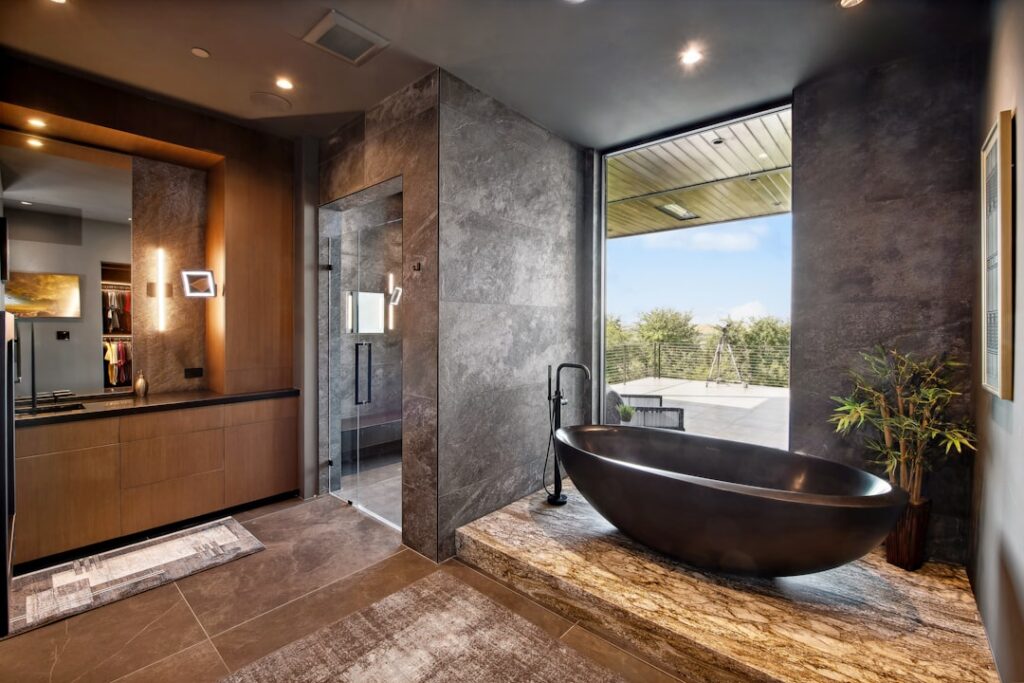
Why Bathroom Remodeling Is One of the Smartest Home Investments You Can Make
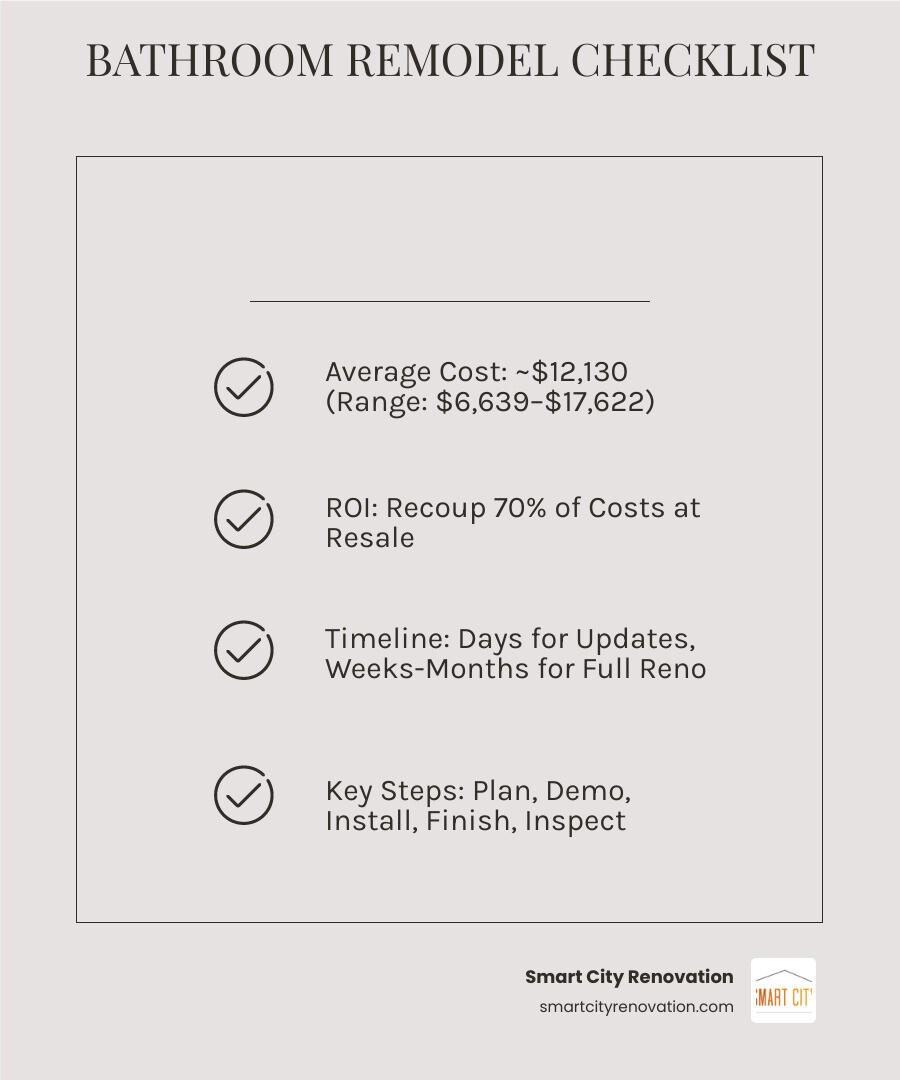
Bathroom remodeling is one of the most popular and highest-return home improvement projects you can take on. Here’s a quick overview of what you need to know:
- Average cost: ~$12,130 (typical range: $6,639–$17,622)
- ROI: Homeowners recoup about 70% of remodel costs at resale
- Timeline: Days for minor updates; weeks to months for full renovations
- Best for: Outdated bathrooms, safety concerns, low home value, or simply wanting a better space
- When to hire a pro: Always for plumbing, electrical, and structural changes
Your bathroom is used every single day. Yet it’s often the most neglected room in the house when it comes to updates.
A dated, cramped bathroom doesn’t just hurt your quality of life — it can drag down your home’s resale value too. On the flip side, a well-planned remodel can transform an ordinary bathroom into a space that feels like a private retreat, while also making your home more attractive to future buyers.
In April 2026, bathroom remodeling trends are leaning toward clean, spa-like spaces with natural materials, smart fixtures, and layouts that actually make sense for how people live. Whether you’re working with a small powder room or a spacious primary bath, the possibilities are wider than most homeowners realize.
This guide covers everything — costs, design ideas, materials, permits, timelines, and the mistakes to avoid — so you can go into your project with confidence.
I’m Norbert, a general contractor with 25 years of kitchen, bathroom, and basement remodeling experience across the Chicagoland area, and bathroom remodeling is one of the projects I’m most passionate about helping homeowners get right. Let’s walk through everything you need to know to plan and execute a remodel you’ll love for years to come.
Planning Your Bathroom Remodeling Project for 2026
The secret to a successful bathroom remodeling project isn’t just picking out pretty tile; it’s in the preparation. As we move through 2026, we’ve seen that the most satisfied homeowners are those who spend at least a few weeks in the “inspiration and logistics” phase before a single hammer swings.
When we act as your Interior Construction Contractor, our first goal is to determine if your current layout works. Are you constantly bumping elbows at the vanity? Is the toilet positioned in a way that feels cramped? Layout changes are the most expensive part of a remodel because they involve moving “wet walls” (walls with plumbing), but they also offer the biggest functional payoff.
According to this Complete Guide to Remodeling, you should always prioritize the “bones” of the room—plumbing and electrical—before worrying about the accessories. We recommend organizing your inspiration photos by specific areas: one folder for showers, one for vanities, and one for lighting. This helps us see patterns in what you like, whether it’s a minimalist Japandi style or a more traditional, ornate look.
2026 Design Trends and Luxury Features
What does a “modern” bathroom look like in 2026? We are seeing a massive shift away from the sterile, all-white “hospital” look of the past decade toward warmer, more organic environments.
- Freestanding Tubs: These remain a centerpiece for primary suites. Oval, sculptural tubs made of resin or stone are replacing the old built-in “garden tubs” of the early 2000s.
- Walk-in Showers: Curbless entries with frameless glass are the gold standard. They make the room look twice as large and are much safer as we age.
- Organic Materials: Think wood-tone vanities, natural stone (or high-quality quartz that looks like it), and earthy palettes of terracotta, sage green, and warm sand.
- Smart Technology: Smart toilets with bidet functions and heated seats are no longer just for luxury hotels. We’re also installing many more programmable “smart showers” that allow you to set your perfect temperature from your phone.
- The “Spa” Extras: Heated floors (radiant heating) and towel warmers are two of the most-requested features in Chicagoland. There is nothing quite like stepping onto a warm floor when it’s -10 degrees in Des Plaines or Schaumburg!
Small Bathroom Solutions
Don’t let a tiny footprint discourage you. In places like Skokie or Lincolnwood, many older homes have smaller bathrooms that require a bit of “architectural magic” to feel spacious.
- Floating Vanities: By exposing the floor underneath the cabinet, the eye perceives more square footage.
- Recessed Niches: Don’t let shower caddies clutter your space. We build niches directly into the wall studs for a sleek, built-in storage solution.
- Visual Expansion: Using the same tile on the floor and running it straight up the wall can make a ceiling feel much higher.
- Lighting Layers: Use a mix of ambient (overhead), task (sconces at eye level near the mirror), and accent lighting (under-vanity LEDs) to eliminate dark corners that make a room feel small.
Understanding Costs, ROI, and Budgeting
Let’s talk numbers. Budgeting for bathroom remodeling in 2025 and 2026 requires a realistic look at both material costs and the labor market in the Chicago suburbs.
The national average for a bathroom remodel currently sits around $12,130, but that is a broad spectrum. A simple powder room refresh might only cost a few thousand dollars, while a luxury primary bath overhaul can easily exceed $30,000.
| Bathroom Type | Average Cost Range (2025-2026) | Typical Features |
|---|---|---|
| Powder Room (Half Bath) | $1,500 – $15,000 | Sink, toilet, flooring, paint, lighting |
| Full Guest Bathroom | $3,500 – $20,000 | Tub/shower combo, vanity, toilet, tile |
| Primary (Master) Bath | $7,000 – $30,000+ | Double vanity, walk-in shower, soaking tub |
According to recent Bathroom Remodel Cost Data, labor typically accounts for 40% to 65% of your total budget. This is because bathrooms require high-skill trades: a plumber, an electrician, a tile setter, and a carpenter.
Factors Influencing Your Bathroom Remodeling Budget
Why does one project cost $10k and another cost $25k? It usually comes down to three things:
- Plumbing Relocation: Keeping your toilet, sink, and shower in their original spots is the easiest way to save money. Moving a toilet even three feet can add $2,000+ to the bill due to floor joist modifications and new piping.
- Material Quality: Porcelain tile is affordable and durable (often under $1/sqft), while natural marble can be $35/sqft. Choosing a General Contractor who has relationships with local suppliers in places like Elk Grove Village or Palatine can help you find “champagne looks on a beer budget.”
- Electrical Upgrades: Modern codes require GFCI outlets and often dedicated circuits for high-draw items like heated floors or steam showers.
- Permits and Demolition: In the Chicagoland area, permit fees usually range from $100 to $1,000. Demolition and debris removal for a full gut job typically adds $1,000 to $2,300.
Return on Investment and Home Value
Is it worth it? From a financial perspective, yes. Homeowners typically recoup about 70% of their investment at resale. In a competitive market like Arlington Heights or Northbrook, a freshly remodeled bathroom can be the “tie-breaker” that leads to a faster sale and higher offers.
Beyond the money, there’s the “joy score.” Upgrading from a leaky, mold-prone shower to a pristine walk-in oasis improves your daily routine in a way that’s hard to put a price on. We often tell clients: if you plan to stay in your home for more than 3-5 years, prioritize your own comfort over “resale neutral” choices. If you’re selling sooner, stick to timeless materials like white subway tile and light wood vanities.
The Step-by-Step Renovation Process
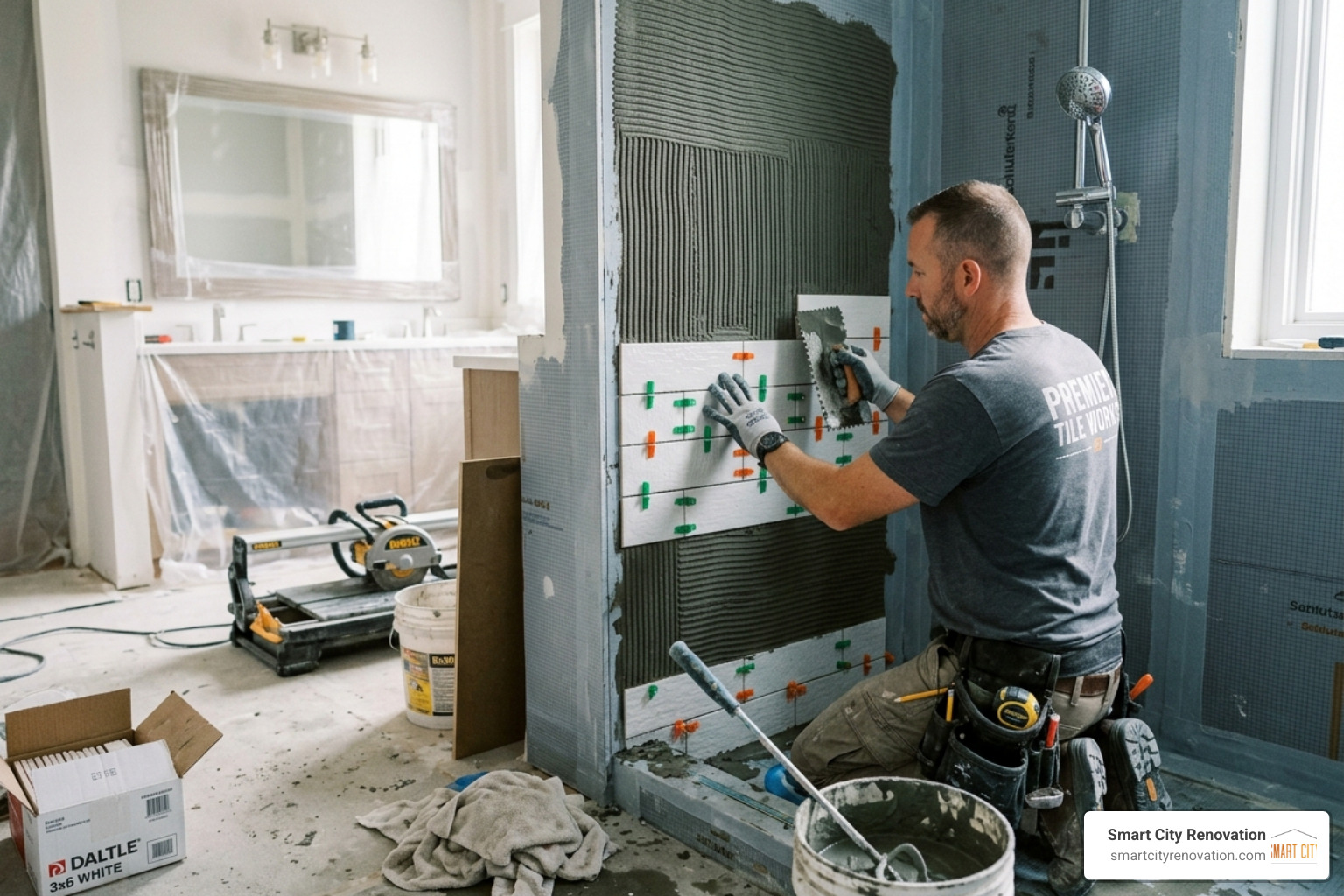
When we take on a project, we follow a strict sequence to ensure nothing has to be “undone.” If you’ve ever seen Our Work, you know that the secret to a flawless finish is what happens behind the walls.
- Demolition: We shut off the water and electricity, then carefully strip the room. We check for hidden mold or water damage in the subfloor—common in older homes in Niles and Park Ridge.
- Rough-in Plumbing & Electrical: This is when we move pipes and wires. Pro tip: Always do the plumbing first so the electrician knows where to run wires without hitting a pipe.
- Moisture Barriers & Drywall: We use “green board” or cement board in wet areas. For showers, we apply a waterproof membrane (like RedGard) to ensure your walls never rot.
- Flooring & Tile: We usually start with the shower walls, then move to the floor tile.
- Vanity & Fixtures: Once the “dusty” work is done, we install the cabinetry, countertops, and finally the “jewelry”—the faucets and showerheads.
Material Selection and Durability
Bathrooms are brutal environments. They are constantly cycling between hot, humid, and cold. Your materials need to be “battle-tested.”
- Porcelain vs. Ceramic: Porcelain is denser and less porous, making it the better choice for shower floors where water sits.
- Countertops: Quartz is the king of the bathroom. It’s non-porous, meaning it won’t soak up spilled makeup or hair dye like marble can.
- Paint: Always use a satin or semi-gloss finish with antimicrobial properties to prevent mold growth on the ceiling.
- Grout: We recommend high-performance, stain-resistant grout. Avoid pure white grout on floors if you don’t want to spend your weekends scrubbing with a toothbrush!
Permits and Building Codes
In the Chicago suburbs, we take building codes seriously. Whether you are in Mount Prospect or Hoffman Estates, you will likely need a permit for:
- Changing the footprint of the room.
- Replacing a bathtub with a walk-in shower.
- Adding new electrical outlets.
- Moving any plumbing lines.
Working with a licensed professional ensures that your project meets the National Kitchen and Bath Association (NKBA) guidelines for safety, such as proper clearance around the toilet and the correct slope for shower drainage.
Frequently Asked Questions

Common Mistakes in Bathroom Remodeling
We’ve seen it all in our 25 years. The biggest mistake? Poor ventilation. If your exhaust fan is too weak, moisture will settle on your new finishes, leading to peeling paint and mold within two years. Always choose a fan rated for the square footage of your room.
Another common error is inadequate storage. A beautiful pedestal sink looks great in photos, but if you have nowhere to put your hairdryer and spare towels, you’ll regret it within a week. Always plan for a mix of concealed storage (cabinets) and accessible storage (niches or shelving).
How long does a typical remodel take?
This is the million-dollar question.
- Cosmetic Refresh: (Paint, new vanity, new light fixture) – 3 to 5 days.
- Standard Remodel: (New tile, new tub, no layout changes) – 2 to 3 weeks.
- Full Gut & Custom Build: (Moving walls, custom cabinetry, smart tech) – 4 to 8 weeks.
The biggest delays usually come from “lead times.” If you order a custom vanity from Europe, it might take 12 weeks to arrive. We always recommend having all materials on-site before we start demolition to minimize the time your bathroom is out of commission.
Should I repair or remodel my bathroom?
If you have a single cracked tile or a leaky faucet, a repair is fine. However, if you see signs of “functional obsolescence”—like a layout that doesn’t work for your family, or recurring mold issues that suggest a leak behind the walls—it’s time for a remodel.
Surface-level fixes often hide structural problems. If your bathroom is more than 20 years old, a full remodel allows us to update the old galvanized pipes or outdated wiring, saving you from a catastrophic leak or fire hazard down the road.
Conclusion
Bathroom remodeling is a journey that transforms one of the most essential rooms in your home from a utilitarian space into a personal sanctuary. Whether you’re looking to increase your home’s value before a sale or you want to enjoy a spa-like retreat every morning, the key is a balance of smart planning, quality materials, and expert execution.
At Smart City Renovation, we bring 25 years of Chicagoland expertise to every project. From the initial design consultation to the final inspection, we understand the unique needs of homes in Des Plaines, Arlington Heights, and throughout the surrounding suburbs. We combine residential warmth with commercial-grade standards to ensure your bathroom isn’t just beautiful, but built to last.
Ready to stop dreaming and start building? We’d love to help you navigate the process and create a space you’ll love. More info about our bathroom remodeling services is just a click away, or reach out to us directly to discuss your vision. Let’s make your 2026 remodel the best investment you’ve ever made in your home!