Why the Difference Between Bathroom Remodel vs Renovation Actually Matters
When it comes to bathroom remodel vs renovation, most homeowners use the two terms like they mean the same thing — but they don’t, and mixing them up can lead to budget surprises and wrong expectations.
Here’s the short answer:
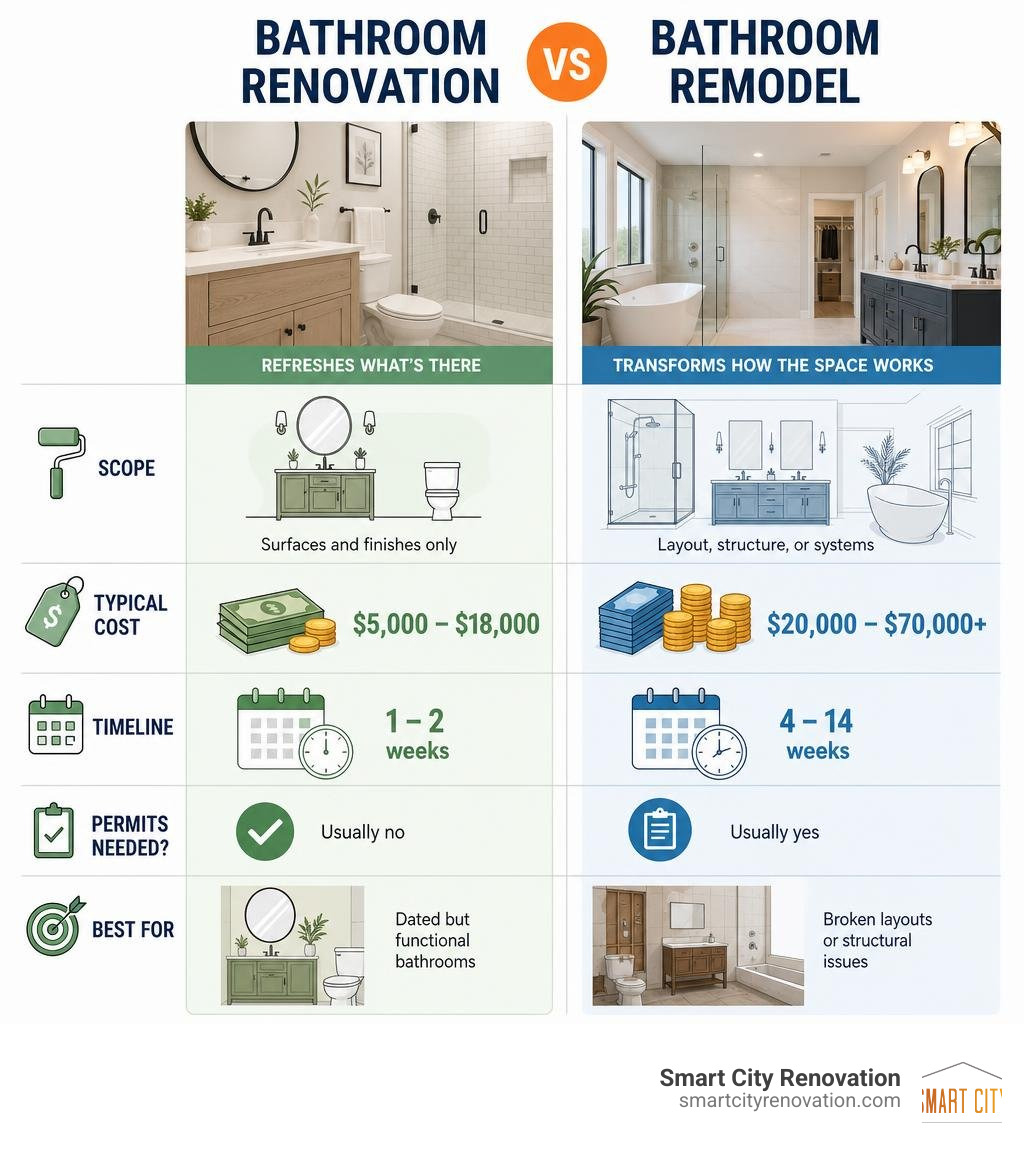
| Bathroom Renovation | Bathroom Remodel | |
|---|---|---|
| What changes | Surfaces and finishes only | Layout, structure, or systems |
| Examples | New paint, vanity swap, tile regrouting | Moving plumbing, removing walls, expanding footprint |
| Typical cost | $5,000 – $18,000 | $20,000 – $70,000+ |
| Timeline | 1 – 2 weeks | 4 – 14 weeks |
| Permits needed? | Usually no | Usually yes |
| Best for | Dated but functional bathrooms | Broken layouts or structural issues |
A renovation refreshes what’s already there. A remodel transforms how the space works.
Both can add value to your home — but they solve very different problems. Choosing the wrong one means either overspending on a simple fix, or underinvesting in a bathroom that genuinely doesn’t work for your household.
I’m Norbert, general contractor and founder of Smart City Renovation, with 25 years of Chicagoland construction experience helping homeowners navigate exactly these bathroom remodel vs renovation decisions. In this guide, I’ll walk you through everything you need to know to make the right call for your home and budget.
Defining the Terms: Bathroom Remodel vs Renovation
To plan your project successfully, you first need to understand the precise definitions used by architects, designers, and municipal permit offices. While a standard dictionary might treat these words as synonyms, the construction industry draws a very sharp line between them.

A bathroom renovation focuses on updating the aesthetic appeal and restoring the existing elements of your bathroom to a “like-new” condition. During a renovation, the core structure remains completely untouched. The toilet, shower, and vanity stay exactly where they have always been. You are simply replacing the worn-out, dated elements with modern equivalents.
On the flip side, a bathroom remodel is a structural transformation. It involves changing the physical layout, reconfiguring the footprint, and altering the core systems of the room. If you are tearing down a wall to expand into an adjacent closet, moving the toilet to the opposite side of the room, or converting a cramped bathtub into a spacious walk-in shower, you are remodeling.
To explore how these changes fit into a broader project plan, you can read more about the entire design-to-completion journey in A Comprehensive Guide to Bathroom Remodeling. Understanding the fundamental boundaries of these two approaches is the first step in deciding which path is right for your home.
What is a Bathroom Renovation?
Think of a bathroom renovation as a highly effective facelift. The primary goal is cosmetic improvement, surface restoration, and immediate visual impact.
A typical bathroom renovation includes:
- Applying fresh coats of moisture-resistant paint to the walls and ceiling.
- Swapping out an old, dated vanity cabinet for a stylish new pre-fabricated unit.
- Replacing old plumbing fixtures, such as installing a modern faucet and a high-efficiency showerhead.
- Regrouting existing floor or wall tiles to eliminate mold stains and refresh the clean lines.
- Installing updated light fixtures, mirrors, and hardware (like towel bars and drawer pulls).
If you live in a beautiful, historic home in Glenview or a mid-century property in Mount Prospect, your bathroom may have a perfectly solid layout but simply look tired. In these situations, a surface-level renovation preserves the original charm of your home while bringing the space into the modern era. Working with an experienced local contractor ensures these updates are handled with care and precision.
What is a Bathroom Remodel?
A bathroom remodel goes far deeper than the drywall. It is a complex construction project that begins with a full or partial demolition of the existing space. It is designed to address fundamental layout flaws, severe structural damage, or outdated utility infrastructure.
A typical bathroom remodel involves:
- Demolishing walls to expand the physical footprint of the bathroom.
- Relocating major plumbing drain lines, supply lines, and vent stacks.
- Upgrading and rewiring electrical systems, such as adding dedicated circuits for heated floors or smart bidets.
- Reconfiguring the layout to improve flow, such as moving the bathtub to install a double-sink vanity.
- Rebuilding structural subfloors and framing that have suffered from years of hidden water damage.
Because of the structural and mechanical changes involved, a remodel requires deep technical expertise, detailed architectural planning, and a clear understanding of local building codes. If you are ready to completely reset your space, you can dive deeper into the logistics with our A Comprehensive Guide to Bathroom Remodeling.
Cost, Timeline, and Permit Differences
When comparing a bathroom remodel vs renovation, the practical constraints of budget, time, and government regulations will often make the decision for you. Let’s break down exactly how these two project types compare across these critical planning phases.
Cost Breakdown for a Bathroom Remodel vs Renovation
Budget is usually the first question on every homeowner’s mind. Because renovations keep the existing plumbing and electrical lines intact, they require far less labor and fewer professional trades, making them highly cost-effective.
- Bathroom Renovation Costs: Typically range from $5,000 to $18,000. This budget easily covers high-quality surface materials, a new vanity, mid-range fixtures, professional painting, and surface tiling.
- Bathroom Remodel Costs: Typically range from $20,000 to $70,000+ in the Chicagoland area. The moment we start cutting into concrete slabs to move drains, running new electrical lines through framing, or installing custom tiled walk-in showers with advanced waterproofing systems, the labor and material requirements increase significantly.
For homeowners in high-end communities like Des Plaines or Arlington Heights, investing in a full structural remodel can align your home with local luxury market standards, though it requires careful financial planning and working with a qualified local design-build team.
Project Timelines and Scheduling
Living without a functioning bathroom is one of the most challenging parts of any home improvement project. Understanding the scheduling milestones can help you plan your life during construction.
- Renovation Timeline (1 to 2 Weeks): Because there is no major structural demolition or rough-in plumbing inspections, a professional crew can complete a cosmetic renovation quickly. The old vanity is removed, walls are prepped and painted, new flooring is laid down, and the new fixtures are connected in rapid succession.
- Remodel Timeline (4 to 14 Weeks): A full remodel is a multi-phase construction process. It requires careful coordination of specialized trades. Demolition takes a few days, followed by framing changes. Next, plumbers and electricians perform the “rough-in” work. Before any walls can be closed, local municipal inspectors must visit the site to approve the work. Only then can we install state-of-the-art waterproofing (like the Schluter-Kerdi system), hang drywall, lay tile, and install final finishes.
Building Permits and Local Regulations
Navigating building codes and municipal inspections is a critical phase of any major home project in the Chicagoland suburbs.
For a simple renovation – such as swapping a vanity in Park Ridge or painting a bathroom in Niles – you generally do not need to pull a building permit. These are considered cosmetic repairs.
However, if you are planning a bathroom remodel that involves structural modifications, running new electrical lines, or relocating plumbing drains, local building departments will require formal permits. Municipalities like Morton Grove, Skokie, and Elk Grove Village have strict building codes to ensure safety. For example, if you are planning a remodel in Morton Grove, working with a team that knows local municipal submittal processes is essential to ensure your project is fully compliant and passes all inspections without delay.
How to Choose the Right Path for Your Home
Choosing between a bathroom remodel vs renovation isn’t just about money; it’s about matching the project’s scope to the actual problems you need to solve in your home.

When to Choose a Bathroom Renovation
A cosmetic renovation is the smartest path forward if your bathroom meets the following criteria:
- The Layout is Highly Functional: You don’t bump your elbows on the wall when using the toilet, there is plenty of clearance for the bathroom door, and the shower feels spacious enough.
- The Infrastructure is in Excellent Condition: There are no signs of mold, no soft spots in the subfloor, and the plumbing drains quickly without any strange odors.
- You are Preparing to Sell Your Home: If you plan to list your home on the market in the near future, a rapid cosmetic refresh provides immediate visual appeal to potential buyers without the risk of over-improving for the neighborhood.
- You Need a Quick Turnaround: If you only have one main bathroom in your home, a quick, one-to-two-week renovation minimizes the disruption to your family’s daily routine.
When to Choose a Bathroom Remodel
You should opt for a full bathroom remodel if you are facing any of these deeper structural or functional challenges:
- The Layout Frustrates You: The bathroom feels cramped, the door hits the vanity when opened, or the toilet is awkwardly wedged next to the bathtub.
- You Suspect Hidden Water Damage: If you notice discolored grout, soft spots in the floor around the toilet, or a persistent musty smell, water has likely bypassed the old waterproofing. The only way to fix this permanently is to gut the space to the framing and rebuild it correctly.
- You Need Accessibility Upgrades: If you plan to age in place, converting a high-walled tub into a curbless walk-in shower requires cutting into the subfloor, relocating the drain, and installing specialized structural support.
- You Want to Build a Brand New Space: If you are starting completely from scratch — such as converting an unfinished basement space into a brand new bathroom — you will need a full design-build remodel. You can read our detailed guide on how to execute this complex project in From Concrete to Commode: Building a Bathroom in Your Basement.
Hidden Costs and Long-Term Value Considerations
Before you sign a contract or swing a sledgehammer, you must understand the financial realities that lie beneath the surface of your bathroom.
Unexpected Expenses in a Bathroom Remodel vs Renovation
In our 25 years of general contracting experience across Chicagoland suburbs like Schaumburg, Palatine, and Buffalo Grove, we have seen many simple renovations turn into full-scale remodels the moment the walls are opened. This is why we always advise our clients to plan for the unexpected.
- The Cast Iron Plumbing Surprise: Many older homes built before the 1970s contain original cast iron drain pipes. While they may look fine from the outside, they corrode internally over 50 to 70 years. If we open a wall during a simple vanity swap and find corroded, leaking cast iron, it must be replaced with modern PVC. This unexpected plumbing replacement can add $10,000 to $20,000 to a project’s budget.
- Failed Waterproofing and Mold: Inexpensive, DIY tile jobs from previous decades often lack proper waterproofing membranes. Over time, water seeps through the grout, rotting the wood studs and creating toxic mold. The U.S. Environmental Protection Agency’s mold cleanup guidance explains why moisture control and proper remediation are so important. Remediating mold and replacing structural framing can easily add thousands of dollars in unexpected labor.
- The Importance of a Contingency Fund: We highly recommend setting aside a 10% to 20% contingency budget for any bathroom project. Having this financial cushion ensures that if we discover outdated wiring or rotted subfloors, we can address the issue permanently rather than applying a temporary cosmetic band-aid.
Return on Investment and Resale Value
Both bathroom renovations and remodels add tangible value to your property, but they do so in different ways.
- Renovation ROI: A cosmetic renovation offers a fast, high-percentage return on investment. Because the upfront costs are low, simple updates like a new vanity, modern lighting, and fresh paint provide an instant boost in visual appeal. This makes it an ideal strategy for homeowners looking to maximize profit right before listing their home for sale.
- Remodel ROI: According to national remodeling data, a mid-range bathroom remodel typically recoups about 60% of its cost in added home equity. While the percentage return may be slightly lower than a quick cosmetic refresh, a full remodel adds substantial long-term value. It upgrades the core systems, improves energy efficiency with low-flow fixtures, and solves layout issues that might otherwise deter high-end buyers. Features like custom walk-in showers, double vanities, and heated flooring are highly sought after in competitive markets like Northbrook, Lincolnwood, and Rolling Meadows.
Frequently Asked Questions
Understanding the technical nuances of bathroom construction helps you make informed decisions. Here are the answers to the most common questions we hear from homeowners in our Chicagoland service areas.
Do I need a permit for a bathroom renovation?
If you are only performing cosmetic updates — such as painting the walls, replacing a vanity in the exact same location, or swapping out old faucets — you generally do not need a permit in municipalities like Prospect Heights, Wheeling, or Hoffman Estates.
However, if your project involves altering the physical structure of your home (like removing a wall), relocating plumbing lines under a concrete slab, or running new electrical circuits, local building departments will require you to secure permits and pass formal inspections. Always verify local requirements with your municipality before starting any work.
What is the most expensive part of a bathroom remodel?
The most expensive components of a full bathroom remodel are professional labor, structural modifications, and plumbing relocations.
Moving a toilet or a shower drain requires cutting through the subfloor (which is often a thick concrete slab in many Chicagoland homes) to reroute the heavy drain lines. This process requires specialized tools, structural engineering, and skilled licensed plumbers. Custom tile work and premium waterproofing systems also represent a significant portion of the overall budget due to the meticulous detail and time required to ensure a lifetime watertight seal.
Can I convert a tub to a shower without a full remodel?
No. Converting a traditional bathtub into a modern walk-in shower is always a remodel, not a simple renovation.
A tub-to-shower conversion requires:
- Demolishing the old tub surround down to the bare wall studs.
- Relocating the drain line (tub drains are typically 1.5 inches, while shower drains must be 2 inches by building code).
- Rebuilding the shower pan floor with precise slope-to-drain ratios.
- Installing a comprehensive, multi-layer waterproofing system behind the tiles to prevent leaks.
Attempting to perform this conversion without addressing these structural and plumbing requirements will inevitably lead to water damage and costly repairs down the road.
Conclusion
The great debate of bathroom remodel vs renovation ultimately comes down to your home’s unique needs, your budget, and your long-term goals. If your bathroom’s layout works perfectly and the underlying plumbing is healthy, a beautiful, cost-effective renovation is a fantastic way to refresh your space. But if you are struggling with a cramped layout, outdated infrastructure, or hidden water damage, investing in a professional, full-scale remodel is the only way to build a bathroom that will serve your family for decades to come.
At Smart City Renovation, we bring 25 years of construction expertise to homeowners throughout the Chicagoland area, including Harwood Heights, Norridge, Rosemont, and beyond. Whether you need a simple cosmetic update or a complex, structural design-build transformation, our experienced team manages every phase of the project with transparency, quality craftsmanship, and local building code expertise.
Are you ready to bring your dream bathroom to life? Explore our full range of professional remodeling and general contracting solutions on our Services page, or connect with a dedicated Remodeler today to schedule your complimentary in-home consultation. Let’s build something beautiful together!