

When Your Roof Can’t Wait: Emergency Roofing Repair Illinois
Emergency roofing repair illinois homeowners need most often comes down to one thing: acting fast before a small problem becomes a very expensive one.
If you need help right now, Smart City Renovation offers 24/7 emergency roofing services across the Chicagoland area, including Des Plaines, Park Ridge, Niles, and the surrounding suburbs. Acting quickly is the key to preventing long-term structural damage.
Illinois is one of the most storm-punished states in the country. In 2023 alone, it recorded 136 tornadoes — more than any other state — plus over 700 severe wind events and 300 hail events. Spring storms, brutal winters, and ice dams push roofs to their limits here every single year.
A damaged roof isn’t just an inconvenience. Water can start causing structural damage and mold growth within 24 to 48 hours of exposure. That’s why knowing who to call — and calling them fast — matters so much.
I’m Norbert, a general contractor at Smart City Renovation with 25 years of Chicagoland construction experience, including hands-on work with emergency roofing repair Illinois homeowners face after major storms. Below, I’ve put together a straightforward guide to help you find the right roofer before the next big storm hits — or right after it does.
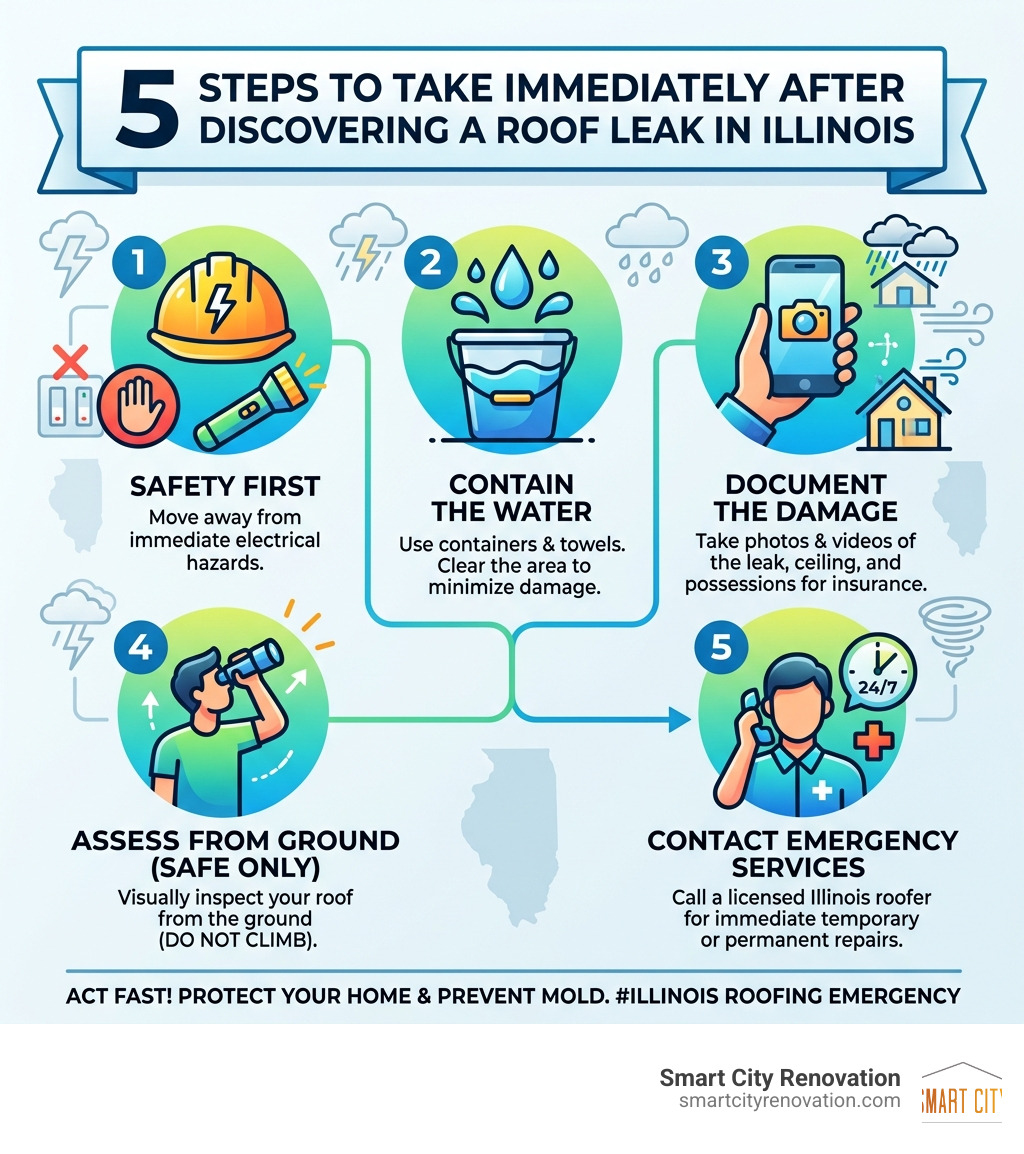
Emergency roofing repair illinois terms explained:
Identifying a Roofing Emergency in the Prairie State
When a storm rolls through the Chicago suburbs, it’s not always obvious if you’re looking at a minor repair or a full-blown crisis. In our 25 years of serving the Chicagoland area, we’ve seen that a true emergency is any situation that threatens the safety of the occupants or the structural integrity of the building.

So, what moves a roof issue into the “emergency” category? Generally, it’s a situation where water is actively entering the home or the structure has been physically compromised.
Key indicators of a roofing emergency include:
- Structural Failure: If a heavy tree limb has crashed through your roof or if you notice sagging rafters, the home may be unsafe to occupy.
- Major Water Infiltration: If water is pouring into your living space, it can quickly reach electrical systems, creating a fire hazard.
- Large-Scale Decking Exposure: If high winds have ripped off significant portions of your shingles and underlayment, leaving the wood deck visible, you are one rainstorm away from a flooded attic.
- Daylight through Boards: If you can see the sky from inside your attic after a storm, you need an Emergency Roof Repair specialist or a local Roofing Contractor immediately.
When these things happen, you don’t have the luxury of waiting until Monday morning. You need Emergency Roof Repair Services that can respond 24/7 to stabilize the situation.
Common Signs of Severe Storm and Hail Damage
Sometimes the damage isn’t as dramatic as a tree through the ceiling, but it’s just as dangerous long-term. In places like Schaumburg and Arlington Heights, hail can be a silent roof killer.
- Granule Loss: Check your gutters and downspouts. If they look like they’ve been filled with coarse, black sand, your shingles have lost their protective coating. This often happens after golf-ball-sized hail hits.
- Missing Shingles: High winds can peel shingles back like an orange. If you find shingles in your yard or see “bald spots” on your roof, the underlying seal is broken.
- Rusted Flashing: Flashing is the metal that seals the joints around chimneys and vents. If a storm has bent or loosened these, water will find its way in.
- Dents in Soft Metals: If your gutters, downspouts, or vent pipes have round dings, your shingles likely took the same beating.
Getting a Storm Damage Assessment from a pro is the only way to know for sure if your roof’s lifespan has been cut short.
Why You Need Immediate Emergency Roofing Repair Illinois
Time is your biggest enemy after a roof failure. In the humid Illinois climate, mold growth can begin in as little as 24 to 48 hours. If water is sitting in your insulation or behind your drywall, you aren’t just looking at a roof repair; you’re looking at a massive restoration project.
Prompt emergency roofing repair illinois prevents what we call “secondary damage.” This is the damage that happens after the storm—like soaked ceilings collapsing, floorboards warping, or electrical shorts. Maintaining structural integrity is much cheaper than rebuilding a house from the inside out. This is exactly Why Professional Roofers Near Me Are Worth the Investment; we have the equipment to stop the leak before it destroys your furniture and memories.
How Illinois Weather Triggers Urgent Roof Failures
Illinois weather is, frankly, a bit moody. We go from “Tornado Alley” conditions in the spring to “Snowmageddon” in the winter.
| Weather Event | Typical Damage Caused | Peak Risk Period |
|---|---|---|
| Tornadoes | Total roof uplift, structural collapse | April – June |
| Hail Storms | Punctured shingles, fractured fiberglass mat | May – August |
| Derechos/Wind | Shingle blow-off, fallen tree debris | Year-round |
| Ice Dams | Water backing up under shingles, gutter failure | December – March |
With 136 tornadoes in 2023 and winds frequently exceeding 60-90 mph during derecho events, the stress on Illinois roofs is constant. When you’re dealing with emergency roof repair in Arlington Heights or Des Plaines, you’re fighting against some of the most volatile weather in the Midwest. For broader background on severe weather patterns that affect the state, see the National Weather Service Illinois page.
The Impact of Heavy Snow and Ice Dams
In areas like Deerfield, which averages 36 inches of snow per year, the weight of the snow alone can cause rafters to groan and sag. However, the real “emergency” often starts with ice dams.
Ice dams form when heat escapes from your attic, melting the snow on the roof. That water runs down to the cold eaves and refreezes, creating a block of ice. New melt-water then gets trapped behind that block and is forced up under your shingles. This freeze-thaw cycle is a leading cause of winter leaks. If you see water dripping from your window frames or ceiling in January, you need Winter Roofing Solutions fast.
High-Risk Zones for Emergency Roofing Repair Illinois
While all of Chicagoland is at risk, certain “hail corridors” and wind tunnels exist. Schaumburg, for instance, often sees 15-20 severe thunderstorm warnings per year. The “heat island” effect of Chicago can sometimes intensify storms as they move into the surrounding suburbs like Skokie, Niles, and Morton Grove.
Whether you are looking for emergency roofing service in Morton Grove or help near the Wisconsin border, these weather patterns don’t discriminate.
Essential Services for Emergency Roofing Repair Illinois
When we arrive at a home for a 24/7 call, our first goal is stabilization. We aren’t necessarily going to install a brand-new roof at 2 AM in a rainstorm, but we are going to make sure no more water gets in.

Common emergency services include:
- Emergency Tarping: Using heavy-duty, weather-resistant tarps to cover damaged sections.
- Debris Removal: Safely removing fallen tree limbs that are weighing down the structure.
- Leak Containment: Identifying the exact entry point and using temporary sealants.
- Structural Reinforcement: If the roof is sagging, we may need to install temporary supports from the inside.
Whether you need speedy emergency roof repair in Niles or Glenview, the priority is always the same: stop the water from entering your home.
Professional Tarping vs. DIY Risks
We get it—the “Do It Yourself” spirit is strong in Illinois. But climbing a ladder during or after a storm is incredibly dangerous. Roofs are slippery, and sections that look solid might be structurally compromised.
Furthermore, a “DIY tarp job” often involves nailing a blue tarp directly through good shingles, creating more holes that your insurance company might refuse to pay for. Professional tarping, like the Professional Tarping Services we provide, uses specialized fastening techniques that won’t further damage the roof. These tarps are designed to last 90 to 180 days, giving you plenty of time to work with your insurance company for a permanent fix.
Navigating Insurance Claims for Illinois Storm Damage
One of the most stressful parts of a roofing emergency is the cost. However, 45.5% of homeowners insurance claims are linked to wind or hail damage. The average storm-related roof repair payout is around $13,804, but fire or lightning claims can go much higher.
In Illinois, most policies have a “mandatory mitigation” clause. This means the homeowner is required to take immediate steps (like tarping) to prevent further damage. If you don’t call for an emergency roofing repair illinois service and water continues to ruin your floors, the insurance company might deny the claim for the interior damage.
As a General Contractor with decades of experience, we often work directly with adjusters to ensure nothing is missed. This Insurance Claim Assistance is vital because what looks like a few missing shingles to an untrained eye might actually be a total loss once we inspect the attic and the flashing.
Maximizing Your Emergency Roofing Repair Illinois Claim
To get the most out of your claim, follow these steps:
- Take Photos: Before any repairs start, document the damage from the ground.
- Keep Receipts: Every penny you spend on emergency tarping or mitigation services in Rosemont should be documented.
- Use a Licensed Pro: Insurance companies are much more likely to approve estimates from licensed, insured contractors who provide detailed damage reports.
- Don’t Wait: The longer you wait, the harder it is to prove the damage was caused by a specific storm event.
Our Smart City Renovation Claims Support team helps by providing the high-resolution photo evidence and technical language adjusters need to process your claim quickly.
Frequently Asked Questions about Illinois Roof Emergencies
What qualifies as a roofing emergency in Illinois?
A roofing emergency is any damage that leaves your home’s interior vulnerable to the elements or threatens its structural safety. This includes large holes from fallen trees, major shingle loss from high winds, or active, heavy leaks during a storm. If you need emergency roof repair in Mount Prospect, it’s because these issues can’t wait.
How long does an emergency roof tarp last in Midwest weather?
A professional-grade tarp installation is meant to be a temporary solution, but it is quite durable. Most are designed to withstand Illinois winds and rain for 90 to 180 days. This gives you a window to settle your insurance claim and schedule a permanent Roofing Contractor.
Does Illinois homeowners insurance cover emergency tarping?
Yes, in almost all cases. Most Illinois policies cover the cost of “reasonable and necessary repairs” made to protect the property from further damage. In fact, failing to tarp a damaged roof can sometimes lead to a denial of coverage for any subsequent water damage.
Conclusion
When the clouds turn that eerie shade of green over the Chicago skyline, it’s time to have a plan. Emergency roofing repair illinois is about more than just shingles; it’s about protecting your home, your family, and your investment.
At Smart City Renovation, we’ve spent 25 years helping our neighbors in Des Plaines, Mount Prospect, Park Ridge, and throughout Chicagoland recover from the worst the Midwest can throw at us. Whether you need a quick tarp job after a hail storm or a full structural restoration after a tornado, we are Shingle and Ready to Mingle with the Best Residential Roofers Near Me.
Don’t wait for the ceiling to sag. If you suspect storm damage, contact us today for a professional inspection and 24/7 emergency support.