
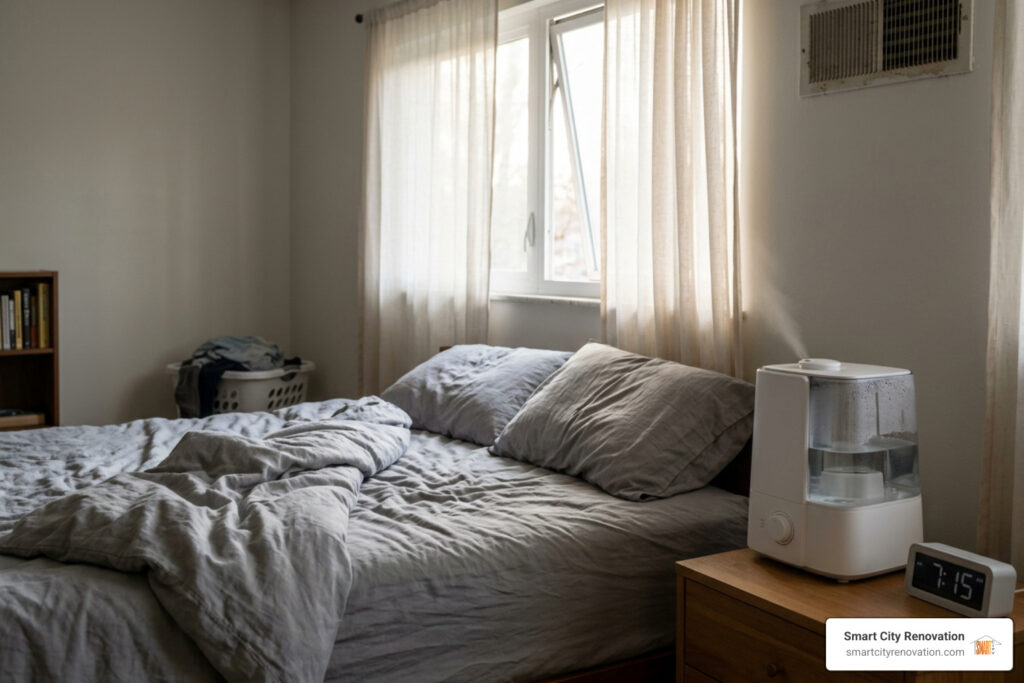
Fix Bad Air Quality in Bedroom Spaces Before It Disrupts Your Sleep
If you wake up tired, stuffy, or with a headache, start with three simple checks: open or improve airflow, keep humidity below 50%, and remove pollution sources near the bed. A closed bedroom can trap the carbon dioxide and moisture people breathe out overnight, along with dust, pet dander, mold spores, smoke, and chemicals from fragrances, paint, carpets, or new furniture.
People spend about 90% of their time indoors, so the air in the room where you sleep deserves attention. Poor bedroom air can affect sleep quality and leave you with dry eyes, throat irritation, brain fog, or morning grogginess. The good news: most causes of bad air quality in a bedroom can be found and reduced with practical cleaning, ventilation, humidity control, and HVAC maintenance.
I am Norbert of Smart City Renovation, with 25 years of Chicagoland construction, remodeling, HVAC, plumbing, and leak-detection experience. I have seen how moisture, blocked airflow, aging HVAC equipment, and poorly planned upgrades can contribute to bad air quality in bedroom spaces.
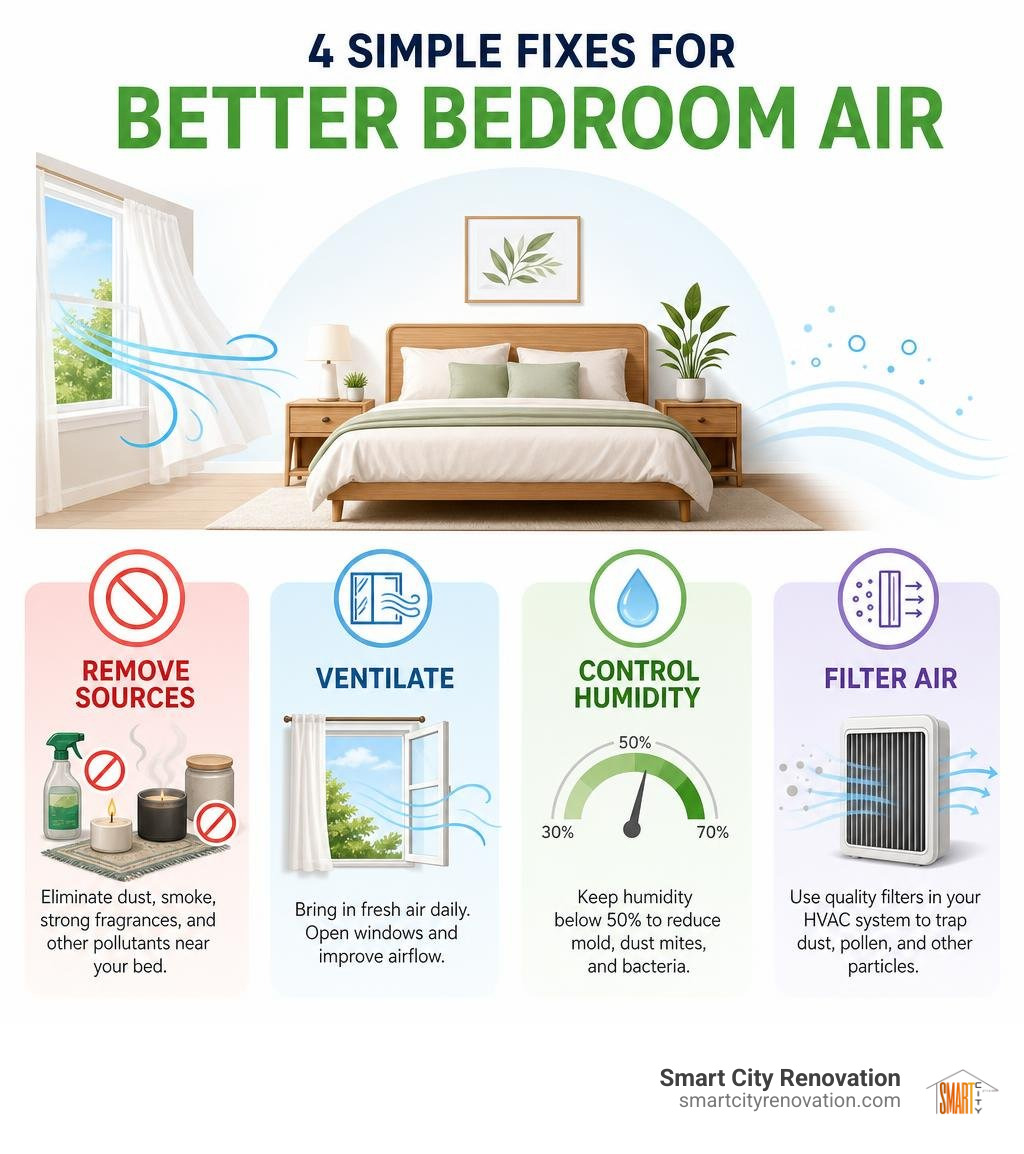
Know your bad air quality in bedroom terms:
Why You Experience Bad Air Quality in Bedroom Spaces Overnight
Most of us treat our bedrooms like private sanctuaries. We close the heavy interior door for quiet, draw the blinds, latch the modern double-pane windows to block street noise, and settle into bed. Unknowingly, we have just sealed ourselves inside an airtight chamber for the next eight hours.
While awake in our living rooms or kitchens, we act like “thermostats with hands”—we notice when a room feels stuffy, we walk around, turn on an exhaust fan, or crack a window. But during deep sleep, that behavioral regulation stops completely. Your body continues operating as an unconscious emission source.
Every breath releases carbon dioxide (CO2) and water vapor. Two sleeping adults exhale roughly one pint (around 20 fluid ounces) of moisture into the bedroom air every single night. In a sealed room, fresh outdoor air (which sits around 420 to 450 ppm of CO2) is locked out. Without air exchange, carbon dioxide levels often climb from normal background levels past 1,500 ppm, frequently spiking over 2,500 ppm to 4,000 ppm by 4:00 AM.
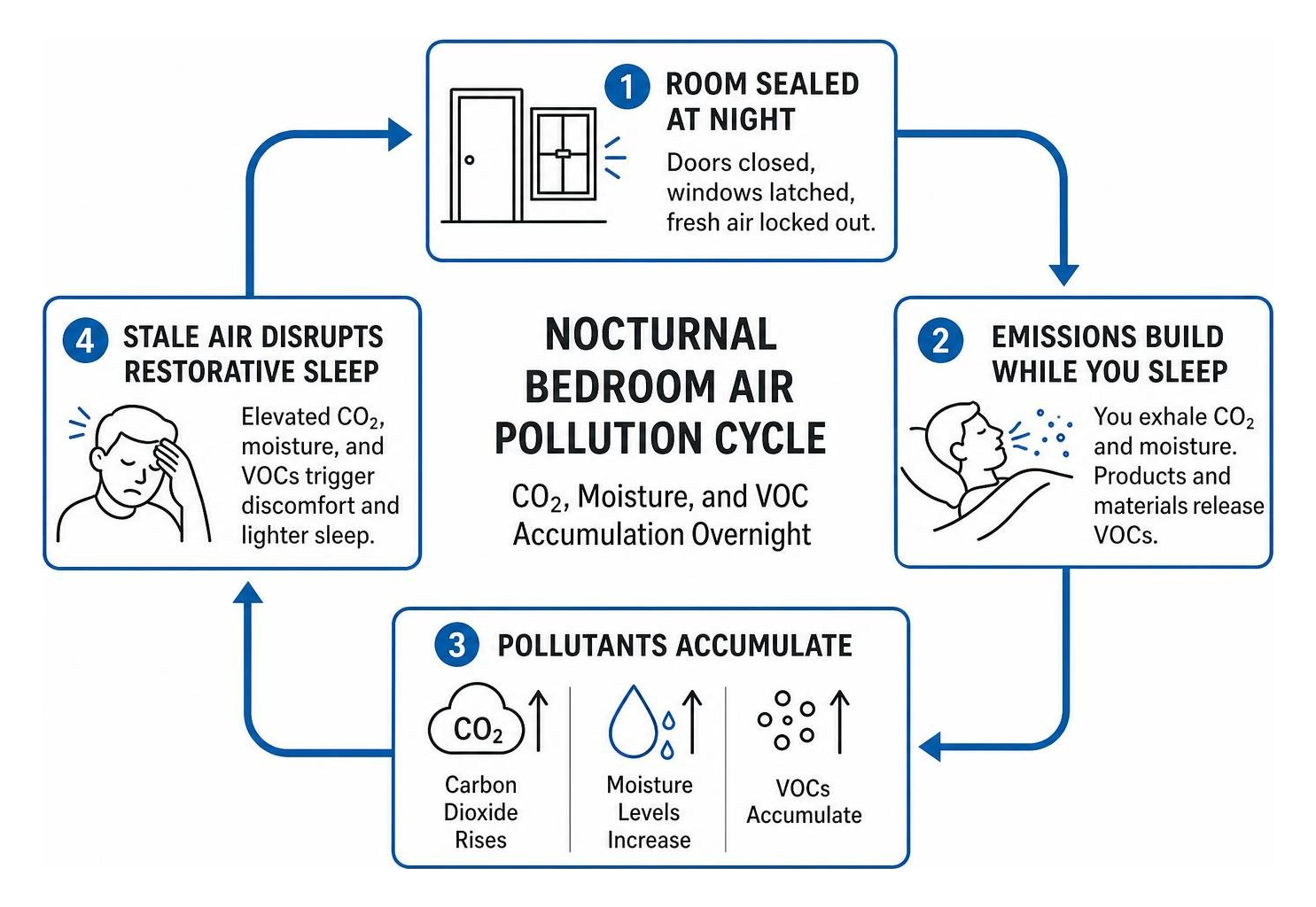
Recent sleep research on bedroom carbon dioxide buildup reveals that modern energy retrofits and tight thermal insulation make this trap worse when background ventilation is ignored. By sealing natural wall leaks without providing mechanical air exchange, bedrooms end up mirroring the classic “sick building syndrome” seen in sealed commercial offices—except you spend a third of your life sleeping in this one.
Health Symptoms Linked to Bad Air Quality in Bedroom Environments
When you sleep in stale, chemical-laden, or high-CO2 air, your body spends its restorative hours fighting environmental stressors instead of repairing tissue and resting your brain. Elevated CO2 directly triggers autonomic nervous system reflexes that jolt you into lighter stages of sleep, elevating your heart rate and worsening sleep apnea episodes.
When bedroom CO2 crosses the 1,800 ppm threshold, research demonstrates measurable next-day cognitive impairment, slower reaction times, and persistent morning brain fog.
| Symptom Category | Acute Symptoms of Poor Bedroom Air | Restorative Clean-Air Bedroom State |
|---|---|---|
| Neurological | Morning dull tension headaches, grogginess, mental fatigue, mid-day “microsleeps” | Waking alert, clear-headed, consistent sustained daytime energy |
| Respiratory | Dry scratchy throat, nasal congestion, coughing fits, overnight asthma flare-ups | Unobstructed nasal breathing, calm respiratory rhythm, no throat tightness |
| Ocular & Dermal | Bloodshot burning eyes, crusty eyelids, itchy skin patches | Clear rested eyes, no surface irritation upon waking |
| Sleep Architecture | Frequent micro-awakenings, tossing and turning, light non-restorative rest | Continuous deep slow-wave sleep cycles, uninterrupted REM stages |
If your physical symptoms reliably vanish an hour after you step outside or leave for work in Des Plaines, Mount Prospect, or Glenview, but flare up again within an hour of getting into bed, the issue is almost certainly localized to your sleeping environment.
Biological and Chemical Triggers of Bad Air Quality in Bedroom Settings
Beyond the CO2 you breathe out, your bedroom contains hidden sources that constantly shed microscopic particulates and volatile chemical vapors into the air.
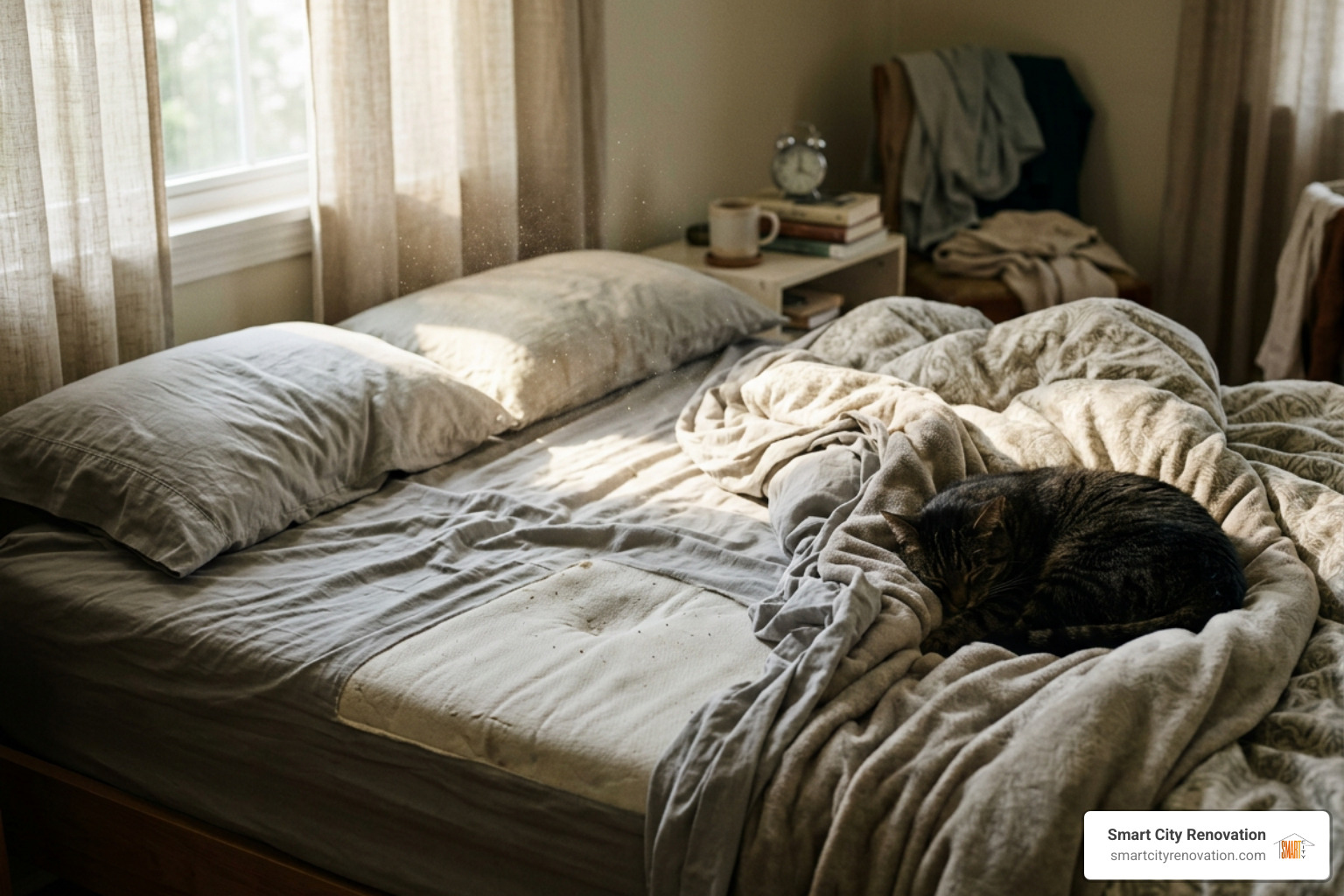
- Dust Mites and Microscopic Allergens: Mattresses, down comforters, and upholstered headboards are prime nesting grounds for dust mites. These microscopic arachnids feed on shed human skin flakes. Their microscopic waste contains potent digestive enzymes that trigger chronic nasal inflammation and nighttime sneezing.
- Mattress and Furniture Off-Gassing (VOCs): Synthetic memory foam mattresses, engineered wood nightstands held together with resin adhesives, and synthetic carpets off-gas volatile organic compounds (VOCs) such as formaldehyde, benzene, and acetaldehyde. Worse, your natural body heat actively accelerates this chemical release directly beneath your nose while you sleep.
- Biological Mold Spores: Whenever bedroom relative humidity climbs above safe thresholds, moisture condenses along cold exterior walls, window trim, and behind dressers. Mold colonies quickly establish themselves, releasing mycotoxins and airborne reproductive spores that inflame bronchial pathways.
- Pet Dander: Allowing beloved cats or dogs to sleep on the bed adds microscopic protein flakes from skin, saliva, and dried urine directly onto your sheets, staying suspended in the air with every movement of the duvet.
- Secondary Chemical Reactions from Fragrances: Scented plug-ins, synthetic room sprays, and scented paraffin candles release complex hydrocarbon molecules. When these interact with low ambient levels of indoor ozone, they undergo secondary chemical reactions, forming hazardous ultrafine particles and airborne formaldehyde.
How to Identify Air Pollution and Ventilation Problems in Your Sleeping Space
Before investing in fixes, take a methodical look at your bedroom to identify the specific pollutants you are dealing with.

1. The Step-Outside Olfactory Reset
Your brain rapidly adapts to lingering odors through sensory adaptation. Step outside into clean outdoor air for 5 to 10 minutes to reset your olfactory senses. Walk straight back into your closed bedroom. If you immediately register a musty, sour, chemical, or stale odor, you have confirmed poor ventilation and an active contaminant source.
2. Moisture and Condensation Inspection
Check the lower corners of your bedroom window panes, exterior wall corners, and baseboards behind your bed or wardrobes. If you see water bead droplets, peeling paint, or dark speckling on cold drywall, your room’s relative humidity is too high, creating conditions for mold growth.
3. Deploy Multi-Sensor Indoor Air Quality (IAQ) Monitors
Modern digital IAQ monitors take the guesswork out of bedroom diagnostics. Place a monitor at nightstand height (breathing level) to track:
- Carbon Dioxide (CO2): Keep it under 1,000 ppm overnight (and strictly below 1,800 ppm).
- Particulate Matter (PM2.5): Fine respirable dust should remain below 10–12 µg/m³.
- Relative Humidity: Maintain between 30% and 50% year-round.
- Total VOCs (tVOC): Identify chemical spikes after bringing in new furniture, dry cleaning, or freshly painted decor.
4. Critical Safety: Carbon Monoxide, Gas Leaks, and Radon Testing
Certain indoor air threats cannot wait for routine cleaning:
- Carbon Monoxide (CO): An unvented or cracked heat exchanger in your furnace can send odorless, colorless CO into bedrooms. Install an Underwriters Laboratories (UL) listed digital CO monitor right outside your bedroom door. If the alarm sounds or you experience sudden nausea, dizziness, or confusion, evacuate immediately and dial 911.
- Gas Leaks: If you smell the rotten-egg odor of mercaptan near floor supply vents, evacuate the building immediately without operating electrical light switches.
- Radon Gas: Radon is a naturally occurring radioactive soil gas and the leading environmental cause of lung cancer, causing roughly 14,000 deaths annually across the United States. Because outdoor baseline radon levels sit at 0.4 pCi/L while average indoor levels reach 1.3 pCi/L, test your home using a certified DIY test kit or engage licensed pros by consulting a comprehensive guide to professional air quality detection companies.
Step-by-Step Strategies to Improve Bedroom Air Quality for Restorative Sleep
Fixing bedroom air quality follows a clear priority framework: Source Control first, Ventilation Improvements second, and Mechanical Air Cleaning third.

Step 1: Eliminate Pollutant Sources (Source Control)
- Ban Indoor Combustion & Fragrances: Remove synthetic air fresheners, plug-in diffusers, and scented candles. If you want a pleasant aroma, focus on cleaning surfaces rather than masking odors with airborne chemicals.
- Establish a Strict Indoor Smoking/Vaping Ban: Environmental tobacco smoke contains over 4,000 chemicals and 40 known carcinogens. Prohibit smoking anywhere inside the home envelope.
- Off-Gas New Furnishings Elsewhere: If you buy a new memory-foam mattress, area rug, or freshly painted furniture, unpack it in a well-ventilated garage, spare room, or patio for at least 72 to 96 hours before placing it in your sleeping quarters.
- Wash Bedding at High Temperatures: Wash sheets, pillowcases, and duvet covers weekly in water at or above 130°F (54°C) to eliminate dust mite populations. Encase mattresses and pillows in zippered, allergen-impermeable covers.
Step 2: Establish Daily Ventilation Habits
- Leave the Bedroom Door Ajar: Keeping your bedroom door open just 2 to 4 inches overnight allows exhaled CO2 and moisture to disperse into larger hallways and living spaces, preventing severe nocturnal CO2 spikes.
- Practice “Lüften” (Morning Shock Ventilation): Derived from long-standing European building practices, open your bedroom windows completely wide for 10 to 15 minutes immediately upon waking. This creates rapid cross-ventilation that dumps accumulated moisture and stale air without chilling the thermal mass of your walls and furniture.
- Utilize Window Trickle Vents: If your modern windows feature built-in frame trickle vents, keep them unobstructed and slid open even during chilly Chicagoland autumns and winters in Rosemont, Niles, or Park Ridge.
Step 3: Manage Humidity Levels
- Target Relative Humidity Under 50%: Use a dedicated bedroom dehumidifier with a built-in humidistat during humid summer months, targeting 40% to 50% relative humidity. In winter, avoid overusing ultrasonic humidifiers, which can spray mineral dust and elevate moisture past the 50% condensation threshold on cold exterior windows.
Step 4: Deploy True HEPA and Activated Carbon Air Cleaners
- Select Mechanical HEPA Filtration: Run a freestanding air purifier equipped with a True HEPA filter (capturing 99.97% of particulates down to 0.3 microns) 24/7.
- Include Granular Activated Carbon: Ensure the unit features several pounds of real activated carbon to adsorb mattress VOCs, pet odors, and ambient gaseous fumes.
- Avoid Ozone Generators and Ionizers: Strictly avoid air cleaners that rely on ionization, plasma, or ozone generation. These produce irritating indoor ozone and create secondary ultrafine particles.
For broader household strategies, follow a comprehensive guide to improve indoor air quality throughout the rest of your home.
HVAC Maintenance and Structural Upgrades to Protect Your Bedroom Air
Your central heating and cooling infrastructure plays a critical role in bedroom air purity. However, a standard residential forced-air HVAC system simply recirculates indoor air through ductwork—it does not mechanically pull fresh outdoor oxygen into your bedroom unless specifically engineered to do so.

1. Upgrade HVAC Air Filtration
Most basic 1-inch fiberglass furnace filters protect the mechanical equipment from coarse lint, but do virtually nothing to clean the air you breathe.
- Upgrade to a MERV 11 to MERV 13 rated pleated filter. These dense filters capture pollen, mold spores, pet dander, and fine particulate matter (PM2.5) before it reaches your bedroom registers.
- Verify that your HVAC blower motor can accommodate the increased static pressure of high-MERV filters without reducing necessary airflow.
- Inspect and replace filters every 60 to 90 days (or monthly if you share your home with shedding pets).
2. Inspect and Clean Supply and Return Ductwork
Leaky, unsealed ductwork passing through unconditioned crawlspaces or attics in Arlington Heights or Morton Grove homes can suck in insulation fibers, rodent droppings, and subterranean mold spores, discharging them directly above your bed when the furnace kicks on. Ensure joints are sealed with mastic tape and clear return air grilles of obstructions like laundry hampers and long drapes.
3. Install Balanced Mechanical Ventilation (ERV / HRV Systems)
For tight, energy-efficient modern homes, natural infiltration through building cracks is no longer sufficient to dilute overnight CO2.
An Energy Recovery Ventilator (ERV) or Heat Recovery Ventilator (HRV) solves this issue. These balanced mechanical ventilation units continuously extract stale, humid bedroom air and replace it with filtered, fresh outdoor air. In the process, the unit transfers heat and humidity between the two airstreams, keeping fresh air circulating without wasting heating or cooling energy.
A detailed study on nocturnal air quality and health risks highlights how dedicated mechanical ventilation keeps bedroom CO2 safely below 1,000 ppm, preventing sleep disruption and morning brain fog.
Frequently Asked Questions About Bedroom Air Quality
What causes bedroom air quality to drop so fast during the night?
The rapid decline is driven by continuous human respiration in a confined space. Two sleeping adults exhale roughly 400 to 500 liters of carbon dioxide and up to a pint of water vapor overnight. When interior doors and energy-efficient windows are shut tight, this exhaled air cannot escape, causing CO2 levels to rise 300% to 500% above outdoor levels by morning.
How do I know if my bedroom air is making me sick?
The most reliable sign is symptom timing. If you wake up with dry eyes, a scratchy throat, congestion, or a dull headache that clears up within an hour of leaving the bedroom, localized air quality is likely the cause. Visible signs include moisture beads on window glass, dark spots on cold drywall corners, or stale odors when re-entering the room after stepping outside.
What is the fastest way to refresh bedroom air in the morning?
The fastest method is the European “Lüften” technique. Open your bedroom windows wide for 10 to 15 minutes right after getting out of bed. This creates rapid cross-ventilation that replaces stale indoor air and moisture with fresh outdoor air without cooling down your walls, furniture, and flooring.
Conclusion
Restorative sleep requires more than a quiet room and a supportive mattress. The air you breathe for eight hours every night plays a direct role in your sleep depth, immune function, and morning energy levels. By eliminating localized pollutant sources, managing humidity below 50%, establishing healthy ventilation habits, and maintaining your HVAC system, you can turn your bedroom into a clean, restful space.
If your home suffers from chronic window moisture, uneven airflow, aging ductwork, or persistent stuffiness, Smart City Renovation brings 25 years of Chicagoland building science, HVAC, and general contracting expertise to resolve the root causes.
Whether you need balanced mechanical ventilation retrofits, professional ductwork overhauls, or whole-home environmental upgrades across Des Plaines, Mount Prospect, Park Ridge, Glenview, or Arlington Heights, we can help you build a healthier living environment. Schedule an on-site consultation by exploring our smart residential renovation services today.