
Find Reliable Heat Pump Repair Near Me Before a Small Problem Grows
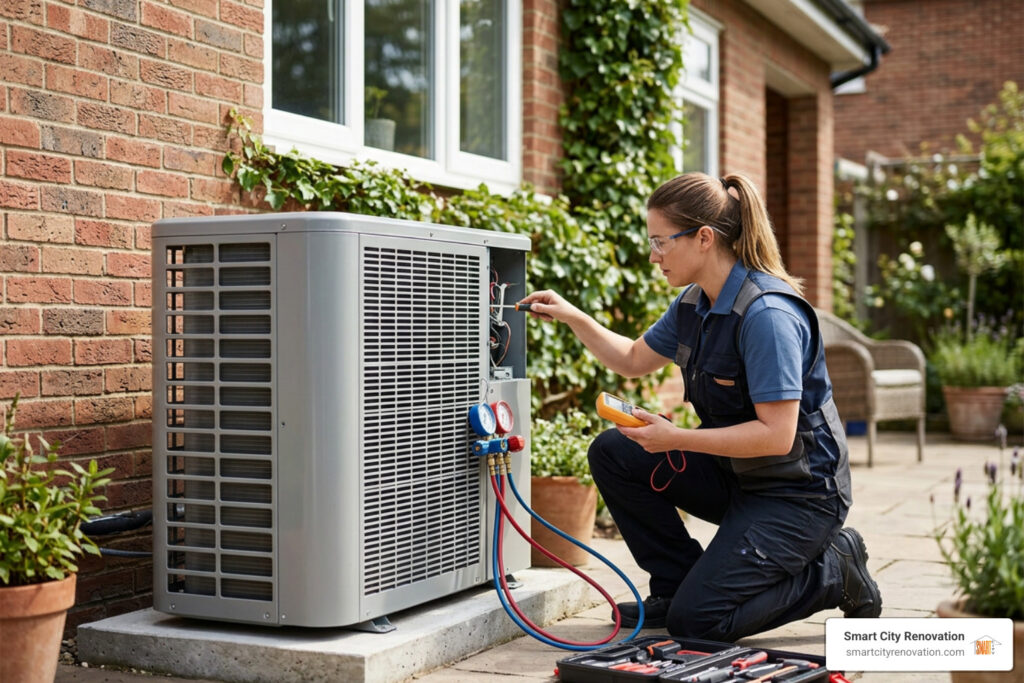
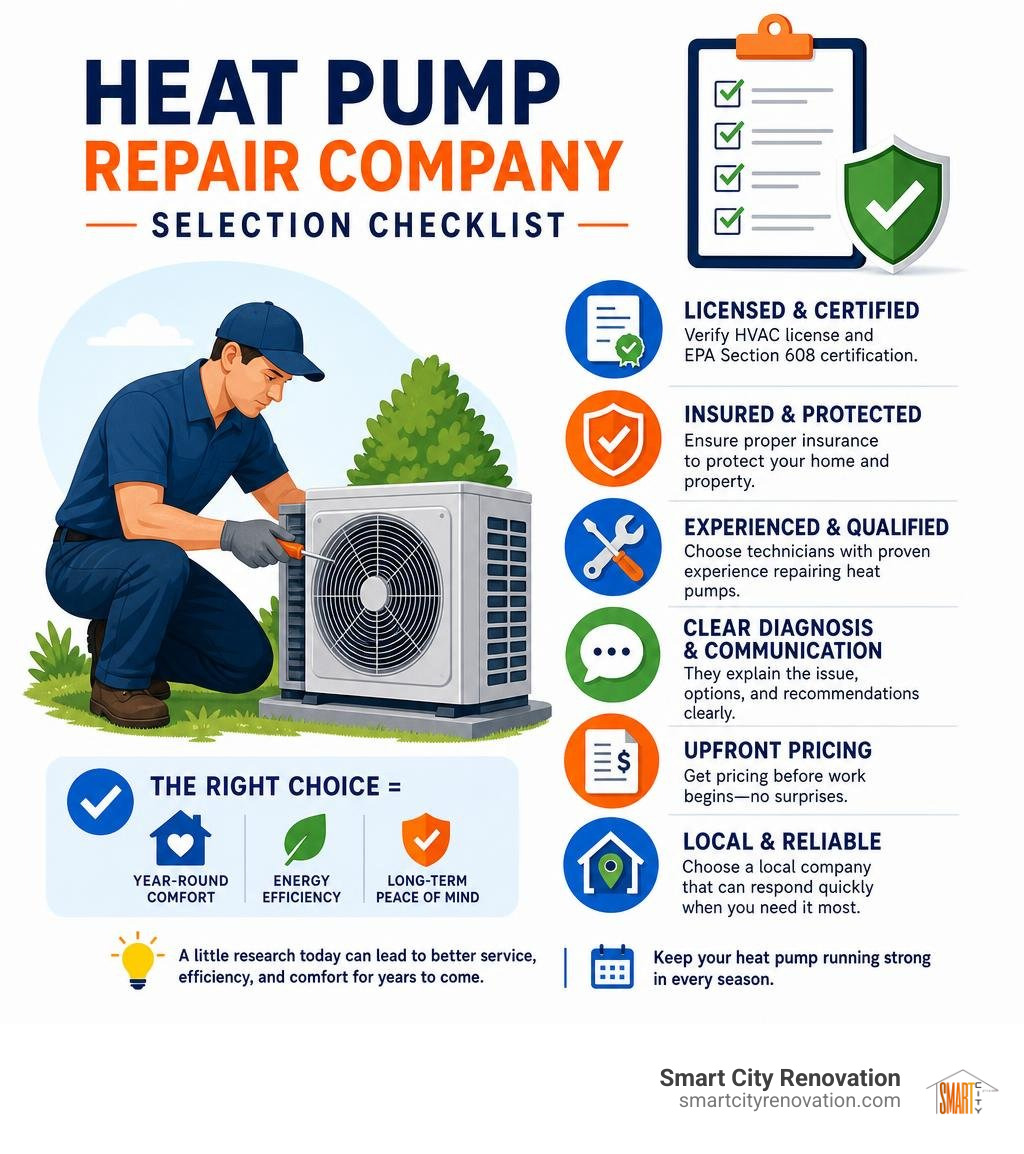
For dependable heat pump repair near me, start with a licensed HVAC company that can test both heating and cooling modes, explain the diagnosis clearly, and provide pricing before work begins. Check that the technician holds EPA Section 608 certification for refrigerant work, has local licensing and insurance, and can service your system’s brand and type.
A heat pump works year-round, so a minor issue can affect both comfort and energy use. Call for professional service if you notice weak airflow, lukewarm air, repeated short cycling, unusual buzzing, rising utility bills, or heavy ice on the outdoor unit. Before scheduling, safely check your thermostat setting, circuit breakers, air filter, and debris around the outdoor unit.
A well-maintained heat pump commonly lasts 15 to 20 years, but prompt diagnosis matters. Problems involving refrigerant, electrical parts, defrost controls, compressors, or reversing valves should be handled by a qualified technician, not a DIY repair.
I’m Norbert of Smart City Renovation, with 25 years of Chicagoland construction and HVAC service experience helping property owners find practical solutions for heat pump repair near me. Next, we’ll cover the warning signs that tell you it is time to call a professional.
Know your heat pump repair near me terms:
Critical Signs Your Heat Pump Needs Professional Service
Because a heat pump carries the workload of both an air conditioner and a heating unit, it logs thousands of operational hours every year. In communities across Arlington Heights, Des Plaines, Skokie, and Schaumburg, our systems battle hot, humid summers and sub-freezing Midwestern winters. This continuous operation accelerates mechanical wear. Recognizing early trouble signs prevents minor electrical glitches from turning into catastrophic compressor burnouts.
If you suspect your system is struggling, check out The Ultimate Guide to Heating Repair for an overview of whole-home thermal systems. Watch for these distinct symptoms:
- Blowing Lukewarm or Incorrect Air: When your thermostat calls for heat but registers cool air at the supply registers (or vice versa in July), the reversing valve or refrigerant charge is likely compromised.
- Short-Cycling: If your heat pump starts up, runs for two minutes, and abruptly shuts down, it is short-cycling. This points to overheating electrical contactors, clogged filters, or faulty high-pressure safety switches.
- Unusual Operational Noises: Grinding, metallic screeching, or electrical buzzing requires immediate shutdown. A buzzing sound often signals a failing capacitor or contactor relay, while metal clanking indicates loose fan blades or broken internal compressor valves.
- Weak Airflow: Restricted register output strains blower motors and causes heat exchangers and coils to overheat or freeze.
- Rapidly Rising Utility Bills: If your electrical bill spikes without a dramatic weather change, the heat pump may be locked into high-consumption emergency heat mode due to an underlying primary circuit failure.
Core Mechanical and Electrical Component Breakdowns
A heat pump relies on a synchronized balance of electrical controls, mechanical motors, and a pressurized closed-loop refrigeration circuit. When one link breaks, the entire chain fails.
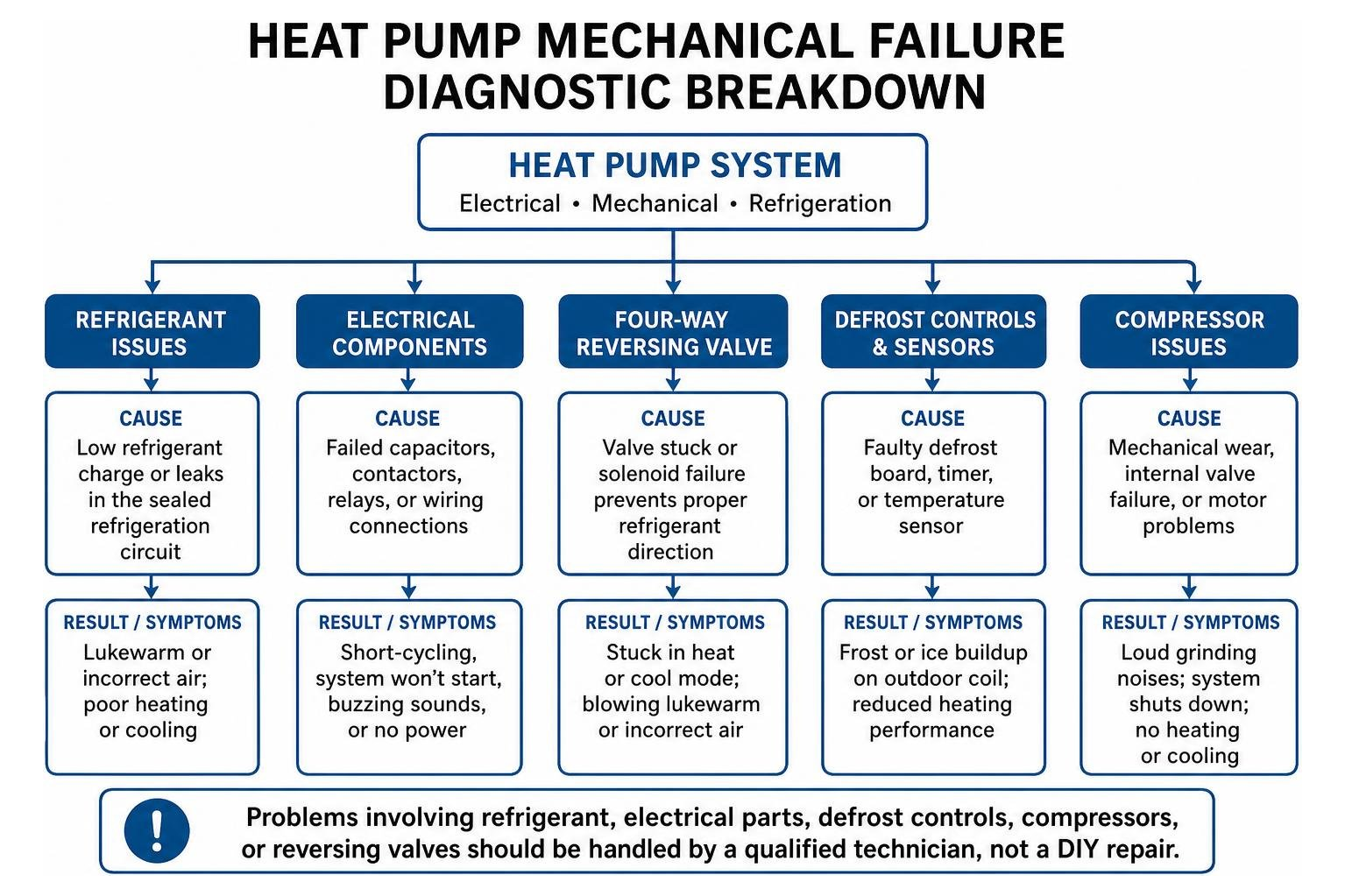
The most frequent mechanical and electrical failures we diagnose in the field include:
- Capacitors and Contactors: Start and run capacitors provide the necessary electrical torque to engage the compressor and outdoor fan. Contactors act as the high-voltage switch. Over time, voltage spikes and heat cause capacitors to bulge or leak oil, preventing motors from starting.
- The Four-Way Reversing Valve: This valve alternates the direction of refrigerant flow between heating and cooling cycles. If its internal sliding mechanism or electromagnetic solenoid fails, your system gets permanently stuck in one operational mode.
- Defrost Control Boards and Sensors: When frost forms on the outdoor coil during winter, the defrost board reverses the cycle temporarily to melt the ice. Defective timer motors or degraded solid-state sensors leave the outdoor unit encased in solid ice.
- Thermostatic Expansion Valves (TXV): The TXV meters refrigerant flow into the evaporator coil. A stuck valve starves or floods the coils, leading to improper pressures and thermal transfer loss.
- Refrigerant Circuit Leaks: Corrosion, vibration, or poor factory flare joints cause pinhole leaks. Running a system low on refrigerant deprives the compressor of vital cooling oil, causing total mechanical seizure.
Diagnosing Freezing Coils and Defrost Cycle Failures
During normal winter operation, a light layer of frost naturally develops across the outdoor coil. Every 30 to 90 minutes, the unit’s automatic defrost cycle should engage, temporarily reversing the system to warm the outdoor coil while relying on auxiliary electric heat strips indoors to maintain room comfort.
However, when you see a solid block of thick ice encasing the outdoor housing, the system is malfunctioning. Common culprits include:
- Defrost Timer or Sensor Drift: The sensor fails to detect cold coil temperatures, or the board logic locks up, skipping the defrost cycle entirely.
- Low Refrigerant Charge: Insufficient refrigerant pressure drops coil surface temperatures below normal operating ranges, causing rapid, heavy ice accumulation.
- Restricted Return Airflow: Clogged air filters or failing indoor blower motors prevent proper heat transfer, triggering freeze-ups on the indoor evaporator coil during summer cooling mode.
- Severe Debris Blockage: Snowdrifts, leaves, or mulch packed against the base of the outdoor cabinet choke off airflow, speeding up ice formation.
Never use an ice pick, screwdriver, or hammer to chip ice off your heat pump coil. You risk puncturing the fragile copper and aluminum tubing, turning a simple sensor fix into a costly total system replacement.
What to Check Before Calling a Professional Technician
Before booking a service call, perform these basic pre-service checks. Homeowners can often resolve simple setup errors safely in just a few minutes:
- Verify Thermostat Settings: Ensure the thermostat is set to the correct mode (“HEAT” or “COOL” rather than “OFF” or “FAN ONLY”). Confirm the setpoint temperature is at least 3 to 5 degrees above (for heating) or below (for cooling) the current room temperature. Check whether the thermostat display requires fresh AA batteries.
- Inspect Electrical Breakers: Heat pumps use two separate circuits: one for the indoor air handler/furnace and one for the outdoor condensing unit. Head to your breaker panel and verify that neither double-pole breaker has tripped. If tripped, reset it firmly once. If it trips immediately a second time, leave it off and call a professional.
- Check the Air Filter: A heavily soiled 1-inch or 4-inch media filter chokes airflow, leading to high-limit trips and coil freezing. Replace dirty filters with properly rated MERV 8 to 11 units.
- Inspect the Outdoor Unit: Clear away autumn leaves, tall grass, deep snow drifts, and surrounding items to maintain a minimum 24-inch clearance on all sides.
- Evaluate Emergency Heat Mode: If your outdoor unit fails during freezing winter temperatures, switch your thermostat to “EMERGENCY HEAT” (Aux Heat). This activates your backup electric heat strips or dual-fuel gas furnace to protect your home while waiting for service.
If you need fast, local assistance in the northwest suburbs, reach out for Expert HVAC Repair in Des Plaines Fast Reliable Service to get your system diagnosed safely and correctly.
How to Choose the Best Heat Pump Repair Near Me
Heat pumps differ significantly from standard central air conditioners and gas furnaces. Finding a qualified repair team requires choosing a company with deep diagnostic experience in dual-mode testing, variable-speed inverter electronics, and cold-climate load calculations.
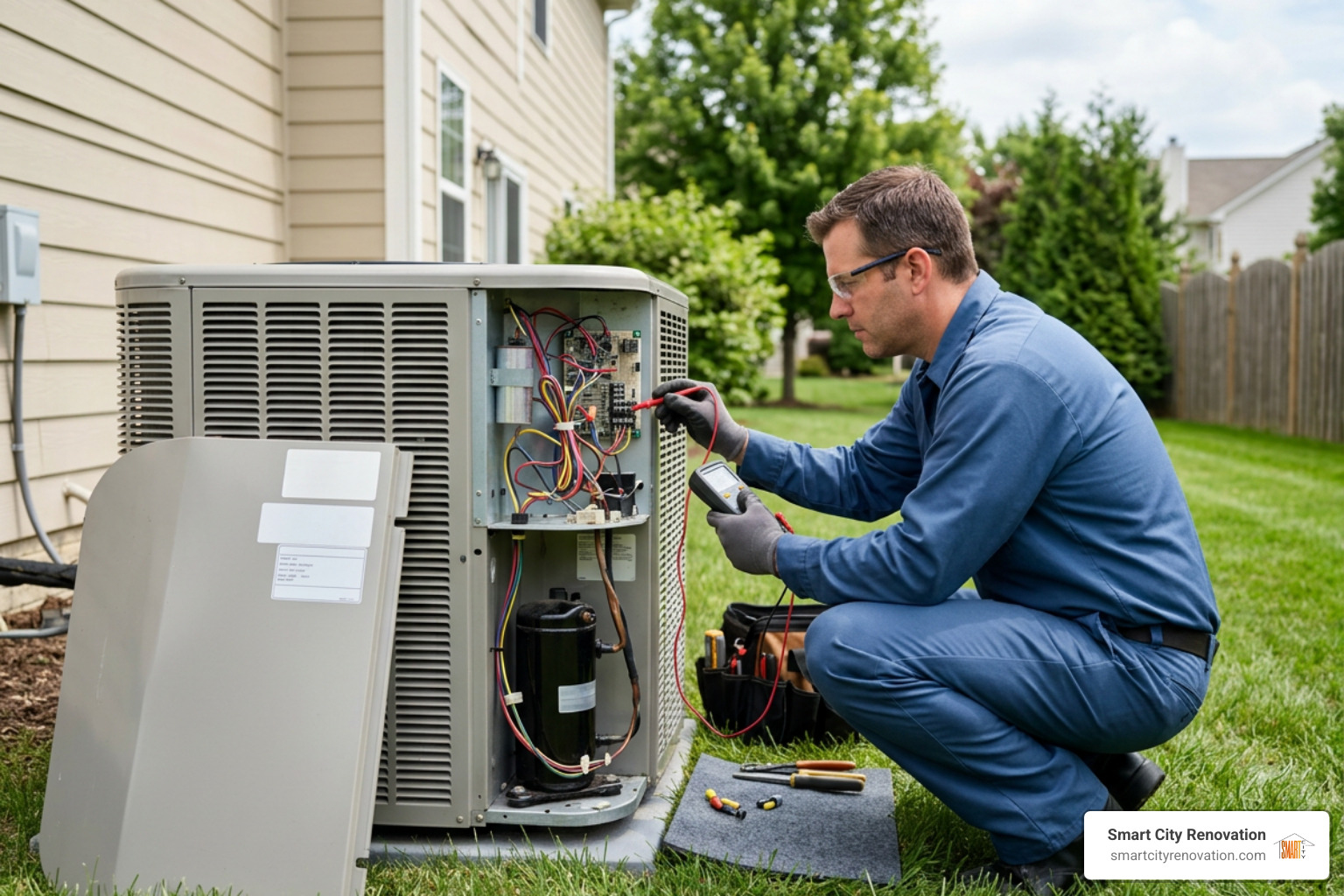
When vetting local contractors across Cook and Northern DuPage counties, demand complete diagnostic transparency. An experienced technician tests both cooling and heating modes, monitors subcooling and superheat pressures, and verifies amp draws on the compressor and fan motors before presenting repair options.
Checklist for Vetting Heat Pump Repair Near Me
Use this practical checklist to ensure you hire a trustworthy contractor:
- Dual-Mode Testing Protocol: Ensure the company’s diagnostic procedure includes checking the four-way reversing valve, defrost logic board, auxiliary heat sequencing, and electrical contactors under full load.
- Transparent Flat-Rate Diagnostic Fees: Reputable contractors clearly state their diagnostic assessment fee upfront (typically ranging between $100 and $200) without hidden trip charges.
- Verified Local Track Record: Check verified customer reviews and ratings across local directories, such as local HVAC contractor reviews on Yelp, to assess response times, punctuality, and workmanship in nearby neighborhoods like Glenview, Northbrook, and Park Ridge.
- Written Estimates Before Repairs: Never permit a contractor to begin swapping components without a written quote detailing part numbers, labor, and warranty coverage.
- Comprehensive Service Standards: Verify that the company follows strict professional HVAC contractor standards with dedicated licensing, adequate liability insurance, and formal workmanship guarantees.
Essential Licenses and EPA Certifications to Verify
Residential heat pump systems operate under strict federal environmental laws and municipal mechanical codes:
- EPA Section 608 Universal Certification: By federal law, any technician purchasing, handling, recovering, or recharging refrigerants (including R-410A and modern low-GWP refrigerants like R-454B) must hold Section 608 certification. Uncertified handling risks hazardous venting and system contamination.
- Municipal Mechanical & Electrical Licensing: Ensure the contractor holds active licenses with local building departments in your village (such as Niles, Skokie, or Schaumburg). Unlicensed work voids manufacturer equipment warranties and risks electrical fire hazards.
- NATE (North American Technician Excellence) Certification: While voluntary, NATE certification demonstrates verified technical competence in heat pump diagnostics, air distribution, and refrigeration cycles.
- Permit Acquisition for Major Replacements: If a repair transitions into equipment replacement, your contractor must pull required local mechanical permits and schedule municipal inspections to guarantee compliance with regional building and safety codes.
Heat Pump Repair vs. Replacement: Making the Right Investment
When faced with an unexpected breakdown, property owners must decide whether repairing an older unit makes financial sense or if replacing it is the smarter long-term move.
A standard heat pump provides an average lifespan of 15 to 20 years when properly maintained. However, continuous dual-season operation means systems older than 12 to 15 years often face compounding component failures. Upgrading to a modern high-efficiency variable-capacity inverter system delivers superior winter heating performance, quieter operation, lower utility bills, and eligibility for federal Energy Efficient Home Improvement credits (Section 25C).
Estimating Costs for Heat Pump Repair Near Me
Understanding typical regional HVAC repair costs helps you evaluate technician quotes and make informed repair choices:
| Repair Category / Component | Average Repair Cost Range | Description & Scope of Work |
|---|---|---|
| Diagnostic Assessment Fee | $100 – $200 | Comprehensive electrical, refrigeration, and airflow diagnostic test |
| Capacitor / Contactor Replacement | $150 – $350 | Quick replacement of failed motor run capacitors or electrical relays |
| Reversing Valve Replacement | $400 – $650 | Evacuating refrigerant, brazing in new 4-way valve, pressure testing, and recharging |
| Defrost Control Board & Sensors | $250 – $550 | Replacing electronic control board, ambient sensors, and defrost wiring harnesses |
| Blower Motor or Outdoor Fan Motor | $350 – $800 | Replacement of failed motor bearings, windings, or ECM control modules |
| Refrigerant Leak Repair & Recharge | $300 – $1,200+ | Electronic leak detection, isolation, nitrogen pressure testing, repair, and full recharge |
| Compressor Overhaul / Replacement | $800 – $2,000+ | High-cost replacement of seized or burned-out scroll/inverter compressor |
| Complete System Replacement | $7,000 – $16,000 | New high-efficiency SEER2 heat pump system installation including permits |
If your system is part of a hybrid setup, review our detailed guide to heating and furnace repair costs to compare maintenance expenses across different equipment types.
Evaluating System Age and the 50 Percent Rule
To make the right choice between repairing or replacing your heat pump, apply the industry-standard 50% Rule:
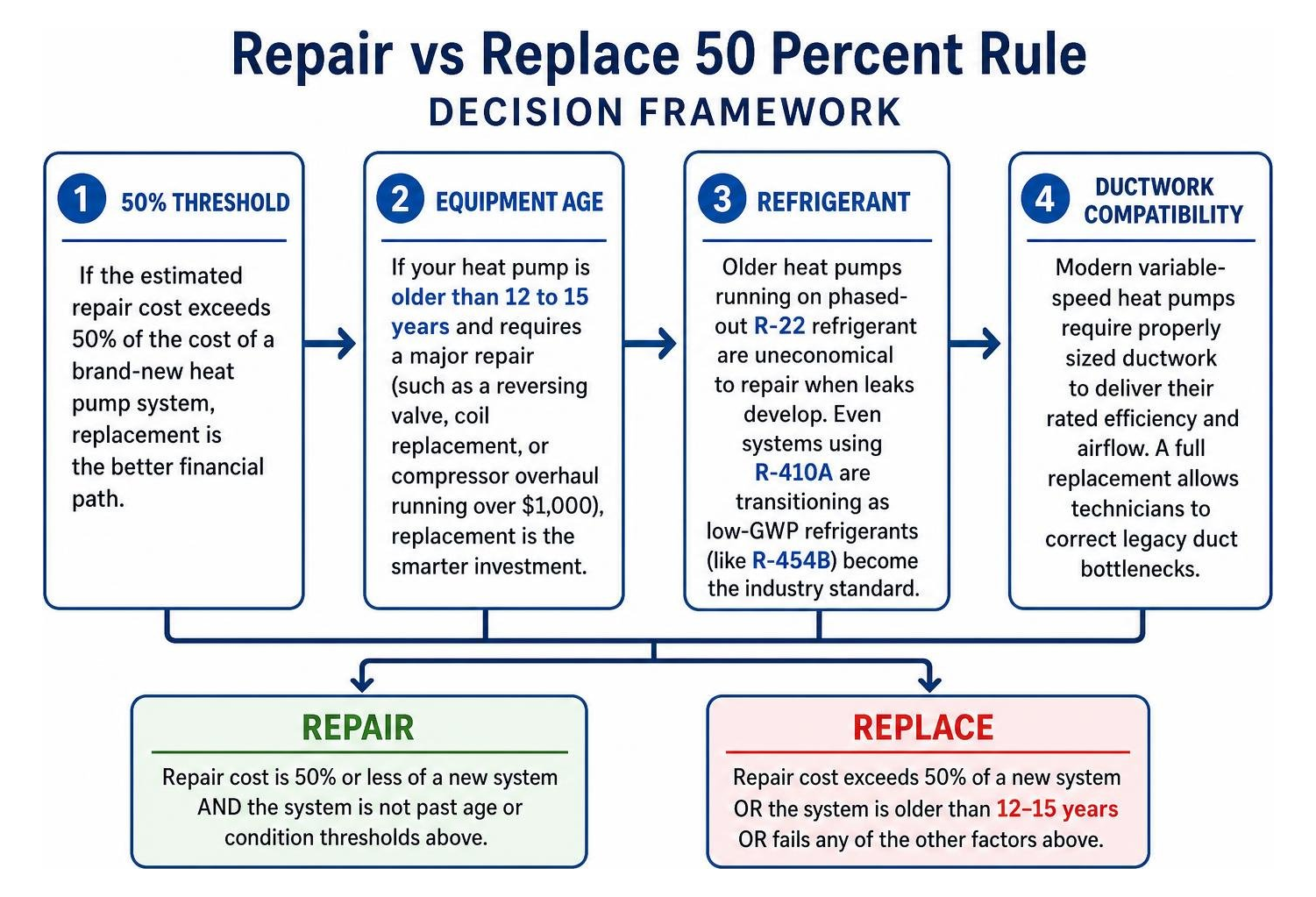
- Calculate the 50% Threshold: If the estimated repair cost exceeds 50% of the cost of a brand-new heat pump system, replacement is generally the better financial path.
- Evaluate Equipment Age: If your heat pump is older than 12 to 15 years and requires a major repair (such as a reversing valve, coil replacement, or compressor overhaul running over $1,000), investing that money into a new, warrantied system with modern SEER2 efficiency makes far more sense than repeatedly patching an aging unit.
- Check Refrigerant Type: Older heat pumps running on phased-out R-22 refrigerant are uneconomical to repair when leaks develop. Even systems using R-410A are transitioning as low-GWP refrigerants (like R-454B) become the industry standard.
- Ductwork Compatibility: Modern variable-speed heat pumps require properly sized ductwork to deliver their rated efficiency and airflow. A full replacement allows technicians to correct legacy duct bottlenecks, banishing cold spots once and for all.
Frequently Asked Questions About Heat Pump Repair
Why is my heat pump freezing up during cold weather?
A light dusting of frost on the outdoor coil is normal during winter, but a solid block of ice indicates an operational failure. This happens when the automatic defrost control board malfunctions, ambient temperature sensors drift out of calibration, return airflow is starved by clogged filters, or low refrigerant pressure drops the coil below safe operating limits. If you see thick ice, turn the heat pump off, switch your thermostat to Emergency Heat mode to protect the compressor, and call for professional service.
How long does a heat pump repair usually take?
A standard diagnostic assessment typically takes between 45 and 90 minutes to thoroughly test electrical, mechanical, and refrigerant cycles. Routine repairs—such as replacing capacitors, contactors, fan motors, or defrost control boards—are usually completed in 1 to 3 hours using parts stocked on our service trucks. More extensive jobs, such as fixing deep refrigerant leaks or replacing a reversing valve or compressor, require system evacuation, brazing, vacuum testing, and precise recharging, taking 4 to 8 hours.
Why is my heat pump running constantly without heating or cooling?
A heat pump running continuously usually points to one of four issues:
- An undersized system or severely restricted airflow through dirty filters.
- A stuck four-way reversing valve preventing the refrigerant from switching into heating mode.
- Low refrigerant levels that reduce the system’s thermal transfer capacity.
- Loose low-voltage thermostat wiring that prevents the system from staging auxiliary heat strips during sudden temperature drops.
Conclusion
Your heat pump is the workhorse of your home’s comfort, providing uninterrupted climate control through blistering summer afternoons and freezing winter mornings. When performance drops, unusual noises start, or ice begins to encase your outdoor unit, delay only leads to costlier repairs. Prompt diagnostics protect critical components like the compressor and reversing valve, keeping your system running reliably and efficiently for years to come.
At Smart City Renovation, our team brings 25 years of hands-on construction, remodeling, and HVAC expertise to homes and businesses across Chicagoland—including Des Plaines, Mount Prospect, Park Ridge, Glenview, Arlington Heights, Schaumburg, Skokie, and surrounding communities. Whether you need an emergency diagnostic assessment, component rebuild, or complete energy-efficient system upgrade, explore our full range of professional HVAC contractor solutions to restore lasting comfort to your home today.