
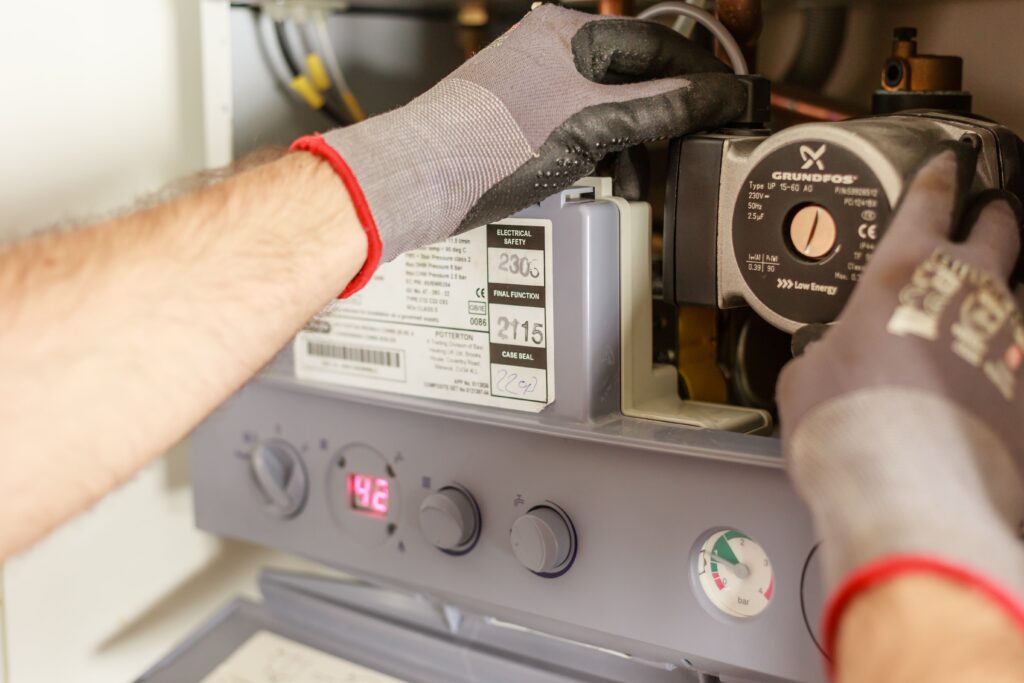
Why Gas Boiler Maintenance Near Me Matters More Than You Think
If you’re searching for gas boiler maintenance near me, here’s the short answer:
Have your boiler serviced once a year by a licensed HVAC professional. This keeps it running safely, efficiently, and prevents costly breakdowns — especially before Chicago’s brutal winters hit.
Quick answers to what most people want to know:
| Question | Quick Answer |
|---|---|
| How often should I service my boiler? | Every 12 months |
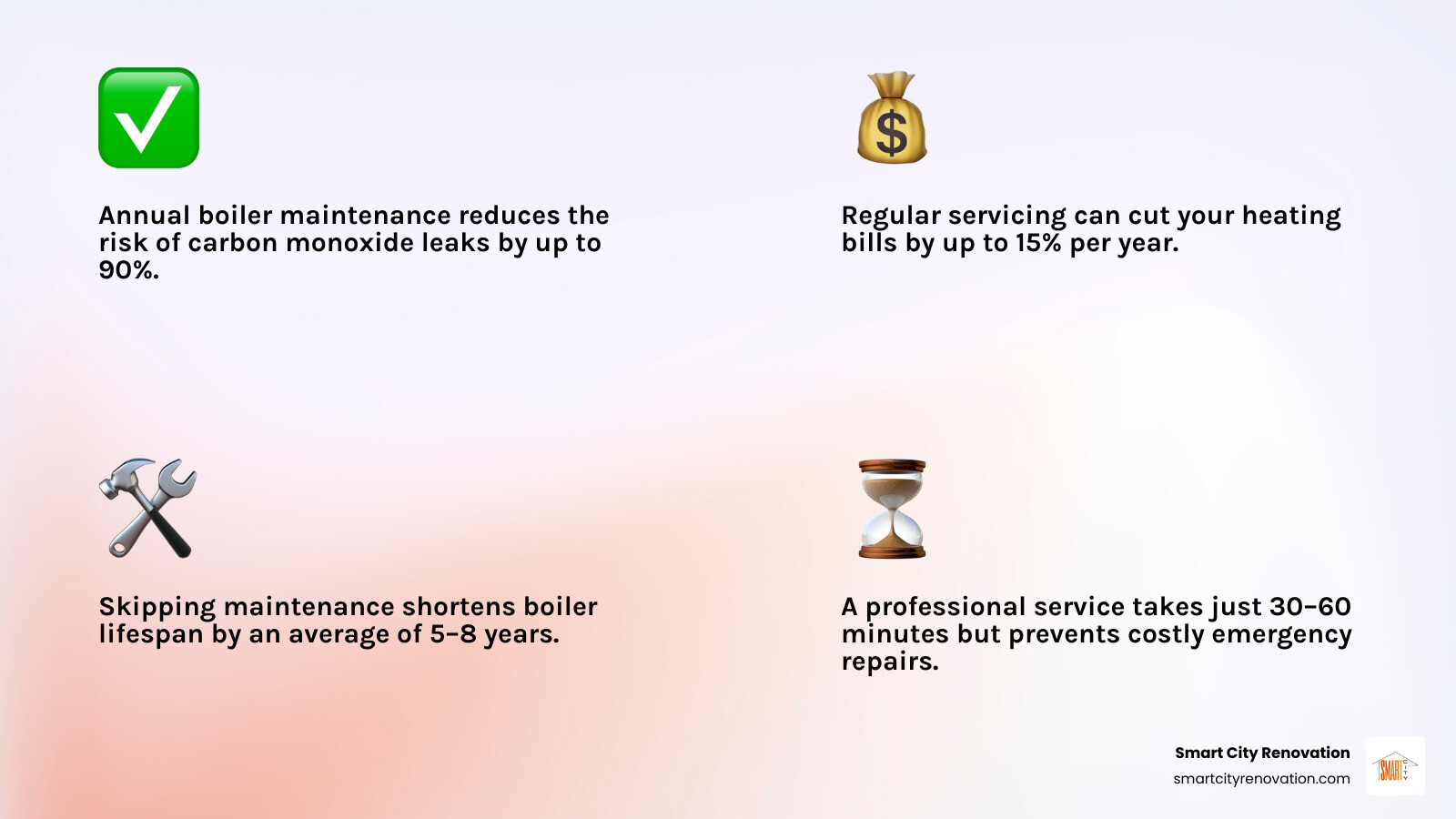
| How long does a service take? | 30–60 minutes |
| What’s the typical annual maintenance cost? | Around $340 (parts, labor, service) |
| Who should do the work? | A licensed, insured HVAC contractor |
| Can I save money with a care plan? | Yes — plans can save ~$163/year vs. ad-hoc costs |
Your gas boiler quietly does one of the most important jobs in your home — keeping you warm and your water hot. But like any hardworking system, it needs regular attention. Skip that annual service, and small issues quietly grow into expensive repairs, rising energy bills, or — in the worst case — dangerous carbon monoxide leaks.
For Chicago-area homeowners especially, a neglected boiler isn’t just an inconvenience. It’s a real risk.
I’m Norbert, lead contractor at Smart City Renovation, and with 25 years of Chicagoland construction and HVAC experience, I’ve seen how routine gas boiler maintenance near me can mean the difference between a cozy winter and an emergency repair call in January. In this guide, I’ll walk you through everything you need to know to keep your system safe, efficient, and reliable.
Why Annual Gas Boiler Maintenance is Essential for Safety and Efficiency
Leaving your boiler to run year after year without a checkup is a bit like driving your car 50,000 miles without an oil change. It might run for a while, but you are actively shortening its lifespan and begging for a breakdown.
An annual boiler service is the single best way to protect your investment. Most modern gas boilers are designed to last 15 to 20 years, but they only reach that age if they are regularly cleaned, inspected, and adjusted. Without this annual preventative care, soot builds up, mechanical parts wear down, and your boiler has to work twice as hard to produce the same amount of heat.
Beyond longevity, annual servicing is often a strict requirement to keep your manufacturer’s warranty valid. If your system breaks down and you cannot provide proof of yearly professional maintenance, the manufacturer may refuse to cover the cost of replacement parts. For more comprehensive details on keeping your home heating systems in peak shape, check out The Ultimate Guide to Heating Repair.
How Regular Maintenance Helps Reduce Your Heating Bills
Let’s talk about your wallet. Did you know that the vast majority of what you spend on energy bills during a Chicagoland winter goes directly toward heating? If your boiler is coated in dust, choked by system sludge, or operating with incorrect gas pressure, it burns significantly more fuel to heat your home.
Over a typical year, the average cost of servicing and maintaining a boiler sits around $340. While some homeowners hesitate to spend that upfront, the energy savings more than make up for it. Regular maintenance restores your boiler’s optimal fuel-to-air ratio, ensuring you aren’t literally burning money.
Furthermore, over time, a central heating system accumulates magnetic and non-magnetic black sludge (iron oxide rust). This sludge settles in your radiators and heat exchanger, creating cold spots and forcing your pump to work under extreme stress. A professional system flush or power flush clears out this debris, restoring rapid heat transfer, lowering your utility bills, and instantly quietening a noisy, banging boiler.
Preventing Carbon Monoxide Leaks and Gas Safety Risks
While saving money is great, safety is the real reason annual maintenance is non-negotiable. Gas boilers burn fuel to create heat, and incomplete combustion produces carbon monoxide (CO) — a colorless, odorless, and highly toxic gas.
During a standard maintenance visit, a technician will use a specialized flue gas analyzer to test the mixture of gases leaving your system. This ensures the boiler is burning gas cleanly and venting it safely out of your home. If there is a crack in the heat exchanger or a blockage in your flue, carbon monoxide can seep back into your living spaces.
Regular maintenance also involves testing all internal safety devices, checking the integrity of gas seals, and verifying that your home’s carbon monoxide detectors are placed correctly and functioning perfectly.
What to Expect During a Professional Gas Boiler Maintenance Near Me Visit
When you book a professional service, the technician shouldn’t just look at the boiler, pat it on the back, and hand you a bill. A thorough, professional visit involves a highly structured checklist designed to test every mechanical and safety component of your system.
During a standard 30-to-45-minute service, a licensed HVAC professional will perform the following steps:
- Visual Inspection: Checking the boiler and flue for visible signs of corrosion, leaks, or distress.
- Control Checks: Testing the thermostat, pressure relief valves, and safety controls to ensure they respond correctly.
- Component Inspection: Opening the outer casing to inspect the burner, main heat exchanger, spark electrodes, and fan.
- Gas Pressure & Flow Test: Measuring the operating gas pressure and gas flow rate to verify the unit is burning fuel at manufacturer-specified levels.
- Flue Gas Analysis: Using a digital analyzer to check combustion efficiency and rule out carbon monoxide leaks.
- Filter Cleaning: Cleaning the magnetic system filter to remove trapped metallic sludge before it can damage the internal pump.
Standard Boiler Service vs. Premium Strip-Down Service
Not all boiler services are created equal. Depending on the age, condition, and usage of your heating system, you may need to choose between a standard annual service and a premium full strip-down service.
A standard boiler service is excellent for relatively new systems under warranty. It focuses on safety checks, external cleaning, and diagnostic testing. However, if your boiler is older or handles a heavy heating load, a premium strip-down service is highly recommended.
A premium service takes about 60 minutes or longer and involves completely dismantling the burner assembly and chamber. This allows the technician to physically scrape away baked-on soot from the heat exchanger fins and deep-clean the sump and electrodes. Think of it as the difference between running your car through an automatic car wash versus getting a full, hand-detailed interior and exterior clean.
| Service Feature | Standard Boiler Service (30–45 Mins) | Premium Strip-Down Service (60+ Mins) |
|---|---|---|
| Best For | Newer systems, regular yearly maintenance | Older systems, heavy-use boilers, neglected units |
| Heat Exchanger | Visual inspection | Full removal and deep chemical/manual cleaning |
| Soot Removal | Basic vacuuming | Deep cleaning of burner chamber and sump |
| Digital Report | Standard safety & combustion report (~8 pages) | Comprehensive report with photo evidence (~20 pages) |
| Cost Protection | Prevents minor operational issues | Protects against major heat exchanger failure ($850+ part) |
Common Gas Boiler Problems Fixed During Routine Maintenance
Many minor issues can be caught and resolved during a routine checkup before they cause a complete system shutdown on a sub-zero night in Arlington Heights or Des Plaines.
- Faulty Thermocouples & Pilot Lights: If your pilot light keeps going out, it is often due to a worn-out thermocouple or a failing gas valve. Your technician can clean or replace these inexpensive parts on the spot.
- Low Gas Pressure: Fluctuating gas pressure can cause your boiler to cycle on and off rapidly (short-cycling), which damages the electronics. Technicians calibrate the gas valve to maintain steady pressure.
- Frozen Condensate Pipes: High-efficiency condensing boilers produce acidic wastewater that drains outside. During extreme Chicagoland freezes, these external drain pipes can freeze solid, causing the boiler to shut down safely. A technician can reroute, insulate, or install trace heating on these pipes to prevent winter lockouts.
- Dirty Magnetic Filters: If your magnetic filter is full, metallic sludge will bypass it and start wearing out your system’s water pump. Cleaning this filter is a standard part of routine maintenance.
If you are already experiencing issues with your heating system in the northwest suburbs, check out our dedicated guide on Expert HVAC Repair in Des Plaines to get your system running smoothly again.
Signs Your Heating System Needs Immediate Repair or Servicing
While you should always schedule an annual service, your boiler might wave some red flags letting you know it needs professional attention right now. Ignoring these warning signs can turn a simple $150 repair into a multi-thousand-dollar emergency system replacement.

Keep a close eye on your boiler throughout the heating season. If you notice any of the following symptoms, don’t wait for your annual service date — call an expert immediately.
Recognizing Yellow Flames, Soot, and Unusual Noises
A healthy gas boiler should always burn with a crisp, steady blue flame. If you peer through the inspection window and see a lazy, flickering yellow or orange flame, this is a major warning sign. A yellow flame indicates incomplete combustion, meaning the gas isn’t burning fully, which drastically increases the risk of carbon monoxide production.
Similarly, if you spot black soot marks, scorching, or dark stains on or around your boiler’s casing, shut the system off and call for service. This indicates that combustion gases are spilling out into your home instead of venting through the flue.
You should also listen to your system. While boilers are generally quiet, build-ups of limescale or sludge can cause “kettling” — a loud banging, whistling, or gurgling sound that sounds like a boiling tea kettle. This occurs when water gets trapped and boils inside the heat exchanger, which can quickly crack the expensive metal components.
When to Call for Emergency Gas Boiler Maintenance Near Me
Some situations require immediate emergency intervention. If you wake up to find you have absolutely no heat, no hot water, or your boiler pressure gauge has dropped to zero and won’t hold pressure after being topped up, you need an emergency technician.
In the middle of a freezing winter night in Mount Prospect, Niles, or Schaumburg, a lack of heat can lead to frozen, burst water pipes in a matter of hours. To explore our full suite of immediate heating solutions, visit our Services page.
Choosing the Right Heating Contractor for Your Home
Your boiler is a complex machine that combines high-voltage electricity, pressurized water, and highly flammable natural gas. Because of these overlapping hazards, boiler maintenance is absolutely not a DIY project. You must hire a licensed, insured, and certified HVAC contractor to handle your system.
When searching for a local specialist, look for contractors who carry significant liability insurance and have specific certifications in hydronic heating systems. In the United States, look for North American Technician Excellence (NATE) certification or manufacturer-specific academy training.
Many high-end boiler manufacturers (such as Viessmann, Bosch, or Vaillant) run highly specialized training academies for contractors. Hiring an academy-trained technician gives you peace of mind, as they have direct, hands-on experience with the exact engineering, wiring, and proprietary parts of your specific boiler brand.
How to Find a Qualified Gas Boiler Maintenance Near Me Specialist
To find a reliable technician in your local Chicagoland neighborhood:
- Verify Licensing and Insurance: Ensure the contractor is fully licensed to work in your specific municipality (whether that’s Skokie, Glenview, or Park Ridge) and carries robust general liability insurance.
- Read Local, Unbiased Reviews: Look for companies with high ratings and detailed, written reviews highlighting punctuality, cleanliness, and technical expertise.
- Ask About Hydronic Expertise: Many standard HVAC companies focus almost entirely on forced-air furnaces. Make sure the company you hire has dedicated, experienced boiler (hydronic) technicians on staff.
- Demand Upfront, Transparent Pricing: A reputable contractor will provide clear, upfront pricing for both standard maintenance and any required repairs, rather than hiding costs behind vague flat fees.
Landlord Gas Safety Certificates and Legal Compliance
If you own rental properties, keeping your heating systems in safe working order isn’t just good practice — it’s often a legal obligation.
In the United Kingdom, for example, landlords are legally required to obtain an annual Landlord Gas Safety Certificate (often called a CP12 certificate) for all gas appliances in their rental properties. While US and Chicagoland laws differ, local municipal codes across areas like Rosemont, Morton Grove, and Elk Grove Village strictly regulate rental property heating systems. Landlords must ensure that heating units can safely maintain minimum indoor temperatures throughout the winter and pass local safety inspections.
If you are looking for examples of highly structured gas safety compliance and standard service checklists, you can read more about how specialist engineers operate across the globe:
- Learn about comprehensive checklists from the Redbridge IG4 Boiler Servicing Experts, Local Gas Safe Engineers, All Models Serviced .
- Discover how structured monthly care plans work with Gasco UK Ltd – Gasco Bridgnorth New Boilers and Installation .
- See how certified technicians handle complex installations at Gas Engineer Tottenham – EcoHeating Boilers .
- View safety compliance standards from Empower Gas — Gas Safe Registered Heating Engineers in Birmingham .
- Compare standard vs. premium strip-down checklists with the Boiler Service | Boiler Servicing & Repairs in Woking .
Frequently Asked Questions About Boiler Servicing
How often should I service my gas boiler?
You should have your gas boiler serviced every 12 months. Regular annual servicing ensures the system operates at peak energy efficiency, prevents sudden winter breakdowns, keeps your home safe from carbon monoxide leaks, and keeps your manufacturer’s parts warranty fully active.
What should I do if I smell gas or suspect a carbon monoxide leak?
If you smell natural gas (a rotten-egg odor) or your carbon monoxide alarm sounds:
- Evacuate immediately: Get all people and pets out of the house.
- Do not flip switches: Do not turn lights, appliances, or flashlights on or off, as a tiny electrical spark can ignite leaking gas.
- Shut off the gas supply: If safe to do so, turn off the main gas valve at your meter.
- Call for help: Once you are safely away from the property, call 911 and your gas utility provider. Do not re-enter the home until emergency services declare it safe.
What is the difference between a boiler and a furnace?
While both heat your home, they do so in completely different ways:
- Boilers (Hydronic Heating): Heat water and circulate it as hot water or steam through radiators, baseboards, or underfloor radiant tubes. This provides highly consistent, even warmth, keeps indoor humidity levels comfortable, and doesn’t blow dust or allergens around your home.
- Furnaces (Forced-Air Heating): Heat air and blow it through ductwork using a motorized fan. While furnaces heat up a home very quickly, they can dry out the indoor air and circulate airborne dust and allergens.
Conclusion
When the snow starts falling in Chicagoland, your gas boiler is the only thing standing between your family and the freezing cold. Don’t wait for a system failure to give your boiler the attention it deserves. Booking a routine annual service keeps your utility bills low, protects your expensive equipment, and — most importantly — keeps your home safe.
At Smart City Renovation, we bring 25 years of trusted construction, remodeling, and HVAC expertise to homeowners across the Chicagoland area, including Des Plaines, Mount Prospect, Park Ridge, Glenview, Arlington Heights, and beyond. Our highly trained, certified technicians are ready to keep your heating system running flawlessly all winter long.
Ready to secure your home’s comfort and safety? Contact Smart City Renovation today to speak with our friendly local team, or visit our Schedule HVAC Contractor Services page to book your annual gas boiler maintenance!