
Act Fast During a Pipe Burst Emergency in Mount Prospect
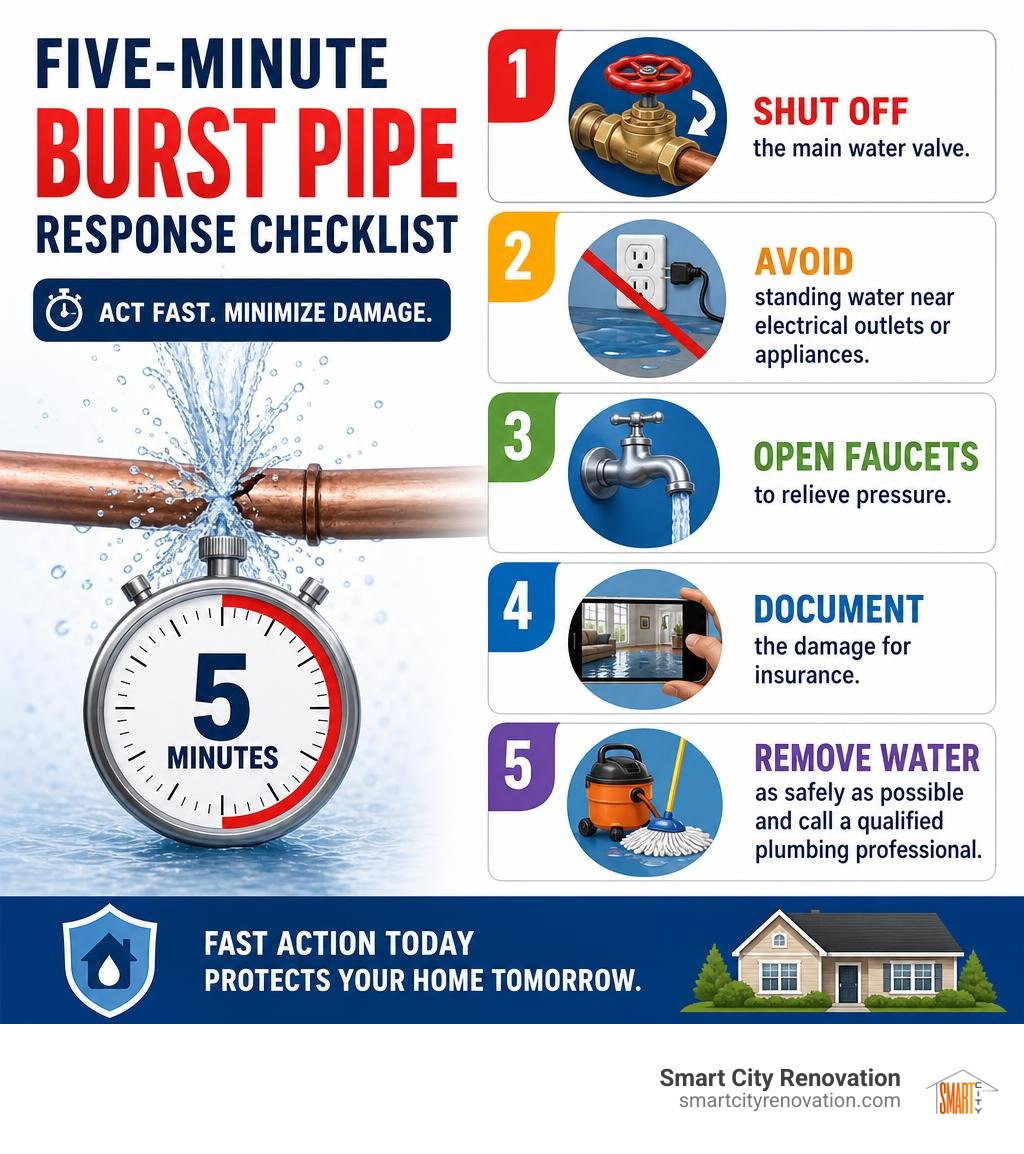
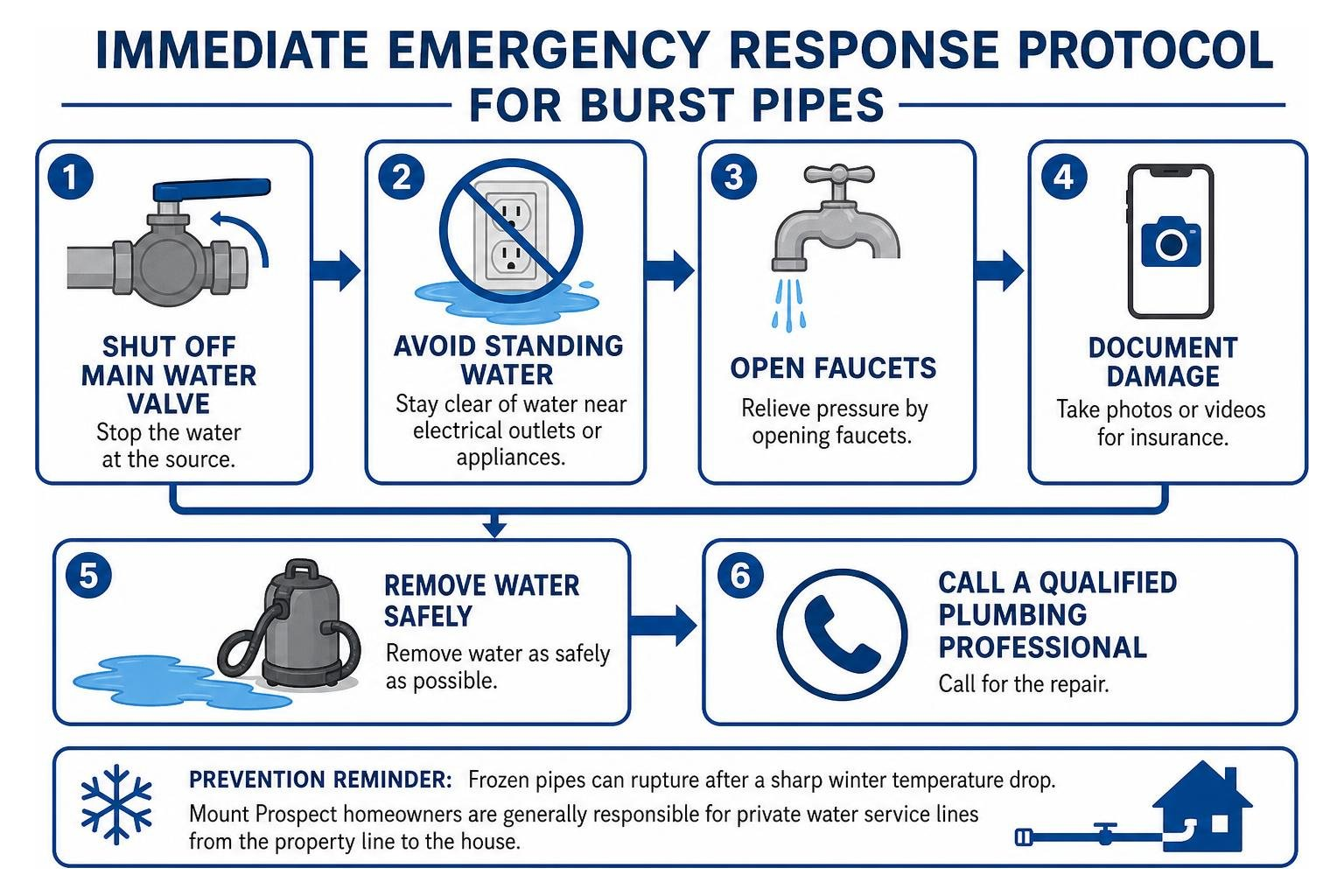
During a pipe burst emergency in Mount Prospect, homeowners should act in this order: shut off the home’s main water valve, avoid standing water near electrical outlets or appliances, open faucets to relieve pressure, and document the damage for insurance. Then remove water as safely as possible and call a qualified plumbing professional for the repair.
Frozen pipes can rupture after a sharp winter temperature drop, sending water into walls, floors, and basements fast. Quick action limits damage, but prevention matters too: Mount Prospect homeowners are generally responsible for private water service lines running from the property line to the house.
I’m Norbert, with 25 years of Chicagoland construction, remodeling, and plumbing experience. I’ve helped property owners respond to pipe burst emergencies across Mount Prospect and protect their homes from water damage before repairs begin.
Helpful plumbing terms and resources to learn:
Immediate Response Steps for a Pipe Burst Emergency Mount Prospect Homeowners Experience
When pressurized water begins pouring out of a wall or ceiling, every second counts. A ruptured supply line can release hundreds of gallons of water per hour, soaking drywall, ruining flooring, and jeopardizing the structural integrity of your home. Taking quick, methodical action protects both your family’s safety and your property value. If the breach occurs below grade, handling extensive basement flooding requires immediate containment to protect foundations and mechanical systems.
Step 1: Shutting Off the Main Water Supply and Power
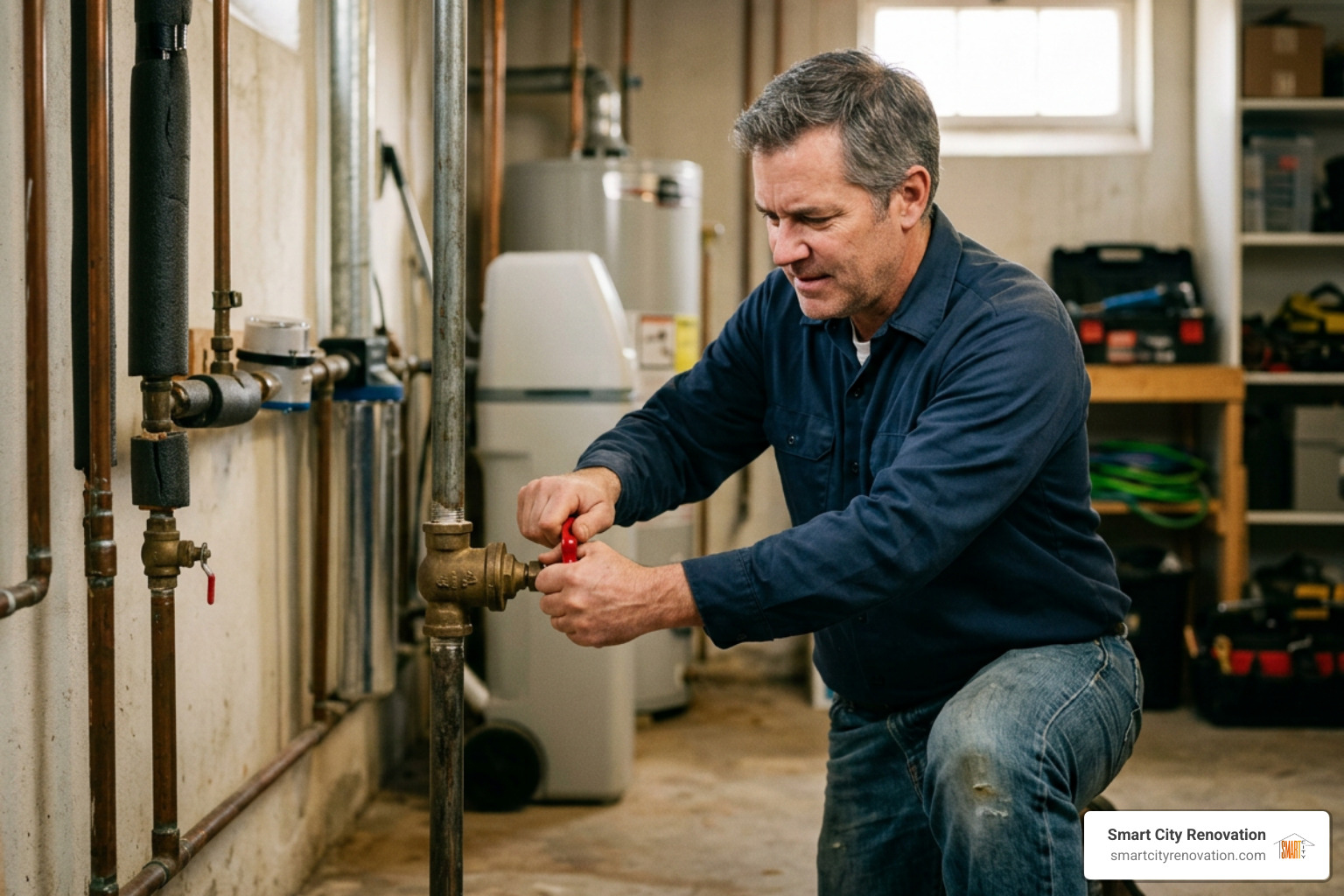
Your immediate priority is cutting off the flow of water at the source. In most Mount Prospect residences, the main water shut-off valve is located in the basement, utility room, or crawlspace near the front foundation wall where the municipal water service enters the structure.
- Ball Valves: Turn the lever handle a quarter-turn so it sits perpendicular (at a right angle) to the pipe.
- Gate Valves: Turn the round wheel handle clockwise until it is seated firmly closed.
If water has pooled near electrical outlets, appliances, or your service panel, do not wade through the water to reach a switch. Go to your main breaker panel—provided the pathway is completely dry—and switch off power to the affected areas. If the electrical panel is in a flooded basement or near standing water, contact an electrician or your utility provider immediately before stepping into the room.
Step 2: Draining Faucets and Relieving System Pressure
Once the main supply is shut down, you need to clear the residual water trapped inside your plumbing system. Opening fixtures drains standing water away from the rupture and equalizes internal line pressure.
- Open the cold water tap at the lowest point in your home, such as a basement utility sink or laundry tub.
- Open the faucets at the highest point of your home (second-floor bathrooms) to allow air into the system, breaking the vacuum and accelerating drainage.
- Turn on hot water taps to drain your water heater and relieve pressure from the hot water lines.
- Flush all toilets once to empty their tanks and prevent back-siphonage.
Step 3: Documenting Damage and Beginning Water Extraction
Before discarding ruined drywall or moving water-logged furniture, take detailed photos and video footage of all affected areas, personal belongings, and the burst pipe itself. Thorough documentation is essential when filing an insurance claim with your homeowner’s insurance carrier.
Begin extracting standing water as quickly as possible using wet/dry vacuums, mops, and towels. Open interior doors and run commercial dehumidifiers and heavy-duty air movers to accelerate drying. Fast moisture extraction significantly reduces the likelihood of toxic mold colonies developing behind damp walls.
Common Causes and Early Detection in Mount Prospect Homes
Mount Prospect experiences brutal winter conditions, with Arctic air masses dropping temperatures well below zero across Cook County. When water freezes inside a copper, PEX, or galvanized steel pipe, it expands by roughly 9%. Contrary to popular belief, it is rarely the ice expansion at the freeze point that splits the pipe; rather, the expanding ice acts as an immovable plug, creating hydraulic pressure downstream between the ice blockage and a closed faucet.
Aside from freezing, line fatigue, excessive water hammer, and interior mineral corrosion can weaken aging pipes. Installing modern automatic leak detection systems can automatically shut off your water supply when abnormal flow patterns or pressure drops occur, stopping catastrophic leaks before they escalate.
Early Warning Signs of an Imminent Pipe Burst Emergency Mount Prospect
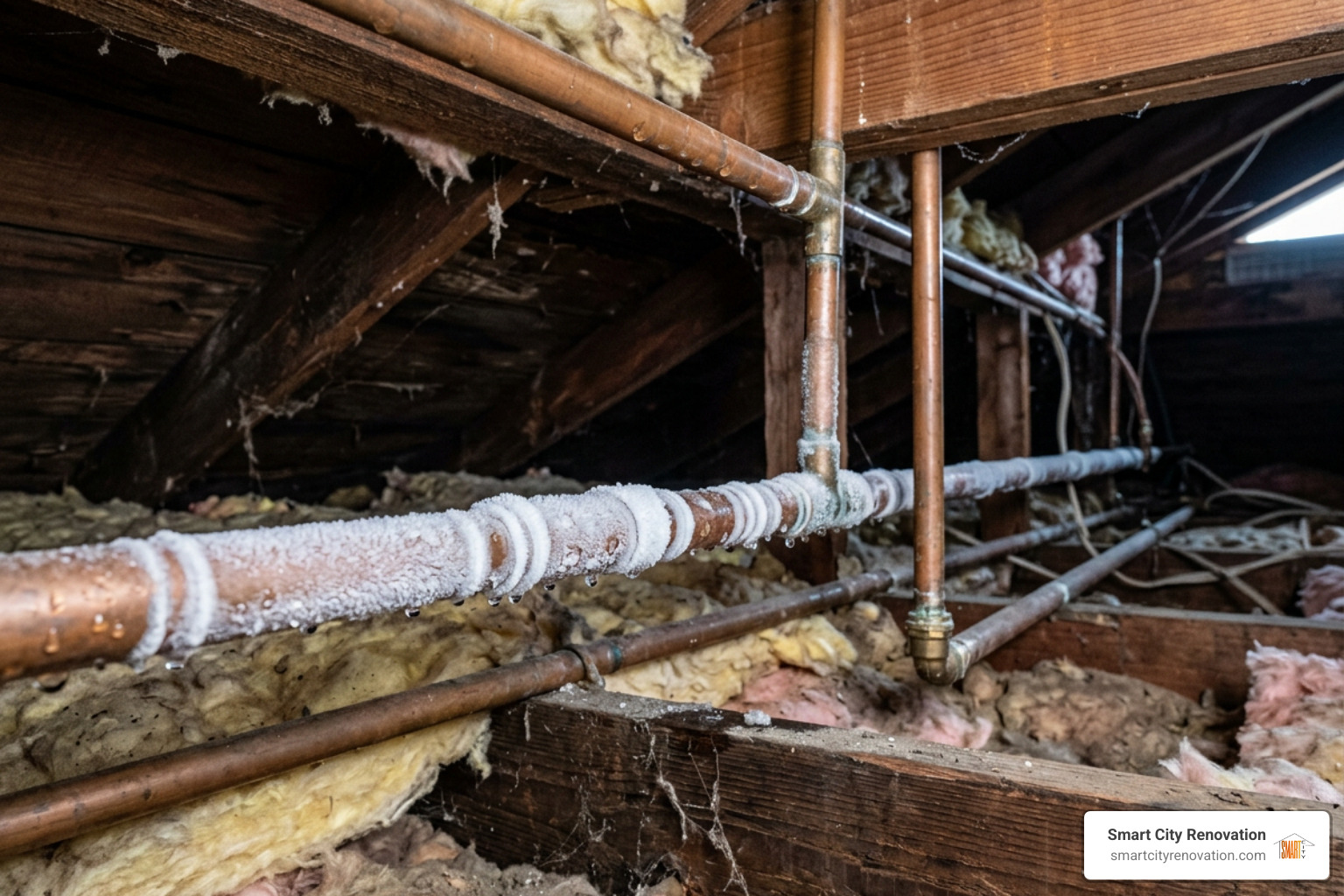
Plumbing lines rarely fail without giving warning signals first. Catching these early indicators during cold snaps lets you take action before an active burst develops:
- Trickling or Sputtering Faucets: A sudden drop in water volume or a spitting faucet indicates ice formation restricting flow within the pipe.
- Visible Frost or Condensation: White frost rings or heavy condensation forming on exposed pipe surfaces in unheated areas.
- Strange Sounds: Whistling, banging, or clanking noises when running water, caused by trapped air bubbles and pressure fluctuations.
- Damp Drywall and Water Spots: Soft spots, peeling paint, or discolored rings on ceilings and exterior-facing walls.
- Unusual Odors: Persistent damp, musty smells coming from cabinets or crawlspaces where small hairline cracks are weeping water.
Identifying Vulnerable Plumbing Zones Across Local Architecture
Mount Prospect features a mix of mid-century ranches, split-levels, and newer two-story construction. Certain architectural areas are naturally more susceptible to freezing temperatures:
- Pipes in Exterior Walls: Supply lines routed through north- or west-facing exterior walls with thin or settled fiberglass insulation.
- Unheated Crawlspaces and Basements: Cold air entering foundation vents or rim joist gaps can freeze uninsulated lines within hours.
- Attic and Garage Plumbing: Supply runs feeding bonus room bathrooms or hose bibs passing through unconditioned garage ceilings.
- Cantilevered Floors: Second-story bump-outs or kitchen sinks located over unheated exterior soffits.
Understanding Mount Prospect Water Regulations, Responsibilities, and Quality
The Village of Mount Prospect Public Works Department supplies treated Lake Michigan water to residential properties. Understanding municipal regulations and where village liability ends helps you coordinate repairs properly and adhere to local building codes.
| Water System Component | Responsible Party | Description & Maintenance Obligations |
|---|---|---|
| Municipal Water Main | Village of Mount Prospect | Public distribution mains located within street rights-of-way and utility easements. |
| B-Box (Curb Stop Valve) | Village / Shared Access | The underground shutoff valve near the property line; operated by Public Works during municipal emergencies. |
| Private Water Service Line | Homeowner | Supply line running from the property line/B-box into the residential meter and distribution system. |
| Interior Plumbing & Fixtures | Homeowner | All interior pipes, shut-off valves, water heaters, and drainage systems inside the residence. |
Municipal Protocols and Service Responsibilities During a Pipe Burst Emergency Mount Prospect
Under Village code, the property owner is responsible for the repair and maintenance of the private water service line from the property boundary into the home. If a pipe ruptures upstream of your main interior shutoff valve, you cannot turn it off from inside. You must contact the Village Public Works Department or an emergency plumbing contractor to shut off the curb stop valve (B-box) located near the parkway.
Major plumbing repairs, such as replacing damaged service lines or modifying interior distribution networks, often require building permits and inspections to confirm compliance with Illinois and local plumbing codes through the Village of Mount Prospect Public Works Department.
Managing Post-Burst Cloudy Water and Village Sprinkling Restrictions
After a pipe rupture has been repaired and the main supply is restored, residents frequently notice milky or cloudy tap water. This is generally harmless and caused by tiny entrained air bubbles trapped during repressurization, or by rapid temperature changes within the lines. To clear the cloudiness, run cold water through your bathtubs or outdoor spigots for 3 to 5 minutes until the stream flows crystal clear.
Additionally, Mount Prospect enforces seasonal watering and sprinkling restrictions to manage peak demand and prevent excessive pressure fluctuations across the municipal grid. Complying with these conservation guidelines minimizes hydraulic stress on older residential supply lines during extreme summer and winter cycles.
Long-Term Winterization and Pipe Burst Prevention Strategies
Taking proactive winterization steps each autumn prevents cold-weather plumbing disasters before temperatures plunge:
- Insulate Exposed Piping: Wrap vulnerable pipes in unheated crawlspaces, attics, and basements with high-density tubular foam insulation sleeves or self-regulating electric heat trace tape.
- Seal Envelope Air Leaks: Caulk and insulate cracks around rim joists, dryer vents, sill plates, and cable penetrations where drafts blow directly onto plumbing.
- Disconnect Exterior Hoses: Remove garden hoses from exterior spigots before the first freeze, and shut off interior isolation valves dedicated to outdoor hose bibs.
- Maintain Indoor Temperatures: Keep your thermostat set to at least 55°F (13°C) day and night, even when traveling.
- Open Cabinet Doors: During sub-zero cold waves, leave vanity and kitchen cabinet doors open to allow ambient heated air to circulate around sink plumbing on exterior walls.
- Let Faucets Drip: Allow a slow, continuous trickle of cold water from vulnerable fixtures; moving water resists freezing and continuously relieves internal line pressure.
For comprehensive seasonal property protection, exploring professional plumbing services ensures your entire plumbing network is inspected, tested, and reinforced against winter weather risks. Similarly, maintaining complete building envelope integrity with commercial roof waterproofing keeps unconditioned utility spaces free from moisture intrusion.
Safe Pipe Thawing Protocols to Avoid Thermal Shock
If you discover a pipe that is frozen solid but has not yet ruptured, careful thawing can prevent it from splitting:
- Open the Faucet: Keep the connected faucet open so melted water and steam can escape as the ice dam recedes.
- Apply Gentle Heat: Use an electric hair dryer, a portable space heater placed at a safe distance, or warm towels wrapped around the frozen section.
- Work from Faucet to Freeze: Always start applying heat at the faucet end and gradually work toward the frozen blockage. This allows expanding water to drain safely.
- Never Use Open Flames: Never use blowtorches, propane heaters, or open flames. Rapid uneven heating causes thermal shock that shatters copper pipes, and exposed flames present a severe fire hazard inside wall cavities.
If a frozen pipe is inaccessible behind drywall, shut off the main water valve immediately and seek emergency plumbing assistance to safely locate and resolve the blockage.
Frequently Asked Questions About Mount Prospect Pipe Bursts
Who is responsible for repairing water service lines in Mount Prospect?
In Mount Prospect, homeowners are responsible for maintaining and repairing the private water service line that runs from the property line (or the municipal B-box shutoff) into the residence. The Village maintains the public water mains running under public roadways and utility easements.
Why does tap water appear cloudy after a burst pipe repair?
Cloudy tap water after a plumbing repair is usually caused by air trapped in the lines during repressurization. Under high pressure, microscopic air bubbles dissolve into the cold water, making it appear cloudy or milky. When poured into a glass, the water will clear from the bottom up within a minute as the bubbles dissipate.
What are the main health risks associated with indoor water damage from burst pipes?
Unaddressed water damage promotes rapid growth of mold species, including Aspergillus and Stachybotrys chartarum (black mold), within 24 to 48 hours. Inhaling mold spores can cause respiratory infections, allergic reactions, and asthma flare-ups. Saturated structural elements can also harbor bacteria and compromise the indoor air quality of your home.
Conclusion
A burst pipe is a stressful emergency, but quick action—shutting down the main valve, draining lines, and removing standing water—prevents minor leaks from escalating into structural damage. Smart City Renovation brings 25 years of Chicagoland construction, remodeling, and emergency plumbing expertise to homeowners across Mount Prospect and the surrounding northwest suburbs. Whether you need immediate emergency repairs, pipe winterization, or full structural water damage restoration, trust our licensed Chicagoland plumbing specialists to restore your home safely and professionally.