
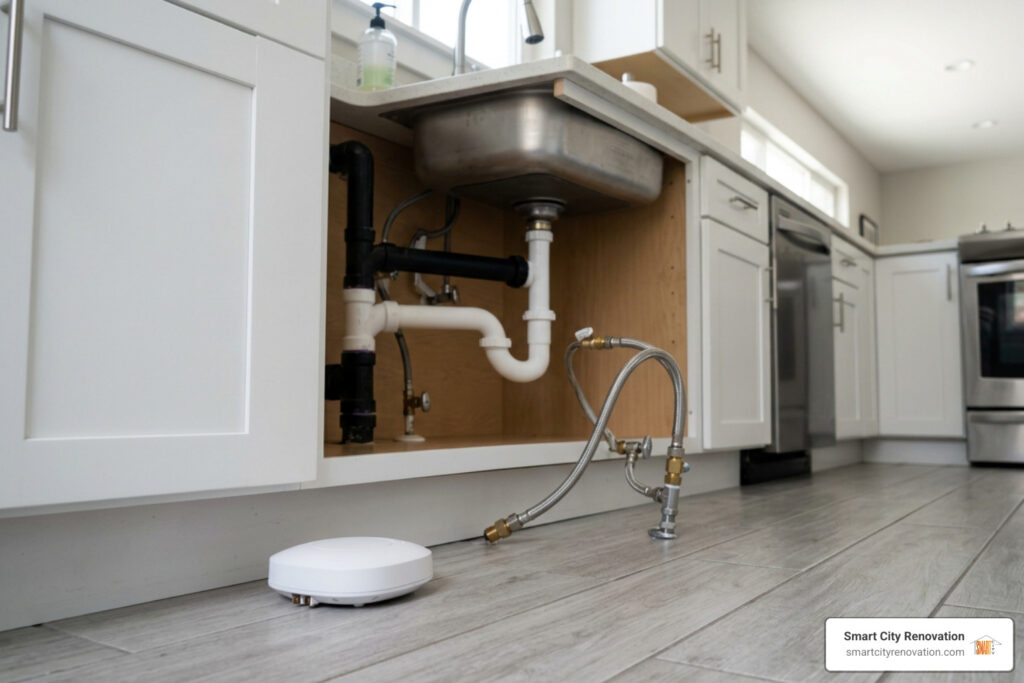
Why Automatic Leak Detection Could Save Your Home — and Your Wallet
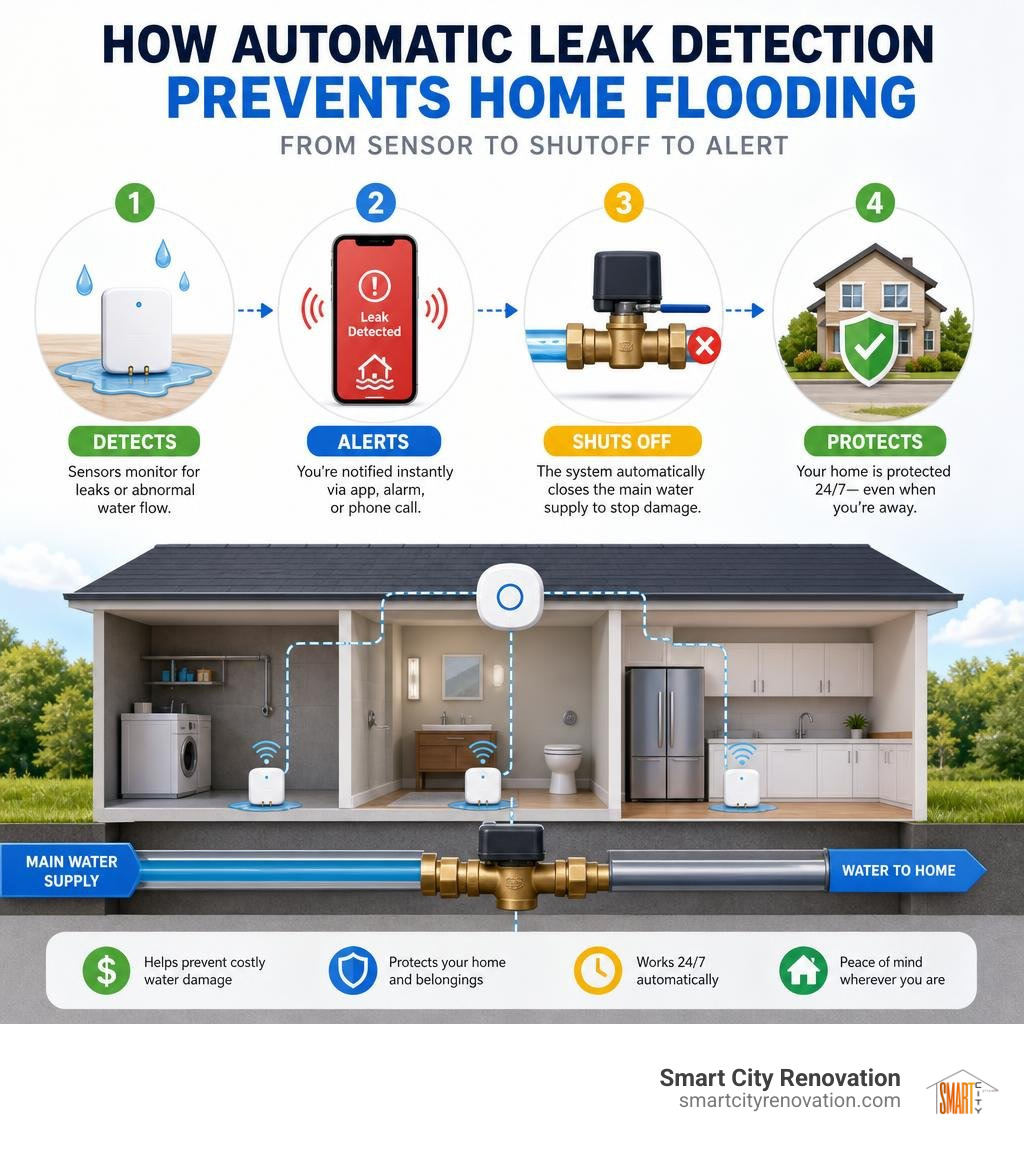
Automatic leak detection is a system that monitors your home’s water supply — either by sensing moisture on the floor or by tracking water flow inside your pipes — and automatically shuts off the water before serious damage occurs.
Here’s a quick breakdown of how it works:
- Detects unusual water flow or moisture using sensors or flow meters
- Alerts you via app notification, alarm, or even a robocall
- Shuts off the main water supply automatically through a motorized valve
- Protects your home 24/7, even when you’re away
This matters more than most homeowners realize. About 1 in 12 homes is affected by a plumbing supply leak every year. Water damage ranks among the most expensive property insurance claims — and most of it is preventable.
The damage isn’t always a dramatic burst pipe. It’s often a slow drip behind a wall, a stuck toilet flapper, or a pinhole leak in aging copper pipe. By the time you notice it, the damage is already done.
I’m Norbert, a licensed contractor with 25 years of construction and renovation experience in the Chicago area, and automatic leak detection is one of the most practical upgrades I recommend to homeowners before a problem forces their hand. Whether you’re managing a single-family home or a commercial property, the right system can stop a costly disaster in its tracks.
How Automatic Leak Detection Works and Core Components

At its core, automatic leak detection works by combining real-time water monitoring hardware with an automated physical shutoff valve installed on your main water service line. Rather than relying on a human being to notice a pool of water in the basement and run down to turn the main shutoff handle manually, the system evaluates plumbing activity around the clock and acts within seconds.

Every high-performance automated water control system relies on three core operational stages:
- Detection Hardware: A pressure sensor, ultrasonic flow meter, mechanical turbine, or floor puck detects an anomaly (such as standing moisture or continuous uninterrupted pipe flow).
- Signal Processing & Decision Engine: The central controller interprets the sensor signal against pre-programmed algorithms or baseline household usage patterns.
- Automated Mechanical Response: A motorized ball valve or magnetic solenoid physically turns off the water line to halt incoming pressure, while sending alert notifications directly to your smartphone or smart home hub.
Flow-Based vs. Moisture-Based Automatic Leak Detection
When selecting an automatic leak detection strategy for your property, understanding the operational mechanics between flow-sensing main line valves and floor-placed moisture sensors is crucial.
Flow-based systems install directly on your primary water supply line where water enters the building. Using ultrasonic flow sensors or micro-turbines, these units measure the velocity, pressure, and volume of water moving through your pipes. High-end ultrasonic systems use sound waves without internal moving parts, making them immune to mechanical wear or mineral clogging from hard Chicagoland water. Flow-based monitors track usage over time to learn your household routine; if water runs continuously for 15 minutes while you are asleep, or if flow rates exceed standard thresholds, the device recognizes a breach (such as a pinhole leak or burst pipe) and closes the main valve.
Moisture-based devices—often called spot sensors or surface pucks—monitor standing water on surrounding floor surfaces. Placed underneath high-risk appliances like washing machines, dishwashers, water heaters, and under-sink reverse osmosis units, these pucks trigger an alarm and send a signal to a central controller when water bridges their metallic contacts. While surface pucks provide point-of-use coverage, they cannot catch hidden pipe leaks inside drywall or ceiling cavities until water physically drips down to the floor.
Main Valve Shutoff Mechanisms
The physical valve responsible for stopping water flow is the most critical mechanical component of the system. Most residential smart shutoff devices use a heavy-duty motorized ball valve made of solid brass or bronze. Unlike traditional gate valves that can stick or corrode over time, motorized ball valves rotate 90 degrees to create a watertight mechanical seal.
These systems connect to standard 110V AC household electrical outlets, but top-tier hardware includes integrated battery backups (such as rechargeable lithium or AA battery packs). Battery backups ensure that if a severe severe winter storm causes a power outage during sub-zero temperatures, your automatic freeze sensor can still trigger a main valve shutdown before frozen pipes burst.
Types of Systems for Automatic Leak Detection
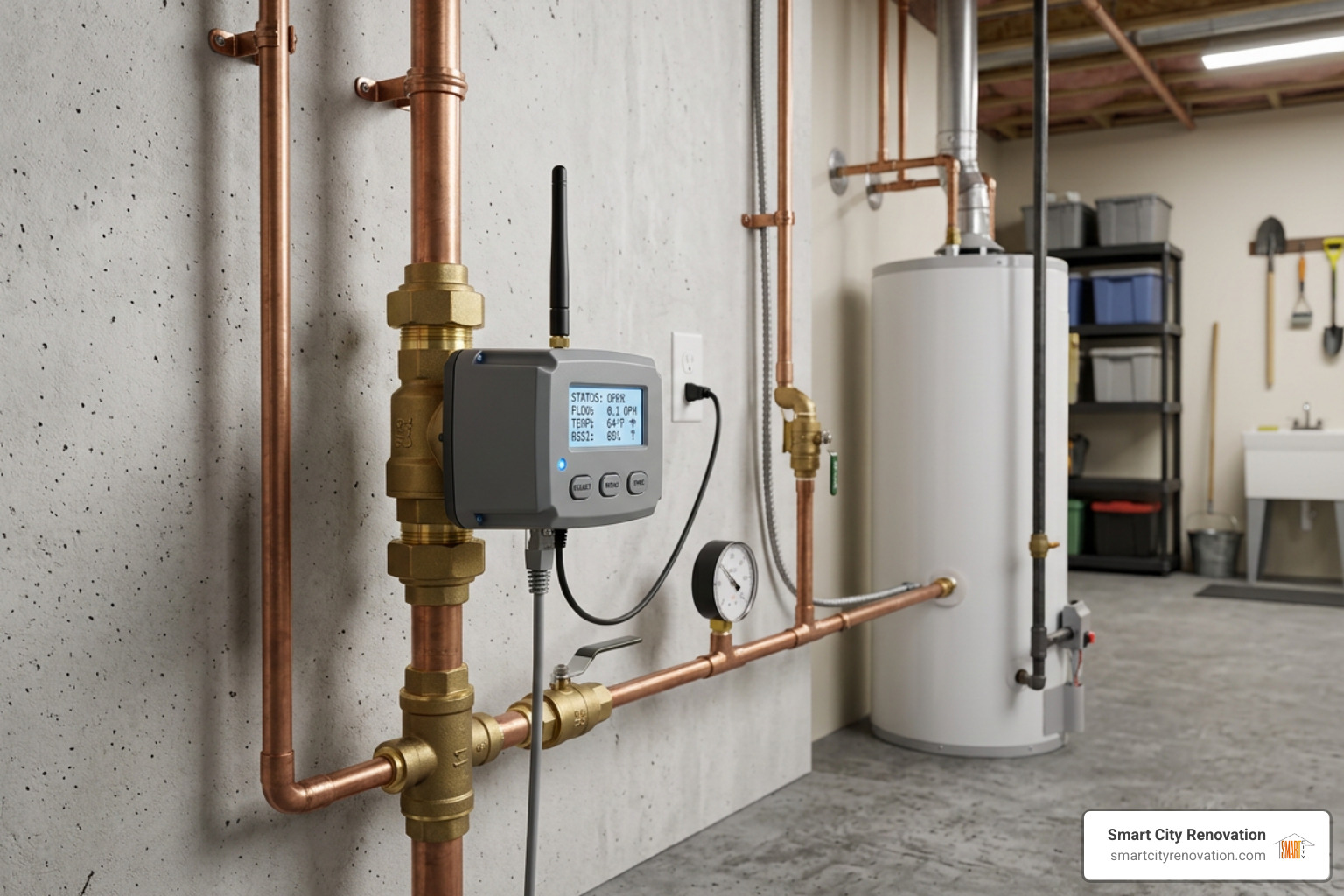
No two properties have identical plumbing structures, which is why automatic leak detection hardware varies widely depending on building size, occupancy, and risk factors.
Spot Moisture Sensors vs. Whole-House Flow Systems
For smaller budgets or localized appliance protection, point-of-use shutoff devices offer targeted defense. For example, standalone systems like the iSpring LS43 pair dedicated ball valves on specific supply lines (such as a washing machine or water heater) with up to 8 spot sensors. When a sensor under the appliance touches water, it closes that specific appliance valve immediately.
Conversely, whole-house flow-based systems monitor every branch of your home’s plumbing footprint simultaneously. From outdoor spigots and fire sprinklers to third-floor master bathroom fixtures, a single whole-house smart valve evaluates overall line pressure and flow, stopping leaks regardless of where they occur.
For multi-family residential structures, commercial properties, or tenant buildings across Glenview, Park Ridge, and Des Plaines, specialized unit-level solutions like apartment water leak detection allow property managers to isolate leaks in individual units without turning off water to the entire building.
Smart Home Integration for Automatic Leak Detection
Modern whole-home shutoff valves seamlessly integrate into broader smart home ecosystems via Wi-Fi, Z-Wave, Zigbee, or cellular gateways. Systems like Phyn Plus and Moen Flo allow homeowners to check real-time water usage, review daily consumption trends, adjust leak sensitivity parameters, and open or close the main water valve remotely from anywhere in the world.
When integrated into Apple HomeKit, Amazon Alexa, Google Assistant, or dedicated security platforms, your leak system can trigger automated smart home actions—such as shutting off HVAC air handlers during a flood alert or flashing smart light bulbs red to warn family members of a water event. To explore how smart plumbing components tie into modern residential mechanical systems, consult our detailed guide to smart plumbing services.
In commercial facilities, industrial plants, or multi-building operations, advanced telemetry protocols like LoRaWAN Leak Detection Sensors and industrial controllers such as the iSN-101/S3 module pass data directly to central Building Management Systems (BMS) via Modbus RTU or BACnet protocols. Similarly, municipal utilities utilize specialized tools like acoustic Leak Detectors and industrial pipeline leak detection to pinpoint service line losses and maintain network integrity.
Key Benefits: Financial Savings and Insurance Incentives
Installing an automatic leak detection shutoff valve provides immediate return on investment by eliminating structural repair costs and securing long-term insurance savings.
Major insurance carriers—including Chubb, State Farm, Farmers, and Nationwide—heavily subsidize smart water valve installations. Because internal plumbing leaks account for a significant portion of costly residential property claims, insurance companies frequently offer premium discounts ranging from 15% to 20% for homes protected by main-line automatic shutoff systems. In fact, systems like Phyn Plus 2nd Gen are recognized by 15 major insurance providers, offering policyholders direct rebates that quickly offset initial hardware purchase costs. To review how insurance providers view smart water protection, read State Farm’s whole house leak detection overview.
Preventing Catastrophic Water Damage
While major line ruptures grab headlines, insidious low-volume leaks often inflict the worst structural damage over time. Consider how different system sensitivity capabilities protect your property:
- Catastrophic Bursts: A ruptured washing machine hose or frozen pipe can discharge over 10 to 12 gallons per minute. Automated valves react within seconds, shutting off supply before water migrates through subfloors and ceilings.
- Micro-Drips and Pinhole Leaks: Precision flow systems like FloLogic can detect continuous leaks as small as 0.5 ounces (1 tablespoon) per minute, while Leak Defense units track flows down to 0.005 GPM. Catching these micro-drips prevents dry rot, structural wood framing decay, and toxic mold growth inside drywall cavities.
- Running Toilets: A stuck toilet flapper can waste up to 200 gallons of water per day, driving up utility bills unexpectedly. Smart flow systems identify continuous flapper movement (typically after 12–15 minutes of uninterrupted flow) and alert you before hundreds of dollars are wasted down the drain.
When undetected water leaks do cause major structural damage to basements or lower levels, securing fast professional remediation is vital; learn how our team tackles urgent water emergencies in our guide to emergency plumbing help for flooded basements.
Costs, Feature Checklist, and Selection Factors
To help you weigh your options when selecting an automatic leak detection solution, the comparison table below outlines key structural, operational, and financial differences between primary technology types:
| Feature / Metric | Flow-Based Whole-House System | Moisture-Based Spot Sensor System |
|---|---|---|
| Primary Detection Method | Ultrasonic or turbine flow measurement | Surface contact conductivity pucks |
| Coverage Area | Entire home plumbing network | Specific local appliance footprint |
| Detection Scope | Hidden wall leaks, running toilets, bursts | Surface puddles under target fixtures |
| Hardware Cost Range | $500 – $2,500+ | $150 – $400 |
| Professional Plumber Required? | Yes (Main water line cutting required) | Optional / DIY friendly |
| Typical Insurance Discount | Premium discounts up to 15% – 20% | Minor discount or none |
| Battery Backup Availability | Standard on top-tier units | Battery powered pucks standard |
Critical Features to Look For
When comparing top-rated smart shutoff hardware—such as Phyn Plus 2nd Gen, Moen Flo, FloLogic, or Leak Defense—ensure your chosen model includes these essential features:
- Granular Flow Sensitivity: Look for devices capable of detecting slow drips down to fractions of an ounce per minute.
- Multi-Channel Alerting: Ensure the app offers push notifications, SMS alerts, and robocalls (like Moen Flo’s automated phone call alert) so critical warning messages aren’t missed in silent mode.
- Automatic Learning Phase Calibration: High-end systems take 7 to 21 days to map your household water usage habits, reducing annoying false alarms while maintaining tight leak tolerances.
- Integrated Freeze Alerts: Temperature sensors inside the valve housing detect ambient room temperature drops, closing the main line before water freezes inside the pipe.
- Manual Override Capability: Verify that the physical valve includes a manual mechanical handle or key so you can open or close the valve manually during extended power loss.
Professional Plumbing Installation vs. DIY Setup
While battery-powered spot pucks can be placed on the floor by any homeowner, installing a main-line flow sensor requires professional pipe modification.
Installing a whole-home valve involves cutting into your main copper, PEX, or brass service line where it enters the property, soldering or threading new transit fittings, ensuring proper electrical grounding, and mounting an outdoor-rated GFCI power supply within 10 to 12 feet of the valve. Furthermore, in Chicagoland municipalities such as Des Plaines, Schaumburg, Arlington Heights, and Skokie, plumbing modifications must comply with local building codes to ensure water pressure remains balanced across the home.
Improper installation can create restrictive flow bottlenecks or cause premature valve failure. For seamless installation and peace of mind, trust our licensed plumbing specialists; learn more about our 24/7 service response through our emergency plumbing services.
Frequently Asked Questions About Water Leak Protection
Do automatic leak detectors work during power outages?
Yes, top-rated automatic leak detection shutoff systems include integrated battery backup modules (using rechargeable lithium-ion cells or heavy-duty AA/D-cell battery packs). When main grid power drops during severe weather, the system continues monitoring flow rates and retains sufficient emergency electrical power to physically drive the motorized ball valve shut if a leak occurs.
How much can I save on home insurance with an automatic shutoff valve?
Most major property insurance carriers offer policy premium discounts between 15% and 20% for installing an approved whole-house automatic water shutoff system. Additionally, many insurance companies provide direct purchase rebates or subsidize the hardware cost entirely because preventing a single severe water claim saves thousands of dollars in restoration expenses.
Will an automatic shutoff valve prevent freeze damage?
While an automatic shutoff valve cannot keep ambient air warm, systems equipped with built-in ambient temperature sensors monitor local pipe temperatures. When surrounding air approaches freezing (typically around 38°F–40°F), the smart valve automatically shuts off the main water line and sends an urgent freeze alert to your phone. By cutting off main water pressure, the system drastically reduces the volume of water available to explode out of a cracked pipe if freezing occurs.
Conclusion
Plumbing supply leaks affect 1 in 12 homes every year, but catastrophic water damage is almost completely preventable. By investing in modern automatic leak detection, you protect your property against silent pinhole leaks, burst supply hoses, running toilets, and sub-zero freeze events around the clock.
At Smart City Renovation, we bring over 25 years of local construction, remodeling, and mechanical expertise to homeowners and commercial property managers across Des Plaines, Mount Prospect, Park Ridge, Niles, Glenview, Arlington Heights, Rosemont, Morton Grove, Skokie, Elk Grove Village, Schaumburg, Palatine, Buffalo Grove, Prospect Heights, Wheeling, Rolling Meadows, Hoffman Estates, Northbrook, Lincolnwood, Harwood Heights, and Norridge. Whether you need an automatic shutoff valve installed on your main water line or complete structural restoration after a plumbing breach, our team delivers expert solutions built to last.
Don’t wait for a burst pipe to ruin your home. Protect your property today by reaching out to our team, and explore our expert guide to leak repair and renovation to learn how we keep Chicagoland structures safe, dry, and resilient.