

When Your Heat Goes Out: What Chicago Homeowners Need to Know
Heating repair is one of the most urgent home service needs you’ll ever face — especially during a Chicago winter. When your system fails, you need fast answers.
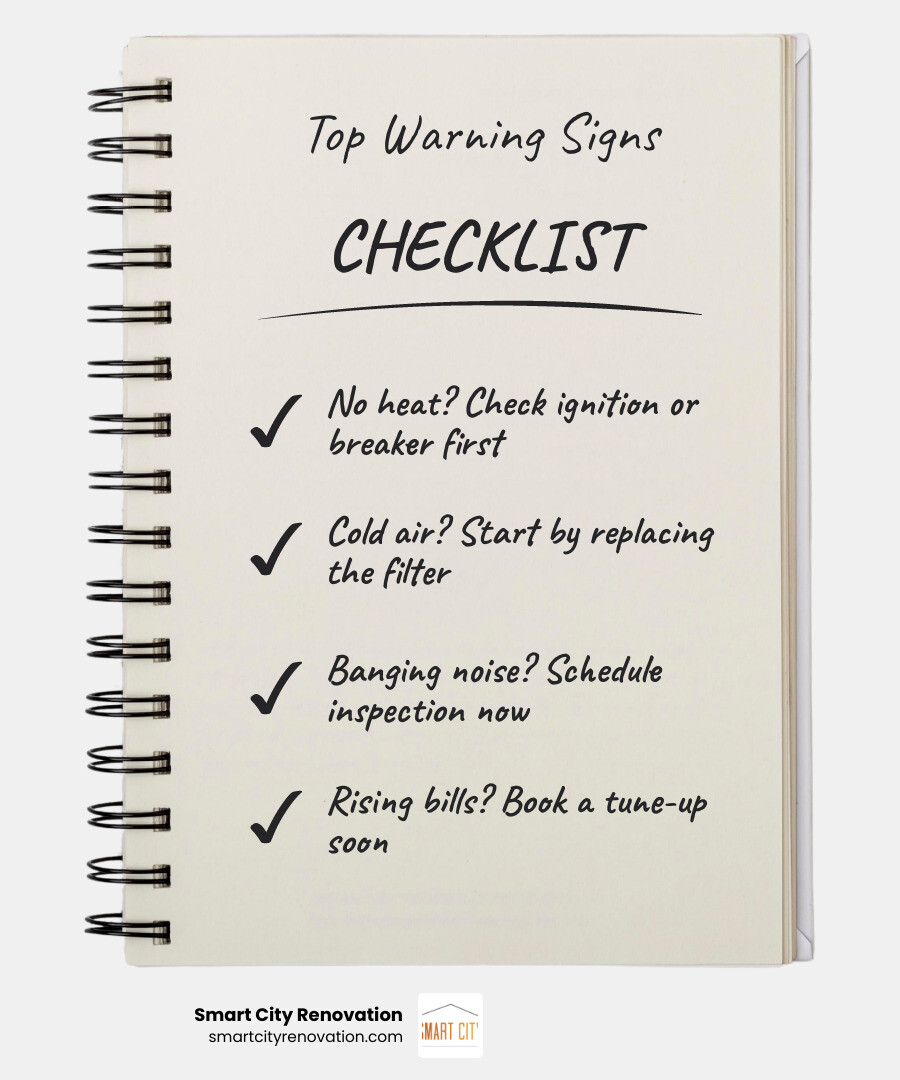
Quick answer: The most common heating repair situations and what to do
| Symptom | Likely Cause | Action |
|---|---|---|
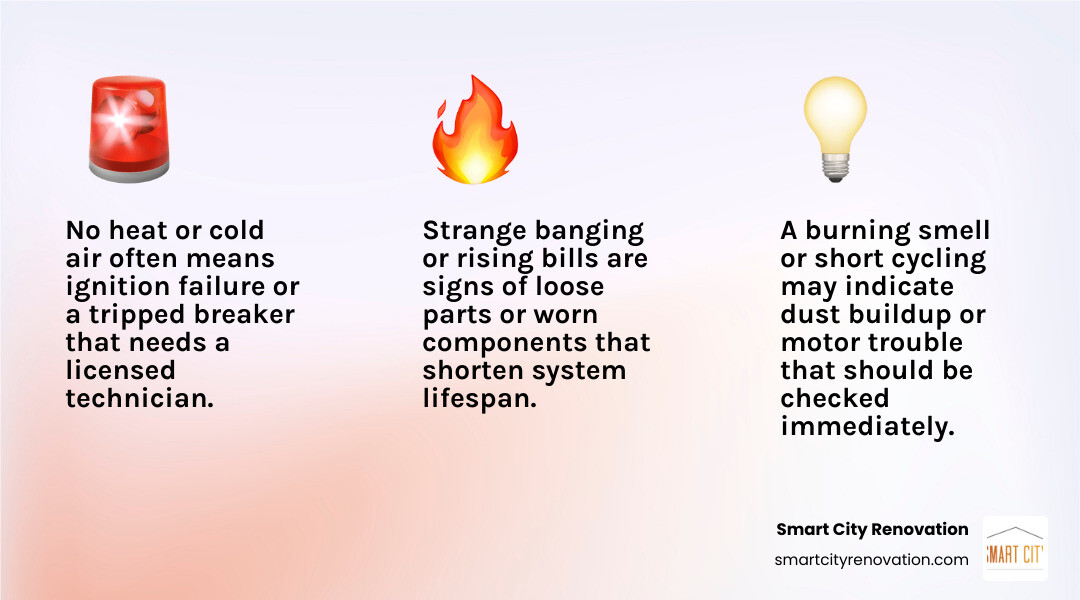
| No heat at all | Ignition failure, tripped breaker | Call a licensed technician |
| Blowing cold air | Clogged filter, thermostat issue | Check filter first, then call |
| Strange banging or rattling | Loose parts, failing motor | Schedule inspection promptly |
| Short cycling (on/off rapidly) | Airflow problem, overheating | Replace filter, call if it continues |
| Burning smell | Dust burn-off or motor issue | Ventilate; call if smell persists |
| Rising energy bills | Dirty system, worn components | Schedule a tune-up |
Most heating repairs can be completed in a single visit once a technician diagnoses the problem. The sooner you act on warning signs, the lower your repair bill tends to be.
Chicago winters don’t forgive a broken furnace. Temperatures regularly drop well below freezing, and a heating system that fails at midnight on a January Tuesday isn’t just uncomfortable — it can be dangerous. Yet many homeowners wait until there’s a full breakdown before calling for help, often turning a minor fix into a costly repair or even a full replacement.
The good news? Most heating problems give you warning signs before they become emergencies. Knowing what to look for — and who to call — can save you significant time, money, and stress.
I’m Norbert from Smart City Renovation, a licensed HVAC contractor serving the Chicago area for over 25 years, with hands-on heating repair experience across hundreds of residential and commercial properties throughout Chicagoland. In this guide, I’ll walk you through everything you need to know to handle heating problems confidently.
Introduction
If your heater is acting strange, this guide is here to help you separate “probably fine” from “please call someone before your living room turns into a walk-in freezer.”
At Smart City Renovation, we handle heating issues across Chicagoland communities including Des Plaines, Mount Prospect, Park Ridge, Niles, Glenview, Arlington Heights, Rosemont, Morton Grove, Skokie, Elk Grove Village, Schaumburg, Palatine, Buffalo Grove, Prospect Heights, Wheeling, Rolling Meadows, Hoffman Estates, Northbrook, Lincolnwood, Harwood Heights, and Norridge. Whether you need a repair in a single-family home, condo, rental property, or light commercial building, the basics are the same: diagnose the problem correctly, fix it safely, and help prevent the next breakdown.
A lot of homeowners search for heating repair when the system has already stopped working. But the smarter move is to act when symptoms first appear. That is where knowledge pays off.
Common Signs You Need Professional Heating Repair
Some heating problems are obvious. Others are sneaky. Here are the most common signs your system needs professional attention.
No heat or not enough heat
If the system runs but your home still feels cold, the issue could be:
- A faulty thermostat
- Ignition or pilot problems
- A clogged filter restricting airflow
- A failing blower motor
- Duct leakage
- A boiler circulation issue
- A heat pump defrost or refrigerant problem
Before calling, check the thermostat setting, replace a dirty filter if you have one on hand, and make sure the breaker has not tripped. If that does not solve it, it is time for professional diagnosis.
Short cycling
Short cycling means the system turns on and off too often. This can be caused by:
- Restricted airflow from a dirty filter
- Overheating
- Thermostat misplacement or malfunction
- Flame sensor issues
- Improper system sizing
Short cycling increases wear and can drive up utility bills fast. It is one of those “small symptom, bigger problem” issues.
Strange noises
A healthy heating system is not silent, but it should not sound like it is building a drum set in your basement.
Common noise clues include:
- Banging: delayed ignition, expanding ductwork, or loose components
- Rattling: loose panels or parts
- Squealing: blower motor or belt issues
- Humming: electrical or motor problems
- Whistling: airflow restriction or duct leaks
Unexpected sounds usually mean wear, looseness, or airflow trouble. Ignoring them can turn a modest repair into a much bigger one.
Uneven temperatures from room to room
If one room feels tropical and another feels like a garage in January, possible causes include:
- Dirty filters
- Duct imbalance or leakage
- Failing blower components
- Thermostat calibration issues
- Boiler zoning or circulation problems
- Heat pump airflow restrictions
Uneven heating is not just annoying. It often signals efficiency loss and developing mechanical problems.
Yellow pilot light or ignition problems
On older gas systems, a pilot light should generally burn blue. A yellow or flickering flame can indicate combustion issues or contamination. Modern furnaces may show ignition failure through repeated attempts to start, then shut down.
Any suspected combustion problem deserves prompt service. Safety comes first.
Rising energy bills
A sudden increase in heating costs without a major weather change usually means your system is working harder than it should. Common reasons include:
- Dirty burners or coils
- Restricted airflow
- Worn motors or capacitors
- Failing sensors
- Leaky ductwork
- Aging equipment losing efficiency
Higher bills are often one of the earliest signs that heating repair is needed.
Strange odors
Not every smell is an emergency, but some are.
- Dusty smell at first startup: often harmless dust burn-off
- Musty smell: possible moisture or microbial growth
- Electrical smell: wiring, motor, or capacitor issue
- Persistent burning smell: overheating components
- Gas smell: leave the area and follow gas safety procedures immediately
If an odor lasts more than a short startup period, have it checked.
Weak airflow
If warm air is coming out, but barely, look at:
- Dirty filter
- Blower motor trouble
- Blocked vents
- Duct leakage or damage
- Dirty blower wheel
- Control board or capacitor issues
Weak airflow stresses the system and reduces comfort.
For help from a licensed local team, visit our HVAC Contractor page or learn more about Smart City Renovation | Heating & Cooling Services.

Comparing Systems: Furnaces, Boilers, and Heat Pumps
Different heating systems fail in different ways. Knowing what you own helps you understand likely repair needs.
Furnaces
Furnaces are common throughout our service area and usually heat air that moves through ductwork.
Typical repair issues:
- Ignition failure
- Flame sensor problems
- Dirty burners
- Blower motor wear
- Limit switch issues
- Clogged filters
- Thermostat malfunctions
Gas furnaces have more combustion-related components, while electric furnaces avoid combustion but still have sequencers, heating elements, and blower parts that can fail.
Boilers
Boilers heat water and distribute warmth through radiators, baseboards, or in-floor systems.
Typical repair issues:
- Circulator pump failure
- Pressure problems
- Air in the system
- Zone valve issues
- Leaks
- Ignition or burner problems
- Expansion tank trouble
Boilers often have fewer moving parts than forced-air systems, but when repairs are needed, diagnosis can be more specialized.
Heat pumps
Heat pumps move heat rather than create it through combustion. They are efficient and increasingly popular, but they come with their own repair profile.
Typical repair issues:
- Refrigerant leaks
- Defrost board malfunctions
- Reversing valve failure
- Outdoor fan or compressor issues
- Sensor problems
- Airflow restrictions
Heat pumps can both heat and cool, which means they work year-round and may see different wear patterns than a heating-only system.
Lifespan and repair comparison
Research across the HVAC industry commonly places most heating system lifespans in the 10-25 year range depending on equipment type, maintenance, and usage. A practical rule of thumb is that many furnaces and boilers can last around 15-20 years or more with good care, while heat pumps often have somewhat shorter service lives because they operate in both summer and winter.
| System Type | Common Lifespan | Common Repair Needs | Relative Repair Cost |
|---|---|---|---|
| Gas furnace | 15-20 years | Ignition, blower, sensors, airflow | Moderate |
| Electric boiler | 15-25 years | pumps, valves, controls, leaks | Moderate to high |
| Air-source heat pump | 10-15 years | Refrigerant, defrost, compressor, sensors | Moderate to high |
Repair cost depends less on the equipment label and more on the failed part, system age, access, and whether specialty parts are needed.
If you need system-specific help, see our Heating Repair Services page or visit Smart City Renovation: Home Comfort Solutions.
The Repair vs. Replace Decision Framework
This is one of the biggest questions homeowners ask us: should we repair the current system or replace it?
There is no single answer, but there is a reliable framework.
1. Consider system age
If your heating system is under 10 years old and the repair is straightforward, repair is often the sensible choice.
If it is in the 15-20 year range, the decision gets more complicated. Research from HVAC service providers consistently points to that age band as the point where breakdown frequency and efficiency concerns become much more important.
2. Apply the 50% rule carefully
A common rule of thumb: if a repair approaches 50% of the value of a comparable new system, replacement deserves serious consideration.
This is not a law of physics. It is just a decision tool. For example, a costly motor or heat exchanger repair on a near-end-of-life furnace may not make financial sense.
3. Look at repair frequency
One repair in several years is normal. Two or three major repairs in a short period is a pattern.
Ask yourself:
- Has the system become unreliable?
- Are parts getting harder to source?
- Are winter breakdowns becoming a recurring event?
If yes, replacement may save money and stress over the next few seasons.
4. Prioritize safety
Replace rather than repair if there are serious safety concerns, such as:
- Cracked heat exchanger concerns
- Carbon monoxide risk
- Repeated combustion problems
- Electrical hazards
- Major corrosion or structural damage
- Red-tag or code-related safety findings
Safety issues move the conversation out of the “what is cheapest” category and into the “what is responsible” category.
5. Factor in efficiency and technology
Newer systems often offer:
- Better AFUE or HSPF performance, depending on system type
- Quieter operation
- Variable-speed components
- Better thermostat compatibility
- Improved comfort control
- Lower utility use
If your current system is old and inefficient, replacement may lower monthly operating costs enough to justify the upfront investment.
6. Think about your long-term plans
If you plan to stay in your home for years, efficiency and reliability matter more. If you are preparing to sell, a dependable, code-compliant heating system can also help the property present better.
For expert guidance, visit Smart City Renovation | Expert Heating Repair.
Professional Standards and Maintenance Benefits
A professional repair visit should be systematic, safe, and clearly explained.
What to expect during a professional heating repair service call
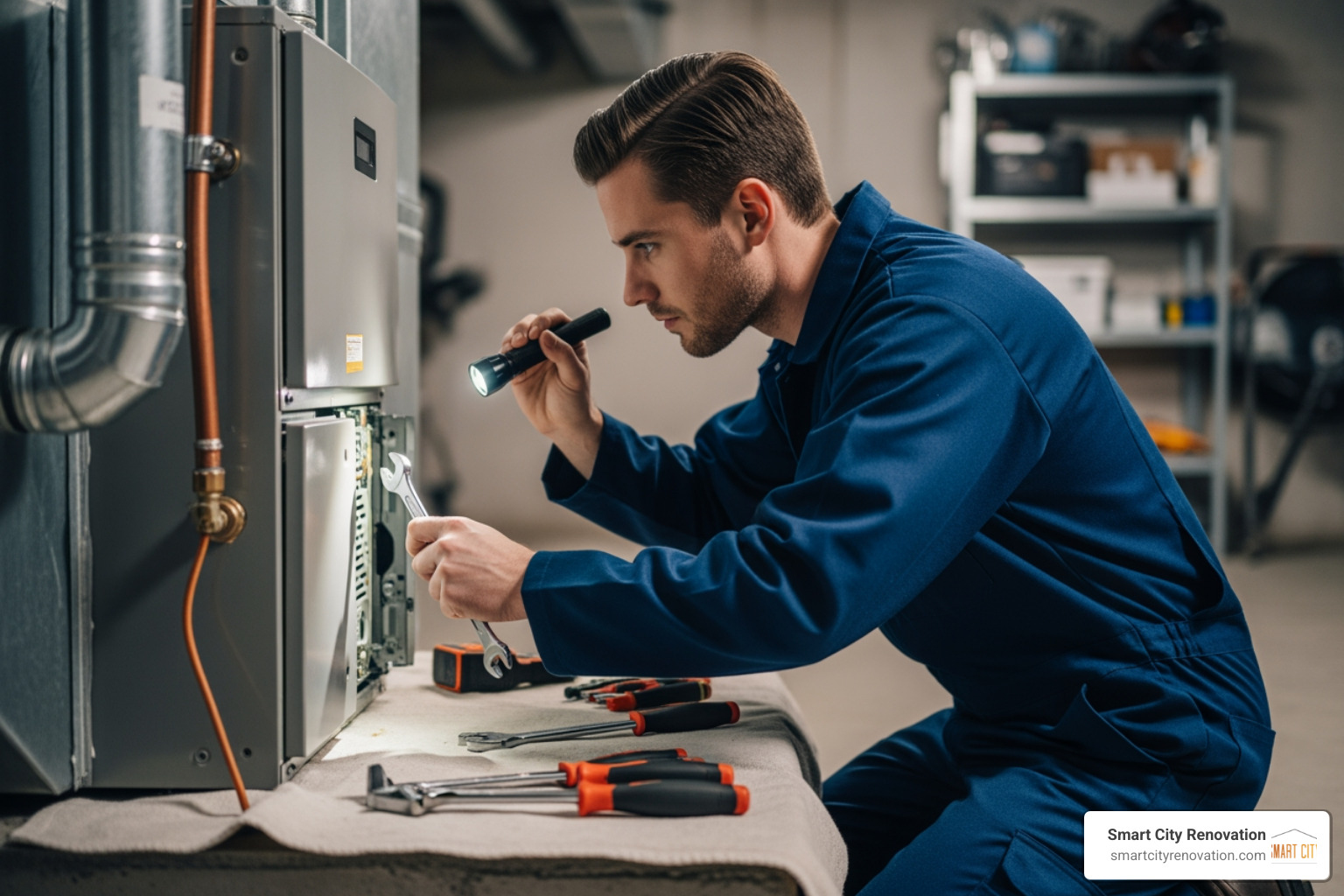
A well-run service call usually includes:
- Symptom review
- Thermostat and control check
- Filter and airflow inspection
- Electrical testing
- Mechanical inspection
- Safety checks
- Diagnosis and repair options
- Upfront explanation of recommended work
- Testing after repair
Many repairs can be completed in one visit once the issue is diagnosed. In cases involving uncommon parts, a follow-up may be needed.
Why maintenance matters
Regular furnace maintenance and tune-ups are not sales fluff. They genuinely help.
Key benefits include:
- Catching worn parts before full failure
- Improving efficiency
- Extending equipment life
- Reducing emergency breakdown risk
- Improving airflow and comfort
- Supporting warranty requirements
- Helping identify safety concerns early
Industry guidance also consistently points to filter care as one of the simplest ways to reduce strain on a system. Homeowners can also review general cold-weather home heating guidance from the U.S. Department of Energy for broader efficiency and safety best practices.
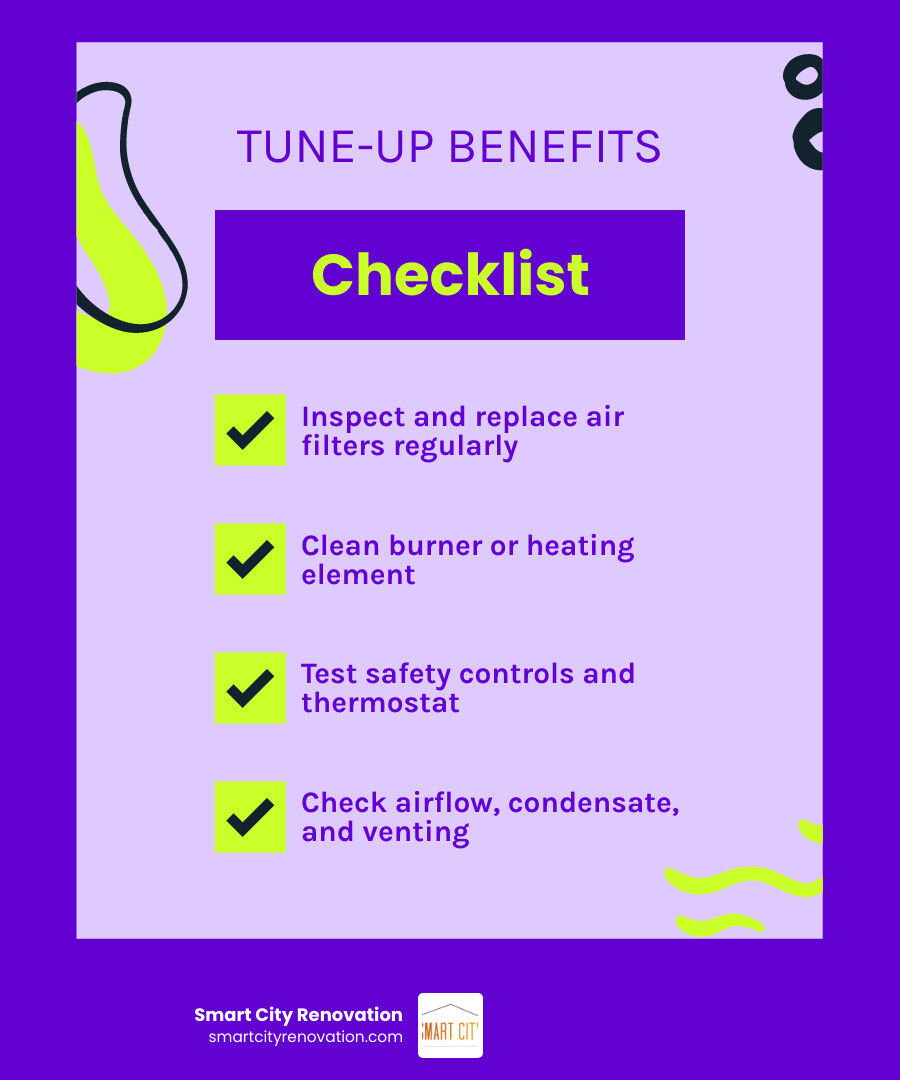
What good maintenance usually includes
- Filter inspection or replacement
- Burner or heating element inspection
- Flame sensor cleaning where applicable
- Blower inspection and cleaning
- Electrical connection checks
- Safety control testing
- Thermostat verification
- Airflow assessment
- Condensate and venting checks where applicable
Warranties and guarantees to look for
When hiring a heating repair company, customers should look for:
- Clear parts warranty terms
- Clear labor warranty terms
- Written scope of work
- Upfront pricing
- Licensed, trained technicians
- Proof of insurance
- Clean explanation of exclusions or limitations
A written guarantee is always better than a handshake and a hopeful smile.
For professional service standards, learn more at HVAC Contractor.
Preparing for Emergency Heating Repair
Heating emergencies never happen at a convenient time. It is almost impressive.
Here is how to prepare before you need 24/7 help:
- Know your system type and approximate age
- Keep model and serial numbers accessible
- Replace filters on schedule
- Test your thermostat before peak winter
- Keep intake and exhaust areas clear
- Have carbon monoxide detectors installed and tested
- Know where your electrical panel and gas shutoff are
- Save the contact information for a trusted service provider
Same-day response matters in winter. One service provider in the research notes that non-operational calls are handled the same day about 80% of the time on average, which shows how important quick dispatch is in this industry.
A simple emergency kit can also help:
- Extra filters
- Flashlights
- Batteries
- Warm blankets
- Portable phone charger
If your system fails completely, call for service right away rather than waiting to see if it “feels better tomorrow.” Furnaces rarely heal through positive thinking.
For local support, visit Smart City Renovation | Heating & Air Conditioning Repair & Installation.
Factors Influencing the Cost of Heating Repair
Heating repair costs vary because no two breakdowns are exactly alike. The main cost drivers are:
- Diagnostic time
- Labor rates
- Type of system
- Cost and availability of replacement parts
- Age of equipment
- Emergency or after-hours timing
- Seasonal demand during extreme cold
- Accessibility of the unit
- Whether temporary or permanent repairs are appropriate
A clogged filter fix is obviously different from a blower motor replacement, control board failure, refrigerant leak, or boiler pump repair.
The best way to control cost is not usually to delay service. It is to catch issues early, keep the system maintained, and get a proper diagnosis before a small problem causes secondary damage.
See Smart City Renovation – Professional HVAC Services for more information.
Frequently Asked Questions about Heating Systems
How long do most heating systems last?
A useful general range is 10-25 years depending on the system type, maintenance quality, and usage pattern. Many furnaces and boilers can last 15-20 years or more when maintained well. Heat pumps often average closer to 15 years because they run in both heating and cooling modes.
Heavy winter use, poor airflow, skipped maintenance, and dirty filters all shorten lifespan.
Why does my heater smell like it is burning?
At first seasonal startup, a brief burning smell is often just dust burning off. That is common. If the smell continues, becomes sharp or electrical, or is accompanied by poor performance, shut the system off and call for service.
Persistent burning odors can be linked to:
- Overheating from airflow restriction
- Motor problems
- Wiring issues
- Failing electrical components
If you smell gas, do not treat that as a normal heating smell.
How often should I change my furnace filter?
A practical guideline is every 1-6 months depending on:
- Filter thickness
- Pets in the home
- Indoor air quality concerns
- Renovation dust
- Allergy sensitivity
- How often the system runs
The more your system runs, the more often the filter should be checked. During heavy winter use in Chicagoland, monthly inspection is smart even if replacement is not needed every month.
Conclusion
Heating repair is really about three things: safety, comfort, and timing. If you respond early to warning signs like short cycling, weak airflow, uneven temperatures, strange smells, or rising utility bills, you give yourself more options and usually lower costs.
At Smart City Renovation, we bring 25 years of experience serving Chicagoland homeowners and property managers with practical, honest HVAC support. We also understand how heating work connects to the bigger picture, from residential remodeling to commercial HVAC coordination and whole-property upgrades.
If your system is acting up and you want a trusted local team to assess it, start here: HVAC Contractor.