

Why Roof Repair Is One of the Most Important Home Investments You Can Make
Roof repair is something most Chicago-area homeowners will face at some point — and acting fast can mean the difference between a $500 fix and a $10,000+ replacement.
Here’s a quick overview of what you need to know:
| Topic | Key Facts |
|---|---|
| Average repair cost | $300 – $1,000 (minor to moderate) |
| Major repairs | Up to $3,000+ |
| Full replacement | $5,000 – $16,000+ |
| Repair vs. replace | Repair if under 15 years old with isolated damage |
| Common causes | Storm damage, cracked flashing, clogged gutters, ice dams, aging shingles |
| First steps | Inspect attic for wet spots, check gutters for granules, look for water stains on ceilings |
Your roof is the first line of defense between your home and the elements. It handles rain, snow, heat, and wind — every single day. When something goes wrong, even a small breach can lead to mold, wood rot, and serious structural damage if left unaddressed.
One useful way to think about it: a small hole in your roof is like a small hole in a boat. It doesn’t stay small for long.
The good news? Most common roof problems are caught early with regular inspections — and many repairs are straightforward when handled by an experienced contractor.
I’m Norbert, and at Smart City Renovation we’ve been handling roof repair and full replacements across the Chicagoland area for over 25 years. In this guide, I’ll walk you through everything you need to know — from spotting early damage to understanding costs, insurance claims, and how to choose the right contractor.
Identifying Damage and Deciding Between Repair or Replacement
A lot of homeowners first notice a roofing problem from inside the house, not outside. Maybe it starts as a ceiling stain, a musty attic smell, or a mystery drip during a storm. By then, water may have already traveled along decking or rafters before showing itself.
In our Chicagoland service area, the most common causes of roof leaks and damage include:
- Wind-lifted or missing shingles after storms
- Cracked, loose, or corroded flashing around chimneys, vents, and skylights
- Clogged gutters that force water back under shingles
- Ice dams during freeze-thaw cycles
- Aging shingles that curl, crack, or lose granules
- Failed pipe boot seals, which often wear out after 10 to 15 years
- Moisture buildup from attic humidity and poor ventilation
- Falling branches or debris impact
If you want a deeper leak-specific walkthrough, see The Homeowner’s Guide to Fixing That Pesky Roof Leak and How to Repair a Roof Leak – This Old House.

Early Warning Signs for Roof Repair
Catching roof damage early is the cheapest superpower a homeowner can have.
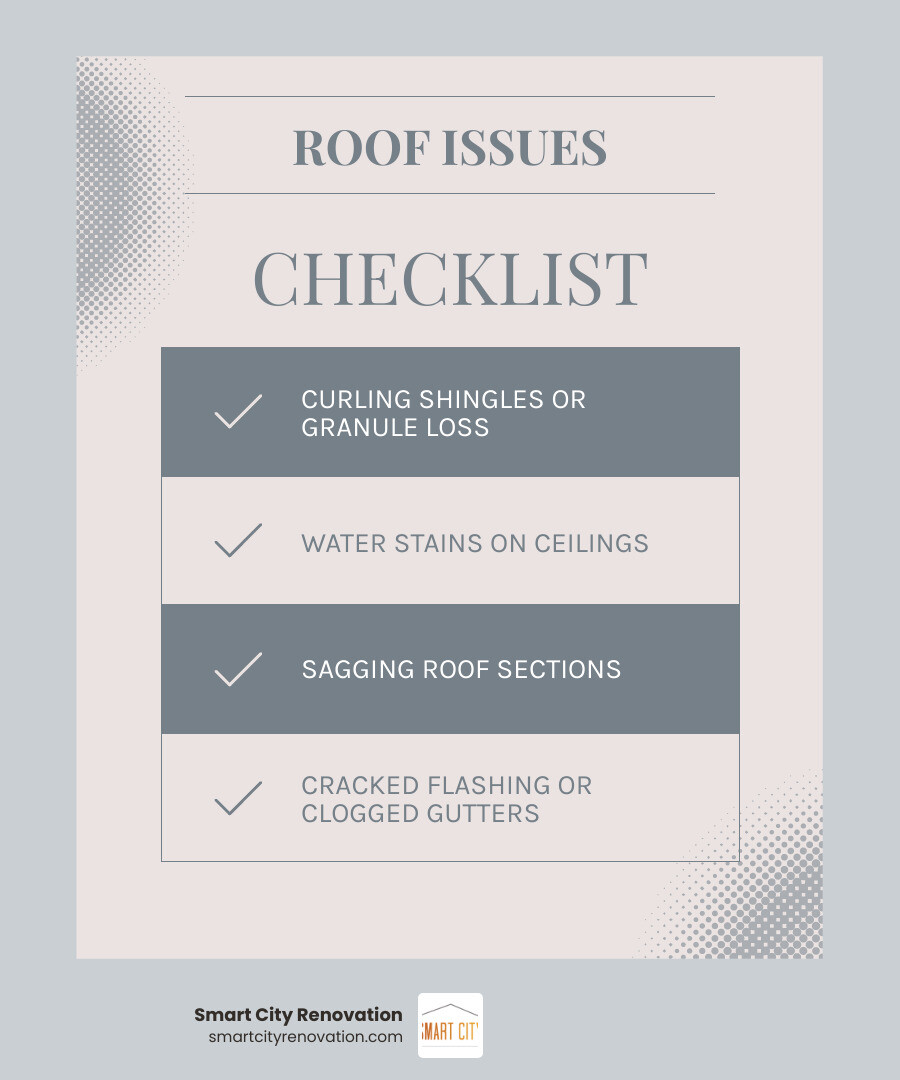
Watch for these signs:
- Curling, blistering, or cracked shingles
- Bald spots where granules have worn away
- Granules collecting in gutters or downspouts
- Water stains on ceilings or upper walls
- Damp attic insulation or dark spots on roof decking
- Sagging roof sections
- Rusted or separated flashing
- Moss or debris buildup in valleys
- Gutters pulling away from the roofline
- Daylight visible in the attic near vents or penetrations
Some of these issues look minor but point to bigger problems. For example, one missing shingle may be a quick repair. A pattern of curling shingles across multiple slopes usually signals age-related failure.
Also remember: the visible leak is not always directly below the entry point. Water likes to travel. Very rude of it, honestly.
The 15-Year Rule for Replacement
A practical rule of thumb is this: if a roof is under about 15 years old and the damage is isolated, repair is often the better choice. If it is older and showing widespread wear, replacement may make more financial sense.
That does not mean every 16-year-old roof needs to go. It means age should be weighed together with condition.
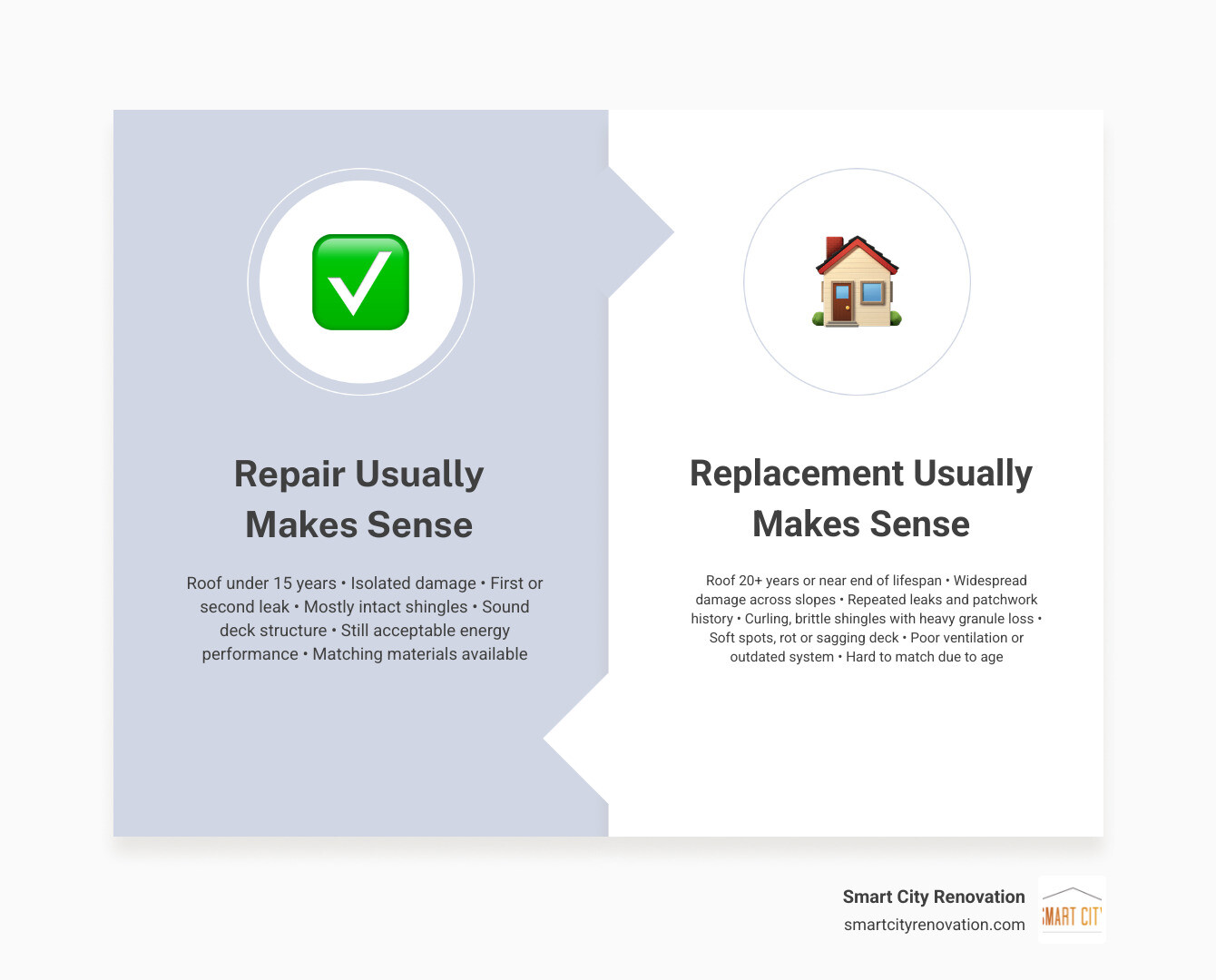
Here is a simple comparison:
| Factor | Repair Usually Makes Sense | Replacement Usually Makes Sense |
|---|---|---|
| Roof age | Under 15 years | 20+ years or near end of lifespan |
| Damage area | Isolated section | Widespread across multiple areas |
| Leak history | First or second issue | Repeated leaks and patchwork history |
| Shingle condition | Mostly intact | Curling, brittle, heavy granule loss |
| Deck structure | Sound | Soft spots, rot, or sagging |
| Energy performance | Still acceptable | Poor ventilation or outdated system |
| Matching materials | Available | Hard to match due to age/discontinued product |
Systemic failure matters more than a single symptom. If the roof has multiple leaks, widespread shingle deterioration, failing flashing in several areas, and soft decking, replacement is often the smarter long-term move.
For homeowners in Des Plaines, Park Ridge, Glenview, Arlington Heights, Schaumburg, and nearby suburbs, winter weather is another deciding factor. Ice dams and repeated freeze-thaw cycles can turn a marginal roof into a recurring repair project. At some point, patching stops being thrifty and starts being expensive procrastination.
Understanding the Costs of Professional Roof Repair
Let us talk numbers, because vague pricing is nobody’s favorite part of home improvement.
Nationally, average roof repair costs often fall between $300 and $1,000 for minor to moderate work, with more extensive repairs reaching $3,000 or more. Full roof replacement commonly starts around $5,000 and can range to $10,000 or well beyond, with larger or specialty roofs hitting $16,000+.
Those ranges line up with what homeowners generally see in real life:
- Small asphalt shingle repair: sometimes under a few hundred dollars
- Typical leak repair or flashing repair: often a few hundred to around $1,000
- Larger repairs involving decking, valleys, or multiple sections: $1,500 to $3,000+
- Full replacement: usually far more cost-effective than endless repairs on a failing roof
For more on why professional work matters, see Why Professional Roofers Near Me Are Worth the Investment and Guide to roof repairs | GAF.
Cost Factors in Modern Roof Repair
Two homes can have “the same leak” and receive very different estimates. Here is why.
1. Extent of the damage
A single damaged shingle is one thing. Wet insulation, rotted decking, and compromised flashing are another. Hidden damage is often what changes the final price.
2. Roof pitch and accessibility
Steeper roofs take more time, more safety setup, and more labor. A simple ranch home is generally easier to service than a tall, complex roofline with dormers and multiple valleys.
3. Roofing material
Asphalt is usually the least expensive to repair. Metal, slate, clay tile, and specialty systems cost more because materials and labor are more specialized.
4. Flashing, penetrations, and details
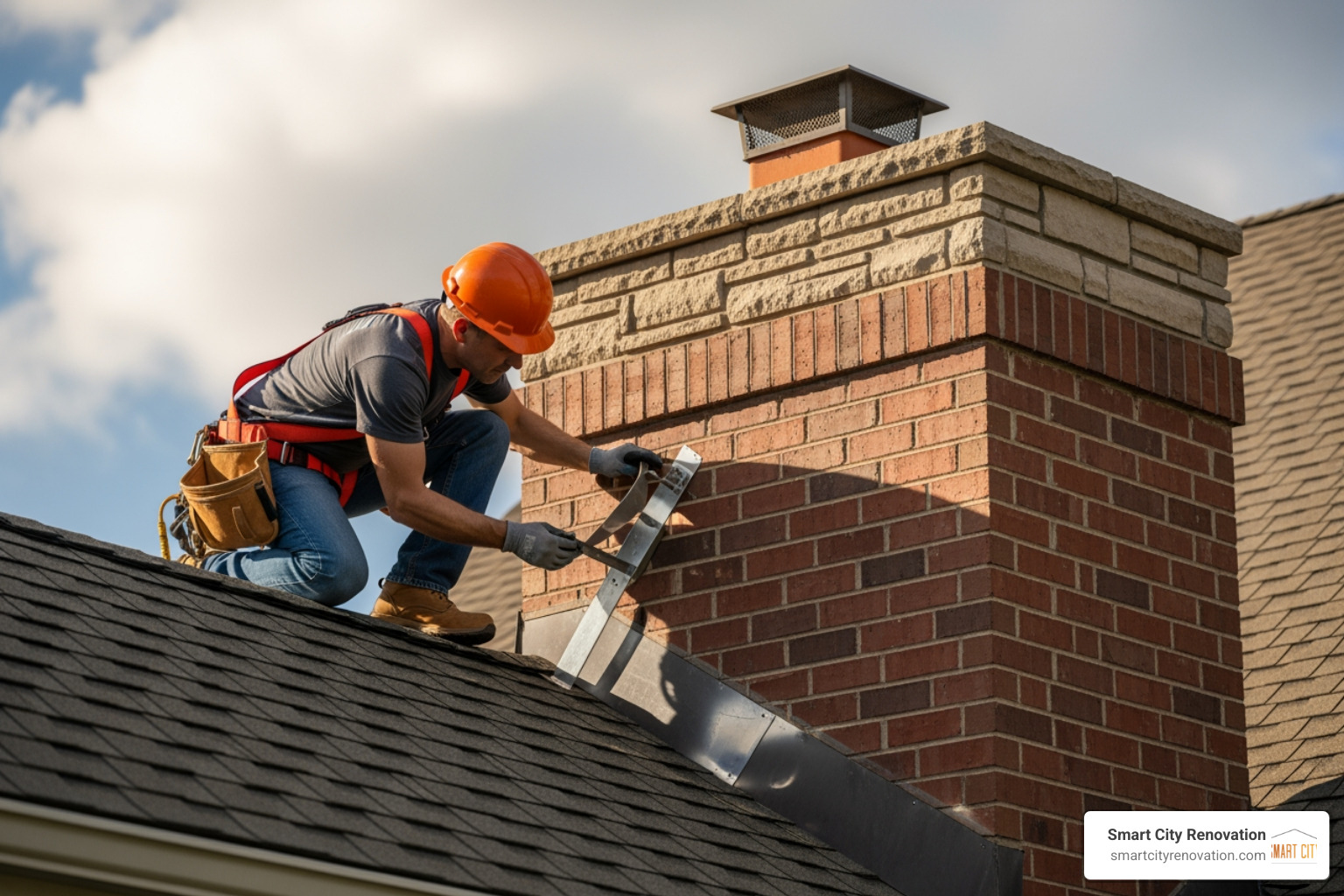
Repairs around chimneys, skylights, vent pipes, and valleys are more labor-intensive than open-field shingle repairs. These are also the places where leaks commonly begin.
5. Structural repairs
If the deck under the shingles is soft or rotten, it needs to be repaired before the exterior roofing can be restored properly.
6. Permit fees and local requirements
Some repair work may not require permits, while larger jobs or structural corrections often do. In Chicagoland suburbs, local requirements can vary by municipality.
7. Material availability in 2026
Supply chain pressures are better than they were a few years ago, but premium materials, matching discontinued shingles, and specialty metal profiles can still affect cost and timing.
Material-Specific Pricing and Durability
Different materials behave differently in Illinois weather.
Asphalt shingles
- Most common residential option
- Lowest repair cost in most cases
- Replacement materials can be easier to source
- Typical lifespan often falls in the 12 to 30 year range depending on product quality and conditions
Best for:
- Budget-conscious homeowners
- Standard suburban homes
- Faster, more affordable repairs
Standing seam metal
- Higher repair and replacement cost
- Excellent durability and strong weather resistance
- Some systems can last 30 to 50 years
- Requires specialized installation and repair knowledge
Best for:
- Homeowners prioritizing longevity
- Roofs exposed to repeated wind and weather
- Owners willing to invest more upfront
Clay tile and concrete tile
- Durable and visually distinctive
- Expensive to repair and replace
- Heavy material that may require structural consideration
- Can last for decades when installed correctly
Best for:
- Specific architectural styles
- Homeowners focused on lifespan and appearance
Slate shingles
- Premium material with very long life potential
- Repairs can be expensive, often reaching into the thousands
- Requires specialized craftsmanship
Best for:
- Historic or high-end homes
- Owners committed to long-term preservation
For our local climate, we often recommend materials that balance impact resistance, wind performance, and durability through freeze-thaw cycles. UV resistance matters too, but in our area snow, ice, and storm exposure usually drive more repair decisions than pure sun exposure.
Best Practices for Maintenance and Insurance Claims
The best roof repair is the one you never need. That may be bad news for dramatic before-and-after photos, but it is great news for your budget.
A smart maintenance routine includes:
- Visual inspections in spring and fall
- Post-storm checks for missing shingles or flashing damage
- Gutter cleaning to keep water flowing away from the roof
- Trimming overhanging branches
- Watching for granules in downspouts
- Checking attic ventilation and insulation
- Looking around chimneys, skylights, and vent pipes for seal failure
- Scheduling professional inspections every few years, or sooner if you suspect damage
In Chicagoland, ice dams deserve special attention. When heat escapes into the attic, snow melts and then refreezes at the roof edge. That trapped water can back up under shingles and create interior leaks. Good insulation, ventilation, and prompt snow management all help reduce the risk.
For more on choosing qualified professionals, see The Best Certified Roofers Near Me for Peace of Mind.
Navigating the Insurance Process
Homeowners insurance may cover roof damage, but usually only when the cause is a covered peril, such as:
- Wind or hail
- Falling tree limbs
- Fire
- Certain storm-related events
Insurance usually does not cover:
- Normal wear and tear
- Neglected maintenance
- Long-term seepage
- Old age alone
If you suspect storm damage, here is the best process:
- Document everything
- Take photos of shingles, gutters, flashing, ceilings, attic stains, and debris.
- Note the weather event
- Save the date of the storm and any local alerts or weather reports.
- Prevent further damage
- Emergency tarping may be needed to reduce interior damage.
- Schedule a professional inspection
- A roofer can identify whether the issue is isolated or claim-worthy.
- File your claim promptly
- Delays can complicate coverage.
- Meet with the adjuster if needed
- Have your inspection findings and photos available.
- Review deductible and scope
- Understand what insurance pays and what remains your responsibility.
The biggest mistake we see is waiting too long. Water damage rarely improves with time. It usually just gets more creative.
Choosing a Certified Contractor
Choosing the right contractor can be the difference between a durable repair and a repeat leak six months later.
Look for these basics:
- Proper licensing where required
- General liability and workers’ compensation insurance
- Experience with your specific roofing material
- Clear written estimates
- Workmanship warranty details
- Local familiarity with Chicagoland weather patterns and municipal requirements
- Good communication and realistic scheduling
It also helps to ask practical questions:
- Do you handle emergency tarping?
- Can you inspect attic and decking conditions, not just shingles?
- Do you help document storm damage for insurance claims?
- Will you explain whether repair or replacement is the smarter option?
- How will you match existing shingles if only one section is being repaired?
If you are comparing contractors, Shingle and Ready to Mingle with the Best Residential Roofers Near Me is a useful companion read.
Frequently Asked Questions about Roof Repair
How long does a typical professional repair take?
Many standard repairs can be completed in a single visit, often in about 2 to 6 hours. That includes common issues like replacing a few shingles, repairing flashing, or fixing a vent boot.
Larger repairs take longer when they involve:
- Deck replacement
- Multiple leak sources
- Complex roof geometry
- Specialty materials
- Weather delays
Emergency tarping can often be done quickly to stabilize the home until full repairs are possible. Rain, snow, high winds, or freezing temperatures can affect timing and material performance, so scheduling sometimes depends on safe working conditions.
Can I repair just one section of my roof?
Yes, in many cases you can repair one section rather than replacing the whole roof.
This works best when:
- The leak is isolated
- The rest of the roof is in good condition
- Matching materials are still available
- There is no broad structural or age-related failure
Typical sectional repairs include:
- Replacing missing or damaged shingles
- Repairing flashing around chimneys or skylights
- Swapping out a failed pipe boot
- Patching a small membrane section on a low-slope area
That said, partial repairs are not always the most cost-effective option. If the roof is aging out, or if one repaired section will stand next to several other failing sections, replacement may save money over the next few years.
Does homeowners insurance cover a leaky roof?
Sometimes, but not always.
Insurance is more likely to cover the leak if it was caused by a sudden, covered event, such as wind damage or a fallen branch. It is less likely to cover the problem if the leak developed from age, neglected maintenance, or gradual deterioration.
In plain English:
- Storm punched a problem into your roof: possibly covered
- Roof slowly wore out over many years: usually not covered
Always read your policy carefully, and do not assume that “roof leak” automatically means “insurance check.”
Conclusion
Roof problems rarely pick a convenient time, but fast action makes a huge difference. The earlier you catch damaged shingles, failing flashing, clogged gutters, or attic moisture issues, the more likely you are to keep the repair simple and affordable.
At Smart City Renovation, we bring 25 years of experience serving homeowners and property owners across Chicagoland, including Des Plaines, Mount Prospect, Park Ridge, Niles, Glenview, Arlington Heights, Rosemont, Morton Grove, Skokie, Elk Grove Village, Schaumburg, Palatine, Buffalo Grove, Prospect Heights, Wheeling, Rolling Meadows, Hoffman Estates, Northbrook, Lincolnwood, Harwood Heights, and Norridge.
Whether you need a targeted residential roof repair, help understanding storm damage, or a full roofing plan for a commercial or residential property, we are here to help you make the smart call before a small issue turns into a major one.
If you are ready to take the next step, visit our Roofing Contractor page to learn more or schedule an inspection.