

Why Hiring the Right General Contractor Can Make or Break Your Project
A general contractor is the professional responsible for overseeing a construction project from start to finish — managing trades, permits, materials, and schedules so you don’t have to.
Here’s what a general contractor does at a glance:
- Manages the job site daily, coordinating all workers and deliveries
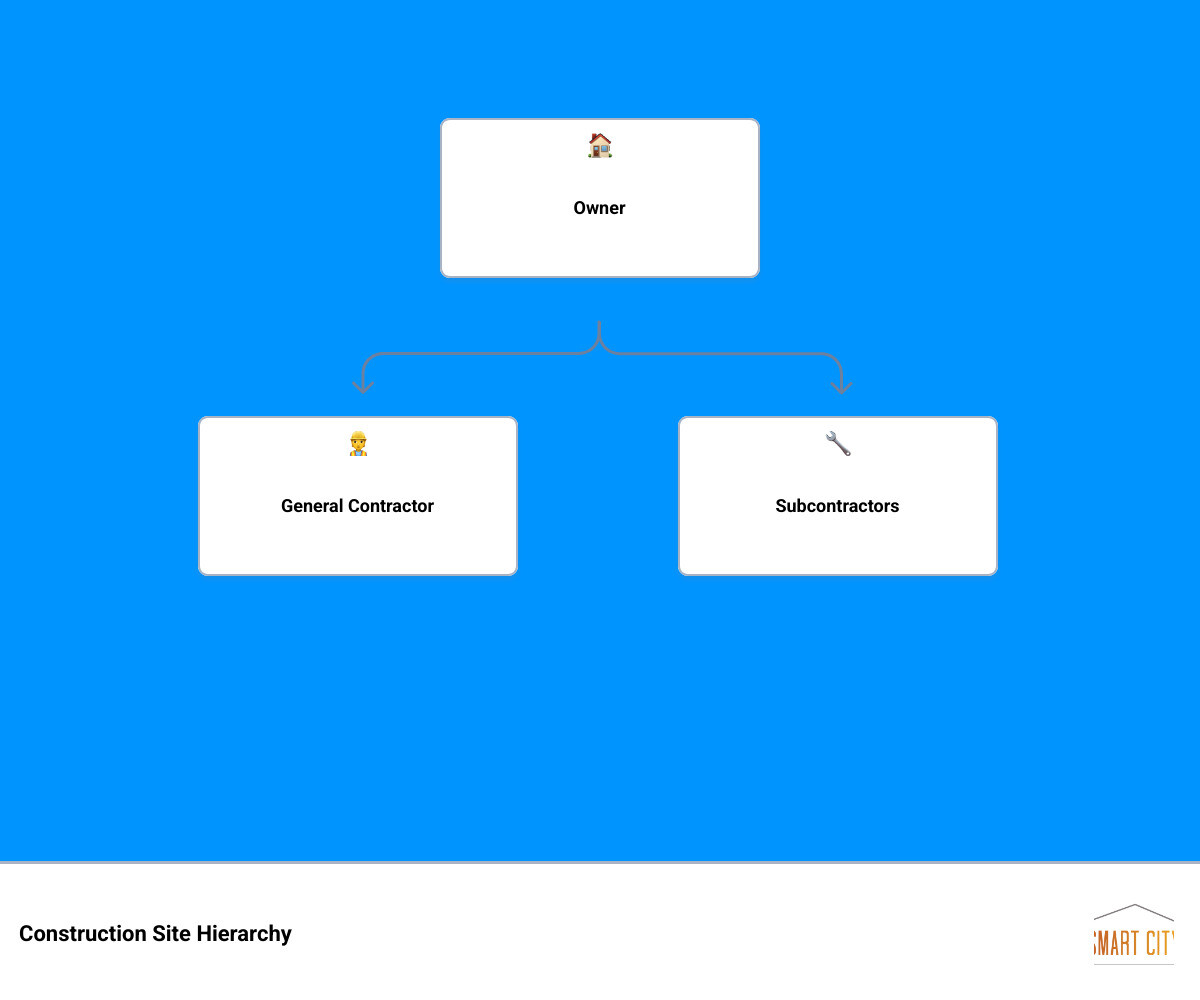
- Hires and supervises subcontractors for specialty trades like plumbing, electrical, and roofing
- Pulls permits and ensures all work meets local building codes
- Controls the budget and schedule, flagging issues before they become costly
- Acts as your single point of contact throughout the entire project
If your project involves more than one trade, requires a permit, or touches structural elements — you almost certainly need a general contractor.
Construction projects are notoriously difficult to manage. Even a kitchen remodel can quickly involve a plumber, an electrician, a tile setter, and a cabinet installer — all of whom need to show up in the right order, on the right days. One scheduling mistake or missed permit can stall the entire job for weeks.
That’s where a licensed general contractor earns their fee.
I’m Norbert, and at Smart City Renovation I’ve spent 25 years managing residential and commercial construction projects across the Chicagoland area as a licensed general contractor. Whether it’s a basement finish in Des Plaines or a commercial build-out in Chicago, I’ve seen what separates a smooth project from a costly nightmare — and it almost always comes down to who’s running the job.
What is a General Contractor and When Do You Need One?

A general contractor is the party that holds the main contract for the project and takes responsibility for day-to-day construction oversight. In plain English: we keep the moving parts moving.
That means we coordinate subcontractors, manage materials, track progress, handle permits, oversee safety, and communicate with owners from planning through closeout. If you want a deeper overview of the role, our General Contractor Services | Smart City Renovation page explains how we approach projects across Chicagoland. You can also find more info about general contractor services. For a broader industry definition, see this overview of a general contractor.
People often confuse a general contractor with a subcontractor, construction manager, or prime contractor:
| Role | Main job | Who they contract with | Best simple definition |
|---|---|---|---|
| General contractor | Oversees the whole build and manages trades | Usually the owner | The person or company running the project |
| Subcontractor | Performs one specialty trade | Usually the GC | The specialist doing part of the work |
| Construction manager | Advises and manages on the owner’s behalf | Owner | The owner’s representative, often earlier in planning |
| Prime contractor | Holds the main contract | Owner | Often similar to GC, especially in larger projects |
In many projects, “prime contractor” and “general contractor” are used almost interchangeably. The key difference is risk: a GC usually assumes responsibility for delivering the work, not just advising on it.
Outside the U.S., terminology changes. In the UK and Australia, “builder” is often the more common term. But the practical function is similar: one lead professional manages the site, trades, schedule, and delivery.
7 Signs Your Project Requires a Professional General Contractor
Here are the clearest signs it’s time to call in a pro instead of trying to play project manager after work and on weekends.
Multiple specialty trades are involved If your project needs plumbing, electrical, HVAC, framing, roofing, drywall, or finish work, coordination matters. One trade working out of sequence can create rework, delays, or inspection failures.
The project will take more than a week Small jobs can sometimes be handled directly with one trade. But once a project stretches over several phases, someone needs to manage scheduling, deliveries, inspections, and progress every day.
Structural changes are required Removing walls, changing layouts, adding openings, or modifying framing raises the stakes. Structural work usually requires engineering review, permits, and tight quality control.
Building permits are necessary Permit work is not just paperwork. It involves approved plans, code compliance, inspections, and corrections if something fails. A GC helps prevent expensive do-overs.
You lack the time for daily site supervision Most owners have jobs, families, and better things to do than chase down a drywall crew at 7 a.m. or answer a delivery question during lunch.
Complex material procurement is needed Cabinets, tile, fixtures, windows, mechanical equipment, doors, trim, and specialty finishes often have long lead times. Ordering them in the wrong sequence is a classic way to blow up a schedule.
High-value investment protection is a priority Your home or commercial property is a major asset. Licensed oversight, documented contracts, insured trades, and professional management reduce risk.
Key Responsibilities of a General Contractor
A good GC does far more than “find workers.”
Our responsibilities typically include:
- Reviewing plans and scope before work begins
- Preparing budgets and timelines
- Coordinating permit applications and inspections
- Hiring and scheduling subcontractors
- Procuring materials and tracking lead times
- Managing site logistics and deliveries
- Enforcing safety practices on site
- Monitoring workmanship and code compliance
- Handling change orders and documentation
- Managing punch lists and closeout
Pre-construction is especially important. Before a hammer swings, we want to understand scope, review project documents, visit the site when needed, and identify issues hiding behind walls or above ceilings. During construction, we become the central hub for communication and execution. After construction, we handle final inspections, closeout items, and turnover.
You can explore more info about our services if your project includes remodeling, roofing, plumbing, HVAC, or new construction.
Residential vs. Commercial General Contractor Roles
Residential and commercial GCs do similar core work, but the projects feel very different in real life.
A residential GC often manages:
- Kitchens, bathrooms, basements, additions, and full-home remodels
- Occupied homes with daily homeowner communication
- Finish selections and lifestyle-driven decisions
- Smaller crews and tighter working spaces
A commercial GC often manages:
- Tenant improvements and office build-outs
- Retail, mixed-use, and light commercial spaces
- Accessibility, occupancy, and life-safety requirements
- More formal schedules, submittals, and documentation
Commercial jobs also tend to involve stricter zoning issues, more stakeholders, and more detailed coordination with property managers, landlords, or tenants. Residential jobs, on the other hand, often require more hands-on guidance around finishes, design choices, and minimizing disruption to daily life.
For projects across our region, visit Our Service Areas in Chicagoland.
The Financial Side: Contracts and Bidding Processes

Money talk is where construction gets real fast.
General contractors are usually paid by the owner under one main agreement, then we pay subcontractors and suppliers downstream. That payment chain is one reason strong documentation matters so much. If the paperwork is messy, payments get messy too.
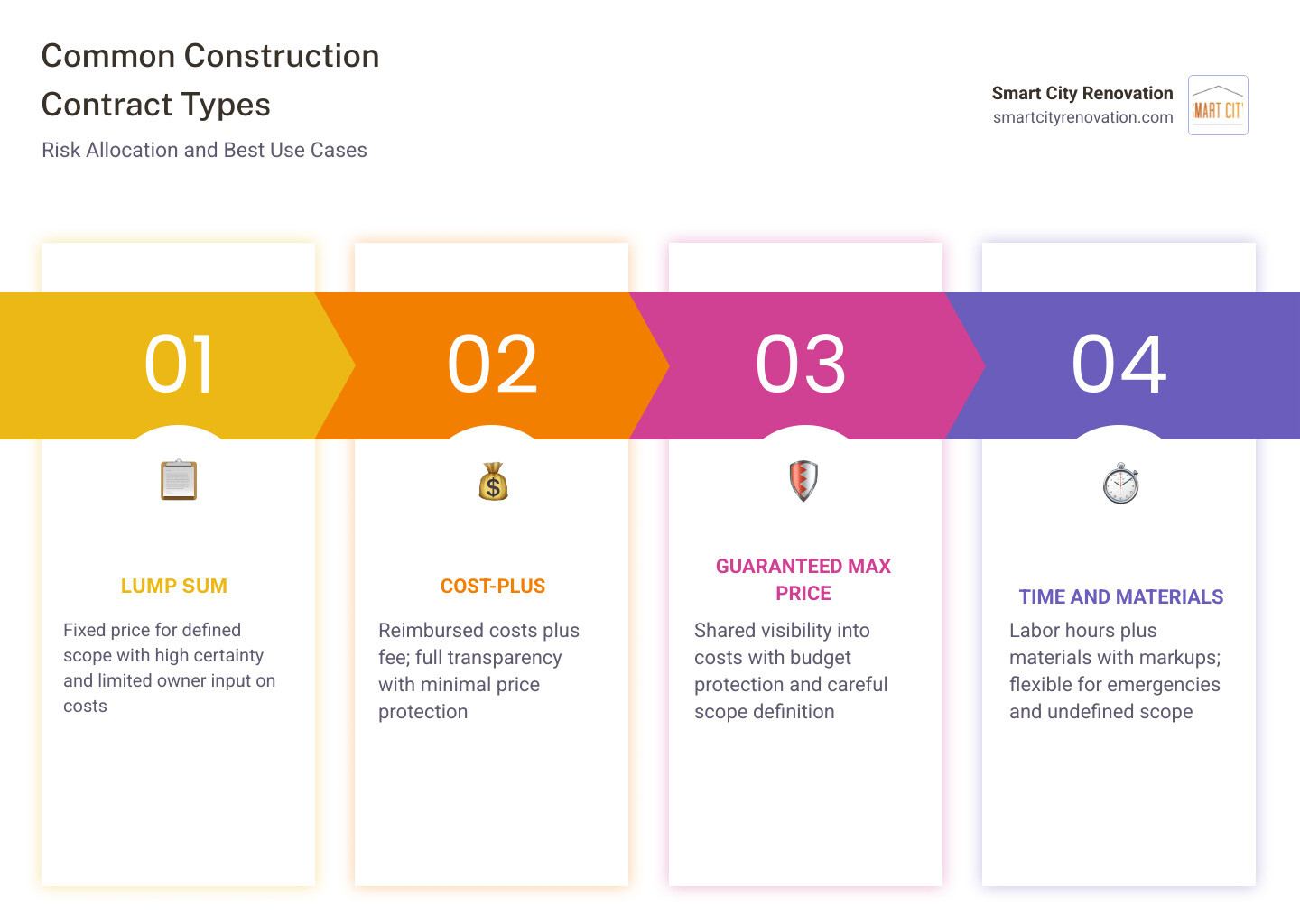
The most common contract types are:
Lump Sum
Also called fixed price. One total price is agreed on for a defined scope of work.
Best for:
- Clearly designed projects
- Stable scope
- Owners who want price certainty
Pros:
- Easier budgeting
- Savings from efficient execution can benefit the contractor
- Simple payment structure through milestones
Cons:
- Less flexible if the scope is incomplete
- Hidden conditions can create change orders
Cost-Plus
The owner pays actual project costs plus an agreed fee or percentage.
Best for:
- Renovations with unknown conditions
- Early-start projects
- Work where scope may evolve
Pros:
- Transparent cost tracking
- Flexible if field conditions change
Cons:
- Final cost can be harder to predict
- Requires trust and good documentation
Guaranteed Maximum Price
A hybrid approach. Costs are tracked like cost-plus, but there is a cap unless the scope changes.
Best for:
- Owners who want transparency with some price protection
- Mid-sized remodels and commercial projects
Pros:
- Shared visibility into costs
- More budget protection than pure cost-plus
Cons:
- Requires careful scope definition
- Not every allowance or exclusion is obvious unless spelled out clearly
Time and Materials
The owner pays for labor hours, material costs, and agreed markups.
Best for:
- Emergency work
- Small repairs
- Situations where scope cannot be fully defined upfront
Pros:
- Fast to start
- Flexible when unknowns are significant
Cons:
- Least price certainty
- Needs close tracking of labor and material receipts
A general contractor’s markup is not the same thing as profit. Industry guidance commonly places markup around 10% to 20% for new construction and 20% to 30% for renovations, while net profit margins for GC businesses often end up much lower, typically around 1.5% to 5% after overhead, insurance, supervision, office costs, and risk.
How the Bidding Process Works
The bidding process usually begins when the owner, architect, or design team issues project information. Depending on the project, that may include an RFP, RFQ, or invitation to bid.
A typical GC bidding workflow looks like this:
- Review plans, specs, and scope documents
- Visit the site, especially for renovation work
- Identify missing details, conflicts, or risk areas
- Request pricing from specialty subcontractors
- Compare subcontractor proposals carefully
- Build the overall estimate, schedule, assumptions, and exclusions
- Submit a proposal to the owner
- Negotiate and clarify scope before contract award
Successful bids are not always the cheapest. They are the clearest. A well-prepared proposal should explain what is included, what is excluded, how long the work should take, and what assumptions the price depends on.
Licensing, Insurance, and Qualifications for Success
Licensing rules vary by location, which is why homeowners and property owners should always verify the requirements that apply where the work is happening.
In the U.S., there is no single federal general contractor license. Instead, requirements are usually set by states and sometimes municipalities. Some states are strict, while others are far looser. Research also shows that a few states such as Vermont, New Hampshire, and Maine do not have statewide GC licensing in the same way many others do.
California is a good example of how seriously some states regulate contracting: licensing is required for many projects, and the research noted a threshold of $500 or more in California. That is not our service area, but it shows why owners should never assume the rules are the same everywhere.
In the UK and Australia, the terminology often shifts from “general contractor” to “builder,” and licensing or registration frameworks differ again. The takeaway is simple: qualifications are regional, but the need for proper credentials is universal.
The three essentials we always tell clients to check are:
- License or registration, where required
- Insurance
- Bonding, if required for the project or jurisdiction
This “holy trinity” protects both the owner and the contractor.
Insurance and Bonding Basics
A qualified GC should typically carry some combination of:
- General liability insurance
- Workers’ compensation coverage
- Commercial auto coverage when applicable
- Umbrella or excess liability on larger jobs
- Surety bonds when required by law or contract
Insurance helps cover accidental property damage, injury claims, and other project-related risks. Surety bonds are different: they are financial guarantees tied to legal or contractual performance.
Safety, Training, and Career Path
Safety is not optional. On professional sites, safe work practices, documented procedures, and OSHA awareness are part of daily operations. A GC may not perform every trade, but we are still responsible for maintaining a safe, organized job site.
For people asking how to become a general contractor, common pathways include:
- Starting in a skilled trade and moving into supervision
- Studying construction management, engineering, or a related field
- Gaining field experience in estimating, scheduling, or project management
- Learning local code, permit, and contract requirements
- Building a vetted network of trades and suppliers
The career outlook remains strong. Research cited projected growth of 9% from 2024 to 2034 for qualified general contractors, significantly faster than the broader job market. Salary ranges vary widely depending on experience, market, and business model, with cited U.S. earnings ranging from $12,955 to $339,343 annually and a median of $62,328.
If your project is renovation-focused, you can learn more about our experience as a remodeler.
Managing Risks and Ensuring Project Quality
Construction risk never disappears. The goal is to manage it before it becomes expensive.
The biggest challenges general contractors face include:
- Cost overruns
- Schedule delays
- Labor shortages
- Material lead-time issues
- Inspection failures
- Safety incidents
- Scope creep
- Payment disputes
Here is how we reduce those risks.
Change Orders
Change orders are formal changes to scope, price, and sometimes schedule. They are normal in construction, especially in remodeling, where hidden conditions show up after demolition.
The wrong way:
- Verbal approvals
- Vague descriptions
- No cost breakdown
- No schedule update
The right way:
- Written documentation
- Clear scope change
- Pricing and time impact explained
- Signed approval before extra work proceeds when possible
Cost Overruns and Delays
We mitigate overruns by defining scope early, reviewing plans closely, confirming allowances, and identifying long-lead items before construction starts.
We mitigate delays by:
- Sequencing trades properly
- Tracking inspections
- Confirming material delivery dates
- Building realistic schedules instead of fantasy schedules
- Communicating quickly when field conditions change
As of May 2026, construction conditions continue to shift. Industry data cited in the research showed construction employment rose by 9,000 in April, while average hourly pay increased to $38.73. Construction spending also rose 0.6% in March. Those numbers matter because labor availability and pricing pressure directly affect project budgets and timelines.
Subcontractor Vetting and Quality Control
A strong GC does not simply hire the lowest number that lands in the inbox.
We vet subcontractors for:
- Relevant experience
- Active licensing where required
- Insurance coverage
- Reliability and crew capacity
- Quality standards
- Safety practices
Quality control includes regular site checks, review against plans, coordination with inspectors, and punch-list follow-up before final completion. If your project includes interiors and complex finish coordination, see our Interior construction contractor details.
Payment Protection and Lien Waivers
Owners often ask whether they should pay subcontractors directly. In most GC-managed projects, no. The owner pays the GC, and the GC pays subcontractors according to the contract.
To reduce payment risk, good practice includes:
- Clear payment schedules
- Applications for payment tied to progress
- Change order tracking
- Lien waivers before final payment where appropriate
- Written records of approvals and completed work
A payment shortcut today can become a legal headache tomorrow.
Frequently Asked Questions about General Contractors
How do general contractors typically get paid?
General contractors are usually paid through scheduled draws or milestone payments under the main contract. Depending on the project, there may be:
- An initial deposit when allowed by contract and law
- Progress payments tied to completed phases
- A final payment after punch-list completion and closeout
The exact structure depends on whether the job is lump sum, cost-plus, GMP, or time and materials. In lump sum work, the price is fixed unless the scope changes. In cost-plus or time-and-materials jobs, the owner pays actual costs plus agreed fees or markups.
Cash flow management is a huge part of GC work because subcontractors and suppliers often need to be paid before the contractor has fully collected downstream funds.
What is the difference between a general contractor and a subcontractor?
A general contractor manages the whole project. A subcontractor performs a specific trade.
Examples of subcontractors include:
- Electricians
- Plumbers
- HVAC installers
- Roofers
- Painters
- Flooring crews
The GC typically holds the prime contract with the owner, coordinates all specialties, manages schedule and quality, and serves as the main point of communication. Subcontractors report to the GC, not directly to the owner, unless the owner has chosen a different project delivery method.
Do I need a license to be a general contractor in the US?
Usually, yes somewhere in the chain, but the exact answer depends on the state and local municipality. There is no federal GC license. Many states require licenses, exams, registration, insurance, and sometimes bonding. Some local governments add their own rules on top.
That is why owners should verify requirements with the relevant contractor board or municipality before hiring anyone. Licensing is about more than paperwork. It supports consumer protection, code compliance, insurance accountability, and in some states even lien rights.
A good rule: if someone wants to do major construction but cannot clearly explain their license and insurance status, that is your cue to show them the door.
Conclusion
A general contractor is not just someone who swings by the site with a clipboard and a caffeine habit. We are the central point of accountability for planning, coordination, safety, quality, and delivery.
If your project involves multiple trades, permits, structural changes, commercial build-outs, or simply more moving parts than you want to manage yourself, hiring the right GC is one of the smartest decisions you can make.
At Smart City Renovation, we bring 25 years of Chicagoland experience to residential and commercial projects, with practical expertise in remodeling, roofing, HVAC, plumbing, interiors, and new builds. If you want to learn more about us, visit About our team. And if you’re ready to move forward, you can Start your project with a professional general contractor.