Why Finding the Right Illinois Renovation Contractor Makes All the Difference
Planning an Illinois renovation is one of the biggest decisions a homeowner or business owner will make — and picking the wrong contractor can cost you time, money, and serious stress.
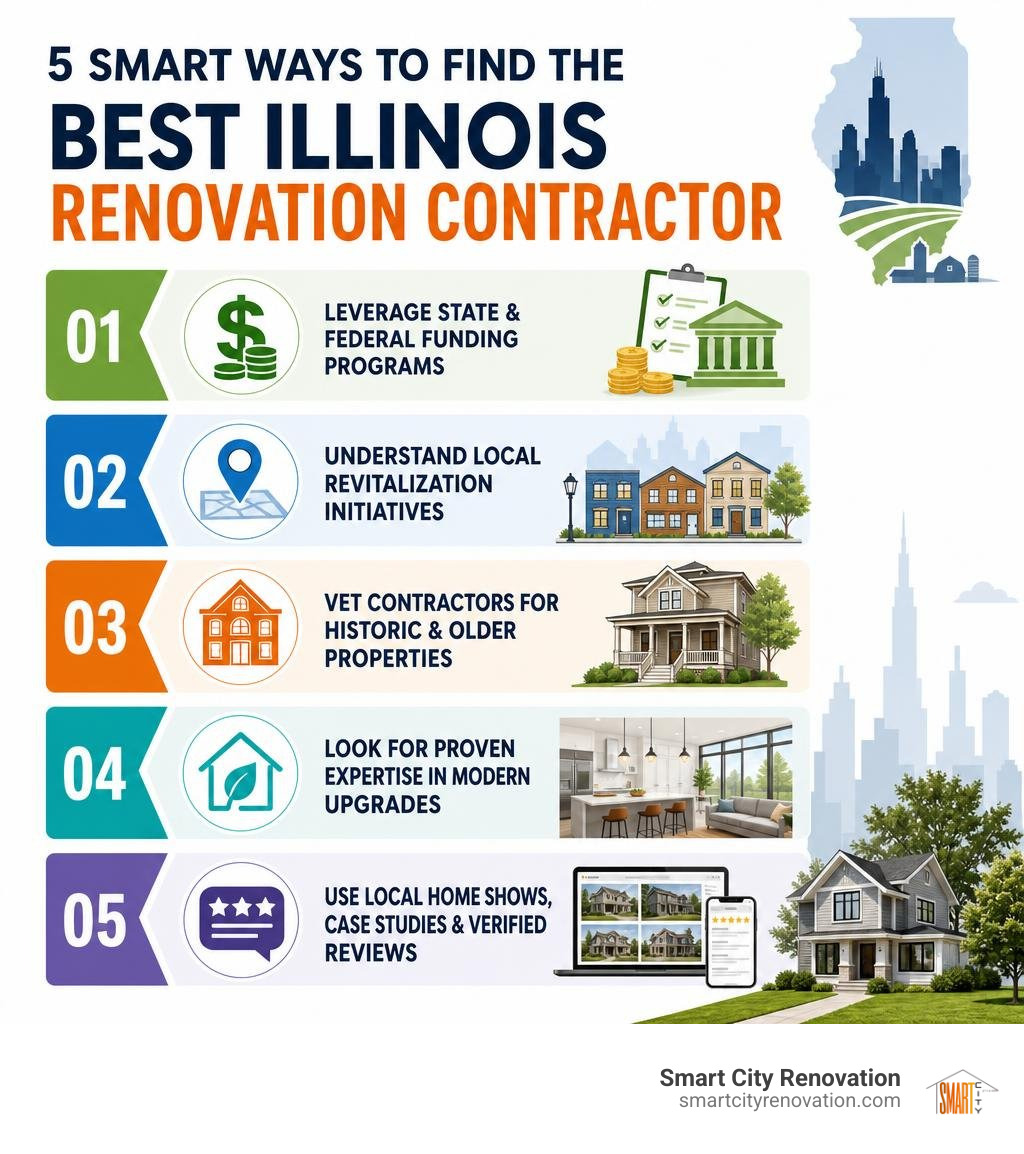
Here are the 5 smartest ways to find the best contractor for your project:
- Leverage state and federal funding programs (IHDA, USDA Section 504) to offset costs before you hire
- Understand local revitalization initiatives in your area — urban or rural — that may affect your project or open up resources
- Vet contractors specifically for historic and older properties, which need specialized skills and longer timelines
- Look for proven expertise in modern upgrades like open-concept layouts, energy efficiency, and condo-specific rules
- Use local home shows, case studies, and verified reviews to compare real contractor work before committing
These steps apply whether you’re remodeling a 1920s bungalow in the suburbs, updating a Gold Coast condo, or tackling a full commercial renovation downstate.
Finding the right contractor isn’t just about price — it’s about matching the right expertise to your specific project type, location, and budget.
I’m Norbert, a general contractor with 25 years of Chicagoland construction and remodeling experience, specializing in kitchens, bathrooms, basements, roofing, HVAC, and plumbing across the full spectrum of Illinois renovation projects. In the sections below, I’ll walk you through exactly what to look for — and what to avoid — so you can hire with confidence.
1. Leverage State and Federal Funding Programs for Your Illinois Renovation
Before you even begin interviewing a General Contractor, it is highly beneficial to see if your project qualifies for state or federal financial assistance. Many property owners in the Chicagoland suburbs—spanning communities like Niles, Des Plaines, and Mount Prospect—overlook valuable programs designed to help with safety, accessibility, and structural updates.
The Illinois Housing Development Authority (IHDA) and the federal government offer several key programs:
- Illinois Homeowner Assistance Fund Home Repair Program (HAFHR): This program provides grants of up to $60,000 per household. It is designed for eligible homeowners who have experienced a COVID-19 related financial hardship after January 21, 2020. To qualify, your household income must be at or below 150% of the Area Median Income (AMI). These grants feature a 3-year forgivable recapture agreement, meaning you do not have to repay the funds if you remain in your home for at least three years after the repairs are completed.
- Home Repair and Accessibility Program (HRAP): Administered by IHDA through local grantees, HRAP offers up to $60,000 to low- and very-low-income homeowners. It targets essential health, safety, and accessibility improvements (such as wheelchair ramps, walk-in tubs, or structural repairs).
- USDA Rural Development Section 504 Home Repair Program: While our core focus remains on suburban communities, it is helpful to know that for very-low-income rural homeowners across Illinois, this federal program offers loans up to $40,000 at a fixed 1% interest rate for 20-year terms, and grants up to $10,000 (or $15,000 in presidentially declared disaster areas) for seniors aged 62 or older to remove health and safety hazards.
To apply for IHDA-funded programs, you must contact local grantees directly rather than applying to IHDA itself, as the state agency does not maintain a direct waitlist.
Additionally, many local municipalities offer targeted assistance. For instance, if you reside in Niles, you can look into the “Grow Your Home” Home Improvement Program | Niles, IL to see what local municipal aid might be available for your property’s exterior or structural needs.
Below is a quick comparison of these primary funding sources:
| Program | Max Funding Limit | Key Eligibility Requirements | Primary Focus | Repayment Terms |
|---|---|---|---|---|
| IHDA HAFHR | Up to $60,000 | Income ≤ 150% AMI; COVID-19 hardship after Jan 2020 | General home repairs, structural | 3-year forgivable recapture |
| IHDA HRAP | Up to $60,000 | Low-to-very-low income | Health, safety, accessibility | Forgivable grant terms via local grantees |
| USDA Section 504 | Up to $50,000 (Combined) | Very-low-income; rural areas; grants for 62+ | Hazard removal, modernizing | 1% interest loan (20 yrs); grants repaid if sold within 3 yrs |
2. Understand Regional and Local Revitalization Initiatives
Municipal planning and local revitalization initiatives heavily influence the scope and rules of any Illinois renovation. Depending on where your property is situated, local zoning, building codes, and community grants will vary significantly.
For example, in the North Shore and northwest suburbs, municipal investments change the local landscape. The ongoing Downtown Glenview Revitalization initiative shows how coordinated public and private investments can reshape commercial and residential building requirements. Similarly, keeping an eye on infrastructure, such as the Morton Grove Road Improvements , helps property owners anticipate construction timelines, utility access, and permitting adjustments.
On a broader scale, the state’s Strong Communities Program (SCP) supports local governments and land banks in returning vacant or blighted residential properties to productive, taxable use. The application deadline for SCP Round 3 has been extended to June 30, 2026. This program highlights the state’s emphasis on community stabilization through high-quality rehabilitation or, where necessary, the demolition of structures beyond repair.
Working with an experienced Remodeler who understands how local municipal initiatives impact building codes ensures your project proceeds without regulatory delays.
3. Vet Contractors for Historic and Older Properties
Renovating an older home in Chicagoland requires a highly specialized approach. Many historic properties in areas like Park Ridge, Glenview, and Evanston feature classic architectural styles—ranging from Victorian and Tudor to early modernist designs.

When you hire an Interior Construction Contractor for an older home, you aren’t just paying for cosmetic updates. You are dealing with complex structural realities:
- Knob-and-Tube Wiring: Older homes often contain outdated electrical systems that must be completely re-run to meet modern safety codes.
- Plaster Walls: Unlike modern drywall, original plaster requires careful skim-coat repairs rather than a total tear-out to preserve the home’s character and acoustic qualities.
- Lead and Asbestos: Properties built before 1978 require strict containment protocols during demolition.
- Higher Contingency Budgets: While a modern home renovation might require a 10% to 15% contingency budget, historic renovations require a 20% to 25% contingency due to unforeseen issues hidden behind plaster walls.
- Extended Timelines: Historic renovations typically take 25% to 35% longer than equivalent projects in homes built after 2000.
For properties with official landmark designations, you must coordinate with local building departments and refer to resources like the Illinois State Historic Preservation Office to ensure your plans comply with state preservation guidelines.
Preserving Architectural Integrity During an Illinois Renovation
Preserving the original character of an older home is an art form. When performing an Illinois renovation, we focus on restoring or replicating original elements:
- Exterior Features: Replicating original trim work, crown molding, and wood siding.
- Windows and Roofing: Replacing damaged components with energy-efficient alternatives that match the historic profile. If your roof needs attention, a qualified Roofing Contractor can help you select slate, tile, or architectural shingles that honor the home’s original style.
- Flooring: Refinishing original hardwood floors rather than replacing them with modern laminates.
Navigating Permits and Timelines for Historic Homes
Obtaining permits for historic properties involves extra scrutiny. Local landmark commissions and building departments will review your architectural plans to ensure structural modifications do not compromise the historic facade.
Rough trades—including work done by a licensed Plumber—must be carefully mapped out to avoid cutting through historic load-bearing timber. Factor these specialized reviews and potential timeline extensions into your project planning from day one.
4. Look for Specialized Expertise in Modern Upgrades
If you are updating a mid-century home or a suburban condominium, your priorities will likely lean toward modernization and maximizing space.
Modern design trends focus on creating open-concept layouts. This often involves removing load-bearing walls and eliminating dated ceiling soffits. In 1990s and 2000s construction, soffits were frequently added for purely aesthetic reasons. Removing them can add 12 to 24 inches of visual ceiling height, but you must verify they do not contain hidden HVAC ducts or plumbing lines first.
For projects in communities like Des Plaines, you must work closely with local building departments. Be sure to review the City of Des Plaines Building Permits & Inspections guidelines before starting any major structural demolition. Additionally, if you are planning a Kitchen Remodeling project, achieving a smooth, modern look requires a premium “level-5” drywall finish to ensure seamless walls under modern recessed lighting.
Energy Efficiency and Sustainable Illinois Renovation Trends
Modern renovations are increasingly focused on sustainability. Upgrading your home’s energy performance not only lowers utility bills but also increases your property’s resale value.
Key trends in green remodeling include:
- All-Electric HVAC Systems: Replacing old furnaces with high-efficiency heat pumps. A professional HVAC Contractor can help design a balanced system for your open-concept space.
- Solar Panel Integration: Utilizing federal incentives through the Inflation Reduction Act to offset solar installation costs.
- Advanced Insulation: Upgrading attic and wall insulation to handle Illinois’ hot summers and freezing winters.
On a larger scale, iconic historic restorations—like the $15 million, privately funded LEED Silver restoration of the Illinois Governor’s Mansion – Vinci Hamp Architects —demonstrate that even the oldest structures can be adapted to meet modern environmental standards.
High-Impact Kitchen and Bathroom Remodeling
Kitchens and bathrooms provide the highest return on investment. To achieve a premium, modern feel, consider these high-impact upgrades:
- Kitchens: Custom two-tone cabinetry (lighter uppers to reflect light, darker lowers for visual grounding) paired with durable quartz countertops and a continuous, floor-to-ceiling quartz backsplash.
- Bathrooms: Frameless glass walk-in showers, freestanding soaker tubs, and cohesive tile work. If you are renovating a rental property or working within a tight budget, professional tub and tile reglazing can save you thousands of dollars compared to a complete tear-out.
When planning these updates in the northwest suburbs, it is helpful to consult local experts who understand the specific housing stock in your neighborhood. You can explore regional design trends and local project examples to see how nearby homeowners are transforming their spaces.
Utilizing Local Home Shows and Case Studies
One of the best ways to vet contractors and gather design inspiration is to see their work in person. Attending regional events like the Illinois Home Show – DES Convention Center in Rosemont allows you to speak directly with professionals and examine material quality firsthand.
You can also study large-scale public and commercial projects to understand current construction trends:
- Corcoran Place Apartments (Chicago): A $40 million affordable senior housing renovation that invested roughly $190,000 per unit to install solar panels and all-electric HVAC systems.
- University of Illinois (Altgeld & Illini Hall): A massive multi-phase campus renovation scheduled for completion in late fall 2027, showcasing complex historic masonry restoration alongside modern classroom construction.
- Rend Lake Resort Facilities: A $21.4 million state park renovation demonstrating high-value public commercial contracting.
Reviewing a residential contractor’s portfolio of local projects—such as our gallery on Our Work—will give you a clear sense of their craftsmanship and experience with similar architectural styles.
Frequently Asked Questions about Illinois Renovations
What state grants are available for home repairs in Illinois?
The Illinois Housing Development Authority (IHDA) offers programs like the Homeowner Assistance Fund Home Repair Program (HAFHR) and the Home Repair and Accessibility Program (HRAP). These programs provide up to $60,000 per household for eligible low- to moderate-income homeowners to address critical safety, structural, and accessibility needs. These funds are distributed through a network of local non-profit grantees.
How do historic home renovations differ from standard projects?
Historic renovations require preserving original architectural elements, navigating strict local preservation guidelines, and addressing outdated building materials (like plaster walls or knob-and-tube wiring). They typically take 25% to 35% longer to complete and require a larger budget contingency (20% to 25%) compared to modern homes.
What permits are required for a condo renovation in Chicago and its suburbs?
Condo renovations require local municipal building permits for electrical, plumbing, or structural changes. Additionally, you must obtain written approval from your condo association, coordinate with building management regarding construction hours, protect common areas, and schedule service elevator usage.
Conclusion
Successfully executing an Illinois renovation requires balancing budget, design, and regulatory compliance. Whether you are preserving the historic charm of an older suburban home or modernizing a commercial space, partnering with an experienced team is key to a smooth construction process.
At Smart City Renovation, we bring 25 years of Chicagoland expertise to every project. We handle everything from general contracting, kitchen and Bathroom Remodeling, and Basement Remodeling to roofing, HVAC, and plumbing. We proudly serve homeowners and businesses across Des Plaines, Mount Prospect, Park Ridge, Niles, Glenview, Arlington Heights, Rosemont, Morton Grove, Skokie, and the surrounding northwest suburbs.
Ready to plan your next project? Explore our full range of Services or Contact us today to schedule your consultation!