
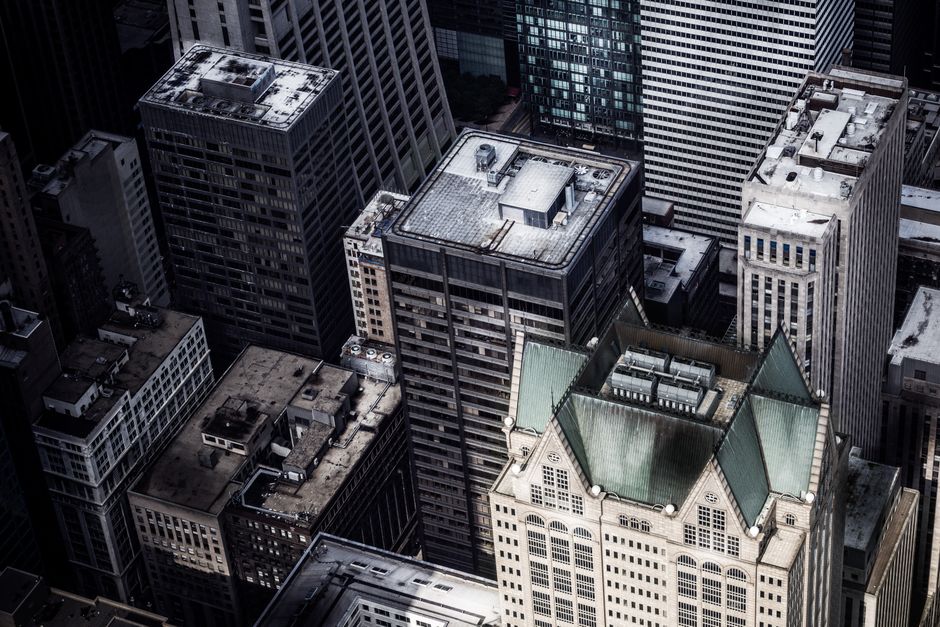
Why Your Illinois Commercial Roof Deserves Serious Attention
Commercial roofing services illinois businesses rely on cover more than just a building — they protect your inventory, equipment, employees, and bottom line.
Here’s a quick overview of what Illinois commercial roofing services typically include:
| Service | What It Covers |
|---|---|
| Roof Inspection | Bi-annual checks + post-storm assessments |
| Preventative Maintenance | Drainage clearing, seam checks, flashing repairs |
| Roof Repair | Leak fixes, membrane patches, flashing replacement |
| Roof Replacement | Full tear-off or overlay with new membrane system |
| Emergency Services | 24/7 response for active leaks or storm damage |
| Green Roofing & Solar | Garden roofs, cool coatings, photovoltaic integration |
| New Construction | Roofing for warehouses, offices, retail, and more |
Illinois commercial buildings face some of the toughest roofing conditions in the Midwest. Brutal winters, lake-effect snow, freeze-thaw cycles, and high winds put enormous stress on flat and low-slope roofs year after year. A failing roof doesn’t just mean a leak — it can mean business interruption, structural damage, and costly emergency repairs that could have been avoided.
The good news? Illinois has a strong network of experienced commercial roofing contractors — from Chicago to Champaign — offering everything from routine maintenance to full-scale replacements.
I’m Norbert, a general contractor with 25 years of Chicagoland construction experience, and I’ve seen how the right approach to commercial roofing services illinois businesses need can save tens of thousands of dollars over a roof’s lifetime. Let’s break down exactly what you need to know.
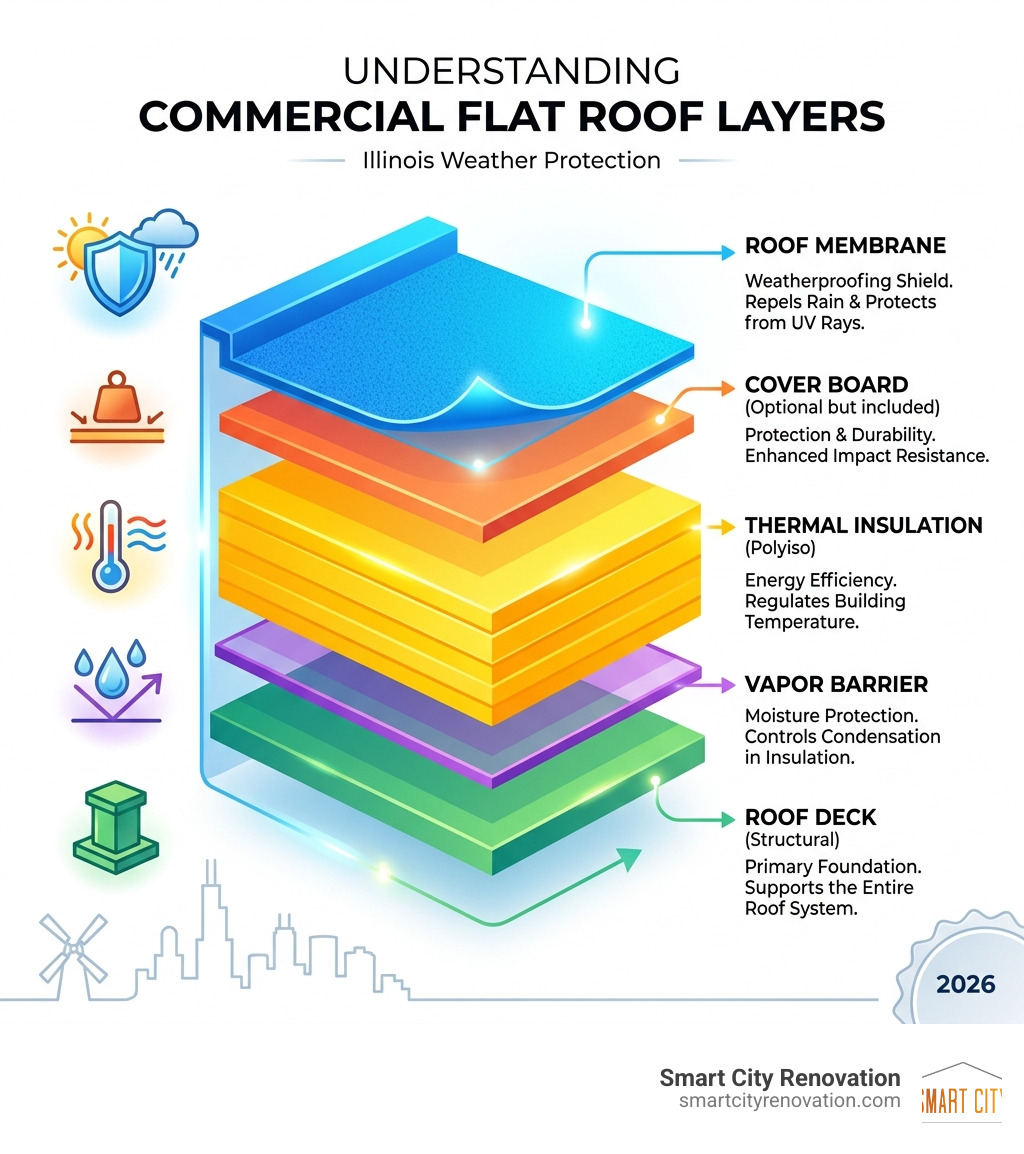
Quick look at commercial roofing services illinois:
Understanding Commercial Roofing Services Illinois
When we talk about commercial roofing services illinois, we aren’t just talking about slapping some shingles on a slope. Most commercial properties in our service area—stretching from the busy streets of Rosemont to the industrial hubs of Elk Grove Village—utilize flat or low-slope systems. Choosing the right material is the first step in ensuring your building stays dry for the next 20 to 30 years.
Common Commercial Roofing Systems
In our two and a half decades of experience across the Northwest Suburbs, we’ve seen a shift toward high-performance synthetic materials. According to the National Roofing Contractors Association (NRCA), these systems provide the necessary durability for commercial structures. Here are the heavy hitters:
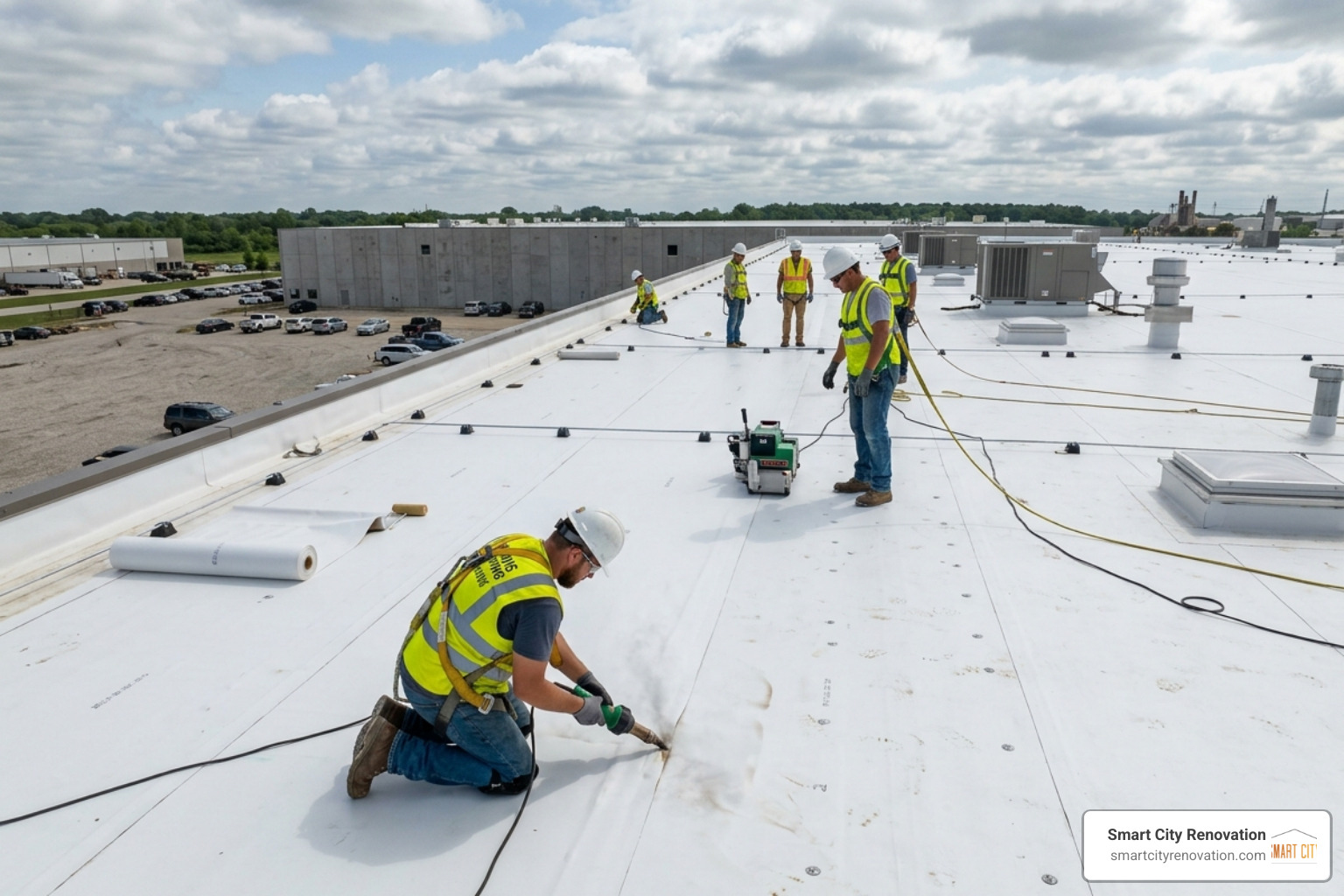
- TPO (Thermoplastic Polyolefin): This is the current king of the hill. It’s a white, reflective single-ply membrane that is heat-welded at the seams. It’s popular in places like Schaumburg and Arlington Heights because it reflects sunlight, keeping cooling costs down during those humid Illinois summers.
- EPDM (Ethylene Propylene Diene Monomer): Often called “rubber roofing,” this black membrane is incredibly durable and handles the “Big Freeze” of Northern Illinois exceptionally well. It stays flexible even when temperatures drop well below zero.
- PVC (Polyvinyl Chloride): Similar to TPO but even more resistant to chemicals, grease, and fires. This is the go-to choice for restaurants in areas like Niles or Glenview where kitchen exhaust might settle on the roof.
- Modified Bitumen: A modern take on the old-school “built-up” roof. It uses layers of asphalt modified with plastic or rubber polymers. It’s tough as nails and handles heavy foot traffic—perfect if you have a lot of HVAC equipment on your roof.
- Built-up Roofing (BUR): The classic “tar and gravel” roof. While heavier and more labor-intensive, it offers multiple layers of protection.
- Metal Roofing: Becoming more popular for its longevity. A well-installed metal roof can last 50 years or more, and with modern coatings, it can withstand the 140 mph winds that occasionally whip through the Illinois plains.
If you are currently dealing with an aging system, it might be time to consult a Roofing Contractor to see which of these fits your budget and building structure.
Illinois Roofing Membrane Comparison Table
| Membrane Type | Estimated Lifespan | Primary Benefit | Best For |
|---|---|---|---|
| TPO | 15–25 Years | Energy Efficiency | Retail/Warehouses |
| EPDM | 20–30 Years | Cold Weather Durability | Industrial Buildings |
| PVC | 20–30 Years | Chemical/Grease Resistance | Restaurants/Manufacturing |
| Metal | 40–60 Years | Extreme Longevity | High-Wind Areas |
| Mod-Bit | 15–20 Years | Puncture Resistance | Roofs with High Foot Traffic |
Navigating Illinois Weather: Snow, Wind, and Ice Challenges
In Illinois, the weather isn’t just a conversation starter; it’s a constant threat to your infrastructure. From the lake-effect snow in Northbrook to the high winds in Hoffman Estates, your roof is the first line of defense.

The Freeze-Thaw Cycle
This is perhaps the biggest “roof killer” in Illinois. During the day, the sun melts the snow on your roof. At night, that water freezes again. If you have even a tiny crack in your membrane, that water seeps in, expands as it turns to ice, and rips the seam open. Over a single winter, a small drip can turn into a waterfall.
Ice Dams and Drainage
Flat roofs in places like Des Plaines and Mount Prospect are prone to ice dams if the drainage isn’t perfect. When water can’t reach the scuppers or drains because they are frozen shut, it pools. This “ponding water” adds thousands of pounds of weight to your structure and accelerates the deterioration of the membrane.
Wind Uplift and Thermal Shock
The “Windy City” nickname applies to the suburbs too! High-velocity winds can get under the edges of a poorly secured roof and peel it back like a sardine can. Furthermore, “thermal shock”—the rapid expansion and contraction caused by a 40-degree temperature swing in a single day—can cause flashings to pull away from walls.
To protect your investment, we always recommend Reliable Commercial Roofing Services Illinois – Contact Us to ensure your wind-uplift ratings and insulation layers are up to 2026 standards.
Essential Commercial Roofing Services in Illinois Cities
While we focus heavily on the Chicagoland area, including Park Ridge and Skokie, commercial roofing needs remain consistent across major Illinois hubs. Whether you’re managing a facility in Rockford or a warehouse in Champaign, the core services remain the same.
Preventative Maintenance: The Secret to Longevity
Most business owners wait for a leak to call us. By then, you’re already paying for structural repairs and potentially mold remediation. We advocate for a “proactive” rather than “reactive” approach.
Professional commercial roofing services illinois should always include:
- Infrared Thermography: We use thermal cameras to find “hot spots” where wet insulation is hiding under a seemingly perfect membrane. This allows us to patch a small area rather than replacing the whole roof.
- Drainage Clearing: Removing leaves, debris, and “Chicagoland slush” from drains is the easiest way to prevent a collapse.
- Seam and Flashing Checks: We look for the early signs of “tenting” or “bridging” where the roof meets the wall.
Understanding Why Professional Roofers Near Me Are Worth the Investment comes down to the math: a $1,500 maintenance visit can easily postpone a $150,000 replacement by five to ten years.
Comprehensive Maintenance and Inspections
We recommend a bi-annual checkup—once in the spring to assess winter damage, and once in the fall to prep for the coming snow. If you’ve just survived a major hailstorm in Buffalo Grove or Palatine, a post-storm inspection is a must for insurance purposes.
For those managing residential-style commercial properties (like apartment complexes in Wheeling), you might find our guide on how to be Shingle and Ready to Mingle with the Best Residential Roofers Near Me helpful for those steep-slope sections.
Full Replacement and Commercial Roofing Services Illinois
When maintenance is no longer enough, a full replacement becomes necessary. This is a major undertaking that involves:
- Tear-off: Removing the old layers down to the deck (wood, metal, or concrete).
- Structural Assessment: Checking for rusted metal decks or rotted wood.
- Insulation (ISO Board): Adding layers to meet the latest Illinois energy codes.
- Membrane Installation: Using heat-welding or adhesives to create a watertight seal.
In the Illinois market, using union labor and ensuring your contractor has manufacturer certifications (like GAF Master Elite or Duro-Last Elite status) is crucial. It ensures the workmanship is held to a higher standard and that your “No-Dollar-Limit” warranty remains valid.
The Financials: Costs, Warranties, and Energy Efficiency
Let’s talk numbers. As of April 2026, the cost of commercial roofing services illinois has stabilized after the volatility of the early 2020s, but material prices remain a significant factor.
Pricing Factors for Commercial Roofing Services Illinois
Typically, commercial flat roofing in Illinois ranges from $7 to $22 per square foot. Why the huge range?
- TPO/EPDM/PVC: Usually falls in the $7 to $15 range.
- Metal/Modified Bitumen: Often costs between $16 and $22 per square foot due to higher material costs and labor intensity.
Other factors that influence your quote:
- Building Height: A 10-story building in Rosemont costs more to roof than a single-story warehouse in Rolling Meadows due to crane rentals and safety rigging.
- Occupancy: Working on a hospital or a school requires stricter safety protocols and often off-hours labor, which adds to the cost.
- Insulation: If you want to significantly lower your heating bills, adding extra tapered insulation is an upfront cost that pays for itself in about 5–7 years.
If you are looking for a detailed estimate, reaching out to a local Roofing Contractor is the best way to get an accurate number for 2026.
Warranties: Your Safety Net
Don’t just look at the price tag; look at the warranty. In the commercial world, you want a No-Dollar-Limit (NDL) Warranty. This means if the roof fails due to a manufacturing defect or (in some cases) poor installation, the manufacturer pays the full cost of the repair, regardless of how much labor and materials have gone up since you bought the roof.
Green Incentives and Solar Integration
Illinois is becoming a leader in sustainable roofing. Many of our clients in the O’Hare corridor are opting for:
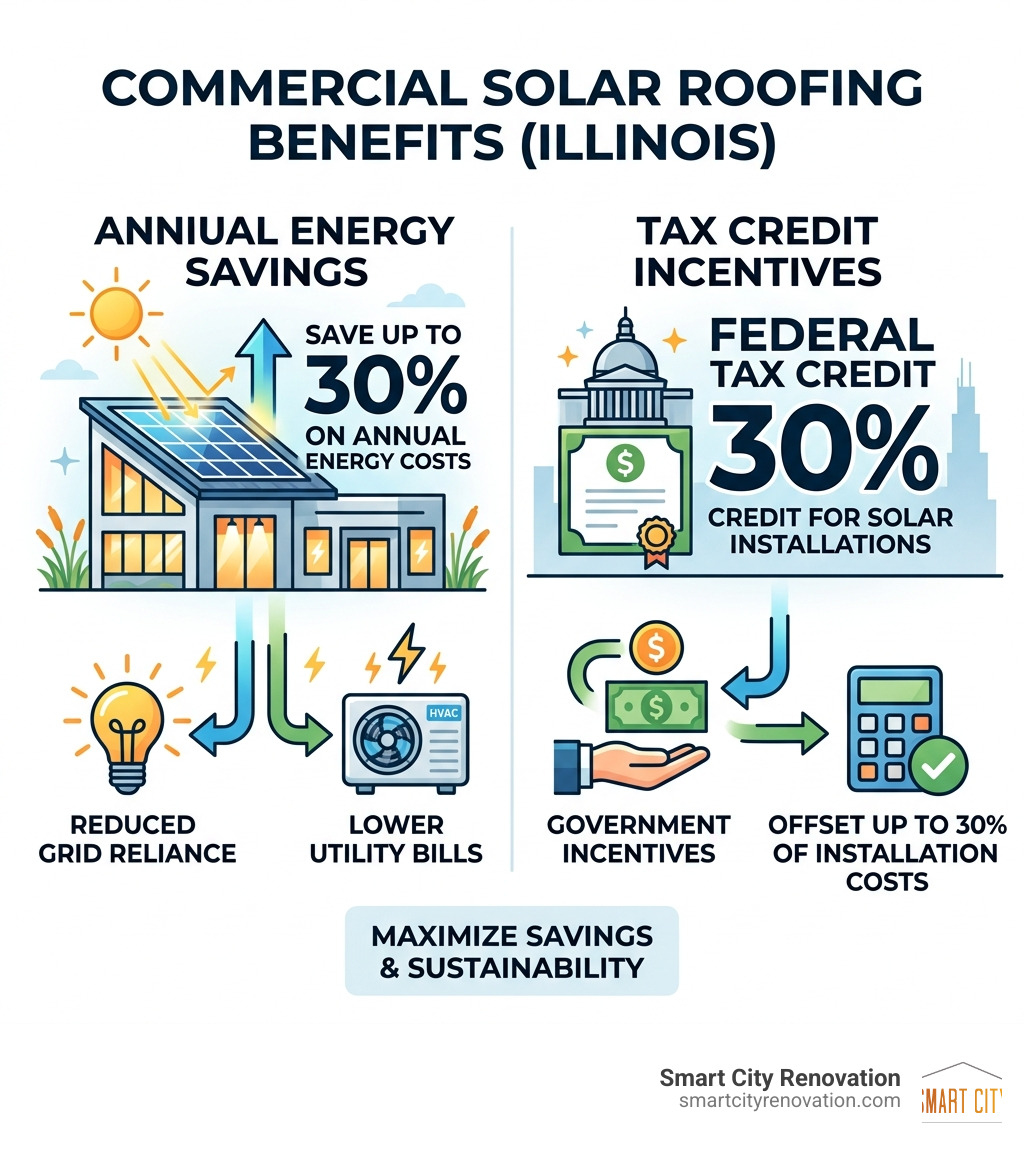
- Cool Roofs: White TPO or PVC that can reflect up to 87% of sunlight, reducing energy costs by up to 30% annually.
- Solar Integration: With federal tax credits still hovering around 30% for solar installations (as outlined by the U.S. Department of Energy), combining a roof replacement with photovoltaic panels is a smart financial move.
- Garden Roofs: In denser areas like Lincolnwood or Harwood Heights, “green roofs” help with stormwater management and can earn you LEED points.
Frequently Asked Questions about Illinois Commercial Roofing
How often should I inspect my commercial roof in Chicago?
We recommend at least twice a year—once in the spring and once in the fall. Additionally, you should have a professional look at the roof after any major weather event involving hail or winds over 50 mph. Foot traffic from HVAC technicians is another common cause of damage, so if you’ve had major mechanical work done, check the roof afterward!
What is the average cost per square foot for Illinois flat roofs?
In 2026, you can expect to pay between $7 and $18 per square foot for most single-ply membranes (TPO/EPDM). If you are looking at premium systems like high-end metal or multi-ply modified bitumen, those costs can rise to $22 per square foot or more.
Should I choose a local Illinois contractor or a national chain?
Local contractors—like those of us who have lived and worked in Chicagoland for decades—understand the specific micro-climates of the North Shore and Northwest Suburbs. We know the local building codes in Norridge and the permit quirks in Prospect Heights. National chains often subcontract the work to local crews anyway; by going local, you cut out the middleman and get a team that is personally invested in the community.
Conclusion
Your commercial roof is a massive asset, and in a state with weather as unpredictable as Illinois, you can’t afford to take shortcuts. From choosing the right TPO membrane for your Schaumburg retail center to scheduling emergency repairs in Buffalo Grove, the right commercial roofing services illinois provider makes all the difference.
At Smart City Renovation, we bring 25 years of expertise to every project. Whether it’s a small repair in Morton Grove or a multimillion-dollar replacement in Arlington Heights, we prioritize quality, integrity, and custom solutions tailored to the Illinois climate.
Don’t wait for the next big storm to see if your roof is up to the task. Contact us today to discuss your project or schedule a comprehensive inspection with a trusted Roofing Contractor. We’re here to ensure your business stays dry and your investment stays protected for years to come.