
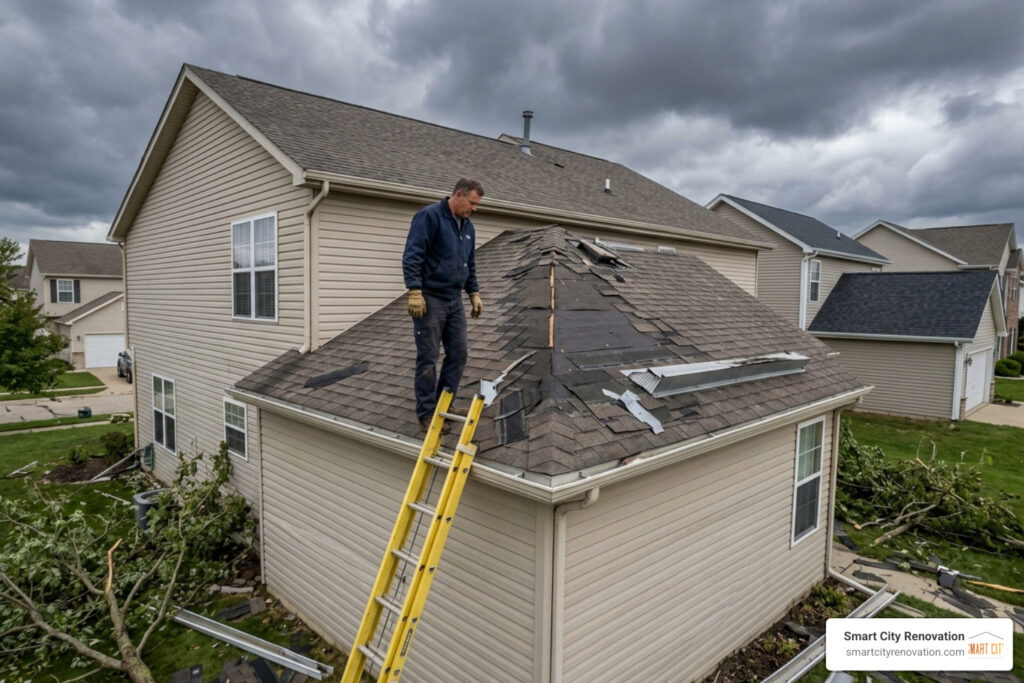
When You Say “I Need a Roofer”: What to Do First
If “I need a roofer” is the thought running through your head right now, here’s the short version:
Quick-start guide for hiring a roofer:
- Check for urgent damage — active leaks, missing shingles, or sagging areas need same-day attention
- Call for an inspection — a licensed roofer can tell you if it’s a repair or a full replacement
- Verify credentials — confirm the contractor is licensed, insured, and ideally GAF-certified or BBB-accredited
- Get 3 written quotes — compare scope, materials, warranty, and cleanup plan
- Ask about insurance — storm damage is often covered; a good roofer will help you document it
Your roof is one of the most critical — and overlooked — parts of your home. Most people don’t think about it until water is dripping into the living room at midnight, or until a storm peels off a row of shingles. And when that moment hits, the pressure to hire someone fast is exactly how homeowners end up with the wrong contractor.
The stakes are real. A typical roof repair runs between $380 and $1,800, while a full replacement can cost anywhere from $5,890 to $12,800 — sometimes more. Making a rushed or uninformed hire can turn a manageable repair into a costly disaster.
I’m Norbert from Smart City Renovation, a licensed general contractor based in Des Plaines with 25 years of Chicagoland construction experience — including roof repair and replacement work across Chicago, Park Ridge, and Niles. When clients tell me “I need a roofer,” I know exactly what questions to ask and what pitfalls to avoid, and that’s what this guide is built around.
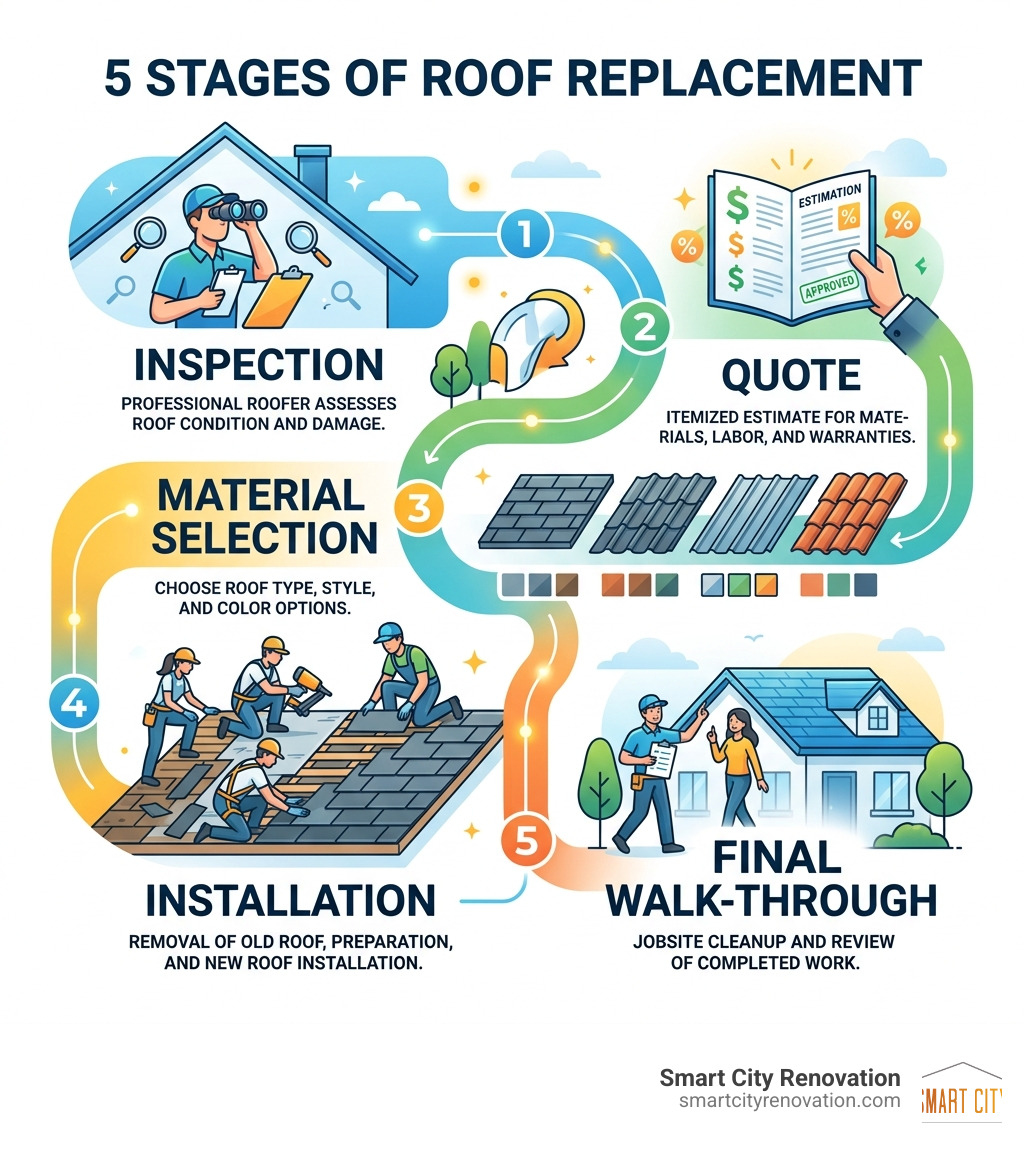
Common i need a roofer vocab:
Identifying the Signs: When to Say “I Need a Roofer”
Living in the Chicagoland area means our homes face a gauntlet of weather—from blistering July humidity to the “lake-effect” snow that hammers places like Des Plaines and Skokie. Because of this, a roof that might last 30 years in a milder climate often reaches its limit around the 20-year mark.
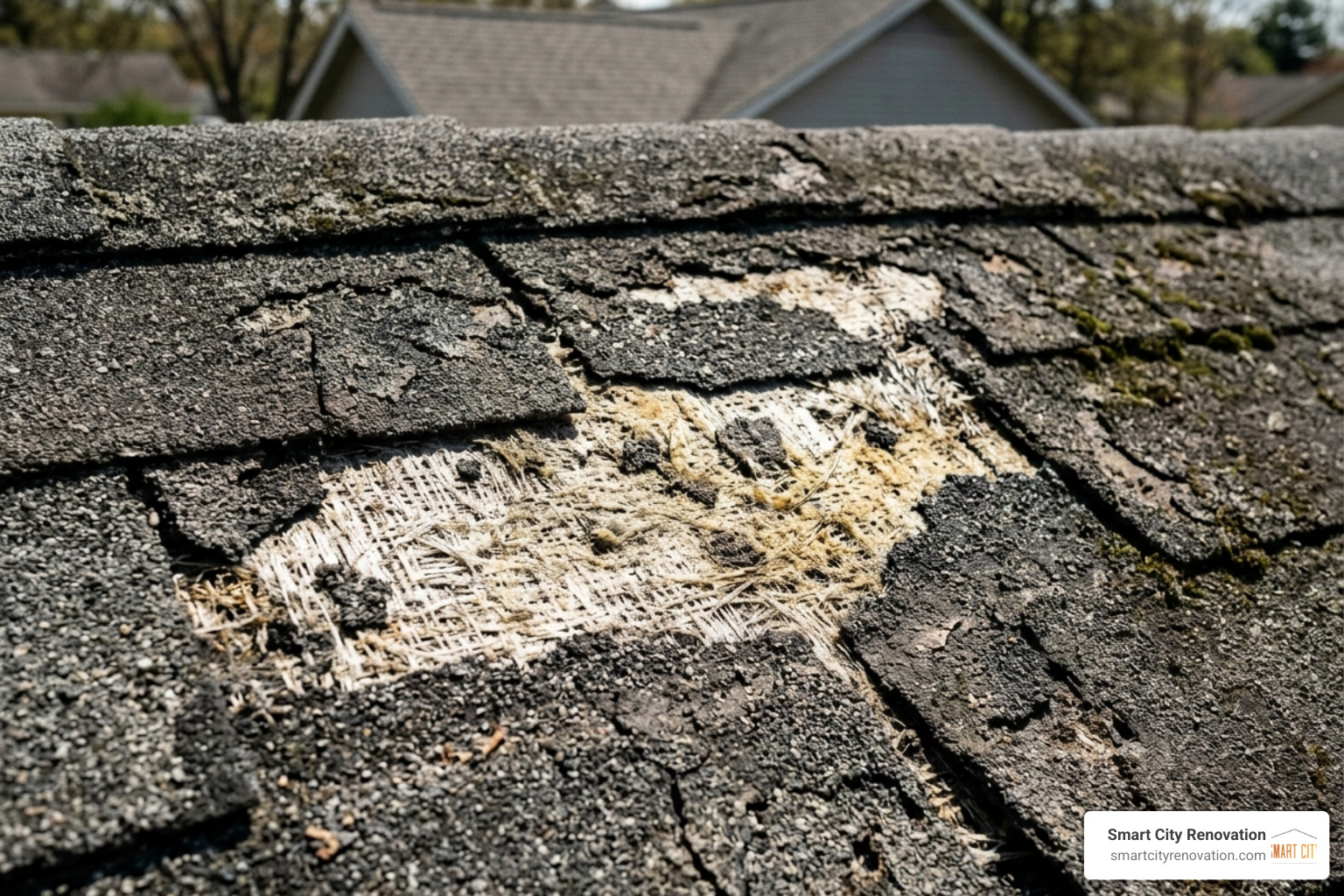
How do you know if you are reaching that limit? Keep an eye out for these red flags:
- Ceiling and Wall Stains: If you see “coffee-colored” rings on your ceiling or streaks down your walls, you have a leak. By the time it shows up inside, the damage to your insulation and sheathing has already begun.
- Granule Loss: Check your gutters. If they look like they’re filled with coarse sand, your shingles are losing their protective outer layer. This makes them brittle and vulnerable to UV rays.
- Missing or Curling Shingles: If your roof looks “patchy” or the edges of the shingles are curling upward like a Pringle, the material is failing.
- Attic Moisture: Sometimes the signs aren’t on the ceiling. If your attic feels damp, smells musty, or shows light shining through the boards, you need professional help.
While standard 3-tab shingles might only last 15–20 years, many homeowners in our area are upgrading to architectural shingles, which can last 25–30 years when properly maintained. If you’re seeing these signs, it’s time to explore more info about roofing services to prevent structural damage.
Spotting Storm Damage and Emergency Leaks
In places like Mount Prospect and Arlington Heights, spring storms can bring high wind speeds and hail. Hail damage is particularly tricky because it’s often invisible from the ground. It creates “bruises” in the shingle that eventually crack and leak. Wind uplift can also peel back shingles, exposing the underlayment.
In a true emergency—like a tree limb falling or a major leak during a downpour—you need a 60-90 minute response time. Emergency tarping is the first line of defense, securing your home until a permanent fix can be scheduled. Getting expert roofing assessment tips early can save you from a total interior renovation later.
Why I Need a Roofer for a Professional Inspection
You might be tempted to climb a ladder yourself, but we strongly advise against it. Every year, there are roughly 647 fatal falls in the construction industry, with over half occurring from heights of 20 feet or higher, according to OSHA safety data. Professional roofers use specialized tools like:
- Drone Inspections: To safely view high-pitched or fragile areas.
- Infrared Technology & Moisture Meters: To find hidden leaks behind walls or under layers of old roofing.
- Leak Tracing: To find the “real” source of a leak, which is often far from where the water actually drips.
A pro doesn’t just look at shingles; they check the structural integrity of the decking and the efficiency of your ventilation. For more on the value of a pro, check out these professional roofing insights.
Repair vs. Replacement: Navigating Costs and Materials
The most common question we hear is, “Can I just patch it?” The answer depends on the age of the roof and the extent of the damage. Generally, if the roof is under 15 years old and the damage is isolated, a repair is the way to go. If it’s over 20 years old or showing widespread wear, replacement is more cost-effective in the long run.
| Service Type | Average Cost Range | Typical Homeowner Spend |
|---|---|---|
| Minor Repair | $380 – $1,800 | $1,100 |
| Full Replacement | $5,890 – $12,800 | $9,500 |
| High-End Replacement | $15,000 – $46,000+ | Varies by material |
Labor is a massive part of this equation, typically making up 60% of the total project cost. On average, roofers charge about $2 per square foot for labor. When you’re shingle and ready to mingle with the best residential roofers near me, make sure your quote includes debris removal and permit fees.
Choosing the Right Shingles for 2026
In 2026, material technology has made roofs tougher than ever. If you live in a hail-prone area like Hoffman Estates or Schaumburg, look for Class 4 shingles. These are UL 2218 tested for impact resistance, meaning they can withstand a 2-inch steel ball dropped from 20 feet without cracking.
- 3-Tab Shingles: Budget-friendly, 15–20 year life.
- Architectural Shingles: Thicker, multi-dimensional look, 25–30 year life.
- Metal Roofing: Lasts 40–70 years and is excellent for energy efficiency.
Understanding the Financial Factors
Don’t let the sticker price give you “roof-rage.” Many homeowners qualify for insurance discounts by installing hail-resistant materials. Additionally, supply chain shifts in 2026 have made material availability more stable, though prices can still fluctuate based on petroleum costs (for asphalt).
We always recommend looking into Smart City Renovation financing and value options. Third-party financing can turn a $10,000 project into a manageable monthly payment, ensuring you don’t have to delay a critical repair.
Vetting Your Contractor: Certifications and Red Flags
This is where many people get burned. Just because someone has a truck and a ladder doesn’t mean they are a qualified roofing contractor.
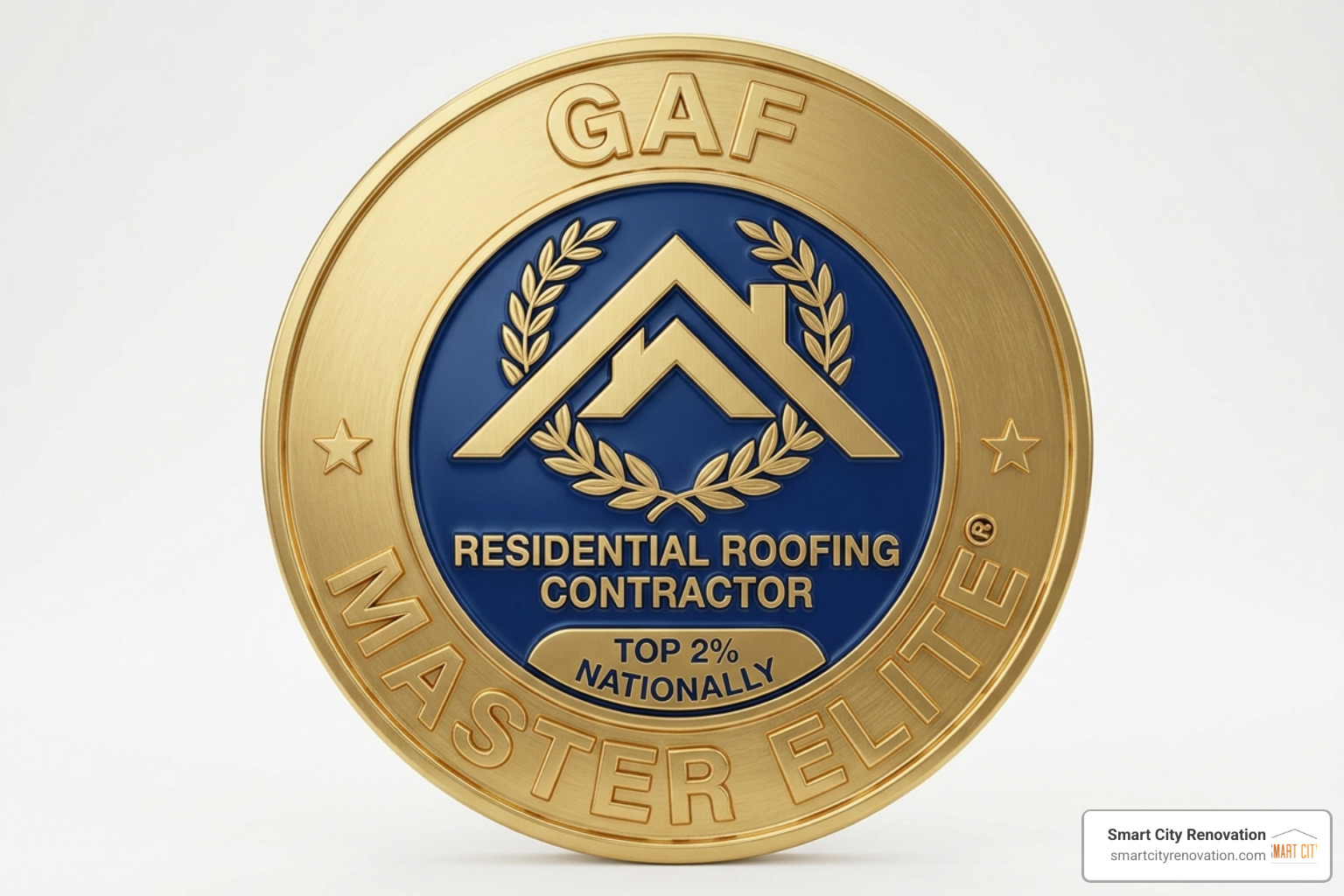
Here is what you should look for:
- GAF Master Elite Certification: Only 2% of roofing contractors in North America hold this. It requires strict licensing, insurance, and a proven track record.
- BBB Accreditation: Check for a high rating and read the reviews.
- Local Licensing: In Illinois, roofing contractors must be licensed by the state.
- Insurance: They must carry both General Liability and Workers’ Compensation. If a worker falls on your property and the contractor isn’t insured, you could be liable.
For a deeper dive into vetting, read why professional roofers near me are worth the investment.
Avoiding “Storm Chasers” and Scams
After a big storm in Niles or Glenview, you might see out-of-town crews knocking on doors. These are “storm chasers.” They offer low rates but often lack proper insurance and disappear before the warranty expires. They might use high-pressure tactics to get you to sign over your insurance check immediately. Always choose a local company with a physical office and a long-standing local reputation.
Questions to Ask Before Saying “I Need a Roofer”
Before you sign a contract, get these answers in writing:
- Do you use subcontractors? You want to know who is actually on your roof.
- What is your workmanship guarantee? A quality pro should offer at least a 10-year guarantee on their labor.
- Will you remove the old roof? Never “recover” an old roof with new shingles; it traps heat and moisture.
- How do you handle cleanup? Ask about magnet nail sweeps to protect your tires and pets.
Check out our roofing FAQ and expert guide for more interview tips.
The Installation Process and Insurance Claims
Once you’ve chosen a general contractor, the real work begins. A typical roof replacement takes 1 to 3 days, depending on the size of your home.
Navigating the Insurance Claim Process
If your roof was damaged by a specific event (like a hailstorm), your homeowner’s insurance should cover the cost. However, they won’t cover “wear and tear” or age-related leaks.
- Step 1: Get a professional inspection and a detailed photo report.
- Step 2: File the claim with your carrier.
- Step 3: Meet the adjuster. We often recommend having your roofer present during this meeting to ensure the adjuster doesn’t miss any damage.
- Step 4: Review the settlement. Your roofer can help explain the “plain language” of the quote.
Explore our emergency roofing and claim tips for more help.
Preparing Your Home for Installation Day
Roofing is loud and messy. To make it easier:
- Relocate Vehicles: Move cars out of the driveway and away from the house.
- Protect the Attic: Cover any belongings in the attic with plastic sheets, as dust and debris will fall through the gaps in the decking.
- Clear the Yard: Move patio furniture, grills, and potted plants.
- Pet Safety: The constant hammering can be stressful for pets; consider keeping them in a quiet room or at a daycare.
A professional roofing preparation plan ensures that the only thing left behind is a beautiful new roof and a 10-year workmanship warranty.
Frequently Asked Questions about Roofing Services
How long does a typical roof replacement take in 2026?
Most residential roofs in the Chicagoland area can be replaced in 1 to 2 days. Larger homes or those requiring structural repairs might take 3 days. Weather is the biggest factor; we won’t tear off a roof if rain is in the forecast.
What is the difference between a roofing license and a certification?
A license is a legal requirement from the state to operate a business and perform work. A certification (like GAF Master Elite) is a voluntary professional achievement that shows the contractor has gone above and beyond in training and quality. You want a roofer who has both.
Does homeowners insurance cover leaks caused by old age?
Generally, no. Insurance is for “sudden and accidental” damage. If your roof is leaking because the shingles are 25 years old and have simply worn out, that is considered maintenance and is the homeowner’s responsibility.
Conclusion
When you think, “I need a roofer,” don’t let the stress lead to a bad decision. Whether you are in Rosemont, Morton Grove, or Elk Grove Village, your home deserves a contractor who understands the specific challenges of our climate.
At Smart City Renovation, we bring 25 years of expertise to every project. As a full-service general contractor, we don’t just slap on shingles; we ensure your entire home—from the gutters to the ventilation—is working together to protect your family.
Ready for an honest assessment? Contact us for a professional assessment today and let’s get your home back in top shape.
For more information on our specific roofing expertise, visit our roofing contractor page.
Our Service Areas: Des Plaines, Mount Prospect, Park Ridge, Niles, Glenview, Arlington Heights, Rosemont, Morton Grove, Skokie, Elk Grove Village, Schaumburg, Palatine, Buffalo Grove, Prospect Heights, Wheeling, Rolling Meadows, Hoffman Estates, Northbrook, Lincolnwood, Harwood Heights, and Norridge.