

Average Cost to Replace Bathtub with Shower in 2026
When homeowners plan a bathroom update, figuring out the cost to replace bathtub with shower is often the very first step. On average, most homeowners across Chicagoland pay between $3,500 and $9,000 for a standard bath-to-shower conversion, though total national project costs range broadly from $2,000 to $12,000 depending on fixture quality, material selection, and required structural changes. Factors such as localized trade rates in suburbs like Des Plaines, Park Ridge, and Mount Prospect can also shape overall estimates. To learn more about general budget expectations in our area, review What Will Your Chicago Bathroom Remodel Cost?.
Labor accounts for roughly 40% to 60% of the overall budget. That means out of a $7,000 project, around $2,800 to $4,200 goes directly toward paying licensed plumbers, professional tile setters, and skilled carpenters who ensure proper subfloor leveling and wall support.
Tub Cut vs. Full Removal: Cost to Replace Bathtub with Shower
If your primary goal is improving accessibility quickly rather than executing a complete bathroom design overhaul, you have two distinct paths: a tub cut or a full removal.
- Tub Cut (Walk-Thru Conversion): A tub cut costs between $800 and $1,800. A technician literally cuts out a section of your existing tub wall and caps it off with a finished step-in insert. It requires no wall demolition or major plumbing modifications, taking just half a day to complete.
- Full Tub Removal & Conversion: Full removal starts around $2,000 for basic setups and ranges upwards from there. The entire tub unit is extracted, surrounding walls are opened, subfloors are thoroughly evaluated for water damage, and brand-new waterproofing, wall surrounds, and customized shower bases are built from scratch.
Conversion Systems: Prefab, One-Day, and Custom Tile
The wall and pan material you choose determines a huge portion of your final bill:
- Prefabricated Acrylic Kits ($2,000–$5,000): Budget-friendly multi-piece units installed quickly over existing structural studs.
- Branded One-Day Systems ($4,000–$9,500): Custom-molded acrylic or composite panels designed to fit your exact alcove specifications without seams.
- Custom Tiled Walk-In Showers ($5,000–$15,000+): Full-scale custom craftsmanship with cement board backer, complete membrane waterproofing, tailored tile layouts, built-in niches, and frameless glass enclosures.
| Shower Conversion Type | Average Installed Cost | Typical Project Duration | Key Features & Maintenance |
|---|---|---|---|
| Tub Cut Conversion | $800 – $1,800 | 0.5 Days | Modifies existing tub; lowest cost; fast accessibility improvement. |
| Prefab Acrylic Kit | $2,000 – $5,000 | 1 – 2 Days | Economic, durable, easy to clean, simple multi-piece walls. |
| One-Day Wall Systems | $4,000 – $9,500 | 1 – 2 Days | Seamless composite/acrylic walls; fast turnaround; non-porous. |
| Mid-Range Tiled Shower | $5,000 – $8,000 | 5 – 7 Days | Ceramic or porcelain tile; customized niches; traditional shower pan. |
| Custom Tiled Walk-In | $8,000 – $15,000+ | 8 – 14 Days | Frameless glass, natural stone/porcelain, custom seating, zero-threshold pan. |
Key Cost Drivers and Plumbing Requirements
Moving structural elements or fixtures increases cost faster than almost any other design decision. Understanding how trade labor and plumbing infrastructure affect your budget ensures a smooth remodeling process.
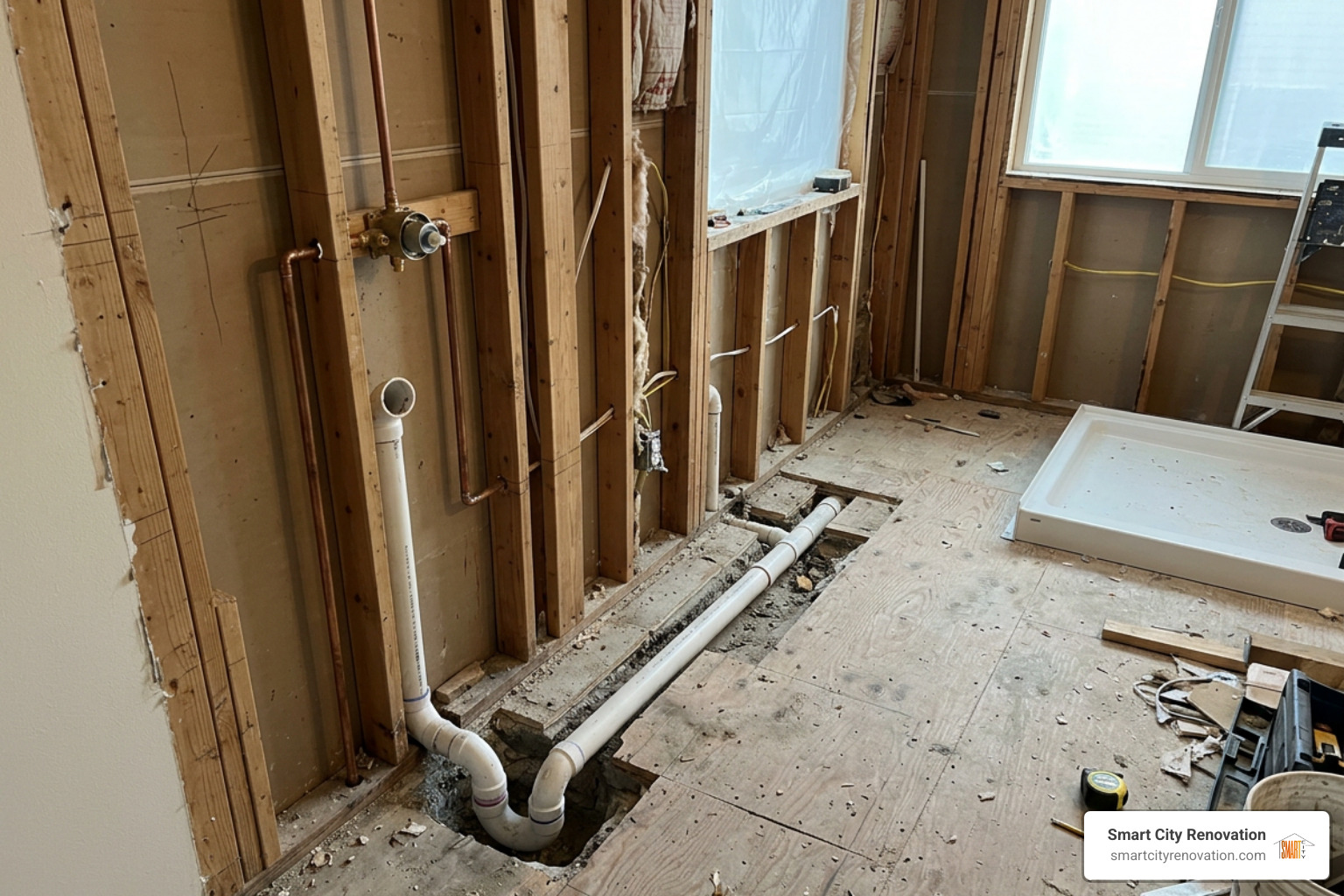
Labor rates in suburban areas around Des Plaines, Park Ridge, Glenview, and Schaumburg reflect specialized trade pricing. Plumbers command $45 to $200 per hour, while master tile contractors and general remodelers charge $70 to $120 per hour. For a broader look at plumbing scope and rough-in work, see our In-Depth Guide to Plumbing Services.
Plumbing Code Updates and Drain Lines
A common misconception is that a new shower pan can attach to existing bathtub drain pipes without major modifications. Standard building rules governed by the International Plumbing Code explicitly require a 2-inch drain line for showers, whereas standard bathtubs rely on a 1.5-inch drain line.

Because showers lack the deep basin reservoir of a traditional tub, water must drain at a higher velocity to prevent pooling and overflow onto bathroom floors. Plumbers must open the subfloor, swap out the old 1.5-inch trap assembly for a code-compliant 2-inch pipe, and tie into the main soil stack. Replacing the old mixing valve and installing a brand-new shower valve assembly adds $225 to $575 installed.
Material Choices and Design Factors: Cost to Replace Bathtub with Shower
Your aesthetic preferences and functional requirements significantly influence the overall cost to replace bathtub with shower:
- Wall Finishes: Prefab acrylic walls keep material costs under $1,500. Ceramic tile adds $500 to $2,000 in material, while designer porcelain tile ranges from $7,000 to $14,000 including high-end installation labor. Premium natural stone slabs can easily exceed $15,000.
- Glass Doors: Standard framed bypass sliding doors cost $300 to $1,200, whereas heavy custom frameless glass enclosures range from $900 to $2,300.
- Hardware & Fixtures: Brushed nickel, chrome, or matte black showerheads and thermostatic valve sets range from $150 for entry-level models to over $1,000 for multi-head spa jet configurations.
Hidden Costs, Permits, and Project Timelines
When opening up 30-to-50-year-old bathroom walls in Chicagoland homes across Niles, Arlington Heights, and Skokie, homeowners should anticipate a few behind-the-wall surprises.
- Subfloor Rot & Mold Remediation: Unseen leaks behind old tub surrounds frequently rot plywood subfloors and wall studs over time. Structural framing repairs, joist sistering, and mold mitigation add $500 to $2,500.
- Permits and Inspections: Replacing fixtures in the same footprint with plumbing alterations requires local municipal permits. Permit fees range from $180 to $600 across local Chicago suburbs.
- Ventilation Upgrades: High-humidity showers demand strong exhaust fans to prevent mildew growth. Adding or upgrading a ceiling fan system with ductwork adds $300 to $800.
To choose a reliable local team that accounts for these variables, consult our Find Bathroom Remodeling Contractors in Chicagoland Survival Guide.
Project Timelines and Duration
- Tub Cuts: 4 to 6 hours.
- Acrylic / One-Day Systems: 1 to 2 working days.
- Mid-Range Tiled Conversions: 5 to 7 working days.
- Custom Walk-In Luxury Showers: 8 to 14 working days.
Always allow tile grout, liquid waterproofing membranes, and 100% silicone sealant to cure completely for at least 24 to 48 hours before exposing the new shower surface to running water.
DIY Feasibility vs. Hiring a Professional
While tackling a DIY conversion might sound like an easy way to save on labor expenses, shower conversions present high risks for amateur builders:
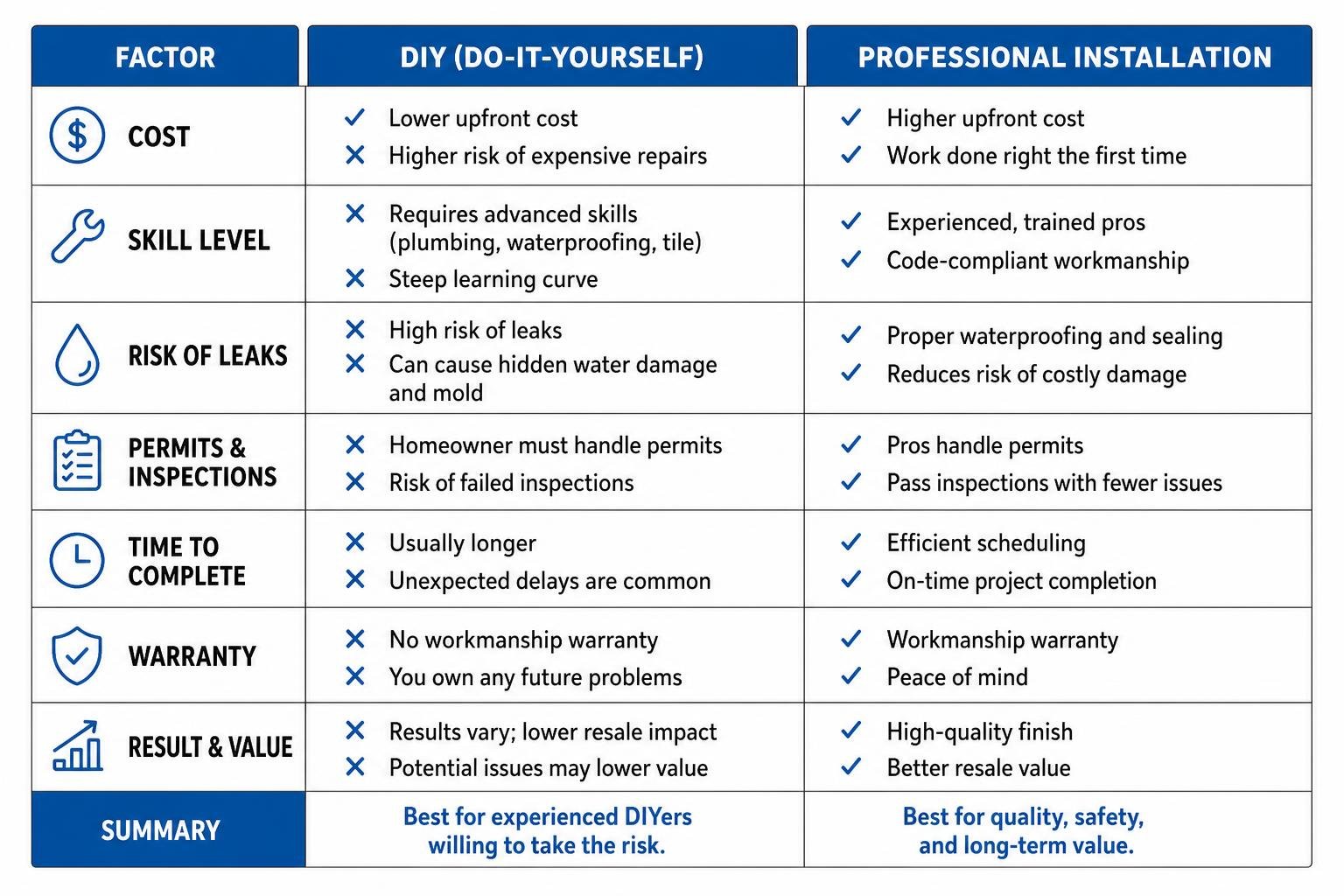
A single hairline leak in an improperly waterproofed or membrane-sealed shower pan can quietly destroy subfloors, ruin ceilings on lower levels, and trigger thousands of dollars in emergency structural repairs.
Resale Value and Impact on Home Equity
A well-executed bath-to-shower conversion typically delivers a solid 60% to 74% return on investment (ROI) upon resale, making it one of the most practical home improvements for modern buyers.

However, homeowners must keep practical family dynamics and buyer expectations in mind. Removing the only bathtub in a single-bathroom residence can turn away families with infant children and negatively affect overall market liquidity. As long as your home retains at least one traditional bathtub in another bathroom, converting an unused or hazardous tub into a sleek walk-in shower boosts property appeal—especially among buyers seeking modern aesthetic layouts, easy maintenance, or built-in aging-in-place features like curbless zero-threshold entries, sturdy grab bars, and built-in bench seating.
Frequently Asked Questions
Do I need a permit to convert a bathtub into a shower?
Yes. Almost all local municipal building departments in the Chicago area require a building and plumbing permit. This is because converting a bathtub to a shower involves structural wall inspection, upgrading the drain line diameter from 1.5 inches to 2 inches, and replacing the underlying shower mixing valves.
Will converting the only bathtub in a home hurt resale value?
Yes, it can. Real estate professionals strongly recommend retaining at least one functional bathtub in the home to maintain broad appeal for buyers with young children. However, if your residence features two or more bathrooms, converting one tub into a modern walk-in shower is widely viewed as a valuable upgrade.
Why does a shower drain need to be larger than a tub drain?
Bathtubs hold standing water in a high-capacity basin and drain gradually through a 1.5-inch outlet. Showers require rapid, continuous drainage over a relatively flat, low-threshold pan. A 2-inch drain is required by standard plumbing code to handle peak water flow from high-output showerheads without flooding the bathroom floor.
Conclusion
Determining the true cost to replace bathtub with shower means looking beyond basic surface kits to understand plumbing codes, subsurface waterproofing, and structural prep work. Investing in high-quality waterproof membranes and licensed trade installation ensures your modern shower remains durable, safe, and leak-free for decades to come.
At Smart City Renovation, we bring 25 years of local construction expertise to homeowners throughout Des Plaines, Park Ridge, Mount Prospect, Arlington Heights, Glenview, and the surrounding Chicagoland area. Explore full service remodeling solutions with our team today to turn your old bathtub into a beautiful, functional walk-in shower.