Why Finding Industrial Roofers Near Me Is Critical for Your Facility
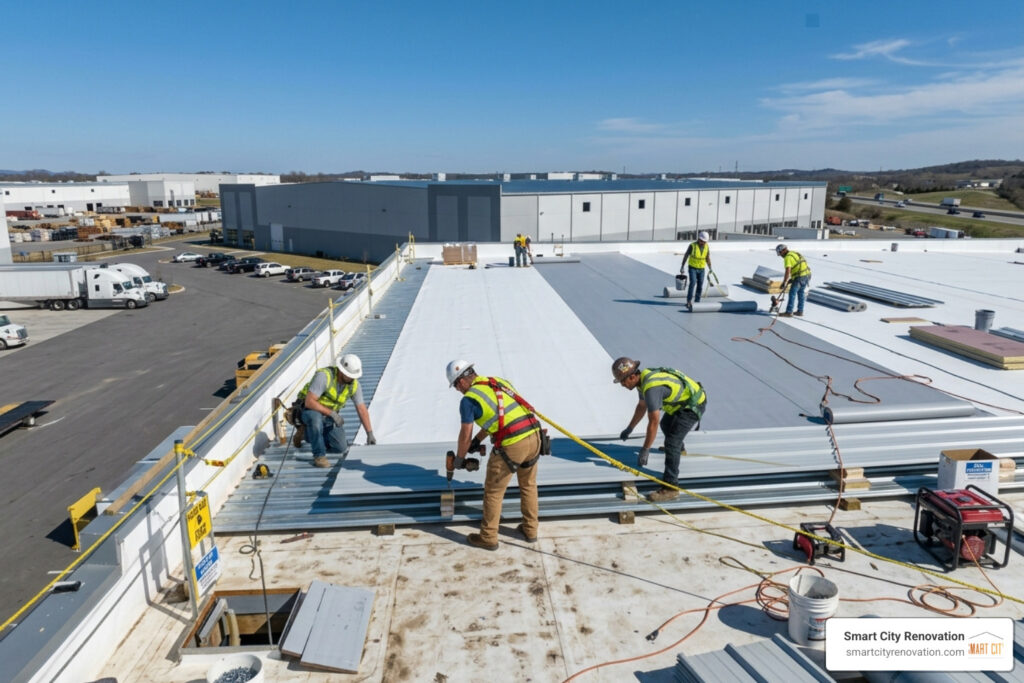
Industrial roofers near me are specialized contractors trained to install, repair, and maintain roofing systems on large-scale facilities like warehouses, manufacturing plants, distribution centers, and chemical facilities.
If you need a quick answer, here’s what to look for:
- Experience: Contractors with 20+ years serving industrial clients
- Safety compliance: OSHA 30-certified crews with site-specific training
- Materials expertise: TPO, EPDM, BUR, modified bitumen, metal, and chemical-resistant systems
- 24/7 availability: Emergency response for leaks, storm damage, and equipment failures
- Credentials: Manufacturer certifications, A+ BBB rating, bonded and insured
- Local knowledge: Familiarity with regional weather, building codes, and load requirements
Industrial roofing is not the same as putting shingles on a house. These are large, complex systems exposed to chemical fumes, heavy equipment vibration, extreme weather, and strict safety regulations. A wrong material choice or a missed inspection can shut down an entire operation.
That’s why choosing the right contractor matters so much — and why proximity alone isn’t enough. You need qualified industrial roofers near you.
I’m Norbert, a general contractor with 25 years of Chicagoland construction experience at Smart City Renovation, where we’ve helped industrial and commercial property owners find the right roofing solutions for their facilities. In the sections below, I’ll walk you through everything you need to know to find and vet reliable industrial roofers near me in your area.
Understanding Industrial Roofing Services and Specialized Requirements
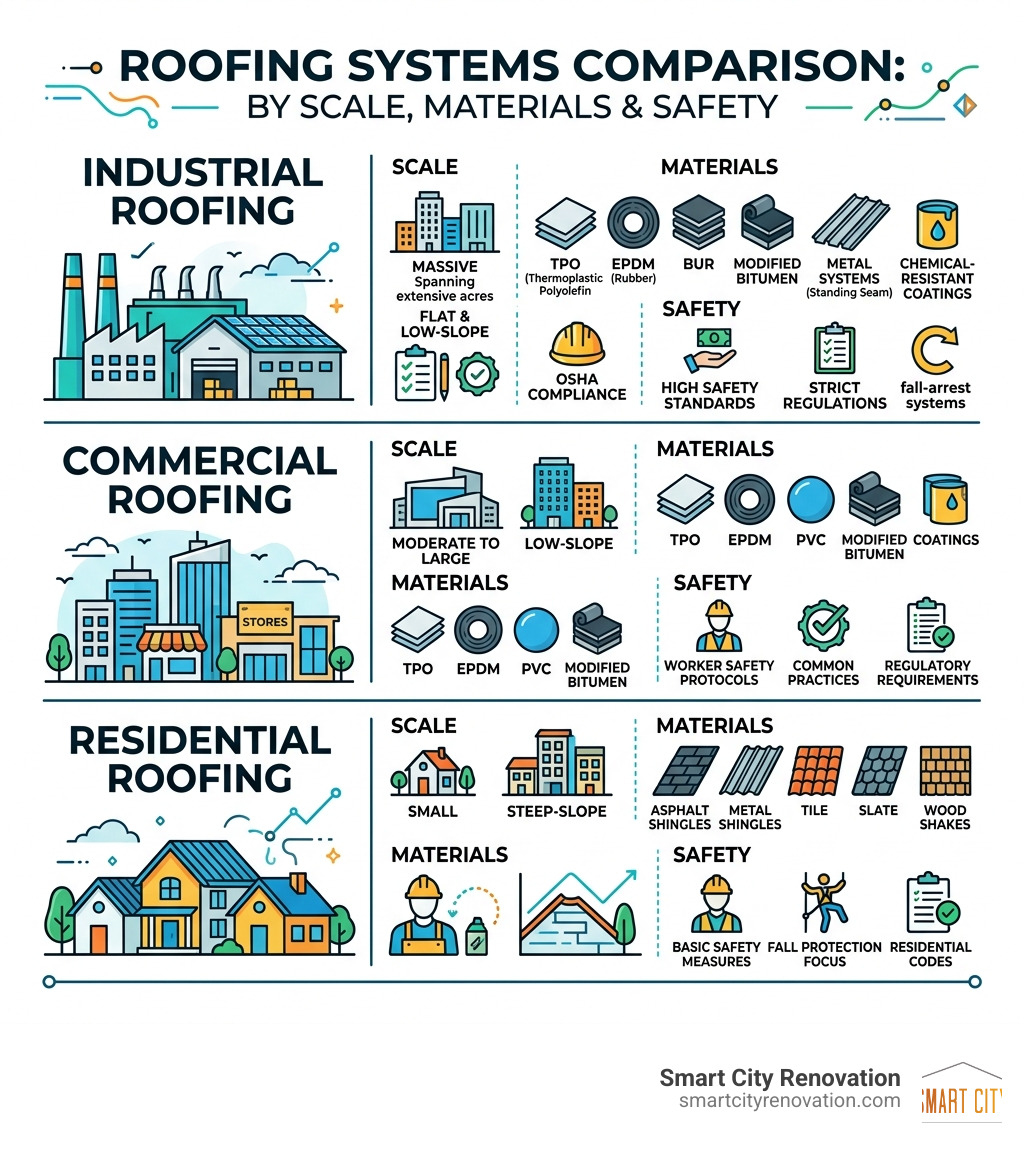
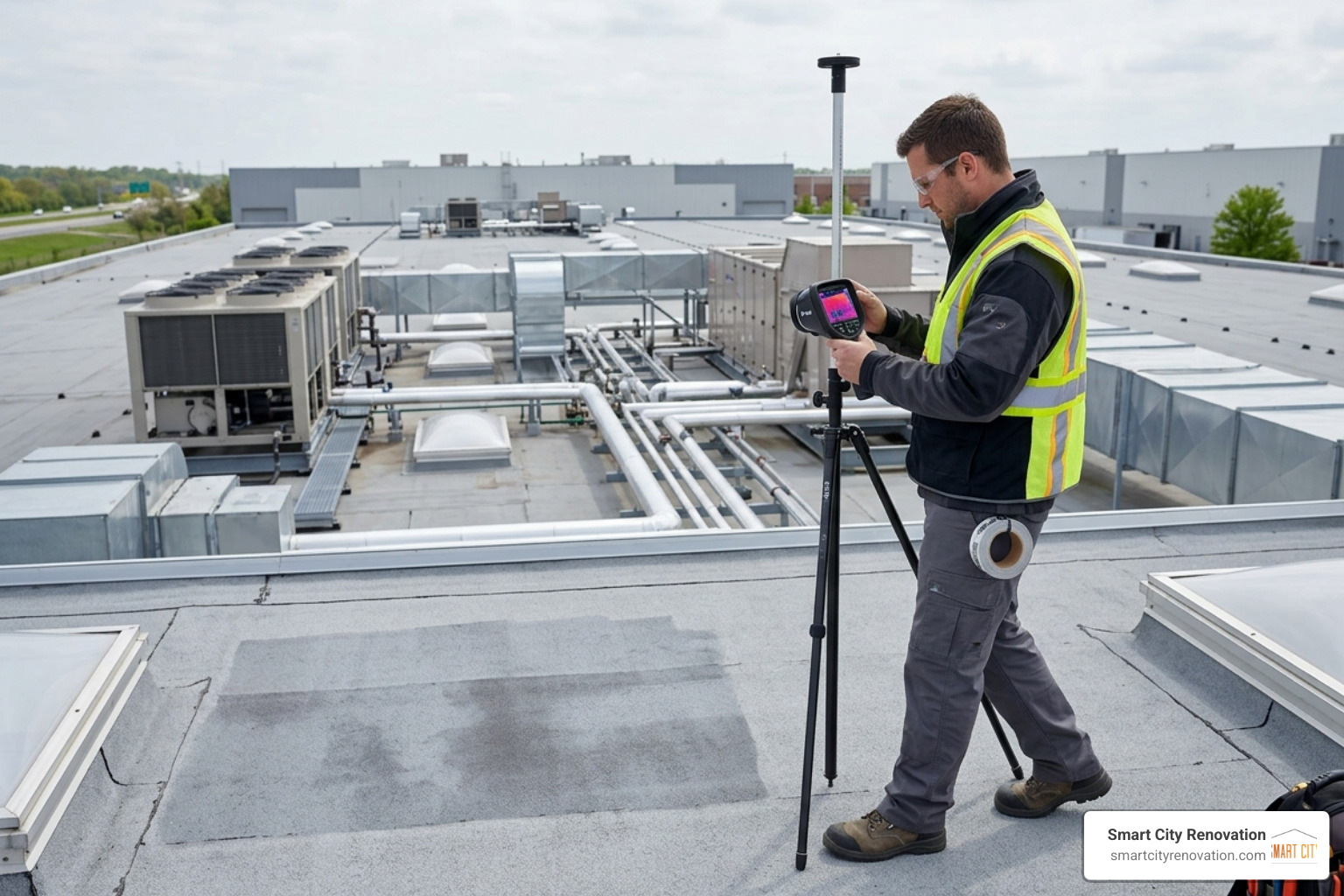
When you start searching for industrial roofers near me, it is vital to understand that industrial roofing is a high-stakes discipline. Unlike residential roofing, which focuses on aesthetics and shedding water from a sloped surface, industrial systems must manage massive flat or low-slope acreages. These roofs often support heavy HVAC units, exhaust fans, and piping systems that create hundreds of “penetrations”—each one a potential leak point.
The High-Risk Nature of Industrial Facilities
Industrial environments often involve chemical resistance requirements. For example, a food processing plant in Elk Grove Village or a chemical storage facility in Des Plaines may emit fumes or oils that can literally melt standard roofing membranes. Specialized industrial roofers near me must select materials that can withstand these corrosive elements.
Furthermore, industrial projects often take place in high-risk facilities. This includes tank farms, energy facilities, and high-rise manufacturing hubs where a single spark could lead to a catastrophe. Because of this, our professional roofing services prioritize site-specific safety plans.
Safety and Compliance Standards
In the industrial sector, “safety first” isn’t just a slogan; it’s a legal and operational requirement. Reliable contractors ensure their crews have OSHA 30 compliance. This level of training is essential for navigating the hazards of heavy machinery and high-voltage equipment found on industrial sites.
Specific training often includes:
- Confined-space training: For working in areas with limited entry/exit points.
- Specialized PPE: Beyond hard hats, this may include chemical-resistant suits or specialized fall protection.
- Chemical spill awareness: Knowing how to react if roofing activities interact with facility chemicals.
When searching for industrial roofers near me, always ask if they provide 24/7 emergency services. Industrial leaks don’t just damage the ceiling; they can ruin millions of dollars in inventory or cause a total production shutdown.
Top Materials Used by Industrial Roofers Near Me
Choosing the right material is the most significant decision for the longevity of your facility. In the Chicagoland area, from Schaumburg to Skokie, our roofs must endure punishing heat in the summer and sub-zero temperatures in the winter.
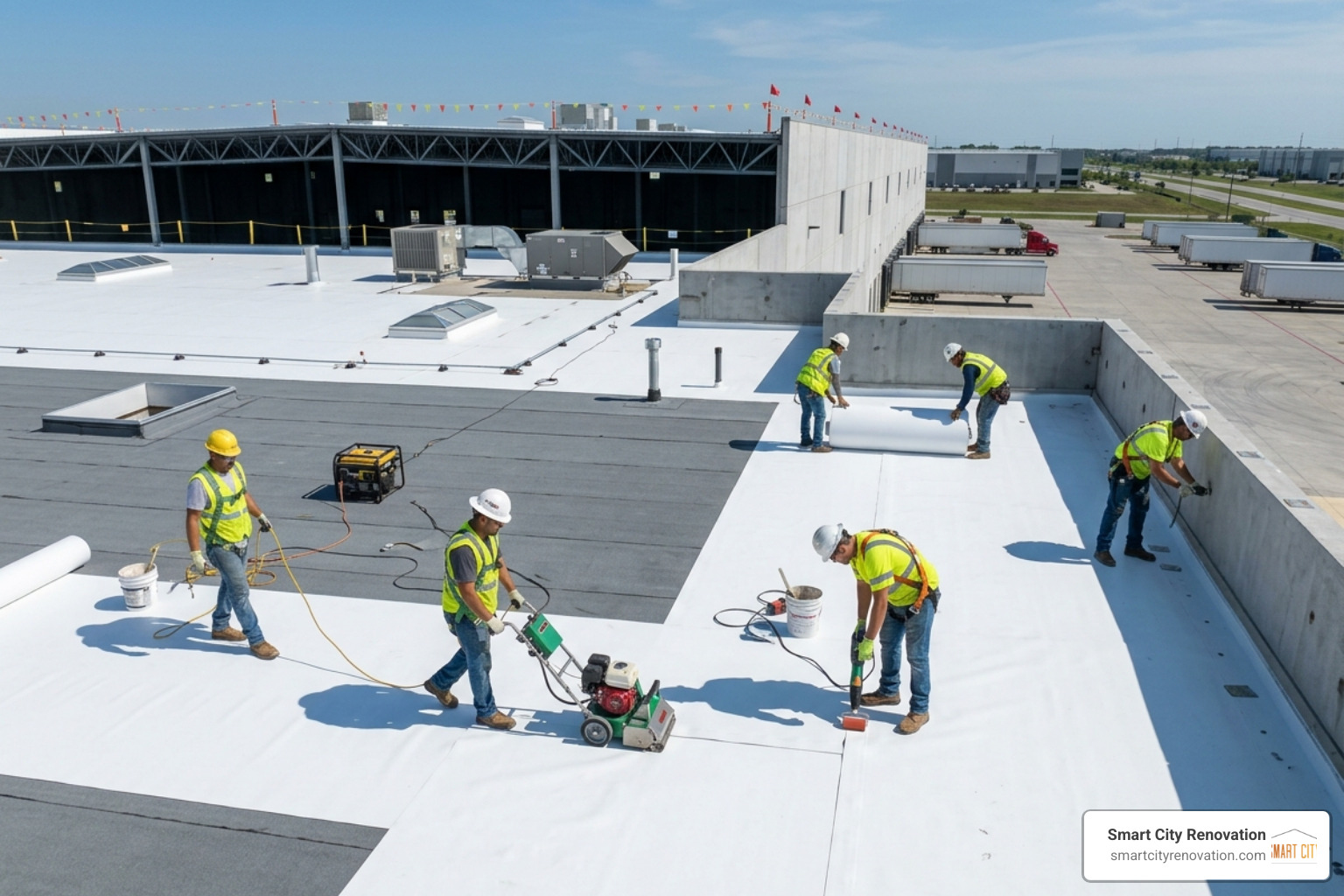
Common Industrial Roofing Systems
- TPO (Thermoplastic Polyolefin): This is a favorite for modern industrial buildings. It is highly reflective, which helps lower energy costs by bouncing UV rays away from the building. TPO is also resistant to chemical exposure and bacterial growth.
- EPDM (Ethylene Propylene Diene Monomer): Often called “rubber roofing,” EPDM is known for its incredible durability and lower cost. It handles thermal shock (rapid temperature changes) exceptionally well, which is a major plus for our local climate.
- Built-Up Roofing (BUR): A time-tested system involving multiple layers of bitumen and fabric. It’s heavy and tough, making it ideal for roofs with high foot traffic.
Material Comparison Table
| Feature | TPO | EPDM | Built-Up Roofing (BUR) |
|---|---|---|---|
| Durability | High | Very High | Excellent |
| Energy Efficiency | High (Reflective) | Moderate (unless coated) | Low |
| Chemical Resistance | Excellent | Good | Moderate |
| Installation Speed | Fast | Fast | Slow |
| Cost | Mid-range | Budget-friendly | Higher |
At Smart City Renovation, our material selection process involves analyzing your facility’s specific output. If your plant produces high heat or chemical exhaust, we might recommend silicone coatings or specialized metal roofing with structural retrofits. These high-performance assemblies provide superior UV reflection and long-term energy efficiency.
Why Local Expertise Matters for Industrial Roofers Near Me
You might find a national company, but local expertise is irreplaceable. In areas like Arlington Heights and Palatine, we deal with specific regional climate challenges.
Snow Load Calculations: Our roofs must be engineered to hold thousands of pounds of wet snow during a typical April 2026 blizzard. Wind Uplift Ratings: Large, flat industrial roofs act like giant sails. If the wind uplift rating isn’t calculated correctly for our local wind speeds, the entire roof could peel off during a storm. Building Codes: Each suburb, from Hoffman Estates to Niles, has its own nuances in building codes. As a local roofing contractor, we ensure every project is fully permitted and compliant with local regulations.
Essential Credentials for Reliable Industrial Roofing Contractors
Don’t let a “truck and a ladder” operation touch your industrial facility. The credentials of your chosen industrial roofers near me serve as your insurance policy against failure.
What to Verify Before Hiring
- 25+ Years of Experience: In the construction world, longevity equals reliability. We’ve been operating in Chicagoland for a quarter-century, which means we’ve seen—and fixed—every possible roofing failure.
- Manufacturer Certifications: Top-tier manufacturers only certify the best. Look for contractors certified by giants like GAF, Firestone, or Carlisle. These certifications often allow the contractor to offer extended “No Dollar Limit” (NDL) warranties.
- Bonded and Insured: This is non-negotiable. Industrial projects involve high values; you must ensure the contractor has the aggregate limits to cover potential incidents.
- A+ BBB Rating: This indicates a history of resolving customer concerns fairly and professionally. You can verify a contractor’s standing through the Better Business Bureau.
As a general contractor, we understand that a roof is part of a larger structural system. Our role as a general contractor allows us to look at the “big picture,” including how the roof interacts with your HVAC, plumbing, and masonry.
Selecting the Best Industrial Roofers Near Me for Your Facility
When vetting candidates, look for these specific service offerings:
- Free Inspections: A reputable roofer should provide a no-obligation assessment of your current system’s health.
- Portfolio Review: Ask to see their industrial capabilities. Have they worked on buildings of your size and type? You can view our work portfolio to see the scale of projects we handle.
- Financing Options: Industrial roofs are massive investments. Flexible financing can help manage the capital expenditure.
- Warranty Transparency: Ensure you understand the difference between a material warranty and a workmanship guarantee.
Proactive Maintenance and Emergency Response for Industrial Roofs
The most expensive roof is the one you ignore until it fails. Proactive asset management is the secret to making an industrial roof last 30 years instead of 15.
Preventative Maintenance Programs
We recommend at least two inspections per year—one in the spring and one in the fall. During these visits, industrial roofers near me should perform:
- Debris Removal: Leaves and trash can clog scuppers and drains, leading to “ponding” water that adds dangerous weight to your structure.
- Gutter and Downspout Cleaning: Ensuring water leaves the roof as quickly as possible.
- Leak Detection: Using thermal imaging or moisture scans to find hidden leaks before they rot the decking.
- Flashings Check: Inspecting the seals around HVAC units and vents, where 90% of leaks begin.
24/7 Emergency Response
In April 2026, severe weather can strike at any hour. Whether it’s hail damage in Mount Prospect or wind damage in Rosemont, you need a roofing contractor with specialized services who can respond immediately. A quick patch during a storm can save your facility’s interior from catastrophic water damage and preserve your structural integrity.
Frequently Asked Questions about Industrial Roofing
What is the difference between industrial and commercial roofing?
While the terms are often used interchangeably, “industrial” typically refers to facilities used for manufacturing, power generation, or heavy storage. These roofs face unique challenges like chemical exhaust, heavy vibrations from machinery, and specialized safety protocols. Commercial roofing usually refers to retail, office buildings, or schools, which generally have simpler environmental demands.
How often should an industrial roof be inspected?
At a minimum, you should have your roof inspected twice a year. However, you should also schedule an inspection after any major weather event (hail, high winds, or heavy snow) and after any significant rooftop equipment installation or repair.
What are the best materials for a flat industrial roof?
For most Chicagoland facilities, TPO and EPDM are the top choices due to their balance of cost, durability, and weather resistance. However, if your facility deals with specific chemicals or high heat, a Built-Up Roof (BUR) or a specialized metal system might be the “best” for your specific needs.
Conclusion
Finding the right industrial roofers near me is about more than just a search result; it’s about finding a partner for your facility’s long-term health. At Smart City Renovation, we bring 25 years of local expertise to every project. We understand the unique demands of the Chicagoland climate and the rigorous standards required by industrial operations in Des Plaines, Arlington Heights, and beyond.
From quality craftsmanship to 24/7 emergency response, we are dedicated to protecting your assets. Don’t wait for a leak to disrupt your business. Contact us for a consultation today and let our experts ensure your facility stays covered.
For more information on our specific roofing capabilities, visit our roofing contractor page.