
When a Main Drain Clog Becomes Your Worst Plumbing Nightmare
A main drain clog is not like a slow kitchen sink or a backed-up shower — it affects your entire plumbing system at once, and it can go from a minor annoyance to a sewage emergency in hours.
Here’s what you need to know right away:
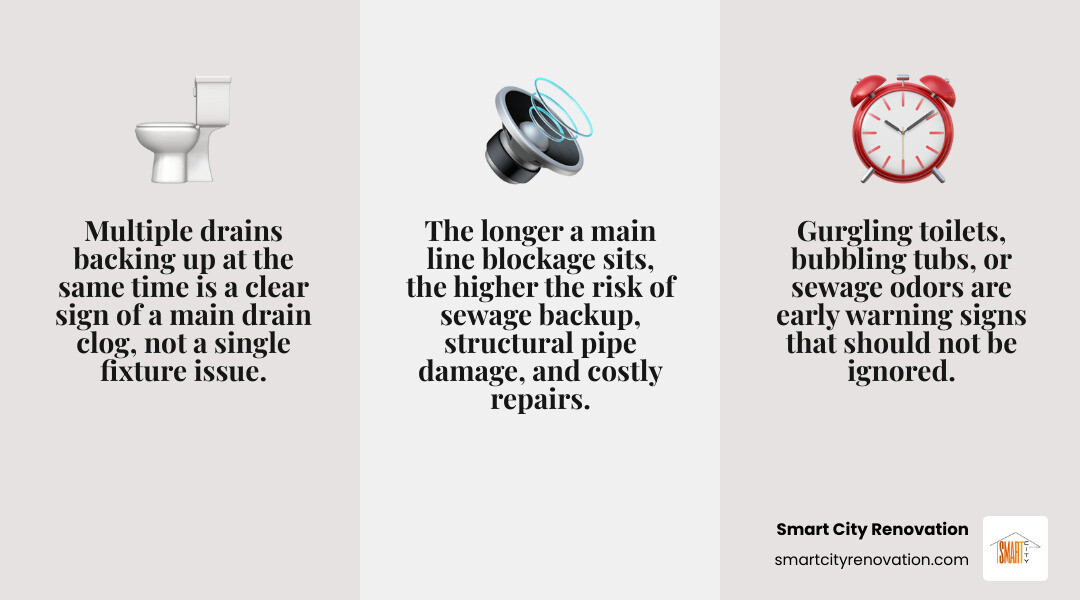
- Multiple drains backing up at the same time = likely a main line issue, not a single fixture
- Gurgling toilets, bubbling tubs, or sewage odors = early warning signs you should not ignore
- Sewage backing up into a basement floor drain = treat this as an emergency
- DIY fixes (hot water, baking soda, small hand snake) can work on minor soft clogs
- Call a professional if multiple fixtures are affected, if clogs keep coming back, or if you suspect tree roots or pipe damage
Every drain in your home — sinks, toilets, showers, washing machine — feeds into one main sewer line that carries all wastewater out to the city sewer or your septic tank. Think of it like a tree: individual fixtures are the branches, and the main sewer line is the trunk. When the trunk is blocked, nothing in the house drains properly.
The longer a main line blockage sits, the worse it gets. Wastewater backs up, sewer gases build inside your home, and the risk of structural pipe damage climbs fast.
I’m Norbert from Smart City Renovation, and with 25 years of Chicagoland construction and plumbing experience, I’ve seen how a neglected main drain clog can turn a straightforward fix into a costly excavation project. In this guide, I’ll walk you through exactly how to spot, diagnose, and stop the problem before it gets out of hand.
Main drain clog terms to know:
Understanding Your Home’s Sewer Lateral and Clog Causes
To truly understand how a main drain clog develops, we have to look beneath the surface. Your home’s wastewater system relies on a single underground pipe called the sewer lateral. According to the International Plumbing Code (IPC) Section 710, residential sewer laterals must be at least 4 inches in diameter to handle the waste load of a modern household.
This entire system operates on a simple, elegant principle: gravity flow. There are no pumps pushing water down your main line; instead, pipes are installed with a code-specified minimum slope of 1/4 inch per foot (a 2% grade). This specific angle is engineered to ensure a self-scouring velocity — meaning the water flows fast enough to carry solid waste along with it, rather than leaving debris behind to accumulate.
When this balance is disrupted, a clog is inevitable. Across Chicagoland communities like Park Ridge, Skokie, and Glenview, we see several primary culprits behind main sewer line failures:
- Tree Root Intrusion: Tree roots are naturally drawn to the warmth, moisture, and nutrients inside sewer pipes. They can exploit microscopic cracks or loose joints, particularly in older clay or cast iron lines. Once inside, they grow rapidly, creating a fibrous net that traps toilet paper and solid waste.
- Grease Accumulation (FOG): Pouring fats, oils, and grease down the kitchen sink is a recipe for disaster. As grease cools, it solidifies along the pipe walls, catching other debris and slowly narrowing the pipe’s internal diameter over time.
- Pipe Bellies: Over time, shifting soil or poor installation can cause a section of the sewer lateral to sag. This low spot, known as a “belly,” collects standing water and allows solids to settle, creating a chronic blockage point.
- Structural Pipe Failure: Depending on when your Chicagoland home was built, your lateral could be made of several materials:
- Clay Pipes (Common pre-1970): Highly susceptible to root intrusion at mortar joints and structural cracking.
- Cast Iron: Strong but prone to internal rust scaling, which reduces flow capacity.
- PVC/ABS: Modern standards that resist corrosion and root intrusion, though still vulnerable to soil shifting.
- Orangeburg Pipe (Compressed wood pulp and pitch, common 1940s–1970s): Highly prone to flattening, delamination, and complete structural collapse.
For a deeper dive into how these factors interact, check out this comprehensive guide on Main Sewer Line Clogs: Signs, Causes, and Professional Response | Clogged Drain Authority .
How to Tell a Branch Line Blockage from a Main Drain Clog
Before you panic, it is crucial to determine whether you are dealing with a local fixture clog or a system-wide main line emergency. Your plumbing system is divided into three distinct levels:
- Fixture Traps (Level 1): The P-trap directly beneath your sink or shower. If only your kitchen sink is backed up, the problem is localized here.
- Branch Lines (Level 2): Horizontal pipes that collect waste from a specific room or group of fixtures (like an upstairs bathroom) and carry it to the main stack.
- The Main Line (Level 3): The single trunk line that collects wastewater from all branch lines and carries it out of your home.
When a branch line is blocked, only the fixtures connected to that specific branch will act up. For instance, if your master bathroom sink and shower drain slowly, but the guest bathroom downstairs works perfectly, you have a branch line issue.
Conversely, a main drain clog affects the entire system. Because wastewater cannot pass through the blocked main lateral, it backs up into the lowest available drains in your home — usually basement floor drains, ground-floor showers, or bathtubs. If you want to learn more about how these lines connect, explore our In-Depth Guide to Plumbing Services or read this helpful resource on Main Line Drain Cleaning: How to Tell When a Clog Is More Than a Fixture Problem | Drain, Sewer & Hydro Jetting .
Warning Signs of a Main Sewer Line Blockage
Recognizing the early warning signs of a main sewer line blockage can save you thousands of dollars in water damage repairs. Because a main line obstruction prevents wastewater from exiting, pressure builds within the system, leading to highly predictable symptoms.
Keep an eye out for these classic warning signs:
- Multiple Fixtures Backing Up Simultaneously: If you run the washing machine and water starts bubbling up into your kitchen sink, or if flushing the toilet causes water to rise in your bathtub, you are dealing with cross-fixture reactions. This occurs because the displaced air and water have nowhere else to go but back up the nearest open drain.
- Toilets Gurgling or Bubbling: Toilets have the largest direct connection to your main sewer line and act as pressure release valves. When a blockage traps air in the system, that air escapes through the toilet bowl’s water trap, creating a distinct gurgling or bubbling sound.
- Wastewater Pooling in the Basement Floor Drain: Because gravity pulls water to the lowest physical point, your basement floor drain is typically the first place a backup will manifest. If you notice standing water, soapy residue, or raw sewage around this drain, stop running water immediately.
- Persistent Sewage Odors: A blocked main line prevents sewer gases from venting safely through your roof stacks. These foul-smelling, hazardous gases will instead escape through your home’s lower drains.
Ignoring these signs can quickly lead to a major household disaster. If you are already seeing water pool where it shouldn’t, read our guide on Plumbing Help for When Your Basement Becomes a Lake and review Main Sewer Drain Clogged: Signs and Causes Guide .
What to Do If Sewage Backs Up Into Your Home
If sewage actively begins backing up into your floor drains, showers, or tubs, you must treat it as a Class B biological hazard. Raw sewage contains harmful pathogens, bacteria, and viruses that pose immediate health risks.
Follow these emergency steps immediately:
- Stop Using All Water: Do not flush toilets, run sinks, take showers, or operate the washing machine or dishwasher. Any water you put down the drain will immediately add to the backup.
- Locate Your Main Water Shutoff: If you cannot get household members to stop using water, or if you suspect an appliance is malfunctioning, shut off the main water valve to the house.
- Put on Protective Gear: If you must enter the area, wear heavy-duty rubber gloves, eye protection, long sleeves, and rubber boots that can be thoroughly disinfected or discarded.
- Avoid Chemical Contact: Do not pour commercial chemical drain cleaners into standing sewage. They will not clear a main line block, and they will create a toxic, acidic pool of water that can cause chemical burns to you or any plumber who services the line.
- Call for Emergency Help: If you live in Des Plaines, Mount Prospect, or Niles, contact us immediately. You can read more about our rapid-response options here: Need an Emergency Plumber in Des Plaines? Fast, Reliable Service Available 24/7.
DIY vs. Professional Solutions for a Main Drain Clog
When faced with a main drain clog, homeowners often wonder if they can tackle the job themselves or if they need to call in the professionals. While a simple branch line clog can often be cleared with a standard plunger or a hand snake, main sewer line clogs require specialized equipment and expertise.
| Feature / Method | DIY (Baking Soda, Vinegar, Hand Snake) | Professional (Hydro Jetting, Motorized Auger, CCTV) |
|---|---|---|
| Best Used For | Minor soft clogs, grease buildup near fixtures | Tree roots, heavy grease, collapsed pipes, scale |
| Max Reach | 10 to 25 feet | 100 to 300 feet |
| Safety Risk | Low (unless using harsh chemicals) | High if untrained (pipe damage, injury) |
| Diagnostic Capability | None (blind clearing) | High (CCTV camera inspection) |
| Long-Term Effectiveness | Temporary fix for main lines | Permanent clearing and structural assessment |
If you want to try clearing a minor main line clog yourself, the safest starting point is your home’s sewer cleanout pipe. By slowly opening the cleanout cap, you can relieve hydrostatic pressure in the system. If you have a manual drain auger (plumbing snake), you can feed it directly down the cleanout to attempt to break up soft blockages.
However, DIY snaking has serious limitations. Forcing a mechanical cable against a hard obstruction can split fragile clay pipes or break the snake itself inside the line. Furthermore, DIY methods cannot address tree root intrusion or structural collapses.
Professionals use advanced tools like high-pressure hydro jetting (operating at up to 3,850 PSI) to scrub pipe walls clean, and CCTV camera inspections to visually confirm the pipe’s integrity. For a detailed breakdown of these advanced techniques, read How to Unclog a Main Sewer Line and When to Call a Pro – WaterWays Plumbing and our guide on The Ultimate Guide to Clearing a Clogged Sewer Line and Jetting It Clean.
Preventing a Future Main Drain Clog with Regular Maintenance
Once your main line is clear, establishing smart preventative habits will keep it that way. Here are our top professional tips for maintaining a healthy sewer lateral:
- Practice Proper Grease Disposal: Never pour cooking oil, bacon grease, or butter down the drain. Let grease solidify in a jar, then throw it in the trash.
- Install High-Quality Drain Screens: Use mesh screens over shower and tub drains to catch hair and soap scum before they enter your branch lines.
- Manage Nearby Landscaping: Keep large trees and shrubs planted far away from the path of your underground sewer line. If you have existing trees, consider installing physical root barriers in the soil.
- Schedule Annual CCTV Inspections: A yearly camera inspection allows us to spot minor root intrusion, pipe sags, or cracks before they escalate into a full-blown backup.
- Use Enzyme Cleaners: Unlike harsh chemicals, monthly treatments with natural enzyme-based cleaners safely break down organic waste and grease buildup without damaging your pipes.
For more preventative tips, check out this guide on Clogged Main Drain? Signs the Problem Is Bigger Than One Fixture .
Frequently Asked Questions About Main Sewer Lines
How much does it cost to have a main sewer line professionally cleared?
The cost of clearing a main drain clog varies based on the severity of the blockage, how easily your cleanout can be accessed, and the tools required. On average, a standard professional drain clearing service ranges from $300 to $1,500.
A simple mechanical snaking through an easily accessible cleanout typically falls on the lower end of this range. However, if the plumber must remove a toilet to access the line, or if heavy root intrusion requires high-pressure hydro jetting and a follow-up CCTV camera inspection, the cost will increase. In cases where the pipe has structurally collapsed, a full repair or trenchless pipe relining is required, which will take longer and cost more depending on the depth and location of the lateral. For an overview of repair standards, see the Best Practices for Main Drain Repair Guide – Plumbing Ways .
Are chemical drain openers safe for all types of pipes and septic systems?
In short: no. Traditional chemical drain openers rely on harsh, highly corrosive chemicals (such as sodium hydroxide or sulfuric acid) to eat through blockages. While they might clear a minor hair clog in a sink, they are incredibly dangerous to use on a main sewer line.
If the chemical cleaner fails to clear the clog, it will sit in your pipes, eating away at cast iron, copper, and even PVC joints, eventually causing structural leaks. Additionally, these chemicals destroy the beneficial bacteria in septic systems, which are essential for breaking down solid waste.
If you prefer a retail DIY product, look for high-density, non-acidic formulas. For example, Green Gobbler Ultimate Main Drain Opener has a 4.2 out of 5 star rating from 30,871 global customer reviews, with 64% of those being 5-star reviews. Priced at $24.98 for 64 fluid ounces ($0.39 per fluid ounce), its high-density formula is designed to sink through standing water to dissolve organic clogs without damaging pipes or septic systems. However, even high-quality retail products are only effective on soft organic blockages and cannot clear tree roots or collapsed lines.
How do I locate and use my home’s sewer cleanout pipe?
Your sewer cleanout is a dedicated pipe with a threaded cap that provides direct access to your main sewer line.
- Locating the Cleanout: In Chicagoland homes, the cleanout is typically located in one of three places:
- Outside, within a few feet of your home’s foundation, often hidden by landscaping.
- In the basement, near the base of the main vertical waste stack.
- In a crawl space.
- Using the Cleanout Safely: If your home is experiencing a backup, the sewer lateral is filled with pressurized wastewater. When unscrewing the cleanout cap, do so very slowly. Keep a bucket and towels nearby, and be prepared to tighten the cap immediately if water begins spraying out. Letting the pressure release slowly into a bucket is much safer than opening the cap quickly and flooding your basement. Once the pressure is relieved, a plumber can safely insert a motorized auger or camera down the line.
Conclusion
A main drain clog is a serious plumbing issue that requires prompt, decisive action. By understanding the early warning signs — like multiple backed-up fixtures, gurgling toilets, and pooling water in your basement — you can address the problem before it leads to costly water damage and health hazards.
While minor clogs can sometimes be managed with careful DIY methods, stubborn blockages caused by tree roots, grease buildup, or structural pipe damage require professional expertise.
At Smart City Renovation, we bring 25 years of local Chicagoland experience to every project. Whether you are in Des Plaines, Park Ridge, Skokie, or any of our surrounding service areas, our team is equipped with the advanced diagnostics and tools needed to clear your lines safely and permanently. Don’t wait for a slow drain to turn into a basement flood — Schedule a Professional Plumber with us today.