
Why Indoor Air Quality Matters in Every Home
Indoor air quality is the condition of the air inside your home, office, or other building. It affects health, comfort, and daily performance because most Americans spend about 90% of their time indoors.
Indoor air can carry particles, gases, and biological contaminants from cooking, cleaning products, building materials, pets, moisture, smoke, and outdoor pollution. In some situations, indoor air may be much more polluted than the air outside.
| Quick answer | What it means |
|---|---|
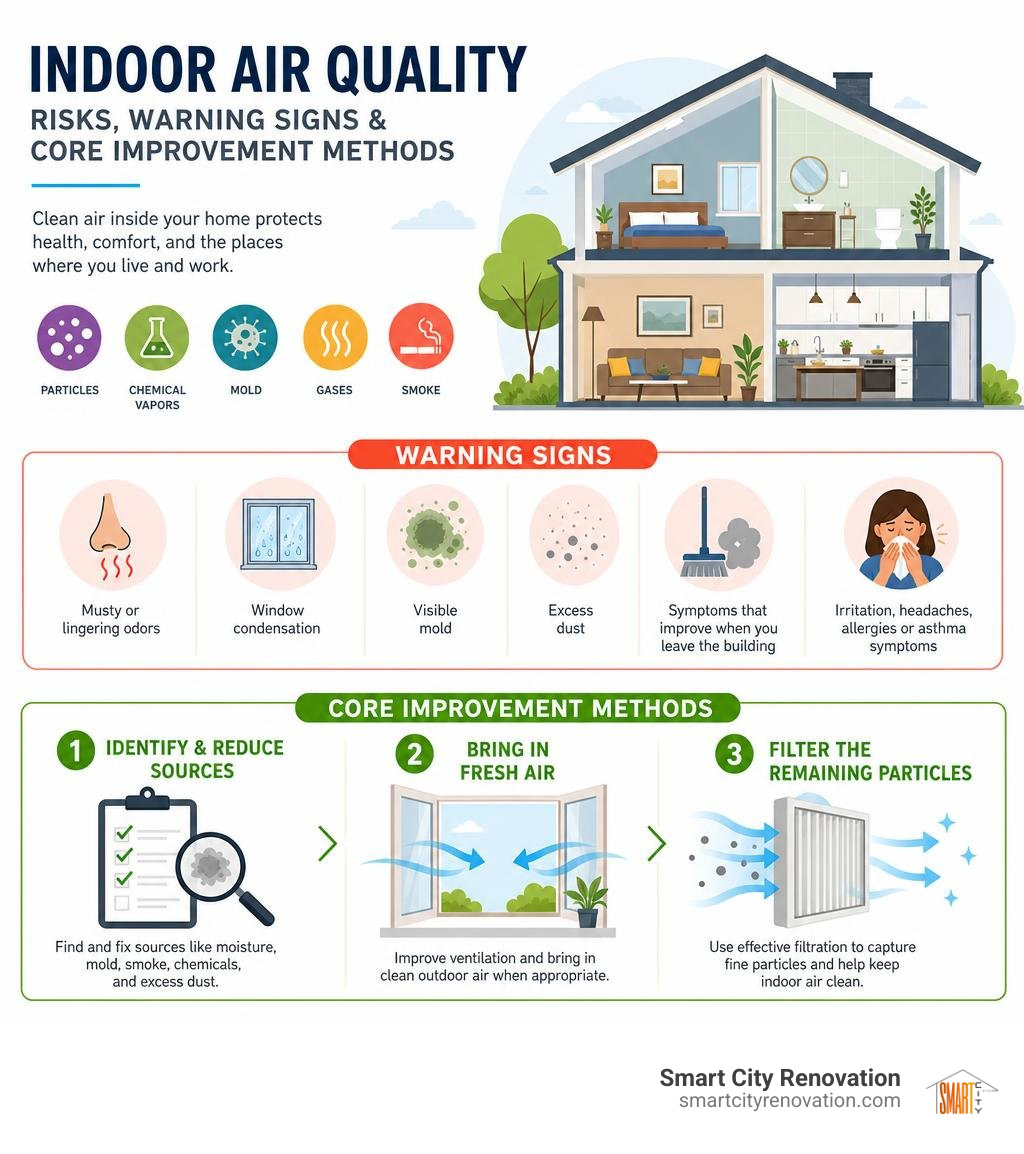
| Why it matters | Poor air can trigger irritation, headaches, allergies, asthma symptoms, and more serious long-term health risks. |
| Common warning signs | Musty smells, lingering odors, window condensation, visible mold, excess dust, or symptoms that improve when you leave the building. |
| Main risks | Radon, carbon monoxide, mold, secondhand smoke, fine particles, and chemical vapors. |
| The core approach | Identify pollution sources, bring in clean outdoor air when appropriate, and filter remaining particles. |
For Chicago-area properties, indoor air quality can become especially important during remodeling, after water damage, in tightly sealed homes, and during wildfire-smoke events. A healthy building is not only cleaner to live or work in – it can also be more comfortable, durable, and easier to maintain.
I’m Norbert of Smart City Renovation, with 25 years of Chicagoland construction and remodeling experience across homes and commercial spaces. Our work in kitchens, bathrooms, basements, roofing, HVAC, plumbing, and leak detection has shown how moisture, ventilation, and building materials can shape indoor air quality long after a project is complete.
Understanding Indoor Air Quality and Its Health Impact
Occupant health and daily well-being are directly linked to the structural integrity and mechanical efficiency of built environments. When we construct or remodel spaces across Chicagoland, we look at buildings as complete ecosystems. Poor indoor air quality does not happen by accident; it stems from the interaction between pollutant sources, moisture, heating and cooling equipment, and airflow dynamics.
When contaminants accumulate inside living and working spaces, building occupants absorb them continuously through respiration and skin contact. Understanding how these factors intersect allows homeowners to protect their health while maintaining structural longevity.
Why Indoor Environmental Health Matters
The U.S. Environmental Protection Agency (EPA) estimates that people spend approximately 90% of their time in indoor built environments. Paradoxically, research demonstrates that indoor air concentrations can be up to 5 times more polluted than outdoor air. In tightly sealed modern structures, localized contaminants have nowhere to go unless mechanically exhausted or filtered out.
Scientific studies, such as those highlighted in the Indoor Air Quality Overview | NIEHS report, prove that indoor environmental health impacts much more than basic physical breathing. Elevated indoor carbon dioxide ($CO_2$) and volatile organic compounds (VOCs) directly impair cognitive executive function, focus, and response times. In commercial offices and educational settings, workers and students score significantly higher on complex problem-solving tasks when operating in high-performance “green” environments characterized by low pollutant levels and adequate fresh air exchange.
Furthermore, vulnerable populations—including infants, the elderly, pregnant individuals, and people managing chronic asthma or cardiovascular disease—face heightened risks. Research shows that indoor pollution exposure during pregnancy is associated with impaired lung development in infants, increasing susceptibility to respiratory infections during their first year. Protecting indoor environmental health is a fundamental necessity for every household.
Short-Term and Long-Term Health Effects
The health impacts of contaminated air range from mild temporary discomfort to severe chronic conditions. Short-term exposure typically manifests as irritation of the eyes, nose, and throat, alongside headaches, dizziness, fatigue, and nasal congestion. These symptoms often mirror seasonal allergies or common colds, making them difficult to diagnose immediately. A key indicator is whether your symptoms improve shortly after stepping outside or leaving the building for a few days.
Long-term exposure carries far higher consequences. Chronic inhalation of fine particulates, mold toxins, chemical fumes, and radioactive decay products can damage lung tissue, trigger cardiovascular disease, and increase cancer risks.
| Exposure Horizon | Common Symptoms & Diagnoses | Typical Triggers |
|---|---|---|
| Short-Term | Eye/nose/throat irritation, headaches, dizziness, coughing, fatigue | Fresh paint VOCs, high $CO_2$, pet dander, cooking smoke, cleaning chemicals |
| Mid-Term | Exacerbated asthma attacks, persistent bronchitis, sinus infections | Chronic high humidity, active mold growth, dust mite infestations |
| Long-Term | Lung cancer, reduced infant lung capacity, chronic heart disease | Radon gas decay, chronic secondhand tobacco smoke, airborne asbestos fibers |
Major Indoor Air Pollutants and High-Risk Hazards
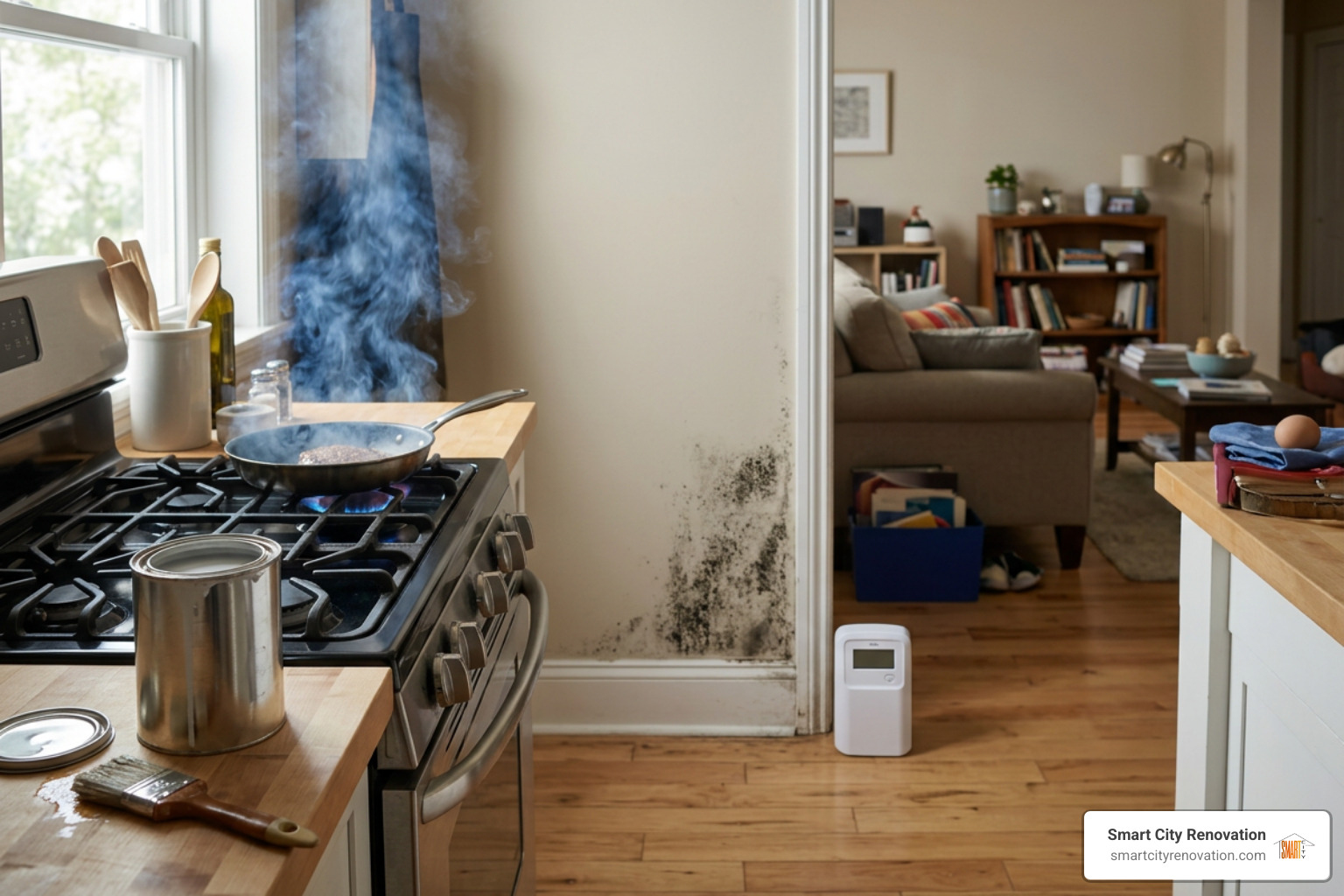
To solve air quality issues, we must first categorize the primary pollutants lurking inside residential and commercial structures. These hazards typically fall into three buckets: chemical vapors, biological agents, and toxic combustion gases.
Common Chemical and Biological Contaminants
Chemical pollutants enter homes primarily through off-gassing from synthetic materials, furnishings, and consumer products. Volatile Organic Compounds (VOCs) are carbon-based chemicals that easily vaporize into the air at room temperature. Common sources include:
- Paints, stains, varnishes, and wood sealers applied during unchecked renovations.
- Formaldehyde emissions from pressed wood furniture, cabinetry adhesives, and carpet backing.
- Synthetic fragrances, citrus-based cleaning agents, and aerosol propellants.
- Fine particulate matter ($PM_{2.5}$) generated during high-heat cooking, oil frying, or burning candles.
It is worth noting that certain “green” cleaning products containing citrus or terpene extracts can rapidly react with ambient indoor ozone to create irritating secondary pollutants and ultrafine particles.
Biological agents flourish whenever excess moisture accumulates within a structure. Dust mites, pet dander, pollen, airborne bacteria, viruses, and indoor microplastics (derived from synthetic textiles and carpets) linger in unmaintained ductwork and floor coverings. Without proper humidity control and high-efficiency filtration, these biological particles continually circulate throughout living areas.
Mitigating Radon, Mold, Carbon Monoxide, and Secondhand Smoke
Certain high-risk indoor hazards require immediate targeted intervention:
- Radon Gas: Radon is an odorless, colorless radioactive gas formed by the natural decay of uranium in soil and rock. It enters structures through foundation cracks, sump basins, and slab joints. The EPA estimates radon is responsible for approximately 21,000 U.S. lung cancer deaths annually, making it the leading cause of lung cancer among non-smokers. Mitigating elevated radon typically involves installing sub-slab depressurization systems that pull soil gas from beneath the foundation and vent it safely above the roofline.
- Indoor Mold: Mold spores exist everywhere in outdoor air, but they require moisture to germinate and grow indoors. On wet organic building materials—such as drywall, subflooring, trim, carpet, or framing lumber—mold growth can establish in as little as 24 hours. Effective remediation requires eliminating the underlying water leak or humidity source before scrubbing non-porous surfaces or removing damaged porous drywall.
- Carbon Monoxide (CO): Produced by incomplete combustion in gas furnaces, water heaters, fireplaces, and gas ranges, carbon monoxide is a lethal, invisible gas. Prevention relies on regular professional appliance tuning, proper chimney venting, and installing code-compliant CO alarms on every floor.
- Secondhand Smoke: Secondhand tobacco smoke contains over 7,000 chemicals, including dozens of known carcinogens. Sidestream smoke from burning cigarettes accounts for the vast majority of airborne toxins in smoked-in spaces. The only effective strategy is maintaining a strict 100% smoke-free policy inside and near building entrances, as outlined in the guidance on EPA Improving Indoor Air Quality.

How to Assess and Improve Home Air

Evaluating your home’s air requires combining sensory observations with modern digital diagnostics. Once pollutant sources are identified, targeted physical and mechanical solutions can be implemented.
Signs Your Home Has Poor Indoor Air Quality
You do not always need sophisticated lab testing to catch early signs of poor indoor air quality. Look for these common warning flags across your property:
- Musty or Earthy Odors: Indicates hidden mold or bacterial growth inside wall cavities, basements, or crawlspaces.
- Window Condensation: Persistent fog or water droplets on glass panes signify indoor relative humidity levels above 60%, creating ideal conditions for dust mites and mold.
- Excessive Dust Accumulation: Rapid dust buildup on furniture and supply registers points to leaky return ducts, dirty HVAC filters, or high outdoor particle infiltration.
- Health Symptom Patterns: Household members experiencing persistent morning headaches, nasal congestion, or dry coughing that subsides when away from home.
Methods to Monitor and Test Indoor Air Quality
To get actionable data, homeowners can employ several testing methods:
- Smart IoT Air Quality Monitors: Modern desktop or wall-mounted monitors track real-time levels of $PM_{2.5}$, total VOCs, $CO2$, humidity, and temperature. VOC and $CO2$ digital sensors require an initial 7-day self-calibration period, while continuous radon sensors require up to 30 days to establish accurate baseline readings.
- DIY Radon Testing Kits: Short-term (2-to-7 day) activated charcoal test kits or continuous digital radon detectors should be placed in the lowest livable area of your home, such as the basement or ground floor.
- Professional Air Testing: When buying a new home, recovering from a flood, or dealing with unexplained health issues, hiring a professional inspection team provides comprehensive lab sampling for mold spores, asbestos, formaldehyde, and chemical outgassing. For detailed structural testing approaches, consult our guide on professional air quality detection.
Practical Solutions: Source Control, Ventilation, and Filtration
Improving indoor air quality rests on three fundamental pillars, prioritized in order of effectiveness:
1. Source Control
The most cost-effective solution is eliminating or reducing individual pollution sources before toxins enter the air. This includes switching to zero-VOC paints, removing water-damaged carpets, banning indoor smoking, sealing asbestos-containing materials, and choosing solid wood or low-emission pressed wood products.
2. Enhanced Ventilation
Bringing fresh outdoor air inside dilutes indoor pollutants. Standard natural ventilation (opening windows) helps when outdoor air is clean and mild. For controlled mechanical ventilation, installing Energy Recovery Ventilators (ERVs) or Heat Recovery Ventilators (HRVs) introduces fresh filtered air while capturing heat energy from exhausted indoor air. Local exhaust fans in kitchens and bathrooms must always vent directly outdoors to strip moisture and combustion byproducts at the source.
3. Air Filtration and Purification
Upgrading your central HVAC system filter is critical. Air filters are rated on the Minimum Efficiency Reporting Value (MERV) scale ranging from 1 to 16:
- MERV 1–4: Basic fiberglass filters that protect heating coils from large lint, but offer negligible air quality benefits.
- MERV 8–11: High-efficiency pleated filters that catch pollen, dust mites, and pet dander.
- MERV 13–16: Advanced residential filtration capable of capturing microscopic bacteria, smoke particles, and fine dust.
When upgrading filters, verify that your blower motor can handle the increased resistance. For individual rooms, stand-alone air purifiers equipped with true HEPA filters (for particles) and activated carbon filters (for chemicals and odors) provide exceptional localized cleaning. Always ensure portable cleaners are certified to meet strict zero-ozone emissions standards.
If your home’s forced-air system requires mechanical upgrades, air balance optimization, or duct restoration, work with experienced technicians through expert HVAC repair and certified HVAC contractor solutions.
Climate Change, Energy-Efficient Housing, and Standards
Modern building trends and shifting global climate patterns have created new challenges for maintaining healthy indoor spaces.
Modern Tight Envelopes and Environmental Factors
Over the past few decades, residential construction across Chicagoland communities—from Park Ridge and Niles to Skokie and Schaumburg—has focused heavily on building tight, energy-efficient building envelopes. Spray foam insulation, high-performance double- or triple-pane windows, and comprehensive air sealing dramatically reduce heating and cooling bills by eliminating natural air infiltration.
However, a tightly sealed home without dedicated mechanical ventilation acts like a sealed plastic container. Moisture, cooking fumes, carbon dioxide from human respiration, and chemical off-gassing become trapped inside, causing pollutant concentrations to skyrocket.
External environmental changes exacerbate this dynamic. Heavy rainfall events and flooding increase the risk of basement water intrusion and mold growth. Furthermore, seasonal wildfire smoke carrying fine particulates can travel thousands of miles across the Midwest, making unmonitored window ventilation hazardous. Maintaining combustion heating equipment, such as through regular gas boiler maintenance, ensures fuel-burning appliances do not spill dangerous carbon monoxide or nitrogen oxides into tightly sealed homes.
Standards and Recommended Resources
Recognized public health and engineering standards provide clear targets for indoor air safety:
- Carbon Dioxide ($CO_2$): Outdoor ambient air averages roughly 400 to 420 ppm. Indoor $CO_2$ levels below 800–1,000 ppm indicate adequate fresh air ventilation. Readings exceeding 1,000 ppm frequently lead to drowsiness and reduced cognitive clarity.
- Radon Action Level: The EPA recommends taking corrective structural action if continuous basement or home radon levels test at or above 4.0 picocuries per liter (pCi/L).
- Carbon Monoxide: The World Health Organization (WHO) safety guidelines recommend keeping 24-hour indoor CO exposures below 4 mg/$m^3$ (approx. 3.5 ppm).
- Institutional Tools: Educational facilities and commercial properties often utilize the EPA’s Tools for Schools action framework to establish systematic ventilation maintenance schedules and pollutant controls.
Frequently Asked Questions
How often should I test my home for radon gas?
The EPA recommends testing your home for radon at least once every 2 years, as well as after any major renovation, foundation repair, or HVAC upgrade that alters home air pressure dynamics. Installing a continuous digital radon monitor in your basement or lowest living level provides ideal year-round peace of mind.
Can indoor plants significantly clean household air?
No. While houseplants are visually appealing, scientific studies demonstrate that a reasonable number of potted plants have a negligible impact on filtering indoor air pollutants in real-world home settings. To effectively clean air, rely on source control, mechanical ventilation, and dedicated HEPA air filtration.
What carbon dioxide level indicates adequate ventilation?
An indoor carbon dioxide level below 1,000 ppm (ideally under 800 ppm) indicates adequate fresh air exchange. If your monitor registers levels consistently above 1,000 ppm, open windows when outdoor air quality permits or operate mechanical exhaust fans and fresh-air intake systems.
Conclusion
Creating a clean, healthy indoor environment requires a deliberate three-pronged strategy: eliminating pollution sources at the origin, bringing in balanced fresh outdoor air, and deploying high-efficiency air filtration. Whether you are managing seasonal humidity in Rosemont and Morton Grove, remodeling a historic kitchen in Evanston, or finishing a basement in Des Plaines or Mount Prospect, protecting your building’s air is essential for your family’s health and comfort.
At Smart City Renovation, our 25 years of Chicagoland construction expertise allows us to seamlessly integrate moisture protection, low-VOC materials, and advanced mechanical systems into every residential and commercial project. If you are ready to upgrade your living space with expert design, superior building practices, and healthy environmental controls, explore our full range of professional home renovation services today.