Understanding EPDM and Why You Need Rubber Roofing Companies Near Me
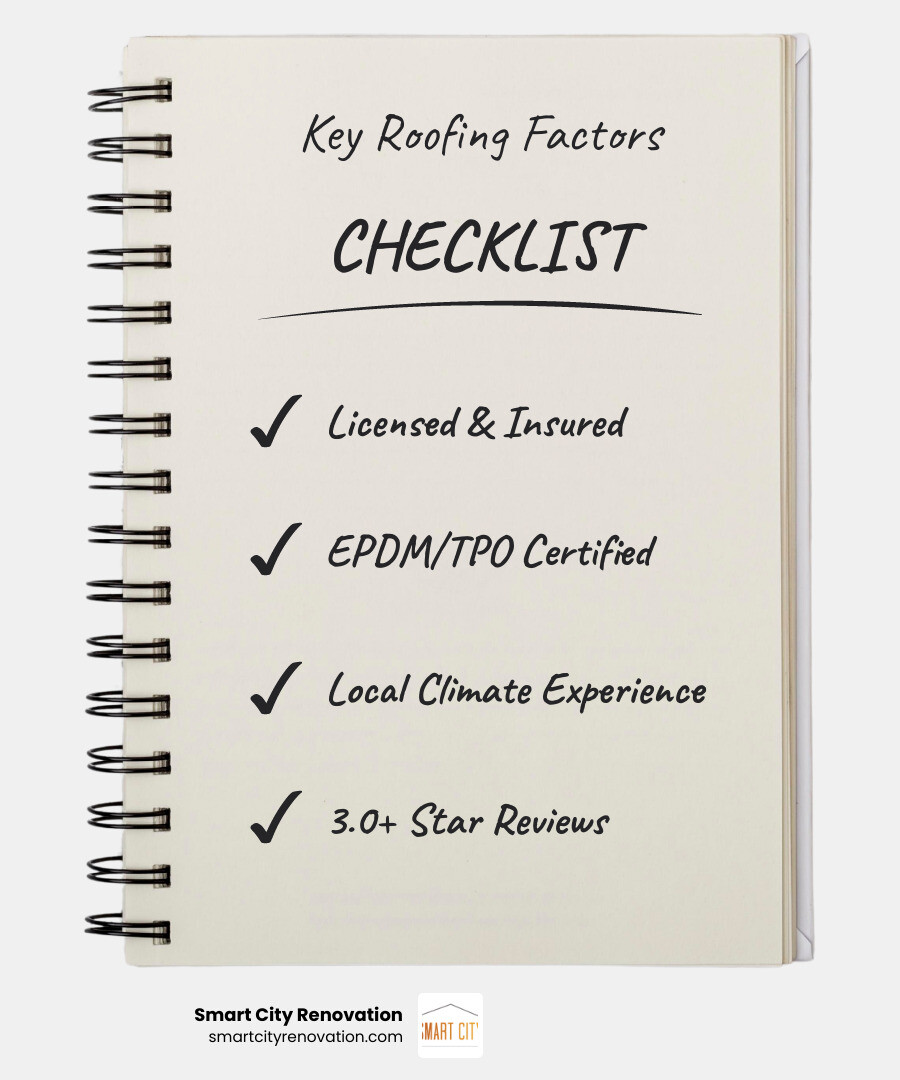
If you need rubber roofing companies near me fast, here’s what to look for:
| What to Look For | Why It Matters |
|---|---|
| Licensed & insured contractor | Protects you legally and financially |
| EPDM/TPO manufacturer certification | Qualifies you for long-term warranties |
| Local experience in your climate | Ensures proper installation for freeze-thaw, snow, and heat |
| Free estimates offered | Lets you compare costs without commitment |
| Verified reviews (3.0+ stars) | Signals consistent quality and reliability |
Finding the right rubber roofing contractor isn’t just about price. It’s about protecting your home or business from the kind of water damage that sneaks in slowly — and costs a fortune by the time you notice it.
Flat and low-slope roofs are especially vulnerable. Traditional shingles rely on gravity to shed water. On a flat roof, that doesn’t work. You need a watertight membrane system — and you need it installed correctly the first time.
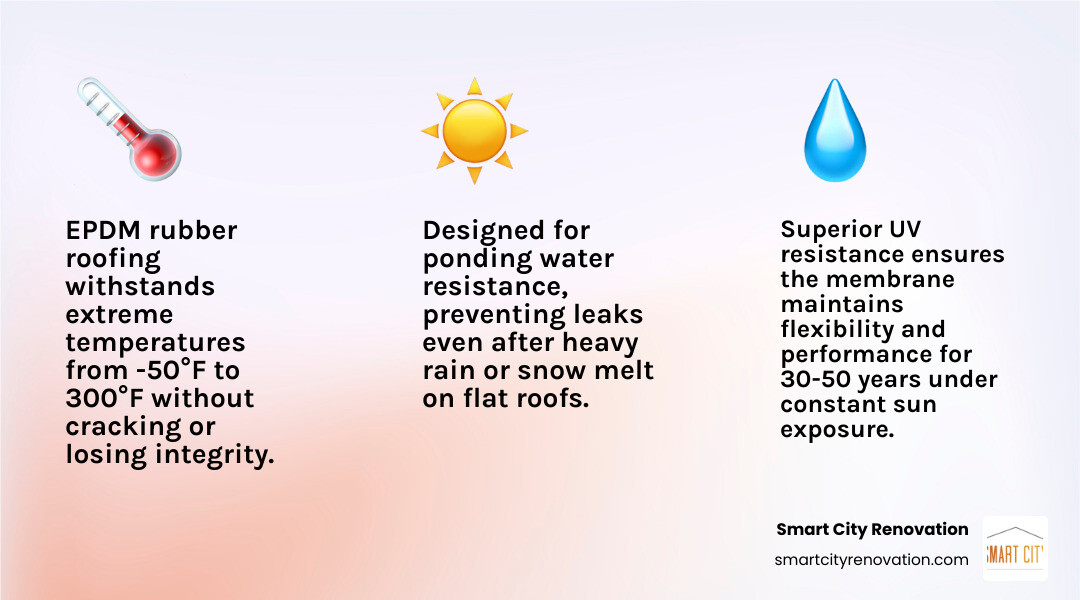
EPDM rubber roofing has been the go-to solution for flat and low-slope roofs since the 1960s. It withstands temperatures from -50°F to 300°F, resists UV damage, and can last 40+ years when properly installed and maintained. That’s a serious return on investment for any Chicago-area homeowner or business owner.
But the material is only as good as the crew installing it.
I’m Norbert, a general contractor with 25 years of experience serving the Chicago area, and I’ve helped homeowners and businesses find reliable rubber roofing companies near me that deliver lasting results — not just the lowest bid. In this guide, I’ll walk you through exactly what to look for, what it costs, and which questions to ask before you hire anyone.
Learn more about rubber roofing companies near me:
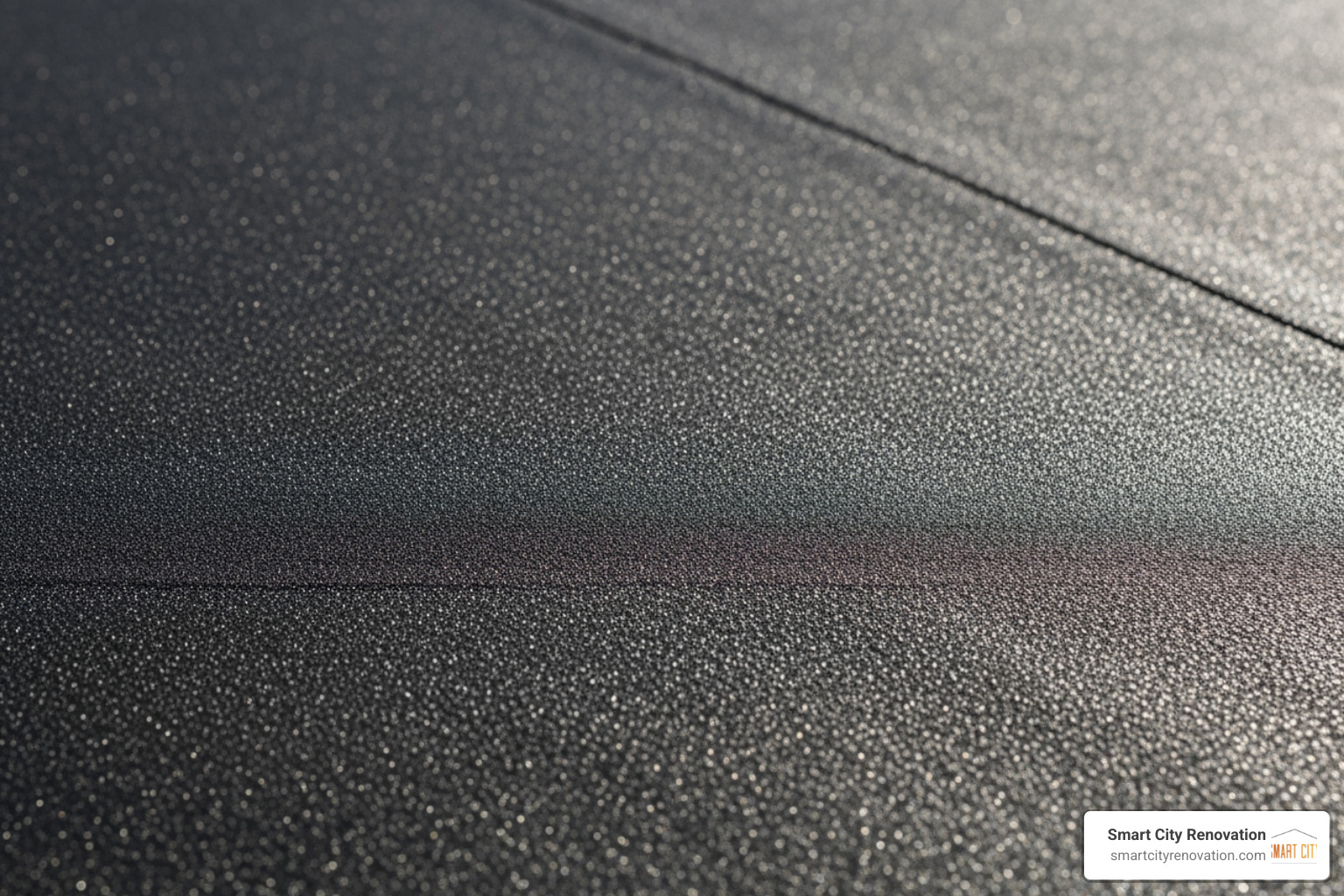
When we talk about rubber roofing, we are usually talking about EPDM (Ethylene Propylene Diene Monomer). It’s a synthetic rubber membrane that has become the gold standard for flat and low-slope properties. In May 2026, as we look at modern building trends, rubber remains a top choice because it is incredibly durable and versatile.
One of the most impressive things about EPDM is its weather resistance. It can withstand extreme temperatures ranging from -50°F to 300°F. Whether we are dealing with a blistering July heatwave in Des Plaines or a sub-zero January night in Schaumburg, this material stays flexible and doesn’t crack. This is vital because many other materials become brittle in the cold, leading to leaks when the snow eventually melts.
Beyond its physical toughness, EPDM is a win for the environmentally conscious. It is often made from recycled materials (like old tires and slate dust) and is 100% recyclable at the end of its long life. Plus, its natural insulation properties and reflective options can lead to significant energy savings on your cooling and heating bills. For those looking for EPDM Roofing Installation and Repair, you’ll find it offers a high degree of fire resistance, which can sometimes even lower your insurance premiums.
Why Search for Rubber Roofing Companies Near Me in 2026?
You might wonder why you can’t just use standard asphalt shingles. The answer is simple: gravity. Shingles are designed to overlap so water runs off a slope. On a flat roof, water doesn’t run off; it “ponds” or sits in place. Shingles aren’t waterproof when submerged, but EPDM creates a watertight seal that can handle standing water without breaking a sweat.
Searching for rubber roofing companies near me is essential for preventing ice dams. In our local Chicagoland climate, snow often melts and refreezes at the edges of the roof. Rubber roofing provides a seamless or tightly taped barrier that prevents this water from backing up under your roof deck. Whether you have a residential porch, a garage addition, or a massive commercial warehouse in Elk Grove Village, a professional installation is the only way to ensure these seals hold up over time. Why Professional Roofers Near Me Are Worth the Investment becomes clear when you realize that one bad seam can lead to thousands of dollars in interior water damage.
Local Expertise in Harsh Climates
Our region demands a specific type of expertise. We aren’t just dealing with rain; we are dealing with heavy snow loads and intense freeze-thaw cycles. When you look for EPDM Rubber Roofing Contractors in Southeast Michigan or similar northern climates, you see that the installation must account for the expansion and contraction of the building itself.
In places like Buffalo Grove or Northbrook, local building codes often have specific requirements for drainage, insulation, and how the membrane is attached to the parapet walls. A contractor from a different climate might not understand the nuances of keeping a roof watertight when there’s two feet of snow sitting on it for three weeks. We focus on precision because we know that in the Midwest, “good enough” usually results in a leak by next spring.
Comparing Rubber Roofing Systems: EPDM vs. TPO vs. Modified Bitumen
Not all flat roofs are created equal. When you consult with rubber roofing companies near me, they will likely mention a few different systems. Here is how they stack up:
| Feature | EPDM (Rubber) | TPO (Thermoplastic) | Modified Bitumen |
|---|---|---|---|
| Primary Benefit | Extreme durability & low cost | High reflectivity & heat-welded seams | Multi-ply “redundant” protection |
| Typical Lifespan | 30 – 50 years | 20 – 30 years | 15 – 20 years |
| Installation | Adhesive or Ballasted | Heat-welded | Torch-down or Cold-applied |
| Best For | Extreme cold/heat swings | Energy efficiency in hot sun | High-traffic flat roofs |
Flat Roofing: TPO PVC, EPDM, BUR, Residential and Commercial options vary based on your specific needs. EPDM is a single-ply membrane that comes in large rolls, meaning fewer seams. TPO is often white and reflects UV rays exceptionally well, making it great for keeping cooling costs down. Modified Bitumen is a modern take on the old “tar and gravel” roofs, using multiple layers for added puncture resistance.
Cost Breakdown for Rubber Roof Installation and Repair
Let’s talk numbers. We know that budget is a huge factor when you start searching for rubber roofing companies near me.
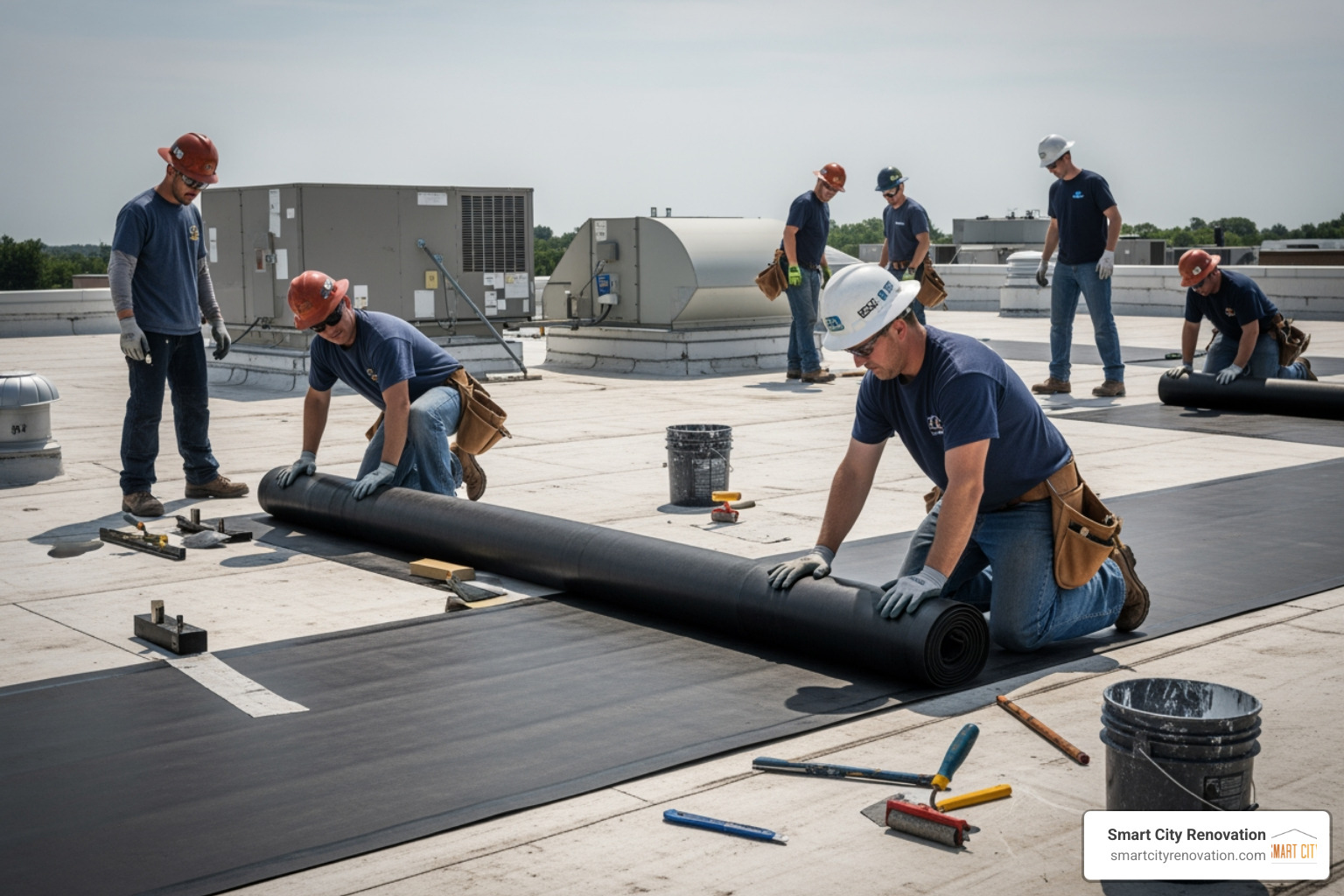
According to industry data for 2026, here is what you can expect:
- Typical Repairs: Most homeowners spend an average of $1,100 on a roofing repair project, though the range can be anywhere from $380 to $1,800.
- Full Replacement: The average cost to replace a roof ranges between $5,890 and $12,800. For very large, high-end commercial projects, costs can exceed $46,000.
- Labor Rates: Roofing labor generally makes up about 60% of the total project cost. On average, professional roofers charge about $2 per square foot for labor.
While these numbers might seem high, a properly installed EPDM roof can last 40 years. If you divide the cost by the lifespan, it is often the most affordable roofing option available. Many top-tier rubber roofing companies near me also offer insurance claim assistance if your roof was damaged by a storm, and almost all reputable contractors (including us!) provide free estimates to help you plan your budget.
How to Identify the Best Rubber Roofing Companies Near Me
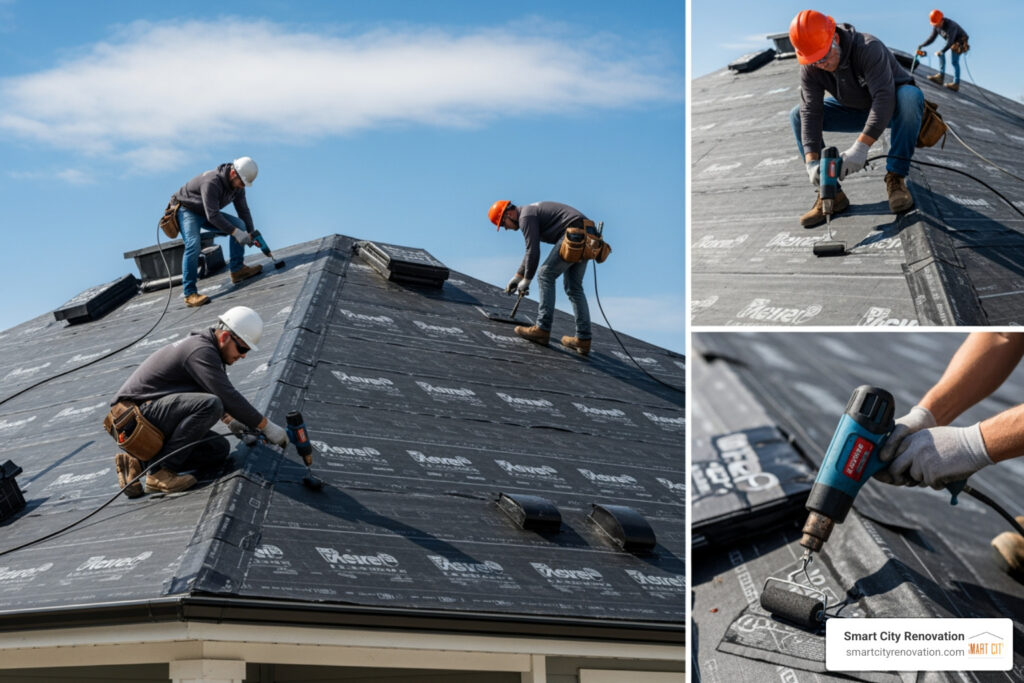
You shouldn’t hire just anyone with a ladder. Rubber roofing requires specialized tools and training that differ significantly from shingle work.
When vetting contractors in areas like Palatine or Arlington Heights, check for these credentials:
- Licensing: Most states and local municipalities require roofers to be licensed. This ensures they follow safety codes and legal standards.
- Manufacturer Certifications: Look for “Authorized Installer” status from brands like GAF or Carlisle. This often allows the contractor to offer extended manufacturer warranties that uncertified roofers cannot provide.
- Ratings and Reviews: Check for an A+ rating from the BBB and look for pros with a 3.0+ star rating on verified platforms. Industrial Roofers Near Me for Reliable Building Maintenance often have long-standing reputations in the local business community.
Questions to Ask Rubber Roofing Companies Near Me
Before you sign a contract, put them in the hot seat with these questions:
- “Do you use subcontractors?” You want to know exactly who is on your roof.
- “What is your cleanup process?” Rubber installation involves adhesives and trimmings; you don’t want that left in your yard.
- “Will you remove the old roof?” While EPDM can sometimes be installed over existing layers, removing the old material allows for a full inspection of the roof deck.
- “What warranties do you offer?” Some GAF-certified installers can offer up to a 50-year warranty on installations. The Best Certified Roofers Near Me for Peace of Mind is worth the extra research.
Maintenance and Longevity: Making Your Rubber Roof Last 40+ Years
A rubber roof is low-maintenance, but it isn’t “no-maintenance.” While a properly installed system typically lasts 30-40 years, some can push past the 50-year mark with the right care.
To maximize your investment, we recommend:
- Annual Inspections: Check for debris buildup and ensure your drains aren’t clogged.
- Acrylic Painting: Every 10 years or so, applying an acrylic coating can rejuvenate the surface and provide extra UV protection.
- Seam Resealing: The seams are the most common point of failure. Having a pro check the seam tape or adhesive every few years can prevent a minor gap from becoming a major leak.
- Installation Timeline: Most residential rubber roofs can be installed in just 1-2 days, meaning very little disruption to your daily life.
By staying proactive, you avoid the “emergency” calls that happen after a big storm. If you are Shingle and Ready to Mingle with the Best Residential Roofers Near Me, you’ll find that rubber roofing is a much more permanent solution for your flat-roofed spaces.
Frequently Asked Questions about Rubber Roofing
What are the signs my rubber roof needs repair or replacement?
Look for water stains on your interior ceilings, pooling water that doesn’t evaporate within 48 hours, or visible “alligatoring” (cracking) on the membrane surface. If your energy bills are rising unexpectedly or you’re dealing with recurring leaks, it’s time for a professional evaluation. If your roof is approaching 20 years of age, a replacement is often more cost-effective than constant repairs.
How does rubber roofing compare to metal or shingles for flat roofs?
Shingles should never be used on a flat roof; they will leak. Metal is a great option but is significantly more expensive and can be difficult to seal around complex roof penetrations like vents or skylights. Rubber provides a watertight, seamless application that is specifically engineered for ponding water, making it superior to rolled asphalt (which only lasts about 3-5 years).
Can rubber roofing be used for both residential and commercial properties?
Absolutely. Its versatility makes it ideal for everything from a residential garage or sunroom addition to large-scale commercial facilities like medical centers, shopping malls, and restaurants. It’s even the preferred material for RV roofing because of its flexibility and lightweight nature.
Conclusion
Choosing the right rubber roofing companies near me is the most important step in ensuring your property remains dry and protected for decades. At Smart City Renovation, we bring 25 years of Chicagoland expertise to every project. Whether you are in Hoffman Estates, Skokie, or right in the heart of Des Plaines, we understand the local climate and the high standards our neighbors expect.
We handle everything from general contracting and remodeling to specialized residential and commercial roofing. Don’t wait for a leak to tell you your roof is failing. Hire a Professional Roofing Contractor Today and get the peace of mind that comes with a roof done right the first time.