
What Does a Kitchen Cabinet Renovation Cost in 2026?
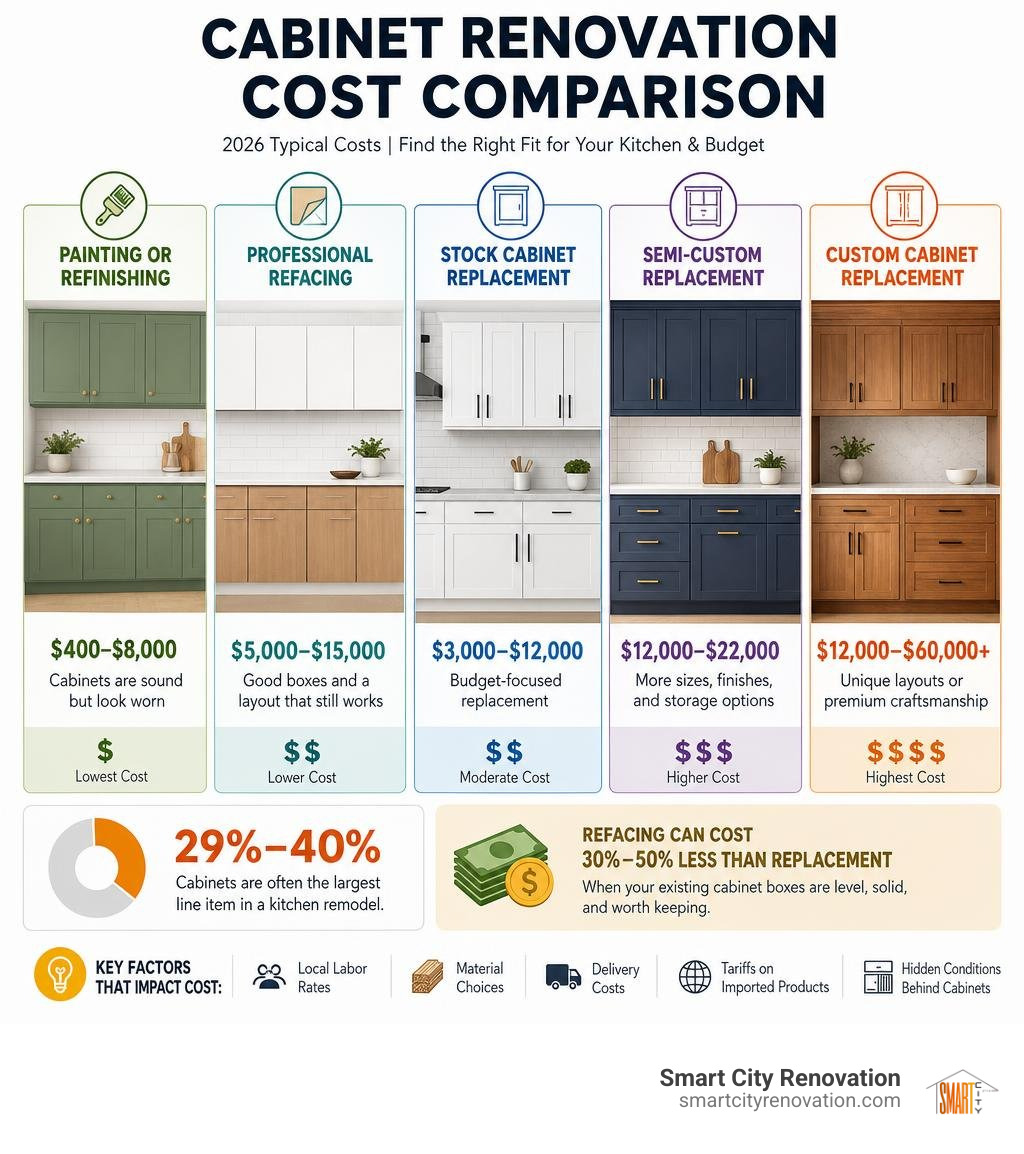
The cabinet renovation cost can range from a few thousand dollars for a surface update to $40,000 or more for a full custom replacement. For most homeowners, the right budget depends on whether the existing cabinet boxes can stay, the cabinet tier selected, labor rates, and whether the kitchen layout changes.
| Cabinet update | Typical 2026 cost | Best fit |
|---|---|---|
| Painting or refinishing | $400-$8,000 | Cabinets are sound but look worn |
| Professional refacing | $5,000-$15,000 | Good boxes and a layout that still works |
| Stock cabinet replacement | $3,000-$12,000 for cabinets | Budget-focused replacement |
| Semi-custom replacement | Often $12,000-$22,000 installed | More sizes, finishes, and storage options |
| Custom cabinet replacement | $12,000-$60,000+ | Unique layouts or premium craftsmanship |
Cabinets are often the largest line item in a kitchen remodel, commonly taking 29% to 40% of the total budget. Refacing can cost 30% to 50% less than replacement, but only when the cabinet boxes are level, solid, and worth keeping. Chicago-area pricing can also shift with local labor demand, material choices, delivery costs, tariffs on imported products, and hidden conditions behind old cabinets.
I’m Norbert, and after 25 years of managing Chicagoland remodeling projects, I have seen how clear planning turns cabinet renovation cost from a stressful guess into a workable budget. The sections ahead break down what drives the price and where homeowners can make smart trade-offs.
Cabinet renovation cost terminology:
Key Factors Driving Your Overall Cabinet Renovation Cost
When you begin calculating your overall cabinet renovation cost, it helps to understand that cabinetry pricing rarely comes down to just a single item. Total expenses are shaped by five primary drivers: cabinet materials, professional labor expenses, total project scope, hardware choices, and layout modifications.
If you are replacing or updating cabinetry in communities like Des Plaines, Park Ridge, or Arlington Heights, labor and material costs naturally mirror the broader Chicagoland construction market. Let’s look closely at how these elements influence your investment.
Stock, Semi-Custom, and Custom Cabinet Tiers
Cabinet selection falls into three main structural tiers: stock, semi-custom, and full custom cabinetry. Each tier represents a clear step up in construction quality, customization potential, and price per linear foot according to industry benchmarks detailed in CostPrism’s 2026 Kitchen Remodel Cost Guide:
- Stock Cabinets ($60 – $200 per linear foot): Pre-manufactured in fixed sizes (typically 3-inch increments) and limited styles. While budget-friendly, box construction frequently uses particleboard boxes wrapped in thin wood veneers or thermofoil. They are ideal for straightforward replacements where off-the-shelf sizes fit without major gaps.
- Semi-Custom Cabinets ($150 – $650 per linear foot): Built to order with far greater flexibility in door styles, stains, paints, and interior accessories (such as spice pull-outs or trash roll-outs). Most mid-range semi-custom lines feature sturdy plywood construction with solid wood face frames, striking the ideal middle ground for durability and value.
- Custom Cabinetry ($500 – $1,500+ per linear foot): Handcrafted to your room’s exact fraction-of-an-inch dimensions. Custom cabinetry allows for specialized built-ins, furniture-grade finishes, exotic wood species, and unique height or depth modifications.
Selecting higher-grade materials like furniture-grade plywood boxes with dovetail drawer joints over particleboard will add to your upfront material bill, but it prevents early sagging and hardware detachment over decades of daily use.
Labor Rates and Professional Contracting Fees
Labor typically accounts for 25% to 35% of total kitchen remodel costs, though complex cabinet-only replacements or intricate custom refacing can see labor climb up to 50% of the project invoice. Skilled installers, carpenters, and finishing technicians bring the precise level of craftsmanship required to align boxes, scribe filler strips along uneven plaster walls, and hang doors perfectly flush.
In urban and suburban markets across Northern Illinois, installer billing typically reflects high regional demand for licensed professionals. Demolition and disposal fees for removing existing cabinetry and hauling away debris generally add $300 to $1,000 to the total labor scope. Hiring a licensed General Contractor ensures trade coordination, building code compliance, and proper insurance coverage throughout the project duration, which usually spans 3 days for stock replacements up to 3 weeks for full custom builds.
Material Choices and Global Supply Chains
The specific material choices you select directly affect longevity and price:
- Solid Wood: Premium, durable, and easily refinished, but sensitive to extreme humidity swings.
- MDF (Medium-Density Fiberboard): Highly stable, resistant to warping, and provides an ultra-smooth substrate for painted cabinet doors.
- Thermofoil Doors: Vinyl film heat-bonded over MDF; affordable and easy to wipe clean, but susceptible to heat peeling near ovens.
- Wood Veneer: Thin sheets of real hardwood bonded to stable plywood or MDF core frames, giving a luxurious appearance at lower cost.
Furthermore, soft-close drawer glides, concealed 6-way adjustable door hinges, and specialty steel pull-out hardware contribute significantly to material totals. Beyond base material costs, global trade policy and international supply chains impact material availability and pricing. As highlighted by Sweeten’s 10×10 kitchen cost analysis, international tariffs on imported wood components, hardware, and metals from overseas manufacturing centers can inflate raw material pricing across the entire cabinet industry.
Refacing vs. Full Replacement: Financial Breakdown
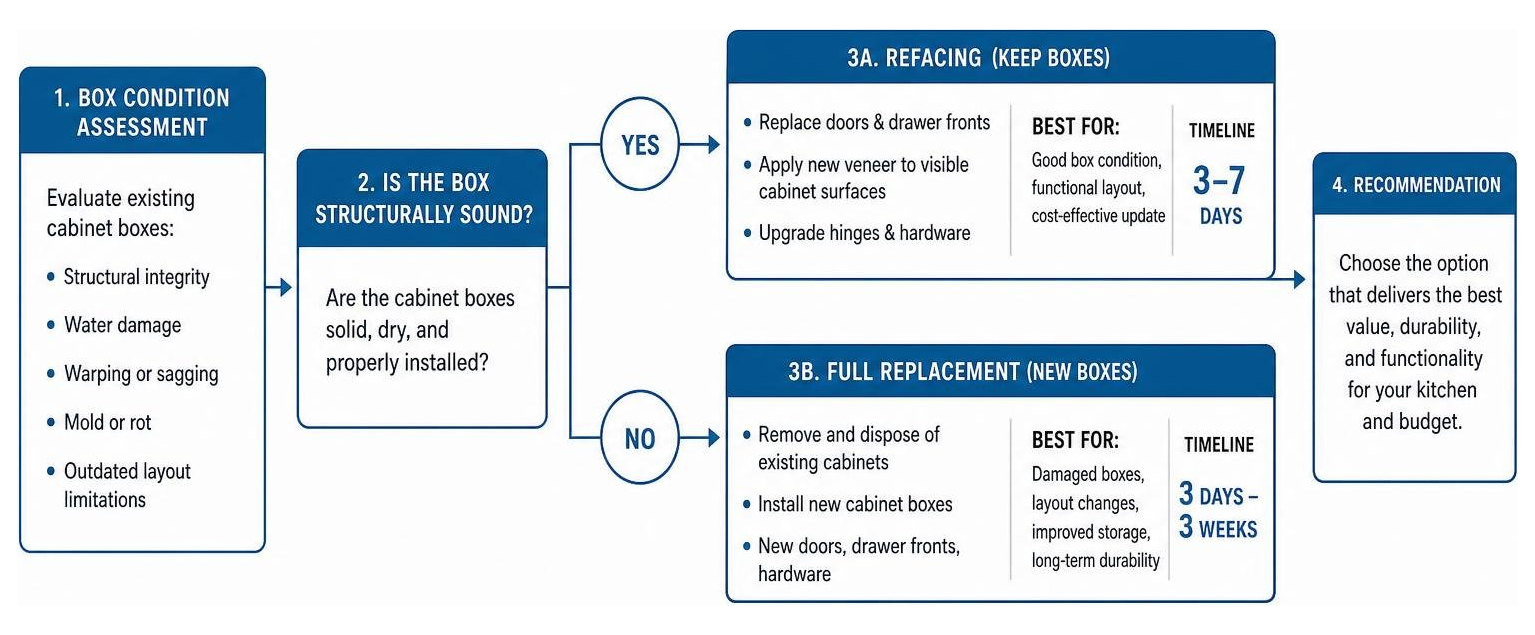
Deciding between refacing your existing cabinetry and tearing it out completely is one of the most consequential choices for your overall cabinet renovation cost. Refacing retains your existing cabinet boxes (the underlying structural box framework) while replacing all exterior doors, drawer fronts, side panel veneers, hinges, and handles.
If your current kitchen footprint works well and your workflow timelines require minimal disruption, refacing allows you to update your space in just 3 to 7 days without removing countertops or disturbing appliances.
Refacing vs. Replacement Cabinet Renovation Cost Comparison
As noted in WillyHomes’ cabinet refacing guide, cabinet refacing typically costs 30% to 50% less than complete cabinet replacement. To visualize how these costs stack up for an average suburban kitchen with 20 to 25 linear feet of cabinetry, review the cost comparison table below based on historical national averages and current data from the Kitchen Cabinet Replacement Cost Calculator:
| Renovation Scope | Average Cost Range | Typical Timeline | Major Structural Changes |
|---|---|---|---|
| Cabinet Refinishing / Painting | $2,000 – $8,000 | 3 – 5 days | None (cosmetic only) |
| Cabinet Door Replacement Only | $4,300 – $7,000 | 3 – 5 days | None |
| Full Cabinet Refacing | $5,000 – $15,000 | 3 – 7 days | None (retains box shell) |
| Refacing Lowers + New Upper Cabinets | $11,000 – $16,000 | 5 – 7 days | Moderate (upper layout shifts) |
| Stock Cabinet Full Replacement | $8,000 – $15,000 | 1 – 2 weeks | Full teardown, same layout |
| Semi-Custom Cabinet Replacement | $12,000 – $25,000 | 2 – 4 weeks | Layout changes permitted |
| Custom Cabinet Full Replacement | $25,000 – $60,000+ | 4 – 8 weeks | Total architectural freedom |
When Refacing Makes Sense vs. Full Replacement
Refacing makes excellent financial and practical sense when:
- Your current cabinet boxes are built from solid plywood or thick hardwood framing that is structurally sound, square, and free of water damage or sagging.
- You are satisfied with your current kitchen layout and footprint (sink, range, and refrigerator locations remain fixed).
- You want to preserve expensive existing countertops (like granite or quartz) that might crack if old cabinet bases were removed.
Conversely, full cabinet replacement becomes necessary when cabinet boxes are warped, mold-damaged, or constructed from flaking particleboard. Full replacement is also essential if you plan to reconfigure your floor plan—such as opening up sightlines to living areas, moving gas or water pipe routing, or adding a large center island.
For homeowners wanting an affordable aesthetic overhaul without full teardown hassles, our guide on Kitchen Facelift Costs That Won’t Leave You Eating Instant Noodles explores smart ways to upgrade style on a practical budget.

Unexpected Expenses and DIY Savings Potential
Even carefully planned cabinet projects can encounter unexpected hidden costs once old framing is exposed or customized orders are placed. Understanding where surprise costs lurk—and knowing which tasks are safe to tackle yourself—will protect your renovation contingency fund.
Hidden Costs, Tariffs, and Contingency Planning
We always advise setting aside a 10% to 20% contingency fund above your initial contract line items. Common hidden expenses encountered during cabinet removal and refacing include:
- Wall and Floor Leveling ($300 – $1,500): Older Chicagoland homes in areas like Niles, Glenview, or Skokie often feature settled subfloors or bowed plaster walls that require shimming, furring strips, or drywall leveling before square cabinet boxes can sit plumb.
- Electrical and Plumbing Upgrades ($500 – $2,500): Exposing bare walls during cabinet teardown frequently reveals outdated wiring, ungrounded outlets, or plumbing valves that must be brought up to modern municipal building codes.
- Permit Fees ($100 – $1,000): Many municipalities require structural, mechanical, or electrical permits if cabinet changes coincide with layout changes or under-cabinet hardwiring.
- Import Tariffs and Freight Surcharges: Changes in international trade agreements can introduce supply chain surcharges or import tariffs on specialty hinges, glides, and foreign lumber species between your initial design quote and final delivery.
DIY Tasks vs. Professional Labor
Attempting to save money by taking on parts of the project yourself can be rewarding, but it requires knowing where DIY effort ends and professional trade skill begins:
- Safe DIY Tasks: Homeowners can easily save $300 to $1,000 by handling non-technical tasks. Safe projects include carefully removing old hardware, clearing out cabinet contents, painting wall surfaces behind cabinets, or installing basic decorative knobs and pulls after boxes are set.
- Risky DIY Tasks: Attempting to reface cabinet box edges with wood veneer, installing complex soft-close drawer tracks, or hanging wall-mounted upper cabinets without specialized leveling tools can lead to misaligned doors, structural failure, or ruined materials.
- Professional-Only Scope: Complex trade labor—such as gas line extensions, electrical rough-ins, countertop scribing, and full structural cabinet hanging—should always be assigned to experienced, licensed contractors to guarantee safety, warrantied workmanship, and local code compliance.
For homeowners researching local labor options, standard guidelines can be found in Current Cost’s Cabinet Replacement Price Guide.
Return on Investment and Regional Price Variations
Evaluating a cabinet renovation cost requires weighing immediate out-of-pocket expenses against long-term equity return and regional market conditions across your local area.
Regional Labor and Material Impacts on Cabinet Renovation Cost
Construction expenses are heavily influenced by geographic location. In the Chicagoland market—including nearby suburbs such as Schaumburg, Palatine, Rosemont, and Harwood Heights—labor rates sit slightly above the national average due to regional labor demands, carpenter licensing requirements, and localized overhead burdens.
As highlighted in HomeCostCalc’s 2026 regional data models, contractor billing rates incorporate business overhead, insurance liabilities, specialized tooling, and worker compensation taxes on top of baseline carpenter wages. To optimize your scheduling, booking indoor cabinet installations during late fall or winter months (November through February) can sometimes yield a 5% to 15% discount as local contractors look to fill indoor service schedules.
Homeowners seeking qualified local trade professionals should review our advice on 5 Smart Ways to Find the Best Illinois Renovation Contractors to ensure clear bidding and transparent pricing.
Maximizing Remodel Value and Resale ROI
Cabinetry updates remain one of the most effective strategies for boosting home resale appeal and owner equity:
- Minor Kitchen Remodels (Cosmetic/Refacing): Industry studies consistently show minor kitchen remodels yield higher relative percentage returns, often recovering 70% to 90%+ of their cost at resale. Buyers immediately react to clean, modern cabinetry in photos and open houses.
- Major Kitchen Remodels (Full Custom Replacement): While custom installations recoup a somewhat lower percentage at resale (typically 50% to 65%), they significantly enhance luxury market positioning and daily functional enjoyment for long-term residency.
To maximize resale value, choose timeless door styles (such as Shaker or flat-panel slab fronts) in soft neutral paints or warm natural wood stains. Overly personalized bright colors or unusual hardware finishes can narrow buyer appeal when it comes time to sell.
For broader planning across your home’s layout, explore our core guide on Kitchen Remodeling to align cabinet designs with your overall home value.
Frequently Asked Questions
What is the average cabinet renovation cost for a 10×10 kitchen?
For a standard 10×10 kitchen (which typically features 20 to 25 linear feet of wall and base cabinets), the average cabinet renovation cost ranges between $4,000 and $18,000. According to sweeten’s industry data, refinishing or painting existing cabinets costs roughly $400 to $1,800.
Purchasing stock or ready-to-assemble (RTA) cabinet units runs $2,000 to $4,000 (plus $1,500 to $3,000 for installation labor). Mid-range semi-custom cabinet replacements installed typically range from $8,000 to $15,000, while high-end custom cabinetry builds for a 10×10 space easily reach $15,000 to $25,000+.
How much of a kitchen remodeling budget goes toward cabinets?
Cabinets represent the single largest material expense in a kitchen renovation, consuming 29% to 40% of the total budget. For a standard $30,000 mid-range kitchen project, you can expect $9,000 to $12,000 to go directly toward cabinet materials, box construction, hardware, trim moldings, and professional installation.
Can I save money by purchasing cabinets and hardware separately?
Yes, purchasing cabinet knobs, handles, pull-out organizers, and soft-close hinges directly from retail distributors or direct-to-consumer suppliers rather than bundling them into manufacturer packages can save 15% to 30% on decorative accents.
However, ensure that hinge dimensions, hole spacing, and drawer glide weight capacities match your installer’s technical specifications before ordering to avoid costly project delays.
Conclusion
Understanding your cabinet renovation cost comes down to balancing your vision with practical choices—whether that means refacing structurally sound boxes, choosing versatile semi-custom options, or building an all-new custom layout. By working within realistic cost tiers and planning for minor contingencies, you can achieve a dramatic transformation that improves daily living while protecting your property’s resale value.
At Smart City Renovation, we bring over 25 years of hands-on expertise to residential and commercial projects across Des Plaines, Arlington Heights, Park Ridge, Schaumburg, and the surrounding Chicagoland area. If you are ready to evaluate your kitchen cabinet options with clear line-item budgeting and dedicated craftsmanship, Explore Our Renodeling Services today to schedule a tailored design consultation.