

Why Choosing the Right Residential Roofing Company Can Make or Break Your Home
Residential roofing companies vary wildly in quality, price, and reliability — and picking the wrong one is an expensive mistake.
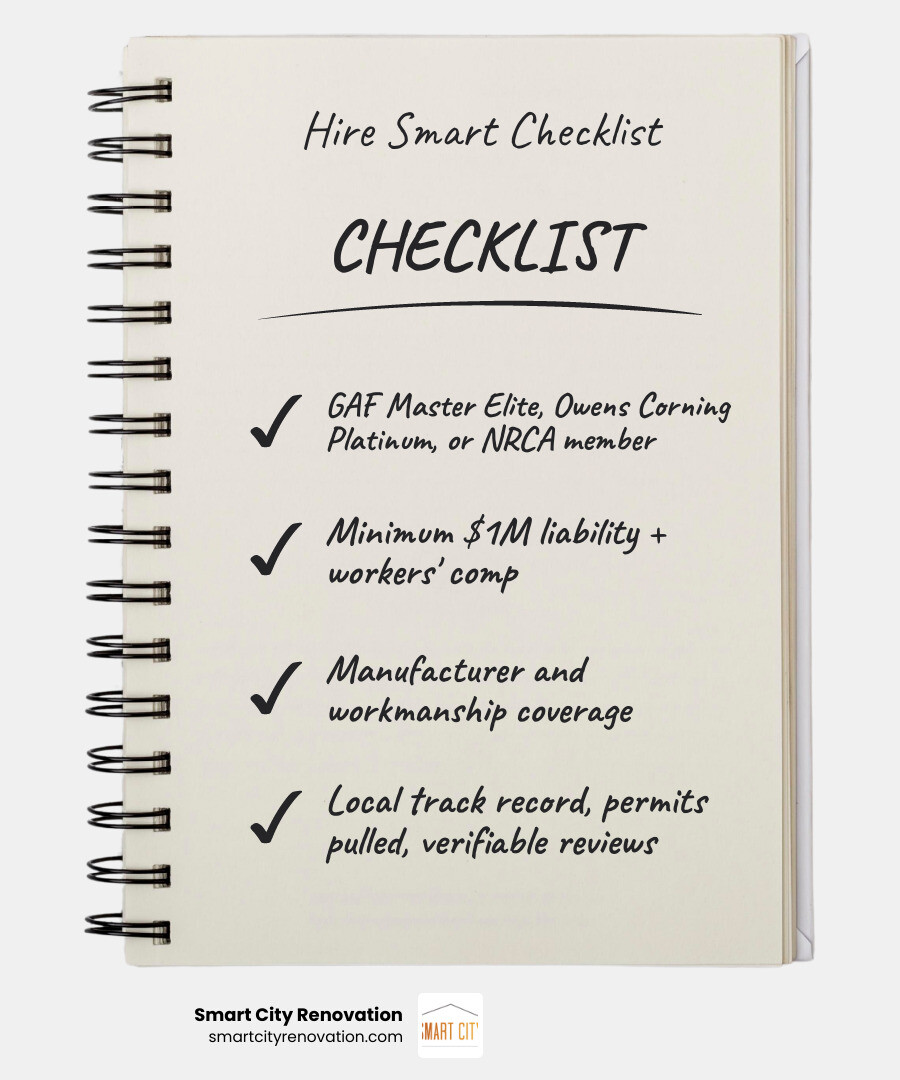
Here’s a quick snapshot of what to look for when hiring a roofer:
| Factor | What to Look For |
|---|---|
| Certification | GAF Master Elite, Owens Corning Platinum, or NRCA member |
| Insurance | Minimum $1M liability + workers’ comp |
| Warranty | Manufacturer and workmanship coverage |
| Experience | Local track record, permits pulled, verifiable reviews |
| Estimate | Written, itemized, no pressure to sign same day |
Your roof is one of the most expensive parts of your home to replace. In the Chicago area alone, a full replacement can run well into five figures — and that’s before you factor in storm damage, insurance claims, or material upgrades.
The problem most homeowners run into isn’t finding a roofer. It’s finding the right one. Someone who knows local building codes, pulls proper permits, and actually shows up on time.
This guide walks you through everything — from spotting red flags to comparing materials, understanding warranties, and knowing what a fair price looks like in 2026.
I’m Norbert, a licensed general contractor with 25 years of hands-on experience serving Chicagoland homeowners, and residential roofing companies are one of my core specialties at Smart City Renovation. Whether you’re dealing with storm damage or planning a full replacement, I’ll help you make a confident, informed decision.
Residential roofing companies word list:
What Makes the Best residential roofing companies Stand Out
The best residential roofing companies are not just good at nailing shingles in straight lines. They make the whole project feel organized, safe, and predictable.
Here is what usually separates a trustworthy roofing company from the ones that leave homeowners stressed, confused, or picking nails out of the driveway for weeks:
- Proper licensing and insurance
- A real local presence in Chicagoland
- Clear written estimates
- Manufacturer-backed training or certifications
- Strong workmanship standards
- Good communication before, during, and after the job
- Clean job sites and supervised crews
- Real warranty documents, not vague promises
Local experience matters more than people think. Roofing in Des Plaines, Mount Prospect, Park Ridge, Glenview, Arlington Heights, Niles, Skokie, Schaumburg, and nearby suburbs means dealing with freeze-thaw cycles, wind, snow load, heavy summer rain, and the occasional hailstorm. A roofer who understands local weather patterns, permit requirements, and common housing styles will usually plan a better system from the start.
Certifications and awards that actually matter when comparing residential roofing companies
Not all badges are equal. Some are marketing fluff. Some actually tell you the roofer has met standards for training, insurance, and business practices.
The certifications and credentials worth paying attention to include:
- Manufacturer certifications from major brands like GAF and Owens Corning
- Higher-tier designations such as GAF Master Elite
- Industry association membership, such as NRCA
- Evidence of ongoing training and safety programs
- Good standing with consumer organizations and local permitting offices
A few important facts from the research stand out:
- GAF is North America’s largest roofing manufacturer
- Only about 2% of roofers in North America qualify as GAF Master Elite contractors
- Higher certification levels can unlock stronger enhanced warranties
That does not mean you should hire a company based on a logo alone. It means certification should be one trust signal among several. We always recommend pairing it with proof of insurance, local references, permit knowledge, and a detailed scope of work.
If you want to see how a local company approaches residential roof replacement, repairs, inspections, and related exterior work, our roofing contractor page gives a practical overview of the roofing services we provide.
Signs a roofer is reliable in your area
In our experience, reliable roofers tend to behave like organized builders, not door-to-door storm chasers.
Good signs include:
- A physical business address serving your area
- Recent local reviews with details about communication and cleanup
- Familiarity with local permits and inspection rules
- An itemized estimate, not a one-line total on scrap paper
- A named project manager or supervisor
- Cleanup procedures such as magnetic sweeps for nails
- A realistic timeline instead of a too-good-to-be-true promise
Red flags include:
- Asking for full payment up front
- Refusing to provide insurance certificates
- Pushing you to sign the same day
- Offering to “cover your deductible”
- Avoiding written change orders
- No discussion of ventilation, flashing, or decking condition
If a roofer cannot explain how they handle flashing around chimneys, valleys, skylights, and wall intersections, that is a problem. Most roof leaks are not caused by shingles alone. They start at details.
How to Find Certified and Reliable Roofers Near You
Finding roofers is easy. Finding good roofers takes a process.
Start local. Search by city and neighborhood, not just by “best roofer.” That gives you better results for contractors who regularly work in places like Park Ridge, Morton Grove, Elk Grove Village, Rosemont, Northbrook, Palatine, and Buffalo Grove.

A practical search process looks like this:
- Make a short list of local roofing companies that serve your suburb.
- Check whether they have a real address and service history.
- Verify certifications directly through manufacturer lookup tools when available.
- Read reviews across multiple platforms.
- Confirm they carry liability and workers’ comp insurance.
- Ask whether they pull permits for full replacements.
- Compare at least 2 to 3 written quotes.
You can also use directories and local listings to expand your shortlist. Local map results, manufacturer contractor directories, and community referrals can all help you identify companies serving your area. Use these as research tools, not automatic endorsements.
Best places to verify a residential roofing company before you hire
Before you sign anything, verify the company in several places:
- BBB profile and complaint history
- Manufacturer certification directory
- Local permit office or municipality requirements
- Proof of current insurance
- Review platforms with recent project details
A useful starting point for local screening is Roofing Contractors near Rosemont, IL | Better Business Bureau.
If the project is in a historic area or has visible exterior changes, always ask whether extra approvals are needed. Chicagoland suburbs can have their own rules on permits, contractor registration, and exterior modifications. A solid contractor should know the process instead of figuring it out on your dime.
Questions to ask before signing a roofing contract
Ask these before you commit:
- What exactly is included in the scope of work?
- Will you tear off the old roof completely?
- Will you inspect the decking and price replacement by sheet if needed?
- What underlayment and flashing materials are included?
- Who pulls the permit?
- Who supervises the crew on site?
- What is the estimated start date and duration?
- What happens if bad weather delays the project?
- How are change orders approved?
- What is the payment schedule?
- Will you provide lien waivers?
- What cleanup steps are included?
- What workmanship warranty do you provide in writing?
For a deeper look at the residential roofing work we handle, including inspections, repairs, replacements, and project expectations, see More info about roofing services.
Services, Materials, and the Roof Replacement Process
Most homeowners contact roofers for one of three reasons:
- A leak or visible damage
- Storm or hail concerns
- A roof that is simply old and wearing out

What services residential roofing companies typically offer
A full-service residential roofer may offer:
- Roof inspections
- Leak diagnosis and repair
- Full roof replacement
- New roof installation on additions or new builds
- Storm damage inspections
- Emergency tarping
- Flashing and chimney work
- Ventilation upgrades
- Skylight replacement
- Gutter installation
- Siding and trim work
- Insurance claim support
Many roofing companies also bundle exterior services. That can be helpful if your project includes gutters, siding, fascia, soffit, or windows. Bundling often improves scheduling and makes responsibility clearer if multiple exterior systems meet at the roofline.
Storm support is another major service category. Some contractors specialize in helping homeowners document damage, meet adjusters, and submit supplements if hidden issues appear after tear-off.
Best roofing materials for your home, budget, and climate
For most Chicagoland homes, the most common material is still architectural asphalt shingles. They balance price, appearance, availability, and weather performance well.
The main options are:
Asphalt shingles
Best for:
- Most homes and budgets
Pros:
- Lower upfront cost
- Wide range of colors and styles
- Easier repair and replacement
- Strong value for resale
Consider:
- Lifespan varies by product and installation quality
- Impact resistance and algae protection vary by line
Research from GAF highlights products like Timberline HDZ as a leading architectural shingle option. These products are popular because they combine curb appeal with stronger wind and system compatibility when installed as part of a full roofing system.
Metal roofing
Best for:
- Homeowners prioritizing longevity and energy performance
Pros:
- Long lifespan
- Good snow shedding
- Strong wind resistance
- Can improve energy efficiency
Consider:
- Higher upfront cost
- More installer skill required
- Appearance is not for everyone
Impact-resistant roofing
Best for:
- Homes in hail-prone areas
Pros:
- Better resistance to impact damage
- May help with insurance discounts in some cases
Consider:
- Costs more than standard shingles
- Product availability varies
Also think about:
- Ventilation: poor attic airflow can shorten roof life
- Algae resistance: useful in shady areas
- Ice and water protection: important in freeze-thaw climates
- Color: darker roofs absorb more heat, lighter colors can help with solar gain
The best material is the one that fits your house, your budget, and local weather realities. Fancy shingles on a poorly flashed roof are still a leak waiting to happen.
How long a typical roof replacement takes and what happens on installation day
A typical residential roof replacement usually takes 1 to 3 days for most homes, though complex roofs can take longer. Weather, roof size, pitch, access, and decking repairs all affect the timeline.
Installation day usually follows this order:
- Delivery of materials and site protection
- Tear-off of existing shingles
- Inspection of wood decking
- Replacement of damaged decking as needed
- Installation of underlayment and leak barriers
- Flashing work around penetrations and transitions
- Shingle or metal roof installation
- Ridge vent and ventilation details
- Cleanup, magnetic sweep, and debris removal
- Final walkthrough
A quality crew should also protect landscaping, keep paths reasonably safe, and leave the yard cleaner than many people expect. “Roofing party favors” in the form of stray nails are not a feature.
Residential Roofing Companies Cost Guide by Project Type and Region
Roof pricing depends on more than square footage. Two houses with the same footprint can have very different roofing costs if one has steep slopes, lots of valleys, multiple chimneys, skylights, or old decking damage.
Average roof repair, replacement, and installation costs in 2026
Below is a practical 2026 guide for Chicagoland-area homeowners. Exact numbers vary by material, access, and complexity, but these ranges are a reasonable planning baseline.
| Project Type | Typical 2026 Cost Range | Notes |
|---|---|---|
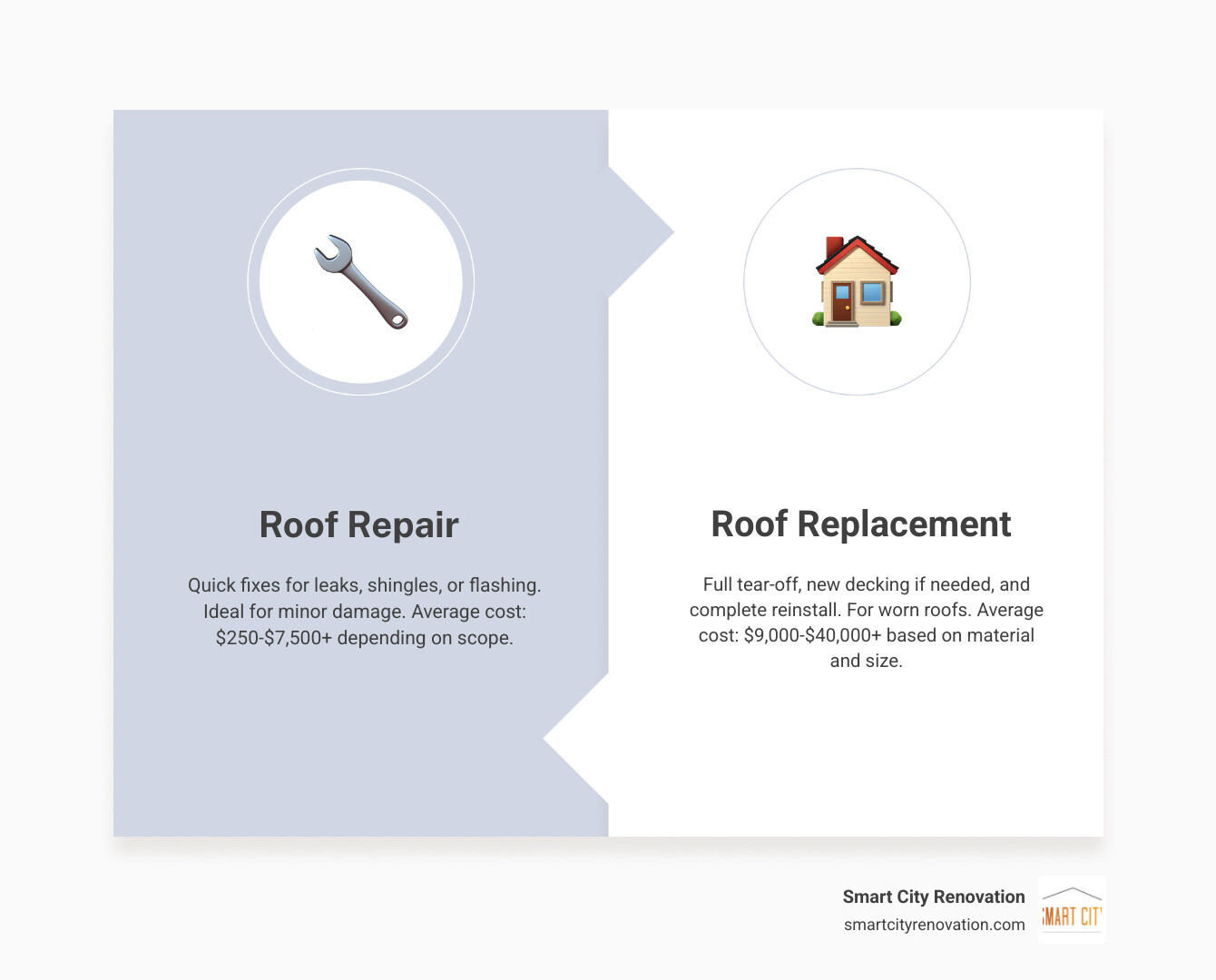
| Minor repair | $250-$900 | Small leak, a few shingles, minor flashing fix |
| Moderate repair | $900-$2,500 | Larger leak area, vent boots, flashing sections |
| Major repair | $2,500-$7,500+ | Structural moisture damage or broad section repair |
| Asphalt roof replacement | $9,000-$22,000+ | Common range for many suburban homes |
| Metal roof replacement | $18,000-$40,000+ | Depends on profile, trim, and roof complexity |
| New installation on addition/new build | Varies widely | Usually quoted by roof area and system design |
A few cost factors matter most:
- Roof size measured in squares
- Roof pitch and complexity
- Number of layers to tear off
- Decking replacement
- Flashing and chimney work
- Material quality
- Permit fees
- Seasonal demand
- Crew access and disposal costs
Financing can help spread the cost, especially when a roof replacement is urgent and not fully covered by insurance.
Regional price differences, permits, and historic district rules homeowners should know
Pricing differs by market. Labor rates, dump fees, storm demand, and permit costs all affect what homeowners pay. Research from outside our service area showed, for example, that roof pricing can vary sharply by state and market conditions. Even though those examples are not directly applicable here, the lesson is: never compare a quote from another region to a Chicagoland project as if it is apples to apples.
For our service area, homeowners should also ask about:
- Local permit requirements
- Contractor registration rules in specific municipalities
- Inspection scheduling
- Historic district or exterior review rules
- Code requirements for ventilation and ice barriers
Why this matters: a cheap quote can become expensive if the contractor skipped permitting, ignored code-required details, or did not account for municipality-specific rules. We have seen homeowners get surprised later when selling the property or filing claims.
Warranties, Insurance Claims, and Financing Without Surprises
A roof is not just shingles. It is paperwork too. Not thrilling, but very important paperwork.
How warranties and guarantees differ between contractors
There are usually two separate warranty categories:
Manufacturer warranty
Covers defects in roofing materials. Length depends on product line and whether the full roofing system was installed according to manufacturer requirements.
Workmanship warranty
Covers installation errors by the contractor. Length and terms vary widely.
Important things to compare:
- Coverage period
- What labor is included
- Whether tear-off is included if a defect appears
- Transferability to a new owner
- Registration deadlines
- Exclusions for poor ventilation, ponding, or unauthorized repairs
Research shows that higher-tier manufacturer-certified contractors may offer stronger enhanced coverage. For example, GAF-certified upper-tier contractors can access premium warranty options not available through every installer. That can be valuable, but only if the installation meets all system requirements and the paperwork is completed correctly.
Always ask for the actual sample warranty document before signing.
How to handle hail, wind, and storm damage insurance claims with a roofer
If your roof may have storm damage, move in this order:
- Schedule an inspection as soon as practical.
- Get photo documentation of all visible damage.
- Protect the property with emergency measures if needed.
- File the claim with your insurer.
- Meet the adjuster with your contractor if possible.
- Review the scope carefully.
- Submit supplements if hidden damage appears during tear-off.
- Keep records of payments, depreciation, and final invoices.
Good roofing contractors can help by documenting damage, explaining code-related items, and communicating with the adjuster. They should not promise claim approval. They definitely should not encourage insurance fraud. If someone says, “Don’t worry, we’ll make your deductible disappear,” that is your cue to make them disappear.
Research also showed that some reputable roofing companies emphasize insurance assistance and established claim workflows. That support can be useful when handled ethically and transparently.
Financing options and promotions from reputable roofing contractors
Common financing structures include:
- Monthly payment plans
- Short-term same-as-cash offers
- Longer fixed-payment loans
- Seasonal promotions
- Bundled exterior project financing
Before accepting financing, ask:
- What is the interest rate after any promo period?
- Is there a prepayment penalty?
- Are there loan origination fees?
- Is approval based on soft or hard credit inquiry?
- Does the offer apply to roofing only or bundled work too?
If your roof project also includes gutters, siding, or ventilation upgrades, bundling can sometimes improve project efficiency and financing flexibility.
Reviews, State-by-State Research, and Final Hiring Checklist
What customer reviews often reveal in states like CT, NJ, and OH
Research from other states consistently shows the same review themes homeowners care about most:
- Response time
- Help with insurance paperwork
- Installation speed
- Cleanup quality
- Communication
- Post-job follow-up
Even though we are focused on Chicagoland, these review patterns are useful because they tell you what to watch for locally too. Fast installation sounds great, but only if the crew also protects landscaping, communicates delays, and actually cleans up. A one-day roof is impressive. A one-day roof with no flashing detail discussion and no permit plan is less impressive.
Final checklist before you choose among residential roofing companies
Use this list before signing with any roofer:
- Proof of license or required local registration
- Current liability and workers’ comp insurance certificate
- Detailed written proposal
- Material brand and product line listed clearly
- Flashing, ventilation, and underlayment details included
- Permit responsibility identified
- Cleanup plan included
- Payment schedule defined
- Change-order process explained
- Workmanship warranty in writing
- Manufacturer warranty information provided
- Project timeline estimated
- Recent local references available
If you want to compare local providers more confidently, our guides on professional roofers near me and roofers near me can help you ask sharper questions and avoid common hiring mistakes.
When to call a local expert for your next roofing project
If you notice missing shingles, interior water stains, sagging roof lines, granules in gutters, frequent leak repairs, or storm damage, it is time to call a local professional. It is also smart to schedule an inspection if your roof is approaching the end of its expected life, even if it is not actively leaking yet.
At Smart City Renovation, we bring 25 years of Chicagoland construction experience to roofing projects across Des Plaines, Mount Prospect, Park Ridge, Niles, Glenview, Arlington Heights, Rosemont, Morton Grove, Skokie, Elk Grove Village, Schaumburg, Palatine, Buffalo Grove, Prospect Heights, Wheeling, Rolling Meadows, Hoffman Estates, Northbrook, Lincolnwood, Harwood Heights, and Norridge.
We believe the best roofing project is the one with no surprises:
- clear scope
- code-compliant work
- solid communication
- clean job sites
- real warranty protection
If you are researching residential roofing companies and want practical guidance from a local team, start with our main roofing contractor page for an overview of our roofing services, service area, and what to expect from a professionally managed project. It is the fastest way to understand how we help protect homes without the sales circus.