
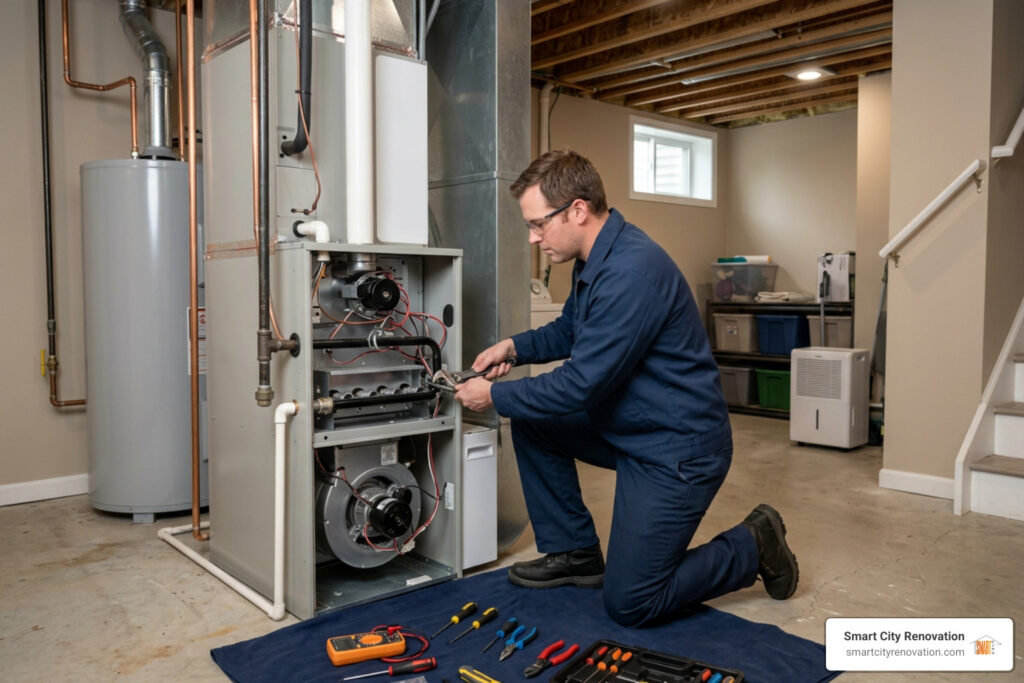
What Does Glenview Furnace Repair Cost?
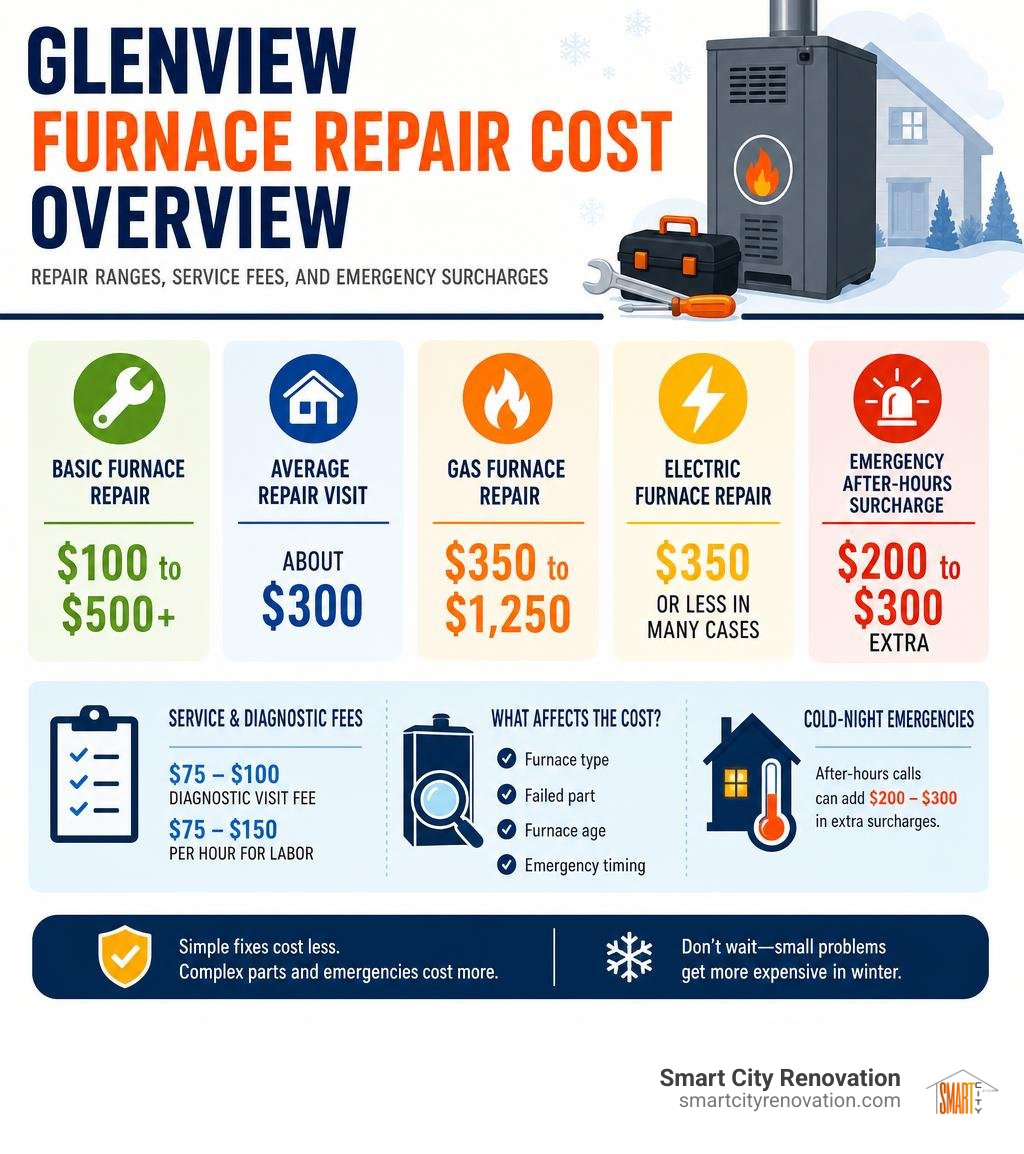
Glenview furnace repair cost averages about $300 for a typical repair, though a simple fix may cost around $100 and more complex work can exceed $500. Most homeowners also pay a $75 to $100 diagnostic visit fee, plus labor commonly billed at $75 to $150 per hour.
| Service type | Typical Glenview cost |
|---|---|
| Basic furnace repair | $100 to $500+ |
| Average repair visit | About $300 |
| Gas furnace repair | $350 to $1,250 |
| Electric furnace repair | $350 or less in many cases |
| Emergency after-hours surcharge | $200 to $300 extra |
Your final price depends on the furnace type, the failed part, its age, and whether the call happens during a cold-night emergency. A failed igniter or flame sensor is usually far less costly than a blower motor, gas valve, or heat exchanger issue.
I am Norbert of Smart City Renovation, with 25 years of Chicagoland construction, renovation, and HVAC service experience. I have seen how Glenview furnace repair cost can change quickly when small heating problems are ignored through a hard Illinois winter.
Common Glenview furnace repair cost vocab:
Breakdown of Average Glenview Furnace Repair Cost
Understanding what you should expect to pay starts with knowing how local HVAC contractors structure their invoices. When a heating system stumbles during a freezing stretch on the North Shore, the total bill usually comprises three primary items: the initial diagnostic fee, hourly labor rates, and the required replacement components.
According to reliable Glenview furnace repair data, most homeowners spend around $300 for a standard service visit. Minor electrical adjustments or simple sensor cleanings can run as low as $100, while multi-component overhauls or complex mechanical failures frequently climb past $500.
The diagnostic fee—commonly between $75 and $100—covers the technician’s travel time and initial troubleshooting to identify the root cause of the breakdown. Most local contractors apply this inspection charge toward your total repair cost if you approve the recommended work on the spot.
Labor costs in Cook County reflect skilled local construction and mechanical trade wages. HVAC technicians operating in Glenview typically charge hourly labor rates between $75 and $150 per hour. For detailed guidance on diagnosing system failures and navigating local service calls, review the ultimate guide to heating repair.
Gas vs. Electric Glenview Furnace Repair Cost
The fuel source powering your home directly affects repair pricing and technical complexity. Gas furnaces are by far the most prevalent heating systems in Glenview homes, but electric units and modern heat pump backups are also present across the northern suburbs.
- Gas Furnaces: Repair costs for gas units typically range from $350 to $1,250. Gas furnaces feature intricate mechanical systems including burner assemblies, pilot light or electronic spark igniters, gas safety valves, draft inducer fans, and safety limit switches. Because fuel combustion requires precise gas pressures and safe ventilation to prevent carbon monoxide buildup, safety inspections and part replacements demand specialized labor.
- Electric Furnaces: Electric furnace repairs tend to be less expensive, usually costing $350 or less for standard issues. Electric systems operate using high-voltage heating elements, sequencers, relays, and blower systems. Because they lack gas lines, flue pipes, and combustion chambers, troubleshooting electrical issues is generally more straightforward and faster to resolve.
Emergency Services and Glenview Furnace Repair Cost Surcharges
Heating systems rarely fail on a warm Tuesday afternoon. More often, a furnace stops working during a severe sub-zero cold snap late Saturday night or over a holiday weekend.
When temperature dips threaten frozen pipes and uncomfortably cold living spaces, 24-hour emergency HVAC repair becomes essential. In the Glenview area, requesting dispatch during non-business hours, weekends, or statutory holidays incurs an additional emergency surcharge of $200 to $300 above standard repair rates. This fee compensates technicians working late-night shifts in severe winter conditions.
Specific Component Replacement Price Breakdown
The single largest factor in your repair bill is the specific component that requires servicing or replacement. Below is a detailed breakdown of average replacement costs for common furnace components in the Glenview market:
| Furnace Component | Estimated Replacement Cost (Parts & Labor) |
|---|---|
| Flame Sensor | $80 to $275 |
| Thermocouple | $100 to $275 |
| Transformer | $100 to $200 |
| Igniter | $175 to $350 |
| Relay Switch | $165 to $330 |
| Blower Motor Capacitor | $170 to $500 |
| Draft Inducer Motor | $200 to $1,550 |
| Control / Circuit Board | $225 to $650 |
| Gas Valve | $225 to $1,050 |
| Flue Pipe Repair | $375 to $850 |
| Blower Motor | $425 to $1,600 |
| Heat Exchanger Repair | $100 to $225 |
| Heat Exchanger Replacement | $475 to $1,550 |
Smaller wearable parts like flame sensors and igniters are budget-friendly and quick to replace, whereas main control boards, gas valves, and heavy-duty blower motors demand higher equipment costs and several hours of labor.
Factors Influencing Furnace Repair and Maintenance Expenses
Several background variables influence the total price you pay when servicing a heating system in Glenview. Recognizing these variables helps you plan household budgets and avoid surprise expenses during peak winter months.
- Age and Condition of System: Older systems often contain hard-to-find components. If your equipment relies on obsolete parts, acquisition fees and shipping lead times increase overall repair expenses.
- Severity of Northern Illinois Climate: The Chicago metropolitan area experiences extreme temperature fluctuations, sustained freezing winds, and heavy snowfall. This harsh environment accelerates thermal wear and mechanical fatigue on combustion components.
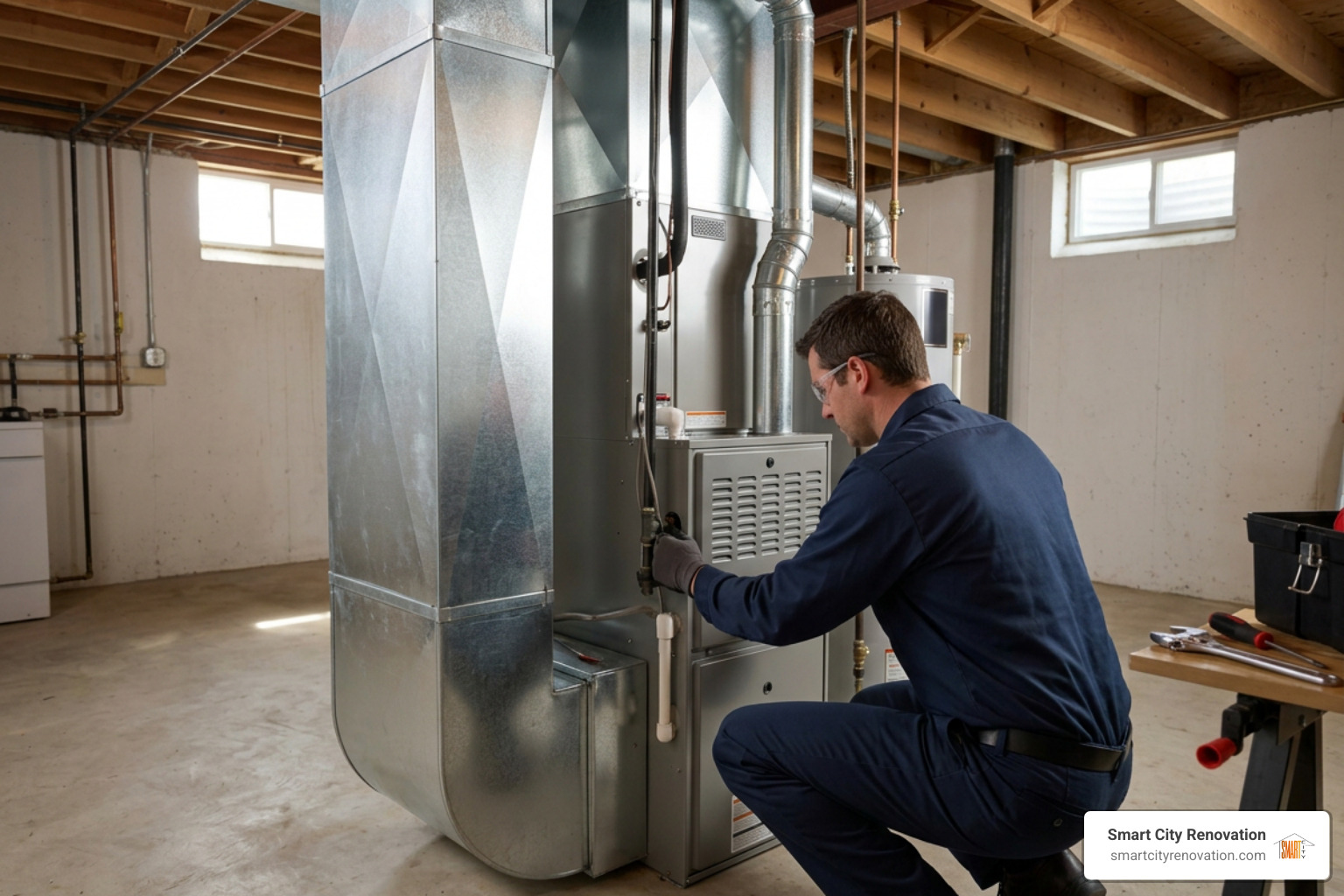
- Accessibility: Furnaces situated in tight crawl spaces, finished basements with limited clearance, or cramped attic utility closets require more labor time to disassemble and service.
- Labor Rates in Cook County: Local trade wages in Cook County sit well above national benchmarks due to rigorous licensing standards, high living costs, and strict municipal building regulations.
To minimize unexpected system breakdowns during extreme cold spells, explore these 10 maintenance tips could save you 1000s.
Common Furnace Problems in North Shore Homes
Homeowners across Glenview, Mount Prospect, Park Ridge, and neighboring North Shore communities encounter similar mechanical issues as heating equipment ages. Identifying these issues early prevents minor glitches from compounding into total system failures.
- Clogged or Dirty Air Filters: Restricted airflow forces the blower motor to work significantly harder, leading to overheating, blown capacitors, or premature system lockouts triggered by high-limit safety switches.
- Faulty Igniter or Flame Sensor: Over time, carbon deposits build up on flame sensors, preventing the control board from detecting gas ignition and causing the system to shut down automatically for safety.
- Failed Blower Motor Capacitor: The capacitor delivers the electrical torque needed to start the blower motor fan. A failed capacitor prevents warm air from circulating throughout home ductwork.
- Damaged Draft Inducer Motor: The draft inducer draws combustion gases through the heat exchanger and flushes them harmlessly out the vent stack. A failing inducer produces grinding noises and prevents furnace startup.
- Thermostat Malfunctions: Outdated or uncalibrated thermostats fail to signal the heating system correctly, creating inconsistent room temperatures or continuous system cycling.
Keep an eye out for these crucial warning signs requiring prompt professional attention:
- Squealing, grinding, or banging noises originating from the furnace cabinet
- Frequent short-cycling (the furnace turns on and off rapidly without heating the home)
- A yellow or flickering burner flame instead of a steady, clear blue flame
- Cold air blowing from supply vents while the heating thermostat is actively engaged
- Unexplained spikes in monthly natural gas or electricity bills
Insurance Coverage and Permit Requirements in Cook County
A common question among Glenview homeowners is whether property insurance will absorb the cost of furnace repairs. Standard homeowners insurance policies generally cover furnace damage only when caused by sudden, covered perils—such as a fallen tree branch hitting an exhaust flue, an unpredicted electrical surge, a burst water pipe, or a home fire. Routine wear and tear, mechanical breakdowns due to aging equipment, and damage resulting from neglected maintenance are strictly excluded from insurance protection.
Regarding local permits, minor component repairs—such as swapping out a flame sensor, replacing a capacitor, or installing a new thermostat—do not require municipal permits. However, major mechanical alterations, gas line modifications, structural flue replacements, or full equipment changeouts require official permits from local municipal building departments in accordance with Cook County mechanical codes. A licensed HVAC contractor will secure all mandatory electrical and mechanical permits before undertaking major structural equipment work.
Furnace Repair vs. Replacement: Making the Right Decision
Deciding whether to continue investing in furnace repairs or proceed with a total equipment replacement is one of the most significant financial choices facing a homeowner.
To make a practical decision, heating contractors recommend utilizing the industry 50 Percent Rule. If the estimated cost of a single repair approaches or exceeds 50% of the cost of installing a brand-new high-efficiency furnace—or if cumulative annual repair costs regularly exceed several hundred dollars on an older unit—replacement is almost always the smarter long-term financial path.
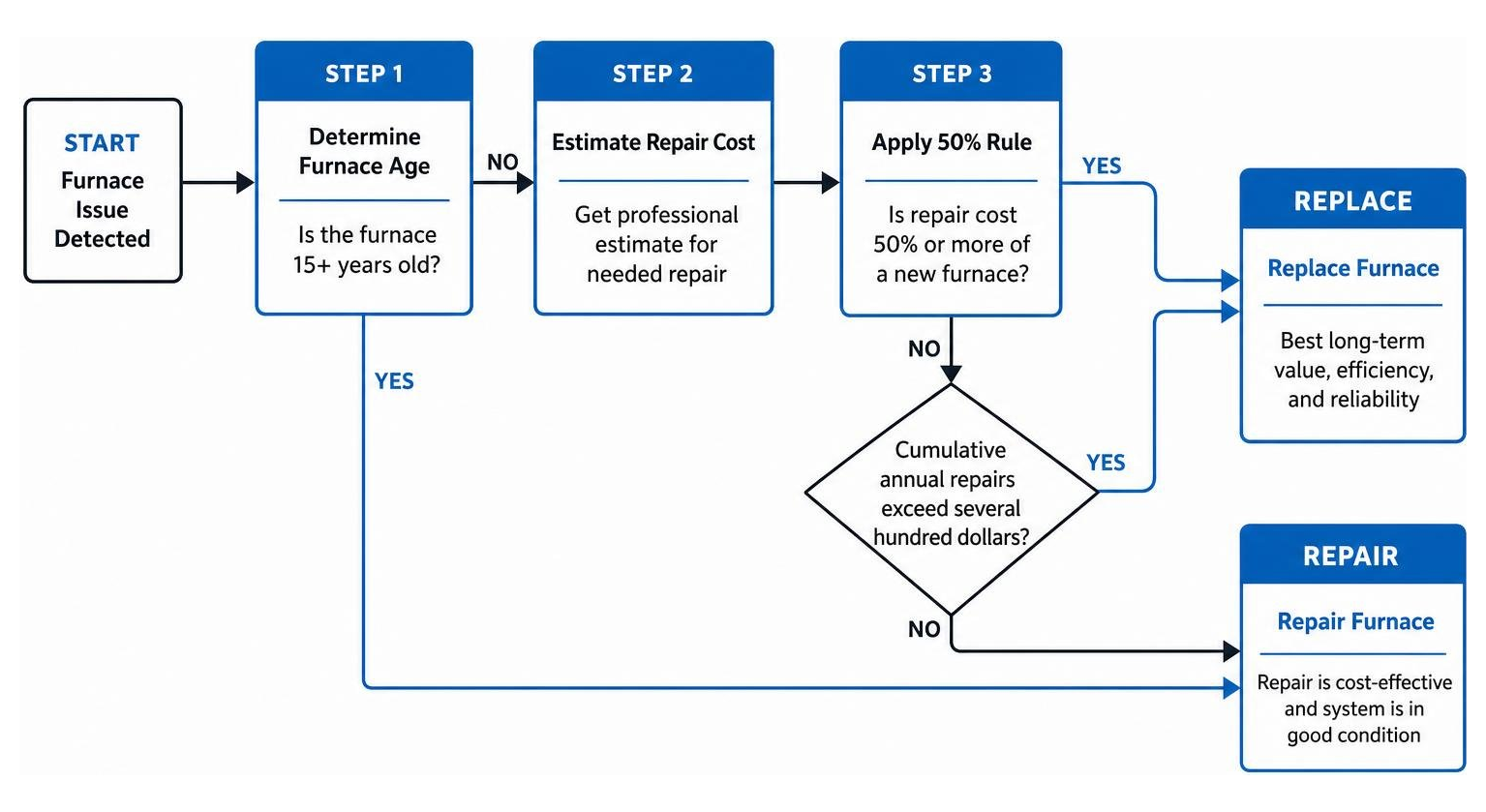
Consider these baseline criteria when weighing repair against replacement:
- Equipment Lifespan: In Glenview’s harsh climate, a standard gas furnace boasts an average operating lifespan of 15 to 20 years. If your system is over 15 years old and experiencing frequent breakdowns, investing in major part replacements yields diminishing returns.
- Energy Efficiency Ratings: Older furnaces typically operate at Annual Fuel Utilization Efficiency (AFUE) ratings between 60% and 70%, meaning 30 to 40 cents of every dollar spent on gas escapes directly up the chimney. Modern high-efficiency condensing furnaces reach up to 98% AFUE, significantly reducing monthly utility expenditure.
- Frequency of Failures: Needing service calls multiple winters in a row is a clear indicator that the system’s structural integrity and main electrical controls are nearing end-of-life.
Comparing Minor Repairs to Full HVAC System Replacement
While minor repairs average around $300, a complete standalone furnace replacement in Glenview averages $4,784, with low-end basic installations costing roughly $2,904 and high-end, variable-speed multi-stage installations reaching $6,664.
When replacing a complete heating and cooling system (furnace, central air conditioning condenser, evaporator coil, and matching controls), basic off-peak regional estimates range from $12,620 to $17,074, while peak summer installation rates in Cook County range from $15,144 to $20,489 due to localized labor demands.
For broader insights on regional pricing dynamics and labor standards across Chicagoland, review these updated Chicago area repair standards and discover how local technicians approach equipment sizing. If you live nearby in the Northwest suburbs, you can also explore expert hvac repair in des plaines fast reliable service.
How Preventive Maintenance Cuts Long-Term Heating Bills
The absolute best way to suppress Glenview furnace repair cost over time is through structured annual preventive maintenance. Enrolling in an annual heating tune-up program—which typically costs around $100 to $150 per year—delivers substantial financial dividends:
- Prevents Costly Emergency Failures: Routine cleaning removes carbon debris, checks safety controls, tightens electrical connections, and lubricates motor bearings before minor wear turns into a mid-winter breakdown.
- Protects Equipment Lifespan: Well-maintained furnaces routinely outlast neglected units by 5 to 7 operational seasons.
- Lowers Monthly Fuel Usage: Clean burners and fresh air filters ensure optimal fuel combustion and unrestricted airflow, shaving up to 15% to 30% off monthly utility bills.
- Maintains Safe Indoor Air Quality: Regular inspections detect hairline heat exchanger cracks early, preventing dangerous carbon monoxide leakage into living areas.
Learn how proactive tune-ups safeguard your boiler or gas furnace by reviewing ways to keep your home cozy with top rated gas boiler maintenance near you.
How to Select a Reliable HVAC Contractor in Glenview

Selecting the right professional contractor ensures high-quality work, transparent billing, and compliance with local building codes. When searching for a heating specialist in Glenview, Niles, Park Ridge, or Arlington Heights, apply the following vetting criteria:
- Verify Licensing and Insurance: Always ensure the company holds active municipal licenses in Cook County and carries full general liability and workers’ compensation coverage.
- Insist on Detailed Manual J Calculations: Sizing a furnace purely based on square footage or replacing equipment with the exact same tonnage as the old unit is an outdated practice. Dependable contractors perform a full Manual J heat load calculation, taking into account home insulation levels, window placement, exterior exposure, and duct structure.
- Demand Written itemized Estimates: Reliable companies provide clear written estimates detailing part charges, labor costs, diagnostic fees, and warranty terms before starting work.
- Consider Off-Peak Scheduling: If your heating system is functioning but showing signs of wear, scheduling major maintenance or equipment upgrades during off-peak shoulder seasons (spring or autumn) can yield better scheduling flexibility and help avoid peak season surcharges.
At Smart City Renovation, we draw on 25 years of local construction, remodeling, and mechanical experience to deliver reliable residential heating solutions tailored to Chicagoland homes.
Frequently Asked Questions About Glenview Heating Systems
How long does a furnace typically last in Glenview’s climate?
In Northern Illinois, a standard residential gas furnace generally lasts between 15 and 20 years. Because local systems operate under heavy thermal stress throughout months of sub-zero temperatures, annual professional maintenance is essential to help your furnace reach the upper end of its expected lifespan.
Does homeowners insurance cover furnace repairs in Illinois?
Homeowners insurance standard policies do not cover normal wear and tear, mechanical breakdown, or damage resulting from deferred routine maintenance. Insurance policies generally only cover furnace damage caused by sudden, unpredicted events such as fires, severe electrical lightning surges, or structural impacts from fallen tree branches.
Do I need a permit for furnace repairs or replacement in Glenview?
Routine maintenance and minor component repairs—such as changing filters, replacing igniters, or installing a new thermostat—do not require permits. However, complete equipment replacements, gas pipe retrofits, or main electrical/flue alterations require mechanical permits issued by the local municipal building department in compliance with Cook County building codes.
Conclusion
Managing your Glenview furnace repair cost comes down to timely action, accurate component diagnostics, and ongoing preventive maintenance. Addressing small mechanical noises or minor short-cycling early keeps standard repair costs near the average $300 mark, while preventing costly emergency surcharges when winter weather turns extreme.
Whether you need rapid troubleshooting, emergency winter repairs, or a comprehensive assessment of an older heating unit, working with an experienced local contractor guarantees long-term indoor comfort and safety. With 25 years of specialized building, renovation, and HVAC experience serving Glenview and surrounding Chicagoland communities, our team is dedicated to keeping your home warm, safe, and energy-efficient.
Ready to secure your home’s heating performance before the next extreme freeze? Connect with a trusted local hvac contractor at Smart City Renovation today for expert heating assessments and transparent, reliable service.