

Smart Basement Remodel Storage Solutions Start With a Clear Plan
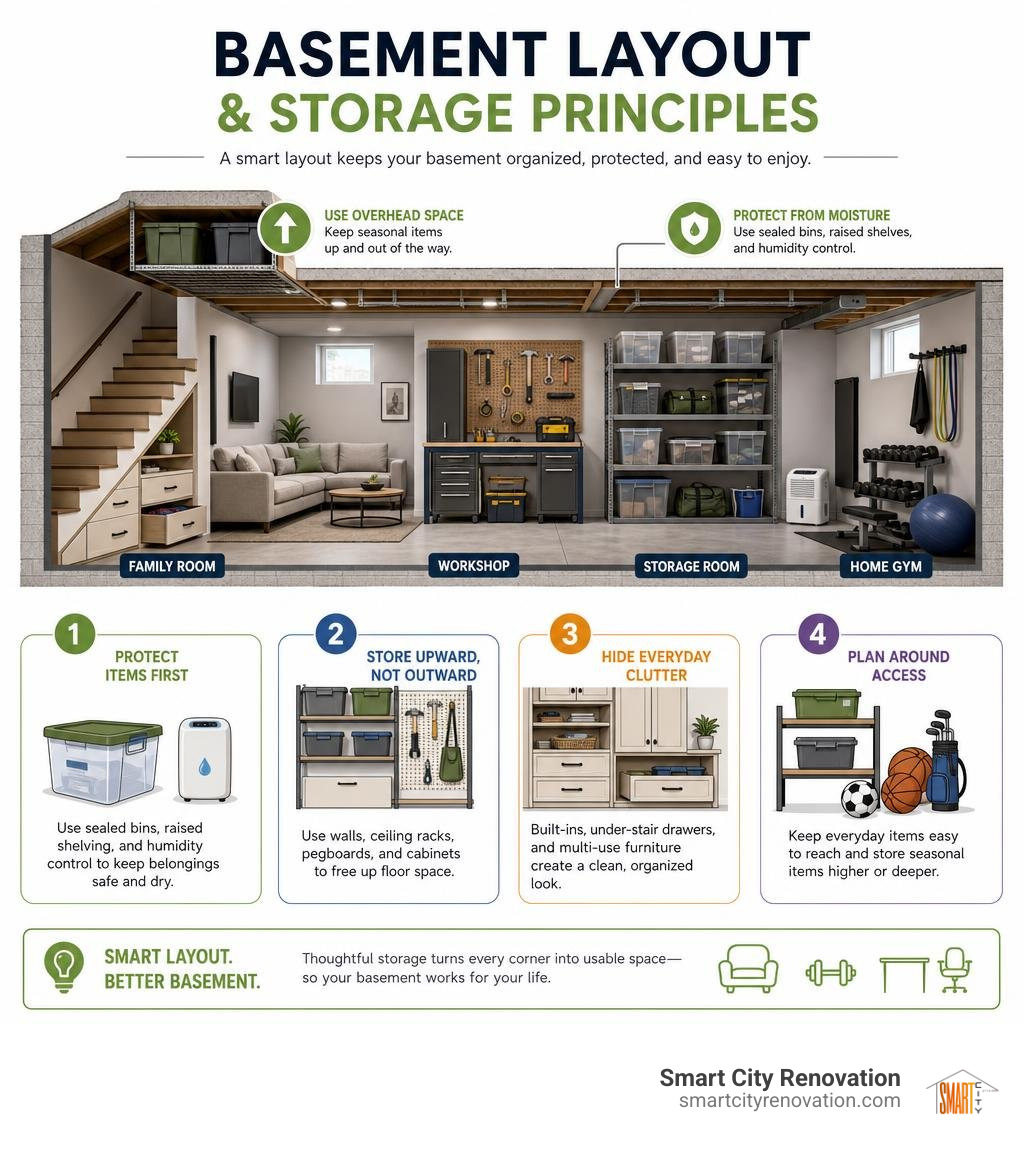
Basement remodel storage solutions work best when they combine three things: moisture protection, smart use of vertical space, and storage that fits the room’s purpose.
- Protect items first: Use sealed plastic totes, raised shelving, and humidity control. Keep valuable paper, photos, fabrics, and electronics out of damp areas.
- Store upward, not outward: Wall shelves, pegboards, cabinets, and ceiling racks free up valuable floor space for living, work, or play.
- Hide everyday clutter: Built-in cabinets, under-stair drawers, and multi-use furniture make finished basements feel calm instead of crowded.
- Plan around access: Put seasonal items high or deep in storage. Keep frequently used tools, sports gear, and household supplies within easy reach.
A basement can be a family room, office, workshop, gym, or playroom without becoming the place where unused boxes go to disappear. The right layout turns awkward areas, such as narrow storage rooms and the space beneath stairs, into useful square footage while helping protect belongings from Chicago-area humidity, leaks, and potential water issues.
I’m Norbert with Smart City Renovation. With 25 years of Chicagoland remodeling experience, I help homeowners plan basement remodel storage solutions that balance durable storage, moisture awareness, and comfortable finished living space.
Basement remodel storage solutions further reading:
Preparing Your Space for Basement Remodel Storage Solutions
Before you buy heavy-duty cabinets or start framing out custom closets, you must prepare the environment. A basement in Park Ridge, Arlington Heights, or Glenview experiences seasonal shifts, freeze-thaw cycles, and concrete vapor emissions. Installing high-end shelving over a damp floor or on top of forgotten clutter is like putting fresh paint over raw rust—it won’t last long.
Step-by-Step Decluttering and Moisture Defense
Every successful basement remodel storage solutions project begins with a rigorous audit of your possessions and your subterranean environment.
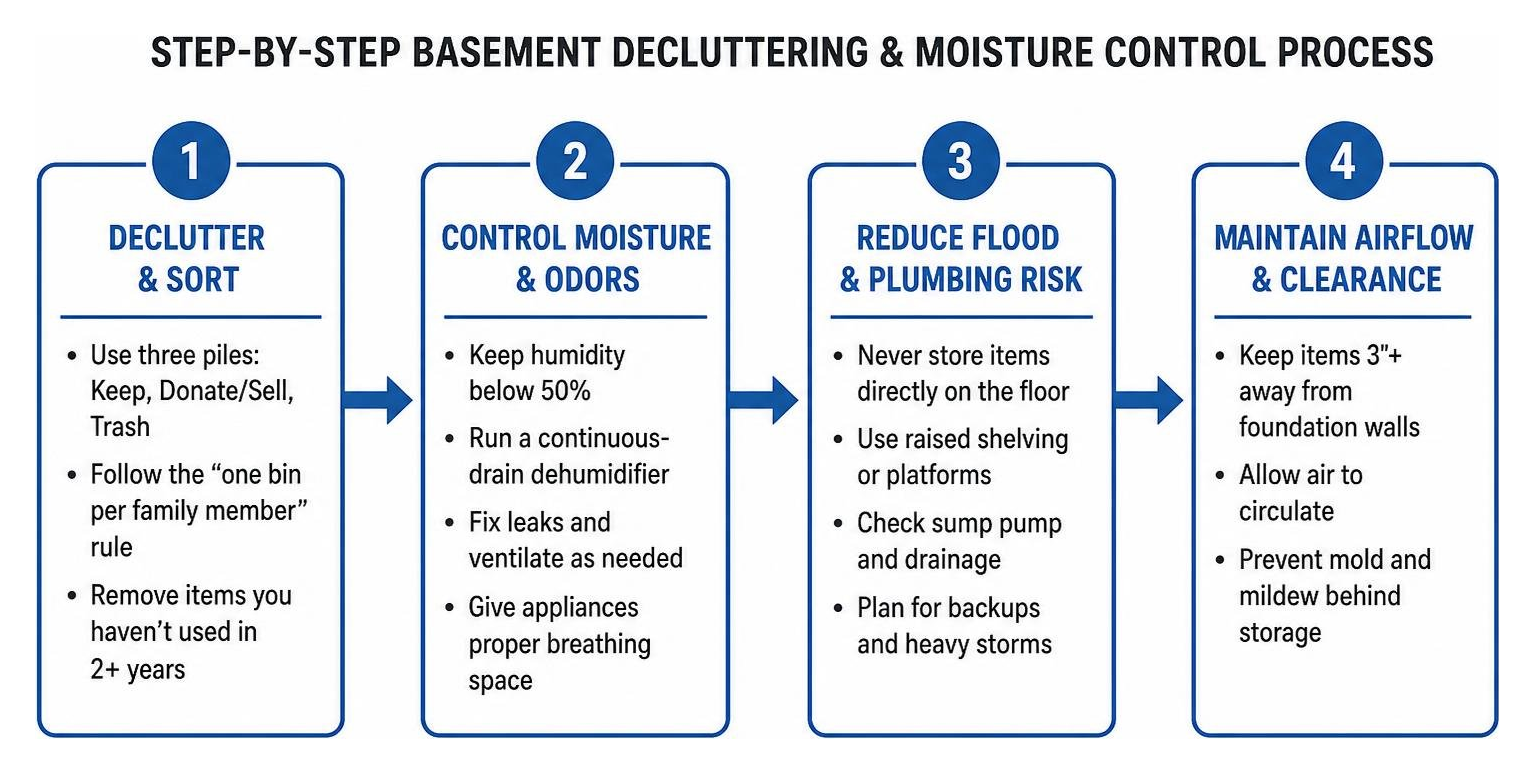
- Implement a Strict Three-Pile Sorting System: Divide everything currently sitting in your basement into three distinct piles: Keep, Donate/Sell, and Trash. If you haven’t touched an item in over two years—and it lacks sentimental value—it shouldn’t take up prime subterranean real estate. A great rule of thumb for paperwork and personal mementos is enforcing a strict “one bin per family member” limit to curb accidental hoarding.
- Establish Aggressive Moisture and Odor Control: Concrete floors wick groundwater upward continuously through capillary action. Keep relative humidity levels strictly below 50% year-round by running a continuous-drain dehumidifier. Ensure appliances have proper breathing space; if you’re upgrading nearby utility zones, refer to our guide on How to Turn Your Basement Laundry Room Into a Clean Haven to eliminate lingering moisture sources.
- Evaluate Flood Hazards and Plumbing Risk: Chicagoland storms can test your sump pump and foundation drainage to their absolute limits. Never store items directly on bare slab flooring. For peace of mind against mechanical pump failures or sewer backups, make sure your drainage strategy is rock solid by reading up on Plumbing Help for When Your Basement Becomes a Lake.
- Maintain Spatial Airflow and Perimeter Clearance: Keep stored furniture and heavy containers at least 3 inches away from foundation walls. This 3-inch boundary allows room air to circulate, preventing hidden micro-climates of mold and mildew growth behind your storage setups.
Protective Container Selection for Basement Remodel Storage Solutions
The container you select dictates whether your stored goods survive a humid summer or an unexpected plumbing drip. Standard cardboard boxes act like oversized sponges, absorbing ambient room moisture, losing structural integrity, and attracting unwanted pests.
Swap cardboard out entirely for heavy-duty, gasket-sealed clear plastic totes. Clear totes allow you to audit contents visually without unstacking half a room. For tax documents, archival photos, or holiday decor on long shelf runs, uniform banker-style plastic bins fit standard shelf depths without dangerous front overhangs.
| Container Type | Moisture Resistance | Structural Integrity | Visibility | Ideal Basement Usage |
|---|---|---|---|---|
| Airtight Clear Totes | Exceptional | High (Stackable up to 5 high) | Excellent (Transparent) | Clothing, linens, holiday decor, photo archives |
| Heavy-Duty Utility Bins | Excellent | Superior (Resists heavy impacts) | Low (Opaque) | Heavy power tools, hardware, camping gear |
| Laminated Banker Boxes | Moderate | Fair (Short-term stacking) | Moderate (Label dependent) | Short-term tax paperwork, home office files |
| Corrugated Cardboard | Poor (Absorbs moisture) | Poor (Collapses when damp) | Poor (Opaque) | Not recommended for basement storage |
Maximizing Vertical and Overhead Basement Storage
When square footage is limited, the smartest direction to grow is upward. Floor space in a remodeled basement should be preserved for foot traffic, living room seating, play zones, or home gyms. By shifting storage to your walls and ceiling structure, you reclaim the main floor area while elevating vulnerable items far above potential water hazards.
Ceiling Joist Racks and Overhead Storage
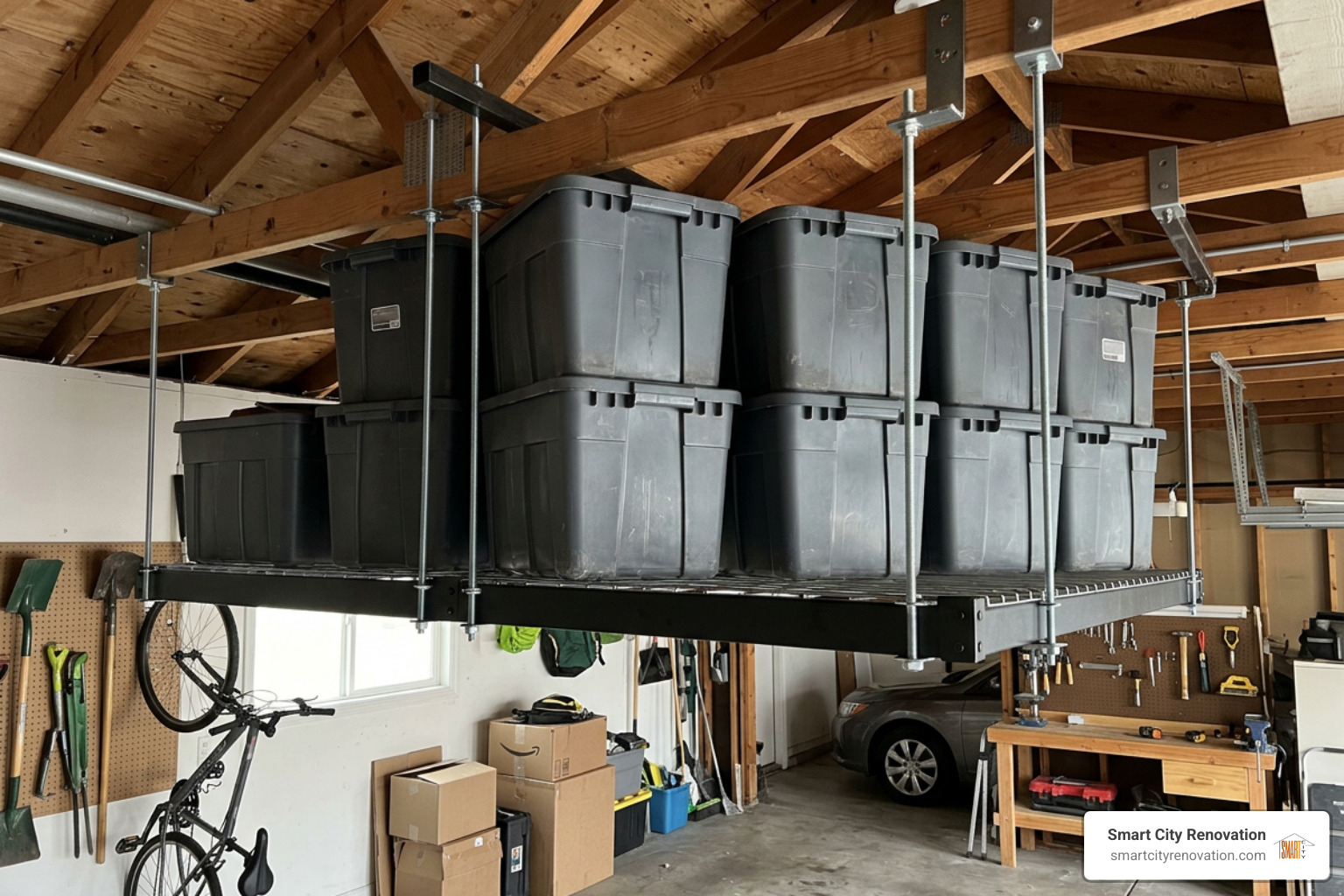
Unfinished floor joists and overhead drop-ceiling tracks represent vast amounts of untouched storage potential.
Heavy-duty ceiling-mounted overhead racks can accommodate up to 250 pounds each. They provide the perfect home for lightweight, bulky items like artificial Christmas trees, patio cushion bags, ice chests, or seasonal sports gear.
For smaller utility workshops in Des Plaines or Niles basements with exposed wooden joists:
- Install Pivoting Overhead Bins: Custom wooden or metal pivoting boxes can be mounted directly between joist cavities. They swing down for access to small parts or craft supplies and latch flush against the ceiling when closed.
- Mount Pulley-Assisted Hoists: Ceiling-mounted bike hoists keep family bicycles completely off the floor, eliminating floor clutter while safeguarding bicycle frame paint from accidental scrapes.
Wall-Mounted Shelving and High-Capacity Systems
Wall storage systems keep items visible, organized, and accessible without cluttering your room layout.
- Pegboards and Magnetic Tool Bars: Wall-mounted pegboard panels combined with heavy-duty hooks convert open drywall or masonry into flexible organization for hand tools, sports rackets, or gardening equipment. Adding magnetic tool strips keeps iron and steel tools off work benches. Pro-Tip: Apply a light coating of machine oil to hand tools before hanging them to prevent surface oxidation in humid environments.
- Solid Wood Closet Systems: For finished closets, media rooms, or utility nooks, solid wood organizer systems deliver unmatched structural stability. Units like the Universal Open Wood Closet System | Expandable Storage – John Louis Home are rated to support up to 1,200 pounds when properly anchored into wall studs (or up to 25 pounds per lineal foot). Mounting garment bars 10.25 inches from the back wall ensures standard clothing hangers hang freely without rubbing against interior drywall.
- Heavy-Duty Steel Cabinetry: In heavy-use workshop alcoves, consider steel modular cabinets. While standard consumer cabinets use thin 24-gauge steel, industrial-grade systems feature 19-gauge welded steel frames. This extra metal thickness prevents cabinet frame twisting and door sagging over decades of heavy tool storage.
For detailed advice on structurally anchoring shelves during wall framing, consult our comprehensive guide on Basement Remodeling 101.
Aesthetic Storage Solutions for Finished Basements
A common challenge in finished basement projects is hiding utility storage without making the space feel cold, clinical, or industrial. When your basement serves as a home theater, family lounge, or guest suite, storage solutions must blend into your architectural design.
Custom Cabinetry and Concealed Storage Wall Units
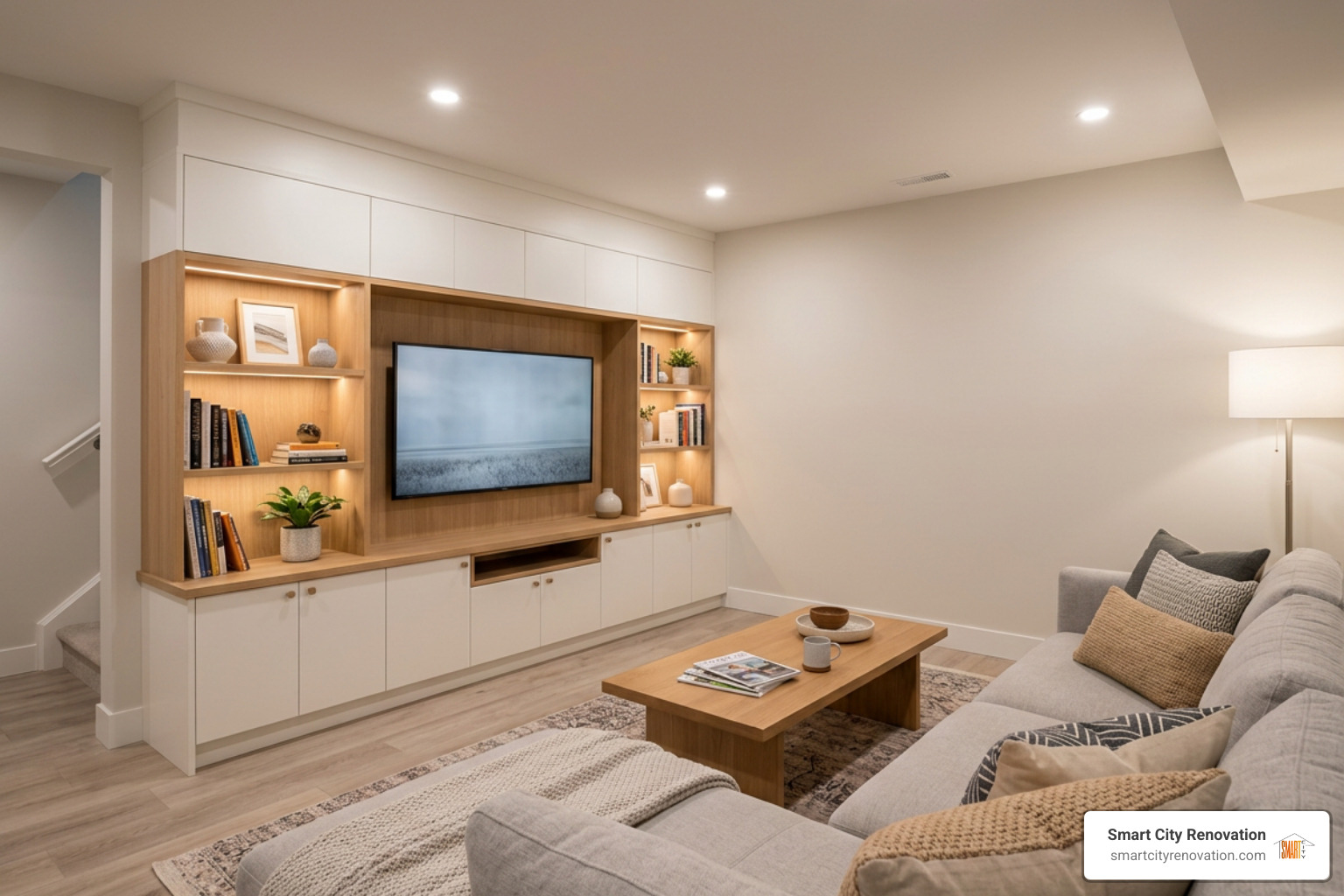
Concealed wall units allow you to store hundreds of pounds of gear out of sight behind clean, modern doors.
- Frameless Full-Overlay Cabinetry: Frameless, full-overlay cabinet designs create smooth, flush modern surfaces that mimic high-end living room furniture rather than traditional utility storage.
- Modular Storage Walls: Prefabricated modular configurations, such as the Klovo 8-Piece 16 ft. Locker Wall Storage Set in White | Homesquare, feature thermally fused laminate panels and 1mm thick PVC edge-banding. This non-porous edge sealing prevents moisture absorption and wood swelling in subterranean rooms.
- Sliding Barn Doors and Room Dividers: Instead of building traditional swing-door framed closets that take up valuable floor clearance, install wide sliding barn doors or recessed pocket doors. They conceal deep utility shelving runs instantly while adding architectural character to the basement living space.
If you are planning your overall design budget, evaluate trade-offs between custom millwork and modular units using our pricing breakdown on From Concrete to Cozy: A Complete Breakdown of Basement Finishing Costs.
Multi-Functional Furniture for Living and Storage
Every piece of furniture placed in a basement remodel should ideally work double-duty.
- Storage Ottomans and Bench Seating: Deep fabric or leather storage ottomans act as coffee tables, footrests, extra seating, and ideal hiding spots for throw blankets, board games, or children’s toys. Built-in window benches or perimeter banquettes can house flip-up tops covering deep storage bins below.
- Sofa Beds and Lift-Top Coffee Tables: Sectional sofas with integrated pop-up chaise storage or pull-out drawer bases maximize floor plan efficiency in guest rooms. Lift-top coffee tables rise up to comfortable desk height while opening up internal space for laptops, gaming controllers, and charging cords.
- Mobile Utility Carts: Roll-away storage carts on lockable casters can move effortlessly between a craft nook and a main living area, then tuck away into a closet when guests arrive.
Explore how dual-purpose layouts elevate comfort across our full line of residential Basement Remodeling design options.
Creative Storage Designs for Awkward Basement Spaces
Basements are famous for non-standard geometry: low HVAC soffits, structural support columns, offset wall alcoves, and awkward stairwell spaces. Rather than walling off these areas, custom design details can turn structural quirks into highlights of your room layout.
Transforming Under-Stair Nooks
The triangular volume beneath your basement stairwell is often completely wasted. Turning this dead space into functional storage adds significant usable capacity to your floor plan.
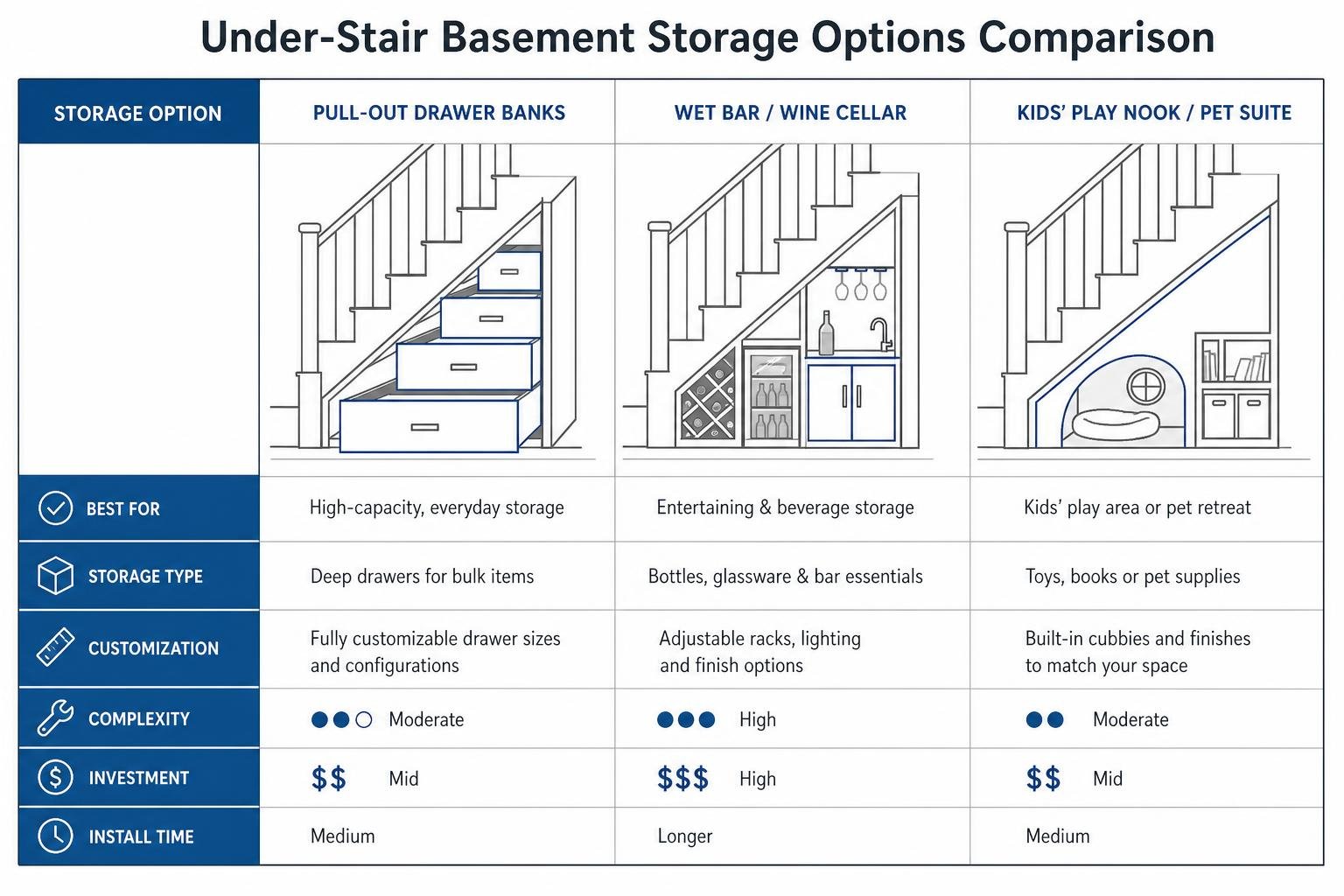
- Custom Pull-Out Drawer Banks: Deep, extra-long drawer units fitted with industrial heavy-duty ball-bearing slides pull straight out into the room. They allow full access to the deepest parts of the stair cavity for shoes, sports equipment, or bulk paper goods.
- Recessed Wine Cellars and Wet Bars: Convert the tallest section of the stair cavity into a custom wine rack display or dry bar cabinet featuring LED accent lighting and glass front doors.
- Hidden Kids’ Play Nooks or Pet Suites: Build a cozy reading hideaway or pet retreat underneath lower stair risers complete with low-voltage lighting and built-in book cubbies.
Customizing Modular Systems for Basement Remodel Storage Solutions
Modular cabinet systems allow you to assemble custom wall layouts tailored precisely around foundation footings, basement windows, or electrical panels.
Systems like the Gararich 17-Piece Modular Garage Cabinet System | Starter Garage Storage | GarageBaseSystems – GarageBaseSystems™ offer 127-inch wide by 80-inch high storage footprints featuring solid rubber wood worktops and integrated pegboards.
When specifying modular storage systems for basement installations, keep these core specs in mind:
- Adjustable Leveling Legs: Concrete basement floor slabs are rarely perfectly flat; they slope toward floor drains. Ensure your storage cabinets feature heavy-duty leveling feet capable of up to 2.36 inches of independent vertical adjustment. This keeps cabinet lines plumb and doors properly aligned.
- Shallow vs. Deep Drawer Ratios: Shallow drawers (2 to 4 inches deep) are far more useful than deep drawers for organizing small hand tools, craft supplies, hardware, and office items. Reserve deep lower drawers for heavy power tools or bulky linens.
- Selecting Full-Featured Modular Sets: For broader spaces or multi-zone basements, larger modular layouts like the Gararich 22-Piece Modular Garage Cabinet System with Rolling Tool Cart | GarageBaseSystems – GarageBaseSystems™ , the Workspace Plus with Tool Cart Modular Garage Cabinet System | GarageBaseSystems – GarageBaseSystems™ , or the heavy-duty Workshop Storage Modular Garage Cabinet System | GarageBaseSystems – GarageBaseSystems™ provide integrated rolling carts, soft-close drawers, and high-capacity tool storage that roll right up to your active workspace.
Frequently Asked Questions
What is the best way to protect stored items from basement humidity and water?
The most effective moisture protection strategy combines continuous dehumidification with waterproof containers and elevated storage surfaces:
- Maintain indoor relative humidity below 50% using a continuous-drain dehumidifier.
- Store items strictly inside gasket-sealed, airtight plastic totes rather than cardboard boxes.
- Keep all containers elevated at least 3 to 6 inches off the concrete slab using wire shelving, composite pallets, or cabinet legs fitted with rubber leveling feet.
- Maintain a 3-inch gap between storage racks and concrete foundation walls to encourage continuous air circulation.
How can I add ample storage to a finished basement without making it look cluttered?
To preserve a spacious, comfortable aesthetic in a finished basement:
- Use floor-to-ceiling built-in cabinetry featuring frameless, full-overlay flush doors painted the same color as your surrounding walls.
- Install sliding barn doors or pocket doors to conceal deep wall storage runs instantly.
- Incorporate multi-functional furniture, such as lift-top coffee tables and deep storage ottomans.
- Convert unused architectural space—such as under-stair nooks—into integrated recessed drawers or cabinet banks.
What items should never be stored in an unfinished basement?
Avoid storing items sensitive to moisture, humidity fluctuations, or mold in an unfinished or unconditioned basement:
- Paper Archives: Essential legal documents, vintage books, and unsealed photo albums.
- Delicate Fabrics: Inherited quilts, wool clothing, and wedding dresses.
- Solid Wood Antiques: Natural wood furniture susceptible to warping, joint separation, and veneer peeling caused by humidity shifts.
- Unprotected Electronics: Sensitive audio gear or vintage electronics vulnerable to internal circuit oxidation.
- Cardboard Boxes: Corrugated cardboard absorbs moisture, harbors mold spores, and attracts subterranean pests.
Conclusion
Smart basement remodel storage solutions turn underutilized, dark subterranean spaces into clean, highly organized, and comfortable square footage. By prioritizing moisture mitigation, elevating items onto vertical wall systems, utilizing unused ceiling joist capacity, and hiding clutter behind smooth custom cabinet doors, you protect your family’s belongings while maximizing total home usability.
Whether you’re organizing a modest storage alcove in Skokie, building out an under-stair wine rack in Mount Prospect, or planning a full-floor finished basement overhaul in Park Ridge or Northbrook, proper planning makes all the difference. At Smart City Renovation, our team brings 25 years of local Chicagoland general contracting expertise to every detail of your build—from sub-floor moisture control and custom millwork framing to luxury finishes.
Ready to transform your home’s lower level into a beautifully organized living space? Explore Professional Remodeling Services with Smart City Renovation today to schedule your design consultation!