
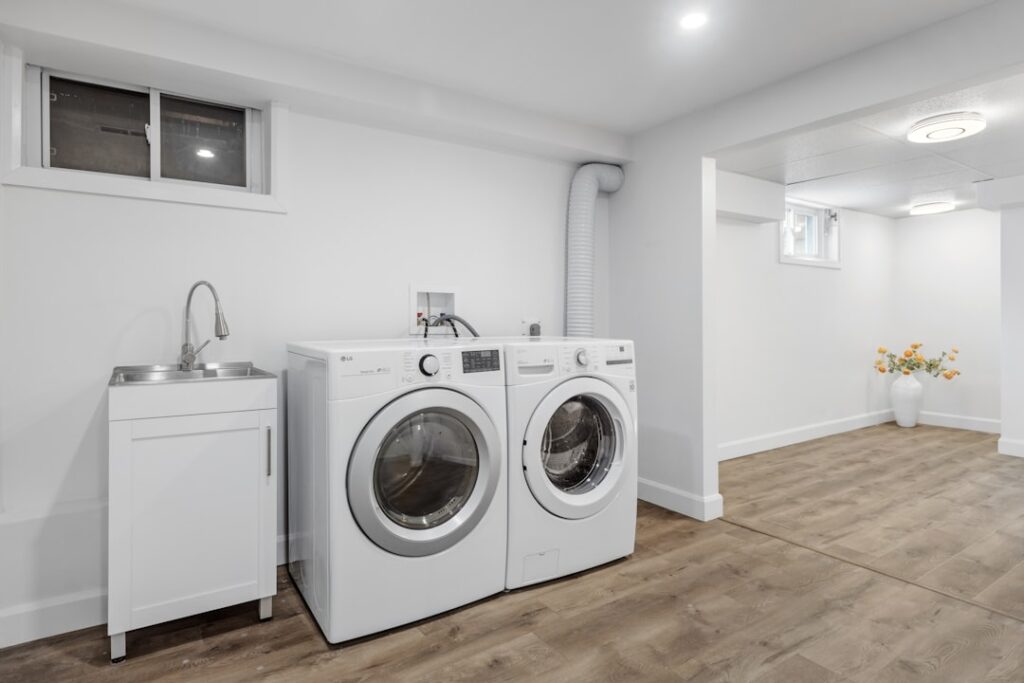
Why Your Basement Laundry Room Deserves a Real Makeover
Basement laundry rooms are one of the most-used — and most-neglected — spaces in any Chicago-area home. If yours feels dim, damp, and a little depressing, you’re not alone.
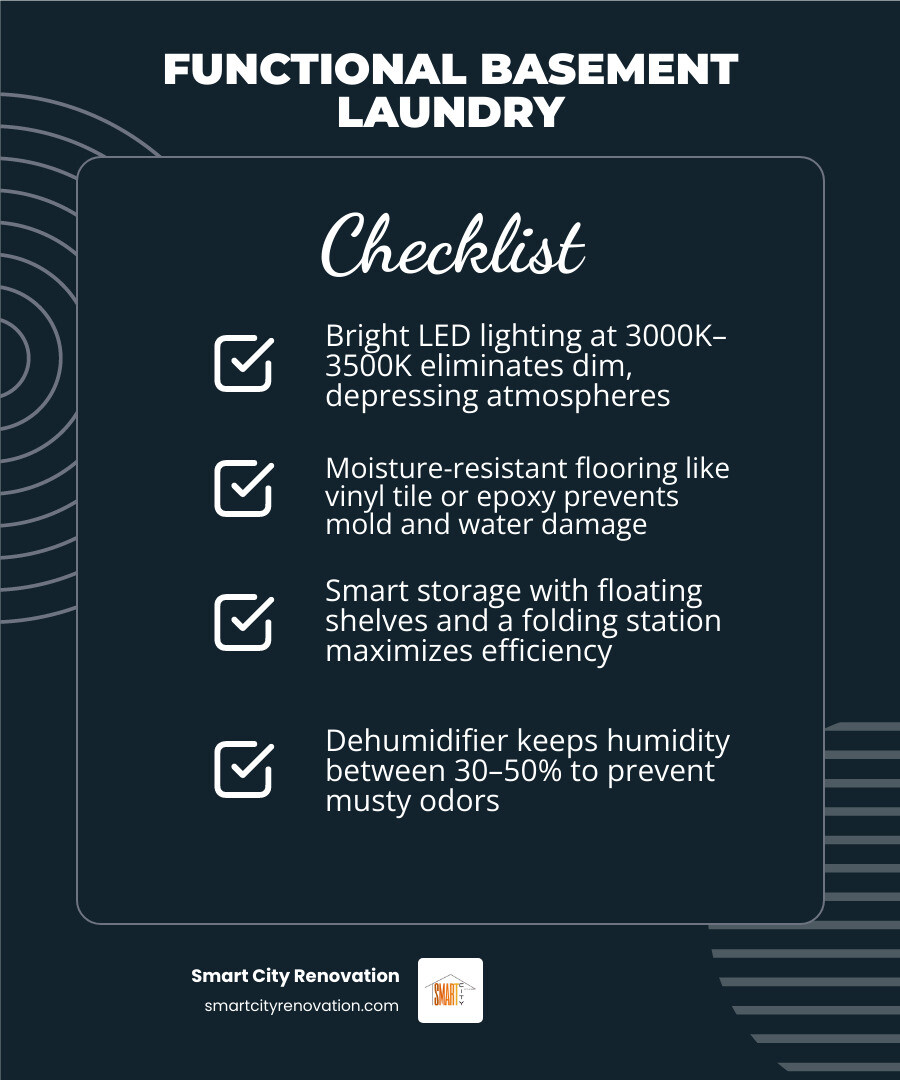
Here’s a quick snapshot of what a functional basement laundry room looks like:
- Bright lighting — warm LED fixtures at 3000K–3500K, no harsh fluorescents
- Moisture-resistant flooring — vinyl tile, epoxy, or luxury vinyl plank
- Smart storage — floating shelves, cabinets, and a dedicated folding station
- Safety basics — clear dryer vents, working water heater flue, mold-free walls
- Ventilation — dehumidifier keeping humidity between 30–50%
The average household runs 300–400 loads of laundry per year. That’s a lot of time spent in a space most people treat as an afterthought. A few targeted upgrades — from paint and lighting to proper waterproofing — can turn that dark concrete cave into a room you actually don’t mind being in.
The good news? Most of it is doable on a realistic budget of $300–$900 for a DIY refresh, or more comprehensively with professional help.
I’m Norbert, lead contractor at Smart City Renovation with 25 years of Chicagoland construction experience, including dozens of basement laundry room renovations across Des Plaines, Park Ridge, and the surrounding area. Below, I’ll walk you through everything — safety, waterproofing, design, storage, and flooring — so you can make smart decisions for your home.
Learn more about basement laundry rooms:
Essential Prep: Waterproofing and Safety for Basement Laundry Rooms
Before you pick out paint chips or shop for cute storage baskets, we need to address the bones of your basement. If you skip this step, a single heavy Chicagoland storm can ruin your hard work.
Moisture control is the golden rule of below-grade spaces. Many homes in Des Plaines or Niles deal with high water tables, making proper drainage and mold prevention non-negotiable. If your basement has a history of flooding, you may need a professional French drain and sump pump system installed. For immediate guidance on handling water disasters, read our article on Plumbing Help for When Your Basement Becomes a Lake.
Addressing Critical Safety Hazards
An unfinished utility room can harbor hidden dangers. When we assess basement laundry rooms, we look at two major culprits: the water heater and the dryer vent.
- Water Heater Backdrafting: Check your gas water heater’s flue. If you notice melted plastic caps on top of the water heater, it is a major red flag. This indicates that the vent flue is blocked—perhaps by debris or even a bird’s nest—and highly dangerous carbon monoxide fumes are backdrafting into your home instead of escaping outside.
- Dryer Vent Fire Hazards: Lint is highly flammable. Your dryer vent must run all the way to an exterior wall with rigid metal ductwork. Never vent a dryer through a window screen. The screen acts as a secondary lint trap, trapping highly flammable fibers, blocking airflow, and dumping massive amounts of moisture directly into your basement.
- Cleaning and Remediation: Before painting, thoroughly clean concrete walls. Use a mixture of bleach, Trisodium Phosphate (TSP), or Simple Green to scrub away years of grime, efflorescence, and mold. Run a heavy-duty dehumidifier continuously during and after this process to keep relative humidity levels between 30% and 50%.
Waterproofing and Concrete Preparation
Once your walls are scrubbed clean, it is time to prep the floors. Older concrete floors in areas like Mount Prospect and Park Ridge are rarely level, which can cause heavy washing machines to vibrate violently and damage their internal components.
If you are planning to tile your floor, we highly recommend using a self-leveling concrete compound to create a perfectly flat surface. Additionally, concrete floors expand and contract. To prevent your beautiful new floor tiles from cracking, you must lay down an uncoupling membrane (such as Schluter Ditra) over unmodified thinset mortar before applying modified thinset and laying your tiles.
If you have a sub-floor drainage system or a French drain, avoid drilling framing studs directly into the concrete floor. Instead, use heavy-duty construction adhesive to secure your bottom plates to protect the integrity of your waterproofing membrane.
For a deeper dive into preparing your subterranean space, check out our comprehensive guide on Basement Remodeling 101.
Designing for Light, Comfort, and Aesthetics
Doing laundry shouldn’t feel like a punishment. With the right design choices, you can make a windowless basement feel as bright and airy as a main-floor utility closet.
Brightening Dark Basement Laundry Rooms with Paint and Lighting
When dealing with limited natural light, your choice of paint and light fixtures does the heavy lifting.
- The Power of LRV: Light Reflectance Value (LRV) measures how much light a paint color reflects on a scale from 0 (black) to 100 (pure white). For dark basements, choose a color with an LRV of 75 or higher. Avoid stark, pure whites, which can look cold and institutional under artificial light. Instead, opt for warm whites, soft creams, or pale greiges—such as Sherwin-Williams Alabaster or Benjamin Moore White Dove.
- Layered Lighting: Ditch the harsh, buzzing fluorescent tube lights. Replace them with high-quality LED shop lights or flush-mount ceiling fixtures with a color temperature between 3000K and 3500K (warm to neutral white). Add plug-in LED under-cabinet lights ($15–$40 a set) to illuminate your folding countertops.
- Reflective Surfaces: Hang a large mirror on an open wall. It visually doubles the depth of the room and bounces light back across the space.
For more inspiration on choosing colors and layouts, the team at Design and Dwelling offers great visual ideas in their guide on Basement Laundry Room Ideas: Bright, Organized & Stylish – Design and Dwelling .
Adding Cottage Charm and Personality on a Budget
You don’t need a massive budget to add character to your utility space. In fact, a few clever DIY tricks can mask structural eyesores while bringing cozy, vintage vibes to your basement.
- Beadboard Panelings: If you have uneven masonry or cinderblock walls, installing beadboard panels is an incredibly cost-effective way to hide imperfections. It adds instant cottage style and saves you the hassle of full drywalling. For an excellent step-by-step look at this style, read the Basement Laundry Room Makeover with Charming Cottage Style blog.
- Sink Skirts: Utility slop sinks are highly practical but incredibly ugly. Hide exposed plumbing by hanging a gathered fabric sink skirt using a simple tension rod.
- Vintage Accents: Keep an eye out for salvaged items. Repurposing an old cabinet or using a vintage baker’s rack for detergent storage adds warmth. You can even mount a wooden pegboard or a row of antique hooks to hang drying items.
Maximizing Layouts and Storage Efficiency
Even a small or awkwardly shaped basement can become highly functional with smart spatial planning.

Smart Storage Solutions for Small Basement Laundry Rooms
To keep your laundry room from becoming a cluttered dumping ground, utilize your vertical space.
- Floating Shelves: Install 12-inch deep floating shelves ($30–$80 per set) directly above your washer and dryer. Use masonry anchors if mounting into concrete walls.
- Stock Cabinetry: If you prefer closed storage to hide mismatched detergent bottles, stock cabinets from local home improvement stores start around $60–$150 per unit.
- Folding Stations: If you have front-loading machines, place a custom-cut butcher block or a sturdy melamine panel directly over the top of them to create an instant, seamless folding counter. This stops sorting from becoming a “floor sport.”
To understand how these storage additions fit into a broader finishing plan, review our resource on From Concrete to Cozy A Complete Breakdown of Basement Finishing Costs.
Multi-Purpose Zones and Utility Integration
If you have the square footage, think about how your laundry room can serve multiple purposes. Could it double as a crafting station, a dog wash zone, or a half-bath?
Adding a utility sink is highly recommended, but plumbing below-grade requires special care. Since your basement floor sits below your home’s main sewer line, gravity won’t do the work. You will need to install a wastewater ejector pump to push the sink’s drainage up and out of the basement.
If you are thinking about adding a toilet or shower alongside your laundry setup, read our guide on From Concrete to Commode Building a Bathroom in Your Basement.
For inspiration on planning a major step-by-step layout transition, you can check out Before/After: Basement Laundry Room Renovation! — The Modern Renovator or read the technical layout tips provided in Design a Functional Basement Laundry Room with Ease – Tidy Home Guide .
Choosing the Best Flooring for Damp Environments
Basement floors demand materials that can handle humidity, minor spills, and potential plumbing leaks. Hardwood, standard laminate, and cork should be avoided at all costs below-grade.
Top Flooring Materials for Below-Grade Spaces
Here is a breakdown of the best moisture-resistant flooring options for basement laundry rooms:
| Flooring Type | Average Material Cost | Pros | Cons |
|---|---|---|---|
| Epoxy Coating | $80–$150 (DIY Kit) | Extremely durable, seamless, 100% waterproof, easy to clean | Cold underfoot, requires meticulous concrete prep |
| Peel-and-Stick Vinyl | $1–$3 per sq. ft. | Budget-friendly, easy DIY install, lots of patterns | Can lift if subfloor has high moisture transmission |
| Luxury Vinyl Plank (LVP) | $3–$7 per sq. ft. | Waterproof, looks like real wood, comfortable underfoot | More expensive, requires a flat subfloor |
| Interlocking Rubber Tiles | $2–$4 per sq. ft. | Soft underfoot, absorbs machine vibration, easy to swap | Industrial look, fewer style options |
For a complete step-by-step look at preparing concrete and laying beautiful tile floors, the tutorial on How to Turn A Creepy Basement Into Your Dream Laundry Room – DIY Huntress is an excellent resource.
Relocating vs. Remodeling: Is the Basement Best?
Sometimes, homeowners ask us if they should skip the basement remodel altogether and move their laundry appliances to the main floor or second level.
Pros and Cons of Moving Laundry Upstairs
Before you start rerouting plumbing lines, weigh the pros and cons of relocating your laundry room:
Pros of Moving Upstairs:
- Convenience: No more hauling heavy baskets up and down two flights of stairs.
- Better Light: Natural light from windows makes sorting chores much more pleasant.
- Incremental Laundry: Placing a stackable washer and dryer in a primary closet allows you to wash clothes in small, daily batches rather than saving it all for a dreaded weekend marathon.
Cons of Moving Upstairs:
- Vibration and Noise: Modern washers spin at incredibly high speeds. On a wooden subfloor upstairs, this vibration can cause walls to rattle and generate significant noise.
- Structural and Plumbing Costs: Relocating water supply lines, drains, and 240-volt electrical lines to an upper floor requires extensive wall demolition and professional plumbing work.
- Water Damage Risks: A washing machine leak on the second floor can ruin the ceilings, drywall, and flooring of the rooms directly below it. In the basement, a leak typically drains harmlessly toward the floor drain.
If you decide that keeping the laundry downstairs is the safest and most cost-effective path, we can help you turn that dark space into a finished masterpiece. Explore our Expert Basement Remodeling Services in Des Plaines Transform Your Space to see how we handle these transformations locally.
Frequently Asked Questions about Basement Laundry Rooms
What is the best paint color for a windowless basement laundry room?
The best colors are warm whites, soft creams, and light greiges with a Light Reflectance Value (LRV) of 75 or higher. Popular choices include Sherwin-Williams Alabaster and Benjamin Moore White Dove. Avoid cool, blue-toned whites, as they can make a windowless basement feel like a sterile commercial bunker.
How do I prevent mold and musty odors in a basement laundry?
Keep a high-capacity dehumidifier running to maintain relative humidity levels between 30% and 50%. Ensure your dryer is vented directly to the outdoors using rigid metal ductwork, and install a mechanical bathroom-style exhaust fan to pull humid air out of the room when washing or air-drying clothes.
What tools do I need for a DIY basement laundry renovation?
If you are tackling a basic cosmetic refresh, you will need standard painting tools, a laser level (to check floor slope), and a utility knife for peel-and-stick tiles. For more advanced DIY framing and storage installation, you will want a miter saw, a Kreg jig (for cabinet making), and tile spacers. If you are altering structural walls, running new electrical lines, or moving main drain pipes, you should always hire a licensed professional.
Conclusion
Your basement laundry room doesn’t have to be a dark, damp “penalty box.” With a clear plan, some fresh paint, upgraded LED lighting, and smart storage, you can transform it into a clean, safe, and highly efficient space.
Whether you want to tackle a simple weekend DIY refresh or are ready for a complete basement transformation, we are here to help. At Smart City Renovation, we bring 25 years of local contracting expertise to every project across Des Plaines, Arlington Heights, Glenview, and the surrounding Chicago suburbs.
Ready to get started? Contact us today to discuss your project and explore our full range of Smart City Renovation Services.