
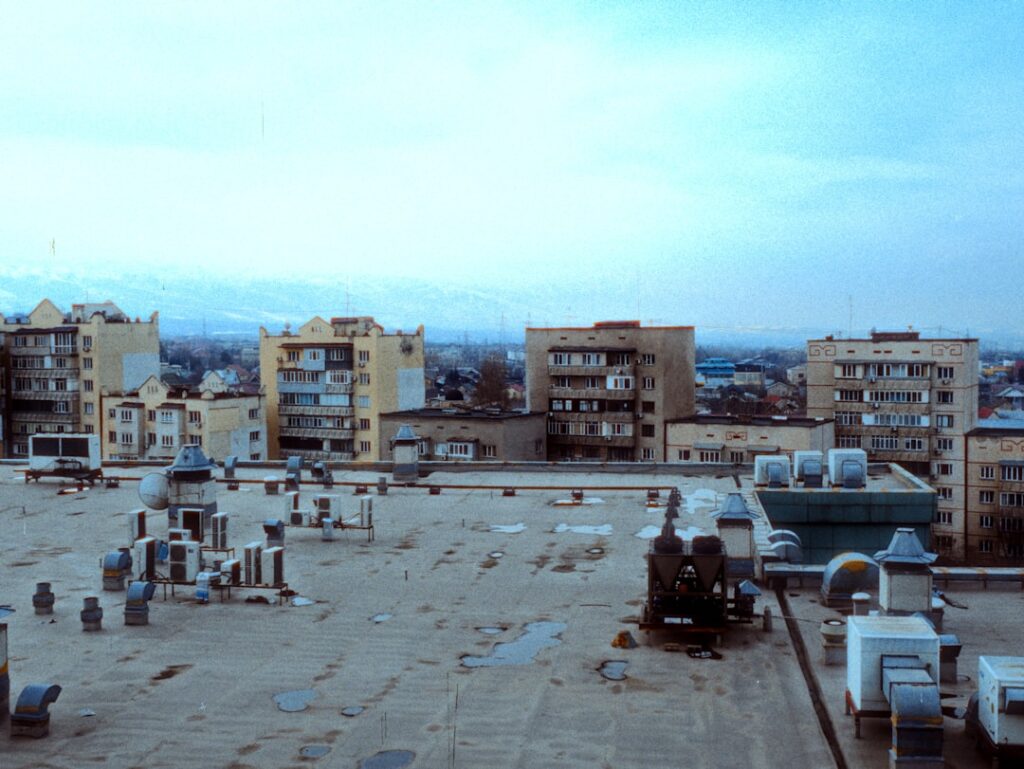
What Is Commercial Roofing — and Why It Matters for Your Building
Commercial roofing is a specialized field that goes far beyond what most people picture when they think about roofs. Unlike residential roofing, it deals with flat or low-slope systems, stricter building codes, larger surface areas, and materials built to protect business operations — not just keep rain out.
Quick answer: What you need to know about commercial roofing
| Topic | Key Facts |
|---|---|
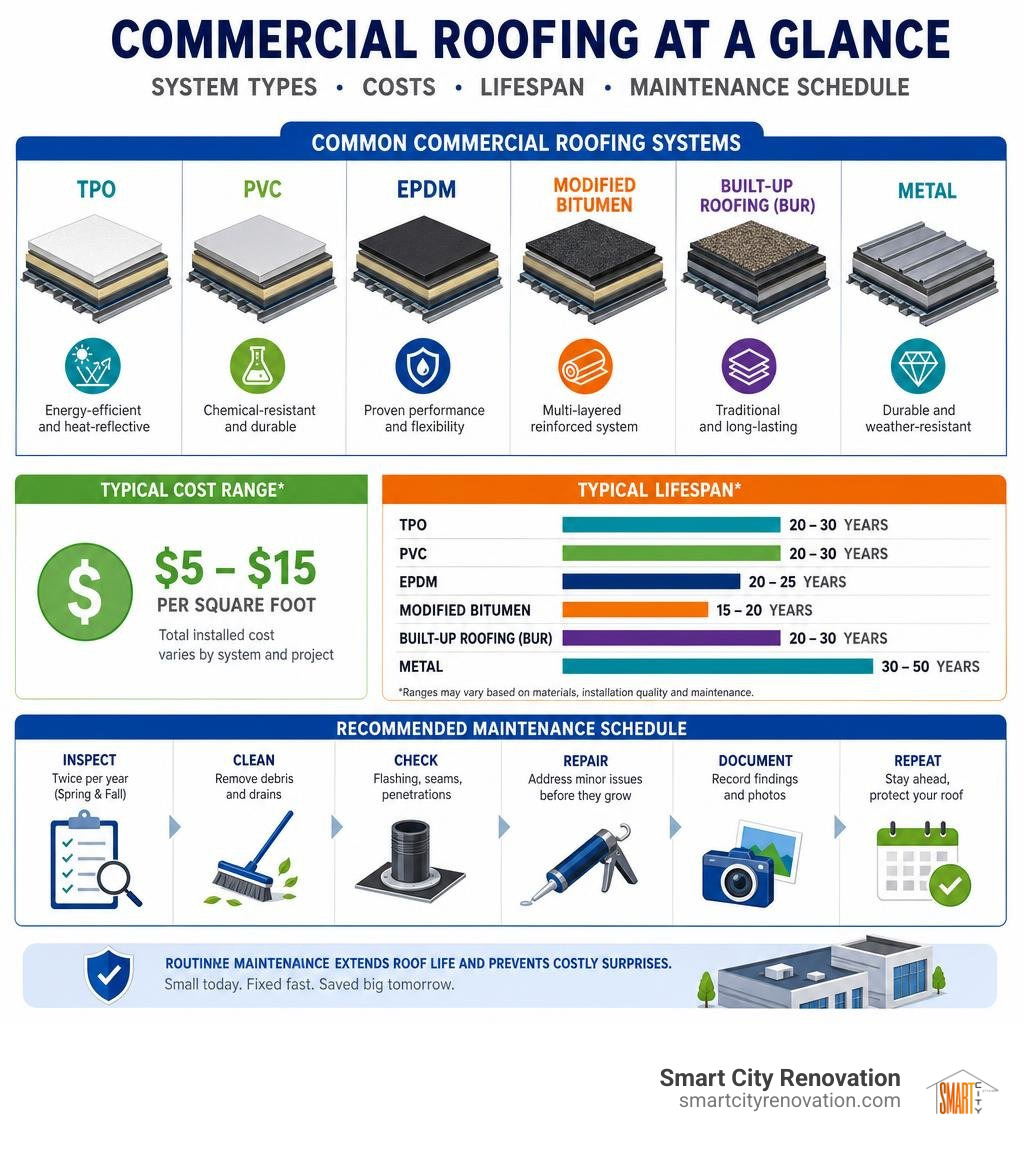
| Common systems | TPO, PVC, EPDM, Modified Bitumen, Built-Up Roofing (BUR), Metal |
| Typical lifespan | 20–30 years depending on material and maintenance |
| Average replacement cost | $5–$15 per square foot |
| Inspection frequency | At least twice per year (spring and fall) |
| Energy compliance | California Title 24 requires cool roof materials with minimum SRI 75 |
| Biggest failure cause | Deferred maintenance, not the roofing system itself |
A single small problem — say, a cracked pipe boot that costs $200 to fix — can quietly become a $15,000 repair once water reaches the insulation and decking below. That’s how fast a neglected commercial roof escalates from a nuisance into a business emergency.
The stakes are high. Your roof protects your equipment, your inventory, your tenants, and your daily operations. Getting it right — and keeping it right — is one of the most important facility decisions you’ll make.
I’m Norbert, and at Smart City Renovation I’ve spent 25 years managing commercial roofing and construction projects across the Chicagoland area. Whether you’re dealing with a leaking flat roof, planning a full replacement, or just trying to stay compliant, this guide will walk you through everything you need to know.
Understanding Commercial Roofing Systems and Materials
Selecting the right commercial roof is a major capital decision. The material you choose dictates your upfront installation costs, energy efficiency, maintenance requirements, and how long the system will protect your property. In our 25 years of general contracting experience throughout Chicagoland, we have seen that every commercial property has unique structural demands.
For properties requiring dependable, long-term building protection, finding qualified Industrial Roofers Near Me For Reliable Building Maintenance is the first step toward safeguarding your investment. Modern commercial buildings typically utilize flat or low-slope designs that require specialized single-ply or multi-ply asphaltic membranes.
To help you understand the landscape of commercial systems, let us look at how the three most popular single-ply and synthetic rubber options compare:
| Feature | TPO (Thermoplastic Polyolefin) | PVC (Polyvinyl Chloride) | EPDM (Ethylene Propylene Diene Monomer) |
|---|---|---|---|
| Material Type | Thermoplastic | Thermoplastic | Synthetic Rubber |
| Seam Method | Heat-welded (hot air) | Heat-welded (hot air) | Seam tape / Adhesives |
| Chemical Resistance | Moderate | High (excellent for grease/acid) | Low |
| UV Resistance | High | High | High |
| Average Lifespan | 20 to 30 Years | 20 to 30 Years | 20 to 25 Years |
| Price Point | Budget-friendly | Premium | Moderate |
When choosing between these systems, you must consider what your building does. A warehouse has very different roofing needs than a restaurant venting grease, or a chemical processing plant. To ensure your system is designed and installed according to the highest industry standards, many property managers consult major national industry guidelines to understand baseline specifications before hiring local specialists.

TPO and PVC in Commercial Roofing
Thermoplastic single-ply membranes have dominated the low-slope market for over two decades. TPO (thermoplastic polyolefin) has been one of the most popular products used for low-slope roofing for over 20 years because of its balance of performance and affordability.
Both TPO and PVC membranes are highly valued for their heat-welded seams. Unlike systems that rely on adhesives or tapes, hot-air welding physically fuses the sheets together, creating a monolithic, continuous barrier that is highly resistant to leaks.
However, they serve different niches:
- TPO: Highly reflective, budget-friendly, and offers excellent protection against UV radiation and ozone. It is an outstanding choice for retail spaces, offices, and warehouses looking to lower their cooling bills. If you are located in the northern suburbs, you can learn more about local single-ply options through resources detailing commercial TPO flat roof replacement in Des Plaines or explore localized services in neighboring communities like Niles.
- PVC: Exceptionally durable and resistant to chemicals, oils, animal fats, and grease. This makes PVC the undisputed standard for restaurants, food processing plants, and manufacturing facilities with heavy rooftop exhaust systems. Additionally, premium PVC membranes often feature high-strength polyester reinforcement scrims that resist punctures and wind uplift.
EPDM and Built-Up Roofing (BUR) Options
If thermoplastic membranes are the modern innovators, EPDM and Built-Up Roofing (BUR) are the time-tested workhorses of the industry.
EPDM (ethylene propylene diene monomer) is a synthetic rubber membrane known for its incredible flexibility and resilience. EPDM can withstand extreme temperature swings without cracking, making it highly adaptable to harsh climates. Because it is an elastomeric material, it expands and contracts naturally with the building. EPDM is typically installed using adhesive or ballast (gravel), and while its seams are sealed with heavy-duty tape rather than welded, a well-maintained EPDM roof can easily last over two decades. Property owners in our service areas frequently select rubber systems; you can find specialized local expertise by reviewing options for a roofing contractor in Mount Prospect, Illinois, checking out Park Ridge, IL roofing contractors, or consulting with providers serving Morton Grove.
Regional Compliance: Title 24 and Cool Roof Standards
Even though our primary footprint is in the Chicagoland area, many commercial property managers operate multi-state portfolios or look to West Coast energy standards as a blueprint for upcoming local code changes. California’s Title 24 Energy Efficiency Standards represent some of the strictest building codes in the nation, heavily influencing how manufacturers design commercial roofing materials nationwide. For official code background and current energy-efficiency resources, property managers can review the California Energy Commission Building Energy Efficiency Standards.
To understand why these standards are migrating eastward, it helps to read up on local climate-smart strategies. You can find valuable baseline advice by checking out Dont Let Your Business Leak With These Illinois Roofing Tips.

How Title 24 Affects Material Selection and Costs
Title 24 compliance requires commercial buildings to meet strict Solar Reflective Index (SRI) and thermal emittance baselines. For flat or low-slope roofs, the code generally mandates a minimum three-year aged SRI of 75 for any major reroofing or recoating project that covers more than 2,000 square feet or replaces over 50% of the existing roof.
This regulatory framework directly impacts material costs and selection:
- Material Compliance: Standard dark-colored membranes do not meet these reflective thresholds. Property owners must choose naturally reflective materials like white TPO, specially formulated PVC, or apply high-solids silicone coatings.
- Insulation Requirements: Compliance is not just about the top membrane; it also dictates the continuous insulation underneath. To meet target R-values, contractors must install thicker layers of polyisocyanurate (polyiso) board, which increases material costs but drastically improves the building’s thermal envelope.
The Impact of Cool Roof Coatings on Energy Bills
Cool roof coatings – primarily elastomeric acrylics and silicones – act as a shield for your building. By reflecting up to 80% of solar radiation away from the roof surface, these materials prevent heat from transferring into the building’s interior.
The real-world benefits of these coatings include:
- HVAC Load Reduction: Cool roofs can cut cooling costs by 10% to 30% during hot summer months. Because the air conditioning units do not have to work as hard to combat heat transferring through the ceiling, the life of your expensive rooftop HVAC units is extended.
- Mitigating Urban Heat Islands: Reflective roofs lower ambient air temperatures around the building, which is particularly beneficial in densely built commercial zones like Schaumburg, Skokie, and Rosemont.
- Restoration vs. Replacement: If your underlying roof structure is dry and structurally sound, applying a high-quality silicone coating can restore your roof’s water tightness and add 10 to 15 years of useful life at a fraction of the cost of a full tear-off.
Maintenance, Inspections, and Preventing Roof Failure
A commercial roof is a major financial asset. Unfortunately, many property managers treat their roofs with an “out of sight, out of mind” attitude. Statistics show that the vast majority of commercial roofs fail prematurely due to deferred maintenance rather than material defects.
To understand how to protect your investment, you can read our comprehensive overview in The Ultimate Guide To Roof Repair.
Common Causes of Commercial Roofing Failure
Understanding why roofs fail is the first step in preventing disaster. The most common culprits include:
- UV Degradation and Thermal Shock: Constant exposure to the sun breaks down chemical bonds in single-ply membranes over time, making them brittle. Daily temperature swings cause the roof to expand and contract; this thermal shock stresses seams and flashing.
- Clogged Drains and Ponding Water: When leaves, debris, or windblown trash clog roof drains, water accumulates. “Ponding water”—defined as water that remains on a flat roof for more than 48 hours after a rainstorm—adds immense weight to the structure and accelerates the breakdown of adhesives and membrane coatings.
- Wind Uplift: High winds can get under poorly secured perimeter edge metals or loose membrane seams, creating a vacuum effect that pulls the roofing system away from the deck.
- Mechanical Damage: Trade workers servicing HVAC units, commercial refrigeration, or solar panels can accidentally drop tools, puncture membranes, or leave heavy equipment resting directly on the roof without protective walkway pads.
Developing a Proactive Maintenance Schedule
We recommend a strict bi-annual inspection schedule—once in the spring to evaluate winter damage, and once in the fall to prepare the roof for freezing temperatures and snow loads.
A professional inspection should always include:
- Core Cuts: Taking physical core samples of the roof assembly to verify the condition of the underlying insulation and deck. This reveals if moisture is trapped beneath the surface.
- Infrared Moisture Scans: Utilizing thermal imaging cameras to detect temperature differentials on the roof surface. Wet insulation retains heat longer than dry insulation, allowing us to pinpoint hidden leaks without destructive testing.
- Drain and Gutter Cleaning: Clearing out all scuppers, downspouts, and drain grates to ensure water flows off the roof immediately.
- Flashing and Penetration Checks: Inspecting the sealant around pipe boots, expansion joints, and HVAC curbs, which are the most common leak sites.
Minimizing Operational Disruption During Installation
Replacing a commercial roof should not mean shutting down your business. At Smart City Renovation, we schedule around your operations to keep your tenants, employees, and customers safe.
When planning a commercial project in busy areas like Arlington Heights, coordination is key. Working with an experienced local contractor ensures that local building codes are met and disruption is kept to an absolute minimum.
To minimize operational friction, look for contractors who employ these best practices:
- Off-Peak and Phased Scheduling: Performing loud tasks—such as tear-offs or crane operations—early in the morning, overnight, or on weekends.
- Safety Barriers and Staging Areas: Clearly cordoning off staging areas for materials and restricting public access near crane lift zones.
- Odor and Noise Mitigation: Utilizing low-odor adhesives and modern, quiet hot-air welders instead of traditional asphalt kettles when working on occupied office buildings or retail centers.
For a deeper look into why hiring experienced, local crews is crucial for keeping your business running smoothly, read Why Professional Roofers Near Me Are Worth The Investment.
Warranties, Documentation, and Insurance Claims
When your project is complete, having the right paperwork is essential. There are two primary types of commercial warranties:
- Manufacturer Warranties: These cover material defects. For the ultimate peace of mind, ask for a No Dollar Limit (NDL) warranty. Under an NDL warranty, the manufacturer covers the full cost of labor and materials to correct any covered leak, regardless of how much the original installation cost.
- Contractor Workmanship Warranties: These are issued directly by us, the installer, covering the quality of our labor and installation techniques.
When dealing with storm or hail damage, insurance adjusters require meticulous documentation. Always ensure your contractor provides high-resolution photo evidence, core sample records, moisture scan reports, and a detailed, line-itemed scope of work. Having this level of detail ready ensures your claim is processed quickly and fairly. To learn more about selecting certified professionals who handle these details seamlessly, check out The Best Certified Roofers Near Me For Peace Of Mind.
Frequently Asked Questions
How much does commercial roof replacement cost?
On average, commercial roof replacement projects range from $5 to $15 per square foot. The final price depends on several key variables:
- Roof Size and Height: Larger roofs offer economies of scale, but multi-story buildings require cranes and specialized safety rigging, which increases labor costs.
- Substrate Condition: If the underlying wood or concrete decking is rotted or water-damaged, it must be repaired or replaced before the new membrane is installed.
- Insulation Thickness (R-Value): Meeting modern energy codes requires specific insulation configurations, which impacts material costs.
- System Type: TPO is generally the most cost-effective single-ply option, while PVC and heavy-duty built-up systems sit at a higher price point.
If you are looking for certified residential or commercial installation options in the northern suburbs, you can consult manufacturer certification directories to compare baseline credentials and ensure you are working with qualified professionals.
How long does a commercial roof typically last?
Most commercial roofs last 20 to 30 years, depending heavily on the material type, local climate, maintenance history, drainage performance, and installation quality. Single-ply systems like TPO and PVC generally deliver 20 to 30 years of reliable service when properly welded and kept clean, while multi-ply built-up roofs can surpass 30 years if their protective gravel or reflective coatings are maintained.
What is the difference between a tear-off and a re-roof?
- Tear-Off (Full Replacement): This process involves removing all existing roofing materials, insulation, and underlayments down to the bare structural deck. It allows us to inspect the deck for damage, replace wet insulation, and install a completely fresh, fully warranted system.
- Re-Roof (Overlay/Recover): This involves installing a new membrane directly over the existing roof system. It is a cost-effective alternative that reduces labor and disposal fees. However, local building codes generally limit buildings to a maximum of two roofing layers. If your building already has two layers, or if the existing insulation is saturated with water, a full tear-off is legally and structurally required.
Conclusion
Your commercial roof is the first line of defense protecting your business, your tenants, and your bottom line. Whether you are managing a warehouse in Elk Grove Village, a retail strip in Palatine, or an office building in Schaumburg, investing in high-quality materials and proactive maintenance pays dividends in energy savings and avoided downtime.
At Smart City Renovation, we bring 25 years of general contracting, remodeling, and roofing expertise to every commercial project across the Chicagoland area. From Niles and Glenview to Morton Grove and Arlington Heights, our team is committed to delivering honest, high-performance roofing solutions that stand the test of time.
Ready to protect your building with a team you can trust? Contact us today at Roofing Contractor to schedule a professional, data-driven roof inspection.