
Key Services Provided by a Modern Air Quality Company
When you hire a professional air quality company, you receive far more than a simple filter check. Modern environmental specialists utilize high-tech diagnostics, continuous data logging, and laboratory sampling to identify hidden hazards inside homes, educational facilities, and commercial buildings.
Whether you are managing a home in Des Plaines or supervising an enterprise facility in Schaumburg, working with a full-service team gives you complete visibility into what you are actually breathing. Standard services offered by an expert air quality company include:
- Indoor Air Quality (IAQ) Testing: Comprehensive physical and chemical evaluations that measure relative humidity, carbon dioxide levels, volatile organic compounds, and temperature imbalances.
- Environmental Assessments: Whole-building evaluations designed to locate structural dampness, inadequate fresh air ventilation, and active pollutant pathways.
- VOC and Chemical Gas Detection: Continuous or targeted sampling for off-gassing construction materials, cleaning solvents, formaldehyde, and chemical fumes.
- Biological Mold Sampling: Moisture mapping using specialized tools alongside air cassette or surface testing to identify active mold growth before visible colonies form.
- Real-Time Sensor Networks: Installation of stationary or cellular IoT hardware to stream real-time air quality metrics to central management dashboards.
To fix long-term indoor environmental problems, physical testing must be paired with mechanical solutions. Working directly with a licensed HVAC Contractor allows property owners to fix underlying airflow deficiencies, upgrade mechanical filtration, and restore healthy indoor ventilation.
Main Types of Environmental Monitoring Technologies
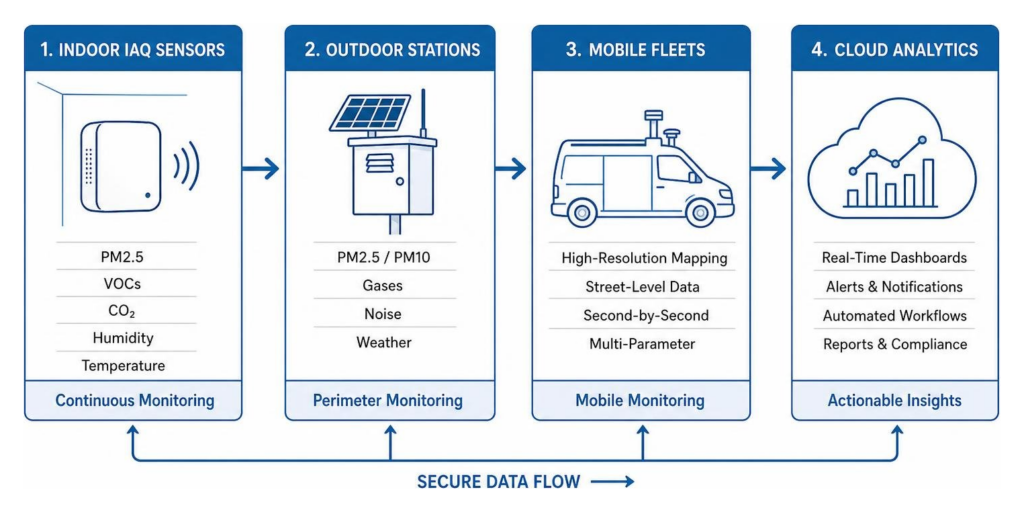
Environmental monitoring technologies have advanced rapidly, expanding far beyond static hand-held sensors. Leading companies now deploy interconnected hardware networks across four main operational environments:
- Indoor IAQ Sensors: Compact wall- or ceiling-mounted optical devices that actively track indoor PM2.5, VOCs, CO2, humidity, and temperature. These continuous units protect high-occupancy facilities like K-12 classrooms, corporate offices, and senior living homes.
- Outdoor Fenceline and Perimeter Stations: Rugged, weatherproof enclosures equipped with solar panels and 4G cellular connections. Placed around industrial boundaries, data centers, and construction sites, they track heavy dust, generator emissions, and noise.
- Mobile Mapping Fleets: Roving vehicles fitted with lab-grade instruments that record pollution levels second-by-second across municipal districts, providing hyper-local, street-level air quality maps.
- Real-Time Cloud Analytics: Centralized software engines that ingest billions of data points to trigger automated remediation workflows, send emergency alerts, and output audit-ready compliance reports.
What to Expect When Hiring an Air Quality Company
When you schedule an indoor environmental assessment, an experienced air quality company follows a rigorous, multi-step inspection protocol rather than relying on quick visual checks:
- Initial Occupant Interview: The specialist reviews historical health complaints, building age, past water intrusion events, and recent remodeling history.
- Visual Inspection with Advanced Diagnostics: Inspectors check hidden wall cavities and utility runs using thermal imaging cameras to spot cold damp spots, alongside borescopes to view internal ductwork.
- Instrumented Air and Surface Sampling: Testing equipment collects measured air samples onto media slides or continuous data logging sensors to evaluate particulate concentrations and gaseous pollutants.
- Laboratory Validation: Air cassettes and mold swipes are sent to accredited environmental laboratories for culturing, species identification, and quantitative spore counts.
- Audit-Ready Reporting and Actionable Recommendations: The final report translates complex chemical data into plain English, providing step-by-step remediation protocols and mechanical repair options.
If you are noticing persistent odors or suspect mold growth near local municipal borders like Niles or Rosemont, scheduling an assessment with a certified inspector ensures you identify root causes early and establish an effective plan for healthy indoor air.
Key Pollutants Measured by Environmental Air Detection Systems
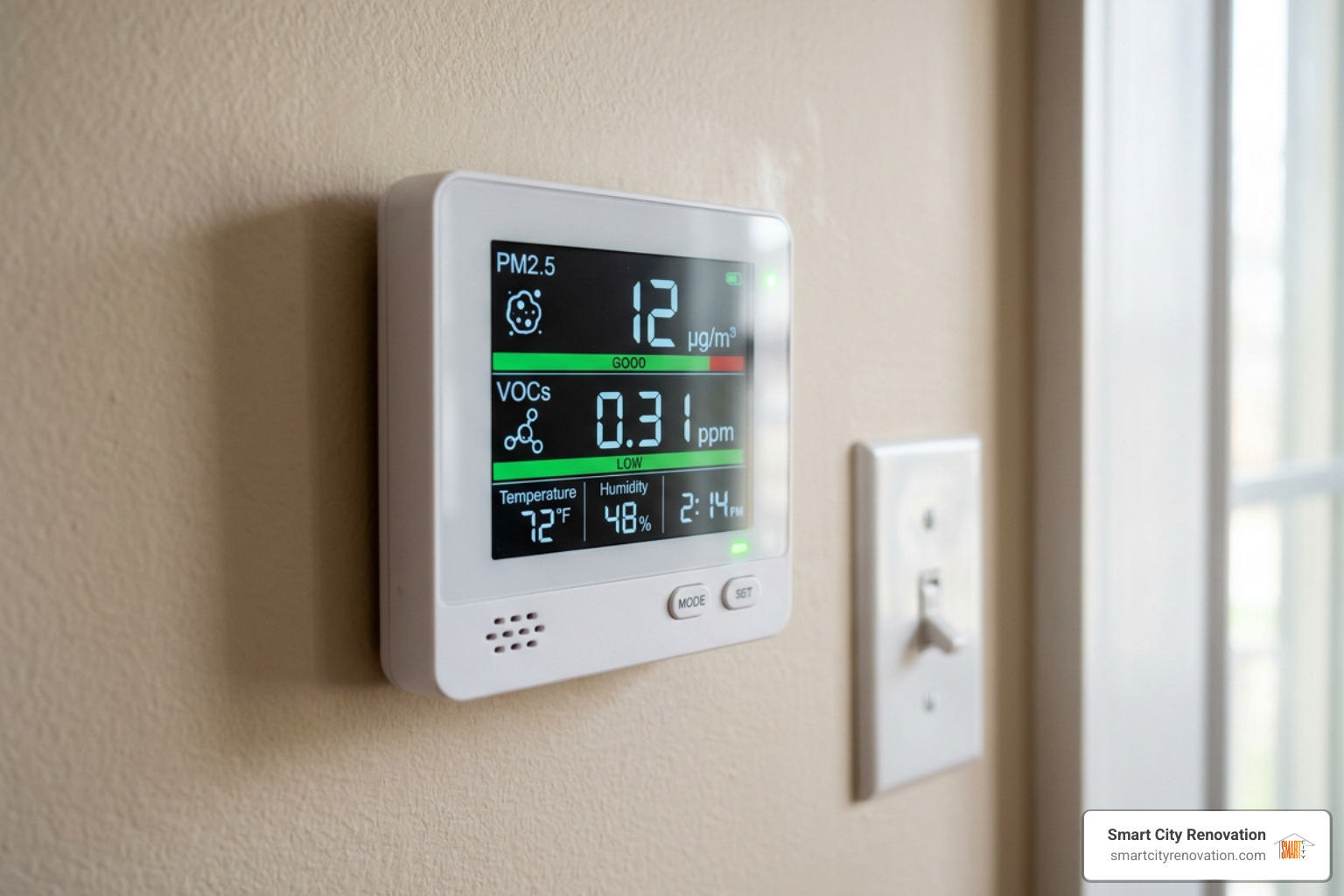
To maintain safe environments, modern detection systems track both particulate matter and gaseous chemicals. Breathing elevated levels of airborne pollutants causes immediate physical reactions like eye, nose, and throat irritation, while long-term exposure significantly increases cardiovascular and respiratory health risks.
Primary Chemical and Particulate Contaminants
A qualified air quality company uses calibrated instruments to isolate and measure specific harmful contaminants:
- PM2.5 and PM10 (Particulate Matter): Microscopic dust, soot, and smoke particles. Fine PM2.5 particles are particularly dangerous because they bypass upper respiratory defenses and penetrate deep into pulmonary tissue.
- Ultrafine Particles (down to 0.003 microns): Exceptionally tiny combustion particles tracked by advanced platforms like IQAir, which can cross directly into the bloodstream.
- Volatile Organic Compounds (VOCs) & Formaldehyde: Off-gassing chemicals emitted by synthetic carpet, paints, cabinetry adhesives, cleaning chemicals, and aerosol sprays.
- Nitrogen Dioxide (NO2): A sharp combustion gas produced by heavy vehicle traffic, gas stoves, and unvented building boilers.
- Ground-Level Ozone (O3): Formed when sunlight reacts with nitrogen oxides and VOCs during hot summer months, irritating respiratory tracts.
- Radon Gas: An odorless, invisible radioactive gas that leaks from soil into basements and ground floors, representing the leading cause of lung cancer among non-smokers.
- Biological Allergens and Mold Spores: Microscopic fungal spores, pet dander, and dust mite fragments that trigger asthma attacks and chronic sinus inflammation.
For homeowners checking daily localized pollution metrics, keeping track of regional tools like the Morton Grove Air Quality Index helps inform decisions on when to run indoor air purifiers or close windows.
How Data Accuracy and Sensor Calibration Are Ensured
A primary concern with modern air monitoring is data reliability. Low-cost optical sensors can produce skewed readings if high humidity, fog, or dust coat internal sensors. High-performing air quality organizations solve this using a multi-tiered validation approach:
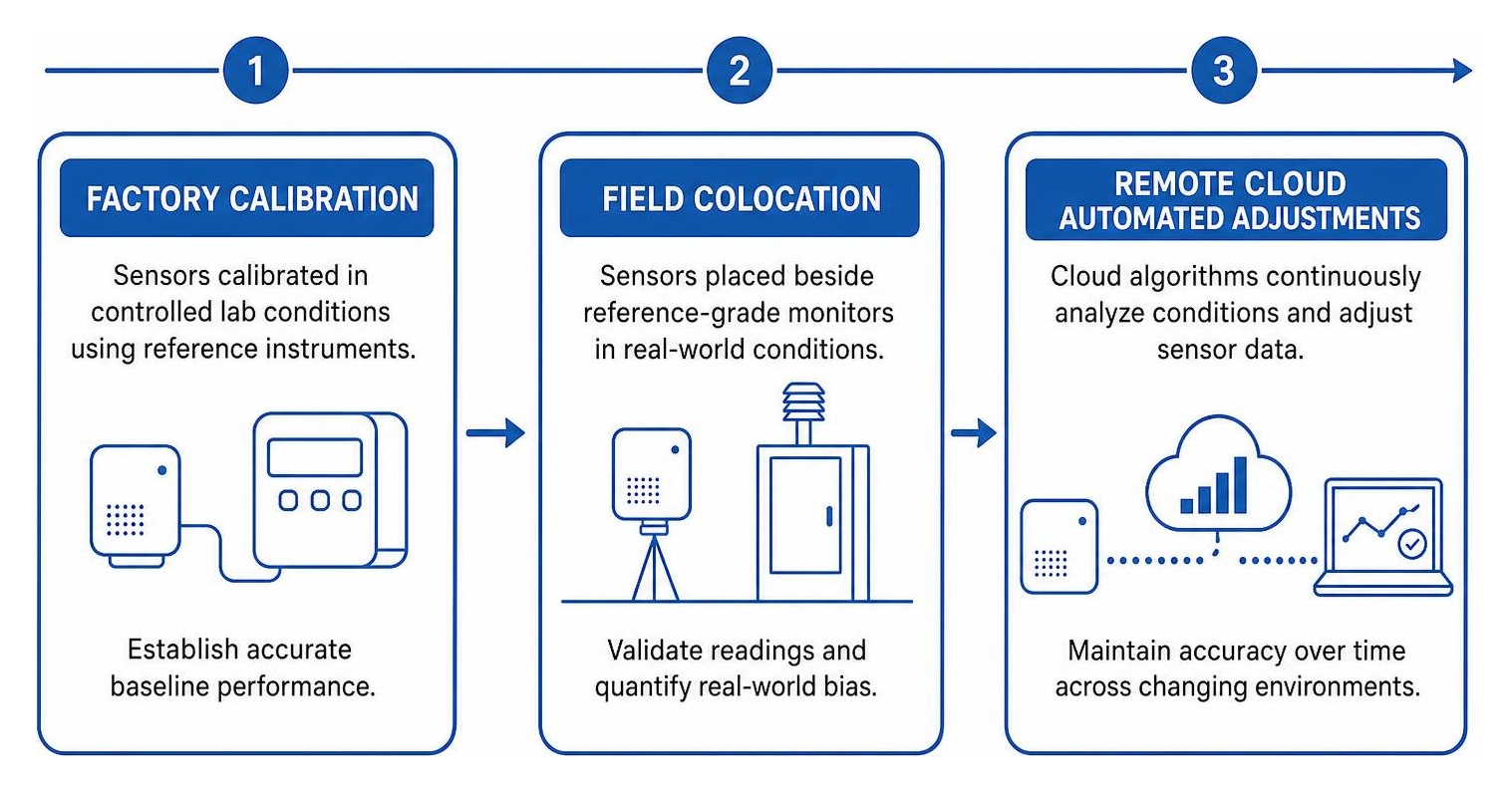
- Reference Station Colocation: Field sensors are temporarily placed directly beside government reference-grade monitors (such as EPA Federal Equivalent Method units) to establish an accurate baseline.
- Automated Cloud Calibration: Machine-learning algorithms continuously evaluate atmospheric conditions, automatically adjusting low-cost sensor data to compensate for ambient humidity and temperature drift.
- Multi-Gas and Add-On Modules: Modular device networks, such as those provided by Clarity, allow base PM2.5 sensors to be expanded with dedicated plug-and-play modules for ozone, black carbon, and NO2 without replacing core hardware.
Advanced Technologies: Low-Cost Networks, AI, and Automation
The air monitoring industry has undergone a major shift. In the past, communities relied exclusively on a few multi-million-dollar government monitoring stations scattered tens of miles apart. Today, dense low-cost sensor networks combined with artificial intelligence provide granular, street-by-street data.
| Feature / Metric | Low-Cost Sensor Networks | Traditional Regulatory Stations |
|---|---|---|
| Spatial Resolution | Hyper-local (block-by-block, dense grid) | Regional (1 station covers 50+ square miles) |
| Capital & Operating Cost | Low subscription or unit cost | Very high capital and maintenance expense |
| Deployment Speed | Minutes (solar-powered, cellular) | Months or years (fixed site, grid power) |
| Primary Data Purpose | Trend tracking, early warnings, community mapping | Legal compliance enforcement, regional standards |
| Calibration Method | Remote cloud algorithms, colocation | Manual physical calibration, standard gas tests |
Artificial Intelligence and Machine Learning in Compliance Reporting
AI tools are transforming how facility managers analyze environmental data. Rather than sifting through thousands of spread-sheet entries, enterprise data platforms like Aethair and its dedicated Data Compliance Platform utilize generative environmental intelligence to automate risk reporting.
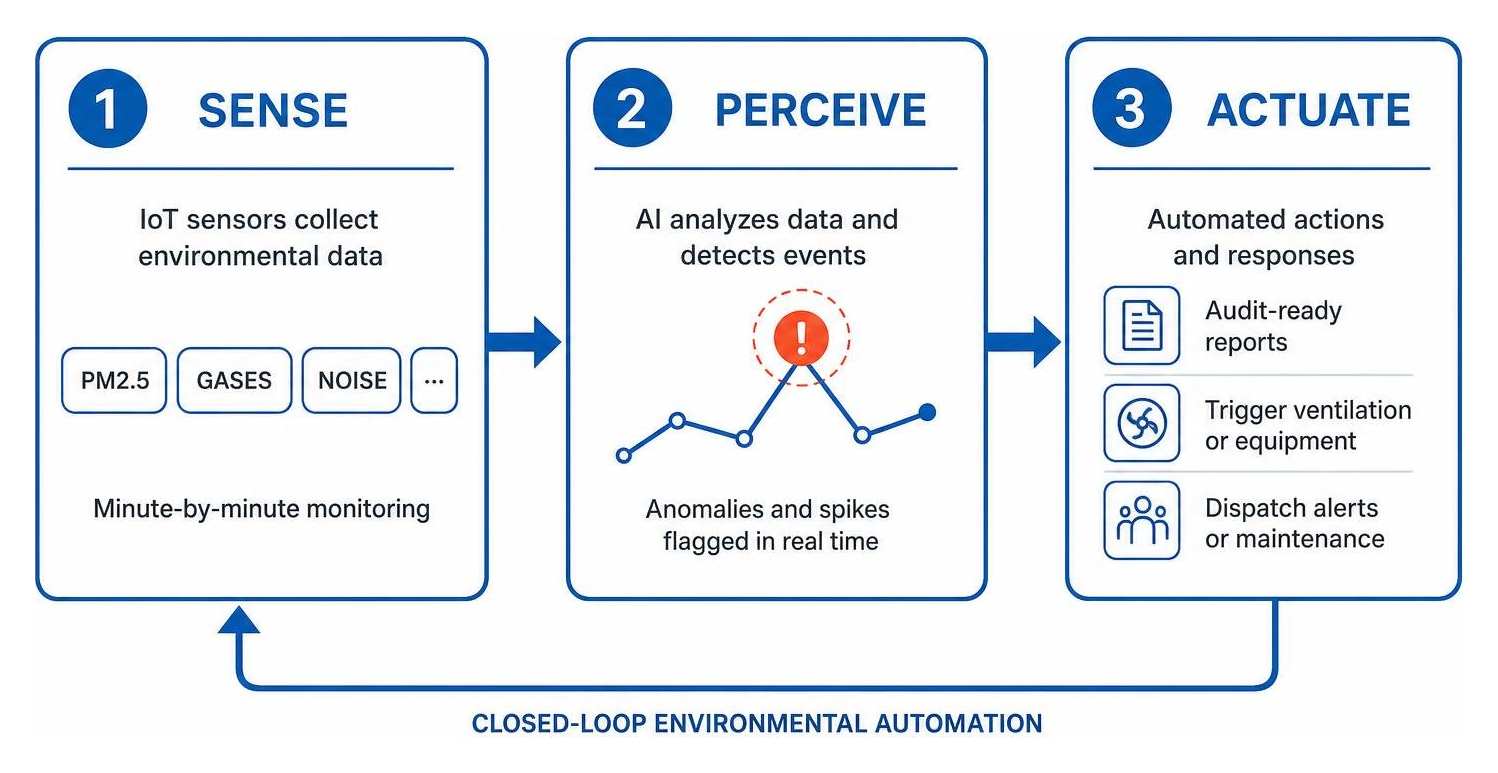
These closed-loop platforms operate on a simple three-step cycle:
- Sense: Physical IoT hardware collects minute-by-minute PM2.5, chemical gas, and noise data.
- Perceive: AI algorithms analyze data trends, flagging anomalies or industrial emissions spikes instantly.
- Actuate: Cloud platforms automatically output audit-ready compliance reports, trigger local HVAC ventilation, or dispatch building maintenance crews.
Additionally, smart building systems like EnviroKlenz integrate active room sensors directly with standalone purification hardware. This allows ventilation systems to dynamically increase fan speeds when room occupancy rises or chemical pollutants spike, reducing energy consumption by up to 20% compared to running fans on high continuously.
Modular Devices, Solar Power, and Sensing-as-a-Service Models
Hardware installation used to require hiring electricians to run conduit and power cables. Today, cutting-edge hardware features built-in solar panels and native 4G LTE cellular modems. Devices can be mounted directly onto utility poles, streetlights, or exterior facility walls in under ten minutes.
To eliminate high initial capital costs, many leading companies offer Sensing-as-a-Service subscription models. This structure bundles hardware, cellular data transmission, automated remote calibration, cloud software access, and hardware replacement into a single predictable monthly fee.
Real-World Applications Across Commercial, Educational, and Municipal Sectors
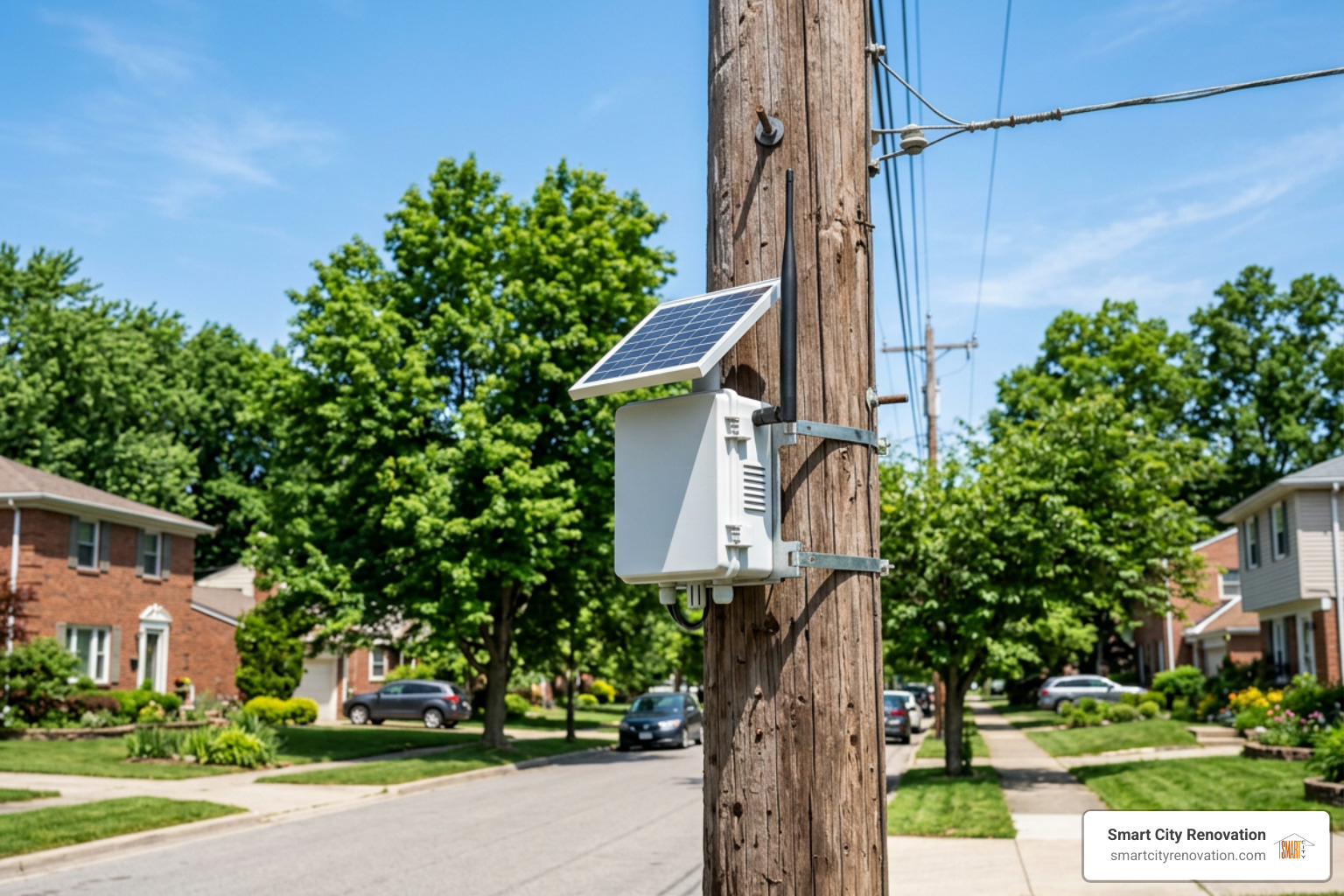
Hyper-local air measurement benefits every level of society, from local school districts to global commercial enterprises:
- Municipalities and Smart Cities: Cities use mobile fleets, such as those operated by Aclima, to conduct block-by-block mapping. This helps city planners locate urban heat islands, identify traffic pollution zones, and protect environmental justice communities.
- School Districts and Universities: Dense indoor sensor grids inside classrooms help administration monitor CO2 levels. Keeping CO2 low prevents student drowsiness, reduces airborne virus transmission, and boosts academic performance. Over 7 million students and teachers currently benefit from active classroom air tracking.
- Construction and Fenceline Monitoring: Industrial sites and construction projects use 4G-connected pelican-case kits to measure dust migration and generator emissions, preventing costly municipal fines and preserving community relations.
- Enterprise ESG Reporting: Corporations rely on certified air tracking across their real estate portfolios to generate verifiable Environmental, Social, and Governance (ESG) performance metrics for investors and tenants.
Questions to Ask an Air Quality Company Before Testing
Before hiring an air quality company for your home or commercial facility in Park Ridge, Skokie, or Glenview, ask these key questions to ensure you receive professional results:
- What specific testing protocols and diagnostic equipment do you use (e.g., thermal cameras, borescopes, cassette samplers)?
- Are your air samples analyzed by an independent, accredited environmental laboratory?
- Do you provide continuous real-time monitoring solutions or only single-point static tests?
- Can your team provide direct remediation guidance and HVAC mechanical integration if high pollutant levels are discovered?
If testing reveals poor airflow or duct contamination, working with experts offering Expert HVAC Repair in Des Plaines Fast Reliable Service ensures your mechanical systems are repaired quickly and correctly.
Role of Ventilation, HVAC Maintenance, and Remediation
Testing is only the diagnostic phase — fixing bad air requires proper HVAC maintenance and remediation. In tight Chicagoland homes across Arlington Heights, Elk Grove Village, and Palatine, poor indoor air is often caused by neglected heating equipment or leaky ductwork.
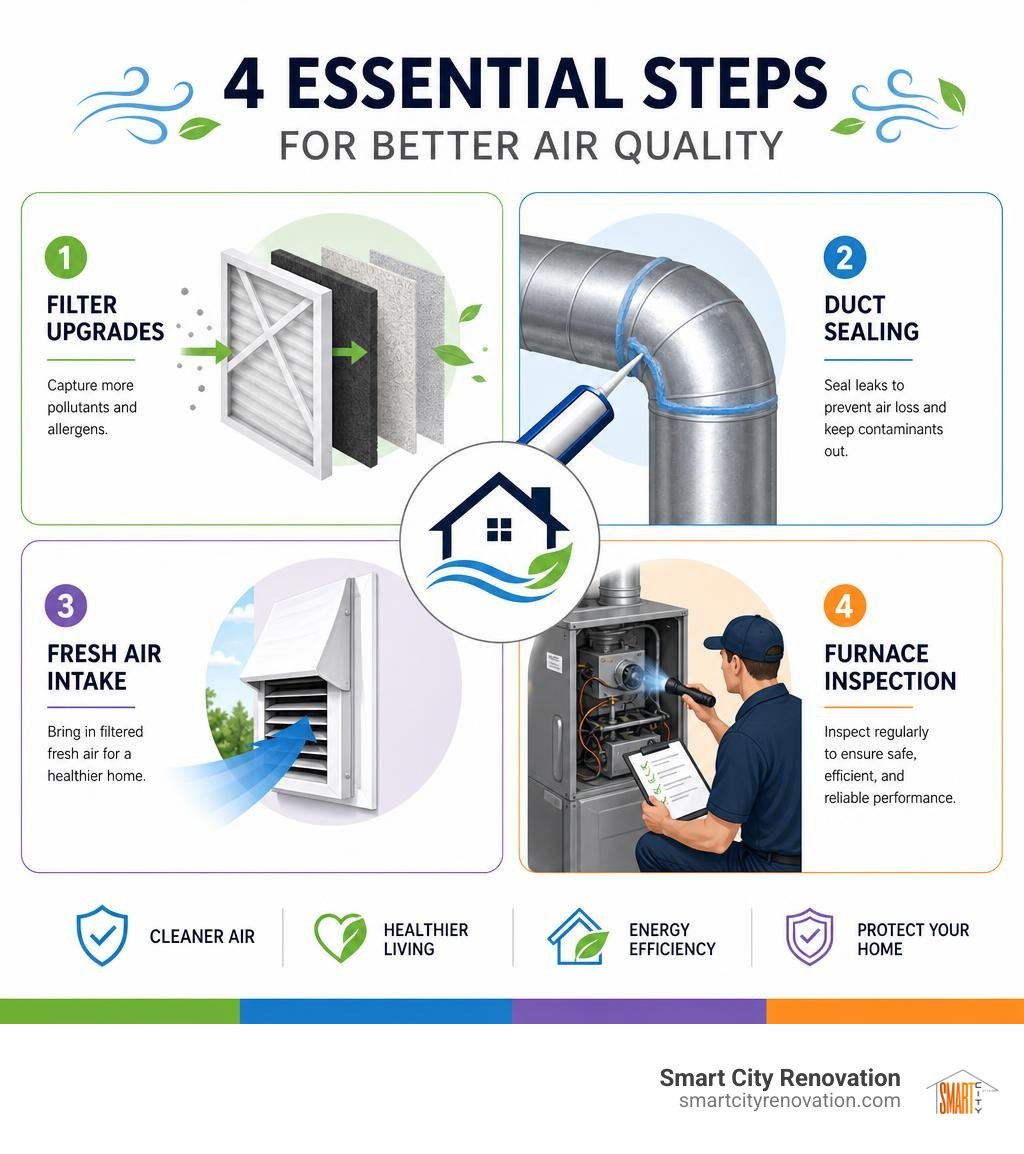
Key steps to restore indoor environmental health include:
- Upgrading Mechanical Filtration: Replace basic fiberglass filters with MERV 13 or high-efficiency HEPA filters to capture fine particulate matter and airborne allergens.
- Optimizing Fresh Air Intake: Mechanical HRV (Heat Recovery Ventilator) or ERV systems replace stale indoor air with filtered outdoor air without wasting heating or cooling energy.
- Duct Work Cleaning and Sealing: Eliminate accumulated dust, mold spores, and debris inside supply and return ducts to prevent recirculating pollutants.
- Regular Heating and Cooling Servicing: Servicing your furnace or boiler prevents hazardous carbon monoxide leaks caused by cracked heat exchangers. Property owners can learn more by reading The Ultimate Guide to Heating Repair.
If your building relies on hydronic heating systems, routine maintenance is equally vital for keeping indoor conditions safe. Learn how to maintain your heating infrastructure with our guide to Keep Your Home Cozy with Top Rated Gas Boiler Maintenance Near You. Likewise, if cooling equipment fails during summer heat waves, indoor humidity can surge and fuel rapid mold growth — making fast action essential through Sweating the Details What to Expect from a 24 Hour AC Company.
Frequently Asked Questions About Air Quality Testing
How do low-cost air sensors compare to traditional regulatory monitors?
Traditional regulatory monitoring stations are exceptionally accurate but cost hundreds of thousands of dollars, meaning cities only install a few regional stations. Low-cost sensor networks trade a small degree of single-station precision for massive spatial coverage.
By placing dozens or hundreds of low-cost, solar-powered sensors across a community, you get hyper-local data revealing exact pollution hotspots. When low-cost networks use automated cloud calibration alongside reference monitors, they deliver decision-grade accuracy suitable for public health tracking and emergency response.
How does real-time monitoring support ESG compliance and reporting?
Environmental, Social, and Governance (ESG) frameworks require companies to submit verifiable environmental metrics. Real-time air quality platforms continuously log indoor and perimeter PM2.5, VOC, and CO2 readings to encrypted cloud servers.
Instead of relying on manual spot-checks, facility managers can auto-generate time-stamped, audit-ready compliance reports in seconds. This proves to stakeholders, auditors, and tenants that indoor workspaces meet strict health and safety standards.
What causes sick building syndrome and how is it identified?
Sick Building Syndrome (SBS) occurs when building occupants experience acute health effects — such as chronic fatigue, headaches, dizziness, nausea, and sinus irritation — that are directly linked to time spent inside a specific property, despite no single specific illness or cause being identified.
SBS is typically caused by inadequate fresh-air ventilation in airtight buildings, off-gassing synthetic construction materials, hidden mold behind walls, or dirty HVAC systems recirculating VOCs. An air quality company identifies SBS through whole-building environmental assessments, using thermal imaging, moisture meters, occupant health interviews, and continuous multi-pollutant air logging.
Conclusion
Breathe easy by choosing the right partner for your indoor environmental needs. Modern air measurement technology gives property owners total clarity over what is circulating through their living and working spaces. From identifying invisible VOCs and mold spores to installing continuous smart sensor networks, working with a professional team takes the guesswork out of indoor health.
At Smart City Renovation, our team brings over 25 years of Chicagoland construction, remodeling, and HVAC expertise to homes and commercial properties across Des Plaines, Schaumburg, Mount Prospect, Lincolnwood, and surrounding communities. We combine deep structural knowledge with modern ventilation solutions to keep your air safe, clean, and comfortable year-round.
Ready to inspect, upgrade, or renovate your building’s mechanical and environmental systems? Explore Our Full Service Offerings today to schedule a consultation with our local experts.